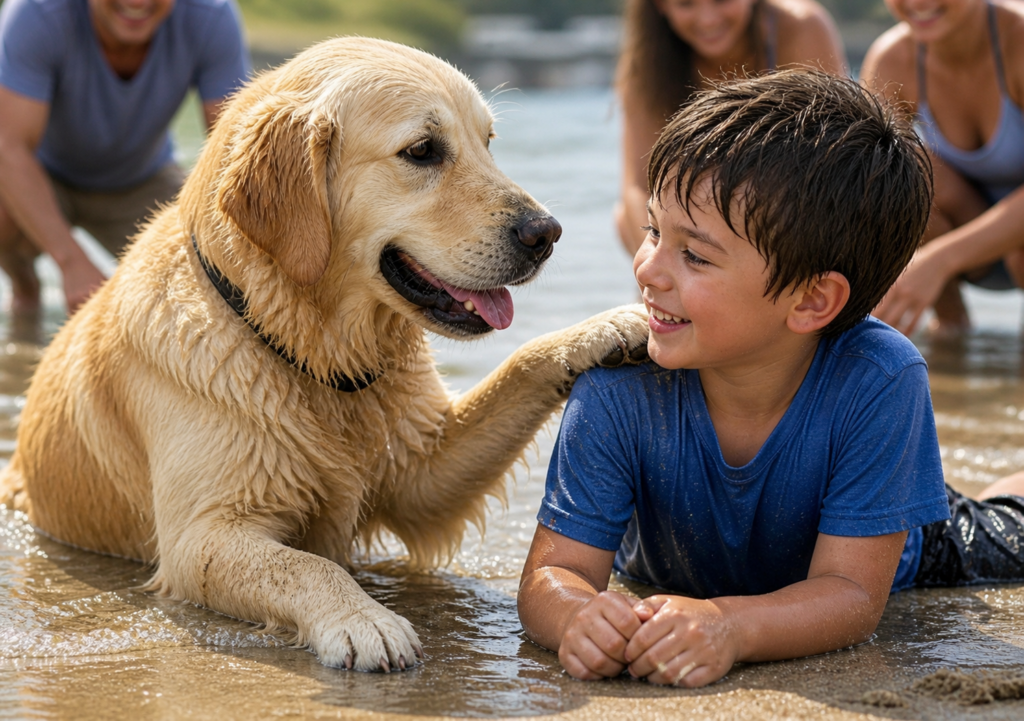
The morning at the beach began like countless others, with soft sunlight reflecting off the surface of the water and a light breeze moving gently across the shoreline. Families arrived early, setting up umbrellas and towels in comfortable spots close to the sand. The sound of children laughing mixed naturally with the rhythm of the waves, creating a peaceful and familiar atmosphere. There was nothing unusual in the environment that would have suggested danger.
The sea appeared calm from a distance, and its steady motion gave the impression of stability. People walked along the shoreline without concern, some collecting seashells while others simply enjoyed the quiet escape from daily routines. Even the deeper water seemed ordinary, with small ripples moving steadily toward the shore. Yet beneath that surface calm, natural currents continued to shift in ways that were not visible to the casual observer. It was a reminder that even peaceful environments can hold unpredictable energy.
The Sudden Shift From Safety to Emergency
The situation changed abruptly when a child, playing near the edge of the water, was unexpectedly caught by a stronger wave. The force of the current pulled the child away from the shallow area and into deeper water within seconds. The transformation from calm recreation to urgent danger was immediate.
At first, those nearby struggled to process what had just happened. The suddenness of the event created a brief pause among beachgoers, as people tried to understand the direction of movement and assess the distance involved. Voices rose in concern, and attention quickly shifted toward the water.
A few adults reacted instinctively and moved toward the shoreline, but the unpredictable motion of the waves slowed their progress. The water conditions were stronger than they initially appeared, and reaching the child quickly became more difficult than expected.
An Unexpected Response From the Shoreline
Amid the growing tension, a dog that had been present on the beach throughout the day began moving with sudden urgency. Until that moment, the animal had shown no unusual behavior. It had been observed walking calmly along the sand, occasionally stopping but never interacting closely with people.
Without hesitation, the dog entered the water and moved directly toward the area where the child was struggling. Its actions were immediate and focused, showing no signs of hesitation despite the increasing strength of the waves. This behavior quickly drew the attention of nearby beachgoers.
As the dog moved deeper into the surf, its presence became harder to track. It disappeared briefly behind waves before reappearing closer to the child’s location. The speed and direction of its movement suggested determination and familiarity with the water environment.
Struggling Against Strong Ocean Currents
The water conditions at that point had become significantly more challenging. Waves were larger and more forceful, making movement difficult even for experienced swimmers. The current pulled in unpredictable directions, creating a situation where stability was hard to maintain.
Despite these conditions, the dog continued advancing without slowing down. Each movement required effort against the resistance of the water, yet it maintained a steady path toward the child. Observers on the shore remained silent, watching the unfolding situation with increasing concern.
The dog’s repeated emergence above the water surface showed its persistence. Even as waves crashed over it, it continued forward, demonstrating consistent focus on reaching its target. The distance between the dog and the child gradually decreased.
The Moment of Contact
After a tense and uncertain period, the dog finally reached the child’s location. The moment was not sudden in appearance, but gradual, as the animal closed the final gap through continuous effort. Witnesses described the moment as both surprising and intense.
The dog managed to make contact and secure a hold on the child’s clothing. This action marked a critical turning point in the situation, as it allowed the beginning of a controlled movement back toward the shore. The effort required remained significant due to the ongoing wave activity.
The return journey was slow and heavily influenced by the sea’s resistance. Each wave added difficulty, but the dog maintained its grip and direction, ensuring that the child remained supported throughout the movement.
Assistance From Beachgoers and Safe Recovery
As the pair moved closer to the shoreline, several people entered the shallow water to assist. Their intervention helped stabilize the final approach, allowing them to safely bring the child onto the sand. Once on shore, immediate attention was given to the child’s condition.
The child showed signs of distress but remained responsive. Within moments, breathing stabilized, and awareness began to return. People nearby provided comfort and ensured the child remained safe while recovering from the shock of the incident.
Meanwhile, the dog remained nearby, calm and observant. Despite the intensity of what had just occurred, it showed no signs of panic or exhaustion, maintaining a composed presence as the situation stabilized.
Observations About the Dog’s Behavior
Once the immediate emergency had passed, attention shifted toward understanding the dog’s behavior. Many witnesses noted how quickly and decisively it had responded, raising questions about its background and experience.
Some observers suggested that the dog may have had prior exposure to water environments, given its confidence in navigating strong currents. Others believed its actions were instinctive, driven by natural response patterns seen in animals during emergencies.
The calm demeanor displayed after the rescue added further interest. The dog did not appear agitated or disoriented, but instead remained steady, as if the event had been part of a familiar pattern.
A Witness Steps Forward With Recognition
Among the crowd was an individual who appeared to recognize the animal. His reaction changed noticeably as he observed the dog more closely. He stepped forward and studied it with visible focus, as though recalling a memory from the past.
After a brief pause, he identified the dog by name, stating that it was known as “Lucky.” This statement immediately drew attention from those nearby, as it suggested a deeper history connected to the location.
He explained that the dog had once belonged to a lifeguard stationed at that same beach. According to his account, the animal had been trained to assist in rescue operations and respond to emergency situations involving swimmers in distress.
A Background of Training and Experience
The witness described how the dog had undergone structured training alongside its handler. This training involved learning to recognize signs of distress in the water, respond quickly to emergencies, and assist in bringing individuals safely back to shore.
Over time, the dog had participated in multiple rescue operations, gaining experience through real-life situations. This background explained the precision and confidence observed during the recent incident.
Eventually, the lifeguard had left the beach, and the dog had disappeared from the area. Its absence had lasted for years, with no clear explanation of where it had gone or how it had been living during that time.
An Unexpected Return After Years Away
According to the witness, the dog’s return to the beach had not been anticipated. It had simply appeared without announcement and moved quietly along the shoreline. No one had initially recognized its significance.
Only when the emergency occurred did its behavior reveal its true connection to the past. The sudden shift from calm observation to decisive action highlighted the lasting impact of its earlier training and experience.
This return, combined with its response during the rescue, created a powerful moment for those who understood its history.
Reflection on the Event
As the day continued, the beach slowly returned to its normal state. People resumed their activities, but the memory of the incident remained present in conversation and reflection. The event had disrupted the ordinary flow of the day in a lasting way.
It served as a reminder of how quickly situations can change in natural environments, and how unexpected responses can make a critical difference in moments of danger. The combination of timing, instinct, and experience played a central role in the outcome.
For many witnesses, the event was not just a rescue, but a demonstration of how past training and memory can influence present action in powerful and unexpected ways.
Final Impression of the Day
By the end of the day, the beach had returned to its usual calm rhythm, with waves continuing their steady motion and people gradually leaving the shoreline. However, the significance of what had occurred remained clear to those who had seen it firsthand.
The dog’s actions left a lasting impression, not only because of the rescue itself, but because of the way it unfolded naturally and without hesitation. It became a moment that would be remembered as both unexpected and meaningful.
In the quiet that followed, the scene stood as a reminder that heroism can appear in many forms, sometimes from the most unassuming sources, and often when it is least expected.
