
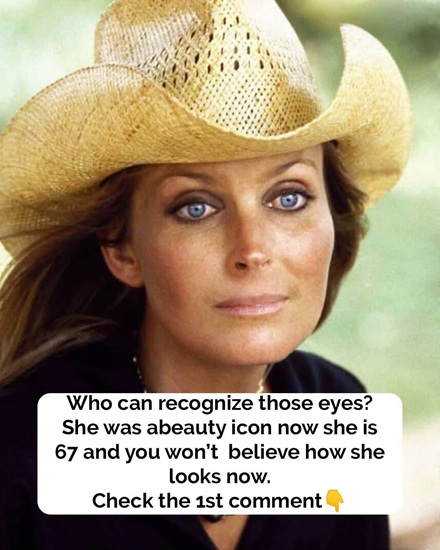
Few actresses became as closely associated with a single breakthrough role as Bo Derek. During the late 1970s and early 1980s, she emerged as one of Hollywood’s most recognizable public figures, attracting worldwide attention through her appearance in the romantic comedy 10 (1979). The film transformed her into an international celebrity almost overnight and established her as one of the most discussed actresses of the era. While public attention often focused on her appearance, Bo Derek’s life and career extend far beyond the image that first made her famous, encompassing decades of work in entertainment, philanthropy, animal welfare, and support for military veterans.
Born Mary Cathleen Collins on November 20, 1956, in Long Beach, California, Bo Derek grew up in Southern California before entering the entertainment industry as a teenager. Her mother, Norma Collins, worked as a hairstylist and makeup artist, while her father, Paul Collins, was associated with the Hobie Cat company. Following her parents’ divorce, her mother later married stunt performer Bobby Bass, introducing Bo to additional aspects of the film industry. These early experiences helped familiarize her with movie productions long before she became an actress herself.
Bo’s acting career began during the 1970s after meeting actor and filmmaker John Derek, an established Hollywood figure known for both acting and directing. Their relationship attracted considerable media attention because of their age difference and became one of the most widely discussed celebrity relationships of the decade. The couple eventually married in 1976 after John Derek’s previous marriage had ended and after Bo reached adulthood. Throughout their marriage, John Derek directed several films starring Bo, including Tarzan, the Ape Man (1981), Bolero (1984), and Ghosts Can’t Do It (1989).
Although those productions generated significant publicity, none matched the extraordinary cultural impact of 10, directed by acclaimed filmmaker Blake Edwards. Released in 1979, the romantic comedy starred Dudley Moore, Julie Andrews, and Bo Derek. The film was both a commercial and critical success, earning Academy Award nominations and becoming one of the year’s highest-grossing releases. Bo Derek’s appearance in the film, particularly the now-famous beach sequence featuring braided hair, became one of the defining popular culture images of the late twentieth century. That single performance established her as an internationally recognized celebrity almost immediately.
The success of 10 also brought challenges. Public attention frequently emphasized Bo Derek’s physical appearance rather than her broader professional ambitions. In interviews over the years, she has acknowledged that sudden international fame dramatically changed her daily life. Constant media coverage, public expectations, and intense scrutiny accompanied nearly every aspect of her career. Like many performers whose breakthrough arrives rapidly, she found herself closely identified with one role, making it difficult for audiences and critics to separate the public image from the individual behind it.
Despite this attention, Bo Derek continued working steadily in film and television throughout the following decades. In addition to feature films, she appeared in numerous television productions, guest roles, documentaries, and interviews. Rather than pursuing a relentless schedule of major studio projects, she gradually became increasingly selective about her professional commitments. Public records and interviews suggest that this shift reflected personal priorities rather than an abrupt withdrawal from public life. She has repeatedly explained that maintaining balance between work and private life became increasingly important as her career evolved.
Following John Derek’s death in 1998, Bo Derek entered a new chapter of her life. Several years later she began a relationship with actor John Corbett, known for his performances in television series including Northern Exposure, Sex and the City, and And Just Like That… After many years together, the couple married in 2020, later confirming the news publicly. Throughout their relationship, both have maintained relatively private personal lives while occasionally appearing together at charitable events and industry functions.
Away from acting, Bo Derek has devoted considerable time to charitable and public service activities. She has long been involved in animal welfare, particularly efforts supporting horse welfare and responsible animal care. Horses have remained an important part of her life for decades, and she has frequently participated in organizations promoting humane treatment and responsible ownership. Her advocacy reflects a longstanding personal interest rather than a temporary celebrity campaign, and she has consistently used her public profile to support causes connected to animal well-being.
Bo Derek has also demonstrated a strong commitment to supporting members of the United States Armed Forces and military veterans. She has participated in programs recognizing service members, worked with organizations assisting wounded veterans, and served in honorary public roles related to military support. In interviews, she has explained that her appreciation for military service developed through family experiences and has remained an important part of her charitable work throughout adulthood. These efforts have become one of the defining aspects of her public life outside the entertainment industry.
Today, Bo Derek’s story illustrates that a successful career can evolve in many different directions. While she remains closely associated with one of Hollywood’s most recognizable films, her later years have been characterized by selective acting projects, long-term charitable involvement, advocacy for animals, support for veterans, and a private family life away from constant media attention. Rather than disappearing from public view, she gradually redirected her focus toward the interests and causes that she considered most meaningful, creating a legacy that extends well beyond her years as one of Hollywood’s most recognizable stars.
As the entertainment industry continued to evolve throughout the 1990s and 2000s, Bo Derek gradually shifted her attention away from pursuing a constant stream of film roles. Rather than attempting to recreate the extraordinary popularity she experienced after 10, she chose a more selective approach to acting, accepting projects that interested her while placing greater emphasis on her personal life and charitable work. In later interviews, she has suggested that personal fulfillment became more important than maintaining a constant presence in Hollywood. Her career demonstrates that stepping away from the industry’s fast pace does not necessarily mean leaving public life altogether, but rather redefining success according to one’s own priorities.
Although she appeared less frequently in major studio productions, Bo Derek remained active within the entertainment industry through guest appearances, television projects, interviews, documentaries, and public events. She continued participating in conversations about classic Hollywood cinema, reflecting on her experiences while expressing appreciation for the opportunities her career had provided. Film historians frequently note that her association with 10 secured her place in popular culture, making her one of the most recognizable actresses connected with the late 1970s and early 1980s.
Outside Hollywood, Bo Derek devoted considerable energy to causes she had supported for many years. Animal welfare became one of her most visible areas of advocacy, particularly efforts promoting responsible horse care and opposing animal cruelty. Horses have long been an important part of her personal life, and she has often described the sense of peace and fulfillment she finds through spending time with them. Her work with organizations supporting animal welfare reflects a long-term commitment rather than occasional public appearances, illustrating how celebrities can use their public visibility to support charitable initiatives.
Support for military personnel and veterans has also remained an important aspect of Bo Derek’s public service. Throughout the years, she has participated in programs honoring active-duty service members, military families, and wounded veterans. She has attended military-related events, worked with organizations assisting veterans, and accepted honorary roles recognizing her continued support for members of the armed forces. These activities have become a significant part of her public identity and demonstrate interests extending well beyond her acting career.
Her personal life also entered a new chapter following the death of filmmaker John Derek in 1998. After several years, she began a relationship with actor John Corbett, whose work in television and film has earned him a loyal audience. The couple maintained a notably private relationship for many years before confirming that they had married in 2020. Unlike many celebrity relationships that receive constant public attention, Bo Derek and John Corbett have generally chosen to keep their family life away from continuous media coverage, occasionally sharing glimpses of their lives while preserving a significant degree of privacy.
In interviews, both Derek and Corbett have often spoken about enjoying a quieter lifestyle away from the constant pace traditionally associated with Hollywood. They have described appreciating time with family, caring for animals, and living in a more relaxed environment. Their relationship has frequently been cited as an example of a long-term partnership built upon shared interests, mutual respect, and a desire to maintain balance between public careers and private life. Rather than seeking continuous publicity, they have largely allowed their work and charitable activities to speak for themselves.
Looking back at Bo Derek’s career, film historians often emphasize that her impact cannot be measured solely by the number of films she made. Her breakthrough in 10 became one of the defining cultural moments of its era, influencing fashion, popular media, and public discussion surrounding celebrity. At the same time, later stages of her life demonstrate how public figures sometimes choose paths that differ from expectations created during the height of their fame. Instead of pursuing celebrity for its own sake, she gradually focused on causes, relationships, and interests that reflected her personal values.
Bo Derek has occasionally reflected on the realities of fame, explaining that public attention can be both rewarding and demanding. Like many actors whose careers become closely associated with a single iconic role, she experienced the challenge of balancing public expectations with personal identity. Over time, however, she has appeared increasingly comfortable allowing her charitable work, advocacy, and personal life to define her legacy alongside her contributions to film. This perspective illustrates how careers in entertainment often evolve in ways that extend far beyond the screen.
Today, Bo Derek continues to be remembered not only for the success of 10, but also for her decades-long commitment to animal welfare, support for veterans, and thoughtful approach to balancing public recognition with private life. Her story demonstrates that long-term success may take many forms and that personal fulfillment is not always measured by awards, headlines, or box-office results. Instead, it may be found through meaningful relationships, continued service to others, and the freedom to define one’s own path beyond the expectations of the entertainment industry.
More than four decades after becoming an international star, Bo Derek remains an enduring figure in Hollywood history. Her films continue to introduce new generations to her work, while her charitable efforts and advocacy highlight another important dimension of her life. Rather than viewing her career solely through the lens of celebrity, many observers now recognize a broader legacy that includes philanthropy, compassion, and a deliberate commitment to living according to her own values. Together, these accomplishments provide a more complete understanding of the woman behind one of cinema’s most recognizable names.

