
Tensions between the United States and Iran have once again become the focus of international attention following a series of military developments and strong public statements from President Donald Trump. In recent days, the situation has intensified after renewed hostilities in the Middle East, prompting governments, military analysts, and international organizations to closely monitor developments. While military operations and political rhetoric have increased concerns about regional stability, officials from multiple countries continue calling for diplomatic efforts aimed at preventing a wider conflict.
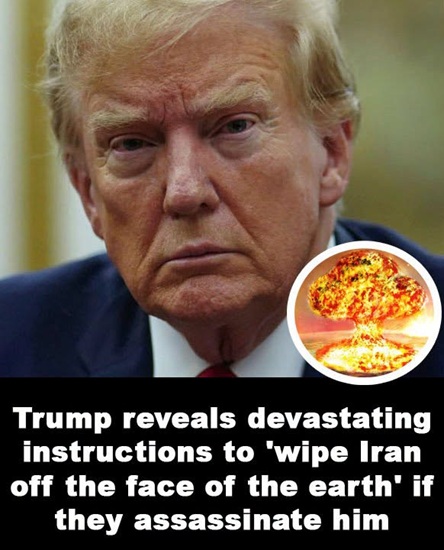
According to reports from Reuters, The New York Post, and other major news organizations, President Trump recently stated that he had previously issued military instructions regarding how the United States should respond if Iran were ever responsible for his assassination. During an interview, Trump said that if such an event were ever to occur, the United States would respond with overwhelming force. His remarks quickly attracted widespread international attention, becoming one of the most discussed political stories in global media.
Trump’s comments came during a period of heightened military activity involving both the United States and Iran. According to multiple published reports, U.S. military forces carried out strikes targeting facilities and military assets that officials described as being connected to Iranian operations. American defense officials stated that the objectives were intended to reduce Iran’s ability to threaten commercial shipping routes and regional security. Iranian authorities, meanwhile, strongly condemned the attacks and reported casualties resulting from the strikes. Because military situations continue to evolve rapidly, casualty figures and operational details have varied across official statements and independent reporting.
One of the primary areas of concern remains the Strait of Hormuz, one of the world’s most strategically important maritime passages. A significant percentage of global oil shipments passes through this narrow waterway each day, making its security a matter of international economic importance. Any disruption to commercial navigation in the Strait has the potential to affect global energy markets, increase shipping costs, and create uncertainty for economies around the world. As a result, governments and international shipping companies continue monitoring developments in the region very closely.
According to statements released by U.S. Central Command, recent military operations were designed to reduce threats against international shipping and protect freedom of navigation. Officials indicated that several military targets associated with Iran’s Islamic Revolutionary Guard Corps were struck during the operation. Iranian state media also reported explosions in several southern locations, including areas near important ports along the Persian Gulf. While both sides have released information regarding the military activity, independent verification of every operational detail remains difficult because of the ongoing nature of the conflict.
President Trump also expressed skepticism regarding future diplomatic negotiations with Iran. According to published interviews, he argued that previous discussions had failed to produce lasting results and questioned whether additional negotiations would lead to meaningful progress. These remarks reflected a broader pattern of strong rhetoric that has characterized U.S.-Iran relations during periods of heightened tension. Iranian officials, meanwhile, have continued criticizing American military actions while defending their own regional policies.
Security experts note that relations between Washington and Tehran have remained strained for decades, shaped by disagreements over regional influence, nuclear activities, economic sanctions, and military operations. Although periods of negotiation have occasionally reduced tensions, major disagreements have repeatedly resurfaced, particularly following incidents involving military forces, commercial shipping, and proxy groups operating throughout the Middle East. Analysts caution that every new escalation increases the risk of miscalculation, making diplomatic communication more important than ever.
Trump’s recent comments regarding possible retaliation also drew attention because U.S. intelligence agencies have previously acknowledged concerns about potential threats directed toward current and former American officials. Government agencies have repeatedly stated that protecting senior political leaders remains a top national security priority. At the same time, officials have generally avoided discussing specific security measures or contingency planning, emphasizing that such matters are handled through established national defense procedures rather than public debate.
International reactions to the latest developments have been mixed. Several allied governments have expressed concern about the possibility of further escalation while encouraging all parties to exercise restraint. The United Nations and numerous foreign ministries have continued urging dialogue, emphasizing that military confrontation could have significant humanitarian, economic, and geopolitical consequences extending far beyond the immediate region. Financial markets have also responded cautiously, with investors closely watching developments affecting oil supplies, shipping routes, and regional stability.
As the situation continues to develop, experts agree that the coming days may prove critical. While political leaders continue issuing public statements and military forces remain on heightened alert, diplomatic efforts are also continuing behind the scenes. Whether those efforts succeed in reducing tensions remains uncertain, but officials across the international community continue emphasizing that preventing further escalation remains in the interest of regional and global security.
As international attention remained focused on the growing tensions between the United States and Iran, analysts emphasized that public statements from political leaders can significantly influence both diplomatic efforts and military planning. President Donald Trump’s recent remarks were widely reported across international media, prompting renewed discussion about deterrence, national security, and the future of U.S.-Iran relations. While supporters viewed his comments as a demonstration of strength intended to discourage potential threats, critics argued that strong rhetoric could further complicate already fragile diplomatic efforts. Regardless of political opinion, the remarks immediately became part of a broader global conversation about stability in the Middle East.
According to reporting by Reuters, The New York Post, and other major news organizations, Trump’s comments followed several days of heightened military activity involving U.S. and Iranian forces. Military officials from both countries issued separate statements describing their respective actions, while governments around the world closely monitored developments. Independent analysts noted that periods of rapid escalation often create uncertainty because information emerges from multiple official and unofficial sources, making careful verification essential before drawing conclusions about the evolving situation.
One of the greatest concerns among defense experts continues to be the possibility of unintended escalation. Military operations, particularly those involving naval forces, missile systems, or strategic infrastructure, can increase the risk of misunderstandings that quickly expand beyond their original scope. Because both the United States and Iran possess significant military capabilities and maintain important strategic interests throughout the region, analysts stress that clear communication and diplomatic channels remain essential even during periods of heightened confrontation. History has shown that preventing miscalculations is often just as important as responding to immediate security threats.
Economic concerns have also become an important part of the international discussion. The Strait of Hormuz remains one of the world’s most critical maritime routes for transporting crude oil and liquefied natural gas. Any disruption to commercial shipping through the waterway can influence global energy prices, financial markets, insurance costs, and international trade. As reports of military activity emerged, investors and shipping companies carefully evaluated the potential impact on supply chains and global markets. Although energy prices often fluctuate during geopolitical crises, experts note that prolonged instability could create broader economic consequences affecting countries far beyond the Middle East.
Diplomatic efforts have continued alongside military developments. Officials from several governments have publicly urged restraint while encouraging renewed dialogue between Washington and Tehran. International organizations, including the United Nations, have repeatedly emphasized that diplomacy remains the most effective path toward reducing regional tensions and avoiding further humanitarian consequences. Although negotiations between the two countries have frequently proven difficult over the years, many foreign policy specialists continue to argue that sustained diplomatic engagement remains necessary to prevent future crises.
The broader relationship between the United States and Iran has been shaped by decades of political disagreements involving nuclear policy, economic sanctions, regional security, and military activities. Successive American and Iranian administrations have alternated between periods of negotiation and confrontation, making the relationship one of the most closely watched geopolitical issues in international affairs. Analysts point out that recent developments should be viewed within this longer historical context rather than as isolated events, since each new incident often builds upon years of existing tensions.
President Trump’s comments also renewed public discussion regarding personal security for senior political leaders. U.S. law enforcement and intelligence agencies have consistently maintained extensive protective measures for current and former presidents, reflecting the importance of safeguarding national leadership. Although security agencies rarely discuss operational procedures publicly, experts note that contingency planning is a routine aspect of national defense and presidential protection. Public statements regarding such matters often generate significant media attention because they involve both national security policy and international relations.
Political observers also note that strong public rhetoric frequently serves multiple purposes during periods of international tension. In addition to communicating messages abroad, statements by political leaders often address domestic audiences, reassure allies, and influence strategic calculations by potential adversaries. Whether such remarks ultimately strengthen deterrence or increase diplomatic challenges remains the subject of continuing debate among foreign policy experts. Different analysts often reach different conclusions depending on their assessments of regional dynamics and historical precedent.
While military developments dominate headlines, humanitarian organizations continue expressing concern about the impact of conflict on civilians throughout the region. Armed confrontations frequently disrupt healthcare services, transportation networks, trade, and everyday life for local populations. International relief agencies have repeatedly emphasized the importance of protecting civilian infrastructure and ensuring that humanitarian assistance remains available whenever regional instability increases. These organizations continue encouraging all parties to respect international humanitarian law while pursuing peaceful solutions wherever possible.
As events continue to unfold, the international community remains focused on both military developments and diplomatic initiatives aimed at preventing a wider regional conflict. Officials, analysts, and global leaders agree that the coming weeks could prove particularly important in determining whether current tensions continue to escalate or gradually move toward renewed dialogue. While political statements and military actions remain at the center of global attention, many experts believe that lasting stability will ultimately depend on sustained diplomacy, careful communication, and continued international cooperation. Until additional verified information becomes available, governments and observers alike are expected to monitor developments closely while emphasizing the importance of avoiding further escalation.

