
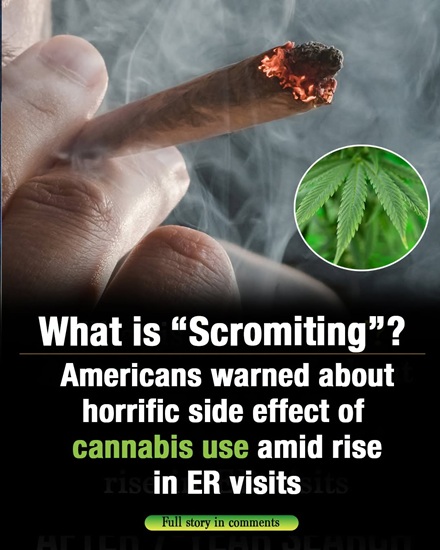
Over the past decade, cannabis use has become increasingly common in many parts of the world, particularly as more countries and U.S. states have legalized its medical or recreational use. While many people are familiar with cannabis’ commonly discussed effects, including pain relief, relaxation, and appetite stimulation, healthcare professionals have also observed a growing number of patients experiencing an unexpected and potentially debilitating condition known as Cannabis Hyperemesis Syndrome (CHS).
Although still unfamiliar to many cannabis users, CHS has become an important topic in emergency medicine because of its severe symptoms and the increasing number of hospital visits associated with it. Cannabis Hyperemesis Syndrome is a medical condition characterized by repeated episodes of intense nausea, persistent vomiting, severe abdominal pain, and dehydration in people who use cannabis regularly over an extended period.
Despite cannabis traditionally being associated with reducing nausea—particularly in some medical treatments—CHS appears to have the opposite effect in a small percentage of long-term users. Researchers continue studying why this condition develops in some individuals but not in others, and many questions remain unanswered regarding its exact biological cause. According to physicians who regularly treat emergency patients, CHS can be extremely difficult to recognize during its early stages.

Many people experiencing the condition initially believe they have food poisoning, a stomach virus, or another digestive illness. Because the symptoms often disappear temporarily before returning weeks or months later, patients frequently visit emergency departments multiple times before receiving an accurate diagnosis. This delayed recognition can lead to repeated medical testing, hospital admissions, and significant healthcare expenses.
Dr. Beatriz Carlini, a research associate professor at the University of Washington School of Medicine, has explained that many patients experience several emergency department visits before healthcare providers correctly identify Cannabis Hyperemesis Syndrome. She notes that repeated hospital evaluations, imaging studies, laboratory tests, and intravenous treatments can result in medical costs reaching thousands of dollars over time. Beyond the financial burden, repeated episodes may significantly disrupt patients’ work, education, and daily lives.
One reason CHS has attracted increasing public attention is the remarkable severity of its symptoms. During an active episode, patients may experience relentless vomiting that continues for hours or even days. The repeated vomiting can become so forceful that it causes dehydration, electrolyte imbalances, exhaustion, and significant abdominal discomfort. In some cases, patients require hospitalization to receive intravenous fluids and careful medical monitoring until their condition stabilizes.
Healthcare workers have even adopted the informal term “scromiting,” combining the words “screaming” and “vomiting,” to describe the intense distress experienced by some patients during severe episodes. Although the nickname is not an official medical diagnosis, it reflects how overwhelming the symptoms can become. Individuals experiencing severe CHS may cry out in pain while repeatedly vomiting, illustrating the seriousness of the condition rather than minimizing it.

Symptoms typically begin within about 24 hours after cannabis use, although the timing varies from person to person. During an episode, patients often report persistent nausea, repeated vomiting, severe stomach pain, sweating, dizziness, and an inability to keep food or liquids down. Because dehydration develops quickly, many eventually seek emergency medical care after home remedies fail to provide relief. Some individuals also experience significant weight loss if episodes continue over an extended period.
Emergency physicians face unique challenges when treating Cannabis Hyperemesis Syndrome because conventional anti-nausea medications frequently provide little or no benefit. According to Dr. Chris Buresh, an emergency medicine specialist, there are currently no medications specifically approved by the U.S. Food and Drug Administration (FDA) for treating CHS itself. As a result, doctors often focus on relieving symptoms, correcting dehydration, and identifying whether cannabis use may be contributing to the patient’s illness.
One of the most unusual characteristics of CHS is that many patients discover temporary relief by taking very hot showers or baths. Physicians have repeatedly observed this behavior among individuals later diagnosed with the syndrome. Some patients report spending long periods under extremely hot water because it briefly reduces nausea and abdominal pain. Although researchers continue investigating why heat appears to help, this pattern has become one of the most recognizable clinical clues that doctors use when evaluating possible CHS cases.
In addition to intravenous fluids, physicians sometimes consider other supportive treatments depending on the severity of symptoms. Some emergency departments have used topical capsaicin cream, applied to the abdomen, because it appears to activate similar nerve pathways involved in the body’s response to heat. In certain severe cases, doctors may also prescribe medications such as haloperidol, although treatment decisions vary according to each patient’s condition and medical history. These therapies aim to relieve symptoms but do not address the underlying cause if cannabis use continues.
As awareness of Cannabis Hyperemesis Syndrome grows among both healthcare professionals and the public, experts emphasize that recognizing the condition early can reduce unnecessary testing, repeated hospital visits, and prolonged suffering. Understanding the warning signs is becoming increasingly important, particularly as cannabis use becomes more widespread in many communities around the world.
Although Cannabis Hyperemesis Syndrome has gained increased attention in recent years, researchers are still working to understand exactly why it affects some cannabis users while leaving others unaffected. Scientists believe the condition is linked to long-term stimulation of the body’s endocannabinoid system, a complex network of receptors involved in regulating functions such as appetite, pain, mood, and nausea. While cannabis can temporarily reduce nausea in many medical situations, repeated exposure over long periods may produce the opposite effect in certain individuals. Exactly why this reversal occurs remains one of the most important unanswered questions in current cannabis research.
Medical experts emphasize that CHS does not develop in every person who uses cannabis. According to current research, the condition appears most commonly among individuals who have used cannabis regularly for months or years, although the amount of cannabis required to trigger symptoms varies considerably from one person to another. Some people may consume relatively large quantities without ever experiencing CHS, while others may develop symptoms despite using smaller amounts. This variation makes predicting who is at risk particularly challenging.
Dr. Chris Buresh has explained that every person’s threshold appears to be different. Once that threshold is reached, even relatively small amounts of cannabis may trigger another episode of severe vomiting and abdominal pain. Because symptoms often disappear between attacks, many patients mistakenly believe the previous illness was caused by food poisoning or another temporary digestive problem. As a result, they continue using cannabis, only to experience another severe episode weeks or months later.
Dr. Beatriz Carlini has also noted that the intermittent nature of Cannabis Hyperemesis Syndrome contributes to delayed diagnosis. Since patients often recover completely between episodes, they may not immediately associate cannabis use with their symptoms. Physicians therefore encourage individuals experiencing repeated unexplained vomiting, particularly those who use cannabis regularly, to discuss their cannabis use openly with healthcare providers. Honest communication allows doctors to consider CHS among the possible diagnoses and may reduce unnecessary testing.
At present, medical experts agree that the only consistently effective long-term treatment for Cannabis Hyperemesis Syndrome is complete cessation of cannabis use. While supportive care—including intravenous fluids, medications, and symptom management—can help patients recover during an acute episode, symptoms frequently return if cannabis consumption continues. For some individuals, stopping cannabis can be difficult, particularly if dependence or addiction has developed. In such cases, healthcare providers may recommend counseling, addiction treatment programs, or behavioral therapy to support long-term recovery.
Research continues to improve understanding of the condition. A study conducted by researchers at George Washington University examined more than one thousand patients diagnosed with Cannabis Hyperemesis Syndrome. The findings suggested that early initiation of cannabis use combined with prolonged consumption may increase the likelihood of developing CHS severe enough to require emergency medical treatment. While the study provides valuable information, researchers emphasize that additional investigations are needed to better understand the biological mechanisms responsible for the syndrome.
Healthcare professionals have also observed an increase in adolescent cases over recent years. Published research indicates that emergency department visits related to CHS among teenagers have risen substantially between 2016 and 2023. Interestingly, some studies found differences in regional trends depending on cannabis legalization policies, although researchers caution that many factors—including reporting practices, healthcare access, and patterns of cannabis use—may influence these findings. Continued surveillance is expected to provide a clearer picture as more data become available.
An important milestone occurred on October 1, 2025, when the World Health Organization (WHO) officially recognized Cannabis Hyperemesis Syndrome by assigning it its own diagnostic code within the International Classification of Diseases. Medical experts believe this recognition will improve reporting accuracy, facilitate research, and help healthcare systems better monitor the frequency of cannabis-related complications worldwide. Standardized diagnostic coding also allows physicians and researchers to compare cases more effectively across different countries and healthcare settings.
Experts stress that recognizing early warning signs may help prevent repeated hospitalizations and serious complications. Individuals experiencing persistent nausea, recurrent vomiting, severe abdominal pain, dehydration, or repeated emergency department visits—particularly if they are long-term cannabis users—should seek prompt medical evaluation. Because several potentially life-threatening illnesses can produce similar symptoms, only qualified healthcare professionals can determine the correct diagnosis and recommend appropriate treatment. Self-diagnosis should never replace professional medical assessment.
As cannabis laws continue evolving around the world, physicians emphasize the importance of balanced public education. While cannabis may offer therapeutic benefits for certain medical conditions when used appropriately under medical supervision, it is not entirely free of risks. Cannabis Hyperemesis Syndrome serves as a reminder that even widely used substances can produce unexpected side effects in some individuals. Increased awareness among both healthcare providers and cannabis users may lead to earlier diagnosis, improved treatment, fewer emergency hospital visits, and better long-term health outcomes. Continued scientific research will remain essential for understanding why CHS develops, identifying those at greatest risk, and developing more effective therapies for the future.

