
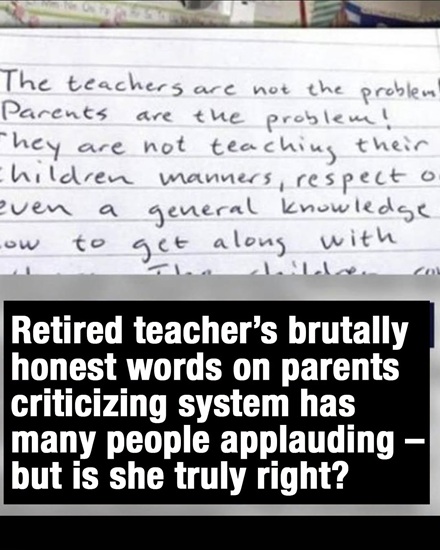
A widely discussed open letter written by a retired teacher has continued to circulate online years after it was first published, reigniting debates about the challenges facing public education and the roles of parents and teachers in shaping student outcomes. The letter, written by Lisa Roberson and originally published in 2017 in the Augusta Chronicle, reflects strong personal views about what she believes are the root causes of issues within the education system.
The topic of education often generates strong opinions, as it plays a central role in society and directly impacts future generations. Discussions about school performance, student behavior, and educational standards are common among parents, educators, and policymakers. These conversations became even more prominent in the years following the COVID-19 pandemic, which brought major disruptions and changes to schooling systems across the United States and worldwide.
However, Roberson’s letter predates the pandemic and was written during an earlier period of ongoing debate about public education in the United States. In her open letter, she expressed frustration as a retired educator with what she described as misunderstandings about schools from people who are not currently working in classrooms. Her comments were directed toward public discussions about how to improve education systems and who should be held accountable for perceived shortcomings.
In the letter, Roberson argued that teachers are often unfairly blamed for problems within schools, while placing greater responsibility on parents. She suggested that many of the issues observed in classrooms stem from a lack of preparation, support, and involvement from families at home. According to her perspective, the role of parents is critical in ensuring that children arrive at school ready to learn, both academically and behaviorally.
She described situations in which students may come to school without basic supplies and noted that teachers sometimes provide materials themselves out of personal resources. This point reflects a broader issue frequently discussed in education systems, where teachers in some regions report spending their own money on classroom supplies to support students’ learning needs.
Roberson also raised concerns about parental involvement in education, emphasizing the importance of communication between families and schools. She questioned how often parents attend school meetings, communicate with teachers, or ensure that their children complete homework and come prepared for class. In her view, these factors play a significant role in determining student success.
Her letter further highlighted behavioral aspects within classrooms, suggesting that disruptions and lack of attention can affect the learning environment. She argued that teachers alone cannot be responsible for addressing both academic instruction and behavioral development if support systems at home are not in place.
The tone of the letter reflected her strong belief that improving education outcomes requires shared responsibility, with families playing an active role alongside schools. While she acknowledged the efforts of teachers, her central argument focused on the idea that schools cannot function effectively without parental engagement and accountability.
After its publication, the letter gained renewed attention when it began circulating on social media and online platforms years later. Many users shared and discussed its contents, often debating whether the views expressed were accurate, fair, or overly critical of parents. As with many viral posts related to education, reactions were mixed and reflected differing personal experiences with school systems.
Supporters of Roberson’s viewpoint argue that parental involvement is indeed a key factor in student success. Education research often shows that students tend to perform better academically when parents are actively engaged in their learning process, including monitoring homework, attending school meetings, and maintaining communication with teachers.
On the other hand, critics of the letter argue that it places too much responsibility on parents and does not fully account for the challenges faced by educators. Many teachers operate in under-resourced environments, large classrooms, and systems with limited funding, all of which can affect their ability to meet student needs. From this perspective, education outcomes are influenced by multiple interconnected factors, not just family involvement.
The debate reflected in Roberson’s letter is part of a much broader and ongoing discussion about education reform. Policymakers, researchers, and educators continue to examine how best to improve school systems, reduce achievement gaps, and ensure that both students and teachers receive adequate support. These discussions often involve balancing responsibilities between schools, families, and government institutions.
The conversation also highlights the emotional and professional challenges faced by educators. Teachers often work in demanding environments where they must manage academic instruction, classroom behavior, administrative tasks, and communication with families. At the same time, parents may face their own challenges in providing time, resources, and support for their children’s education.
The continued circulation of Roberson’s letter demonstrates how strongly people feel about education and how widely perspectives can differ on what improvements are needed. Even years after its initial publication, the letter continues to spark discussion because it touches on issues that remain relevant in modern education systems.
Ultimately, the open letter serves as a reflection of one educator’s perspective on a complex and multifaceted issue. While it has generated debate and disagreement, it also highlights the importance of ongoing dialogue between parents, teachers, and communities in addressing the challenges faced by schools.
As discussions about education continue, the themes raised in the letter remain part of a larger national and global conversation about how to best support students and ensure effective learning environments for future generations.

