
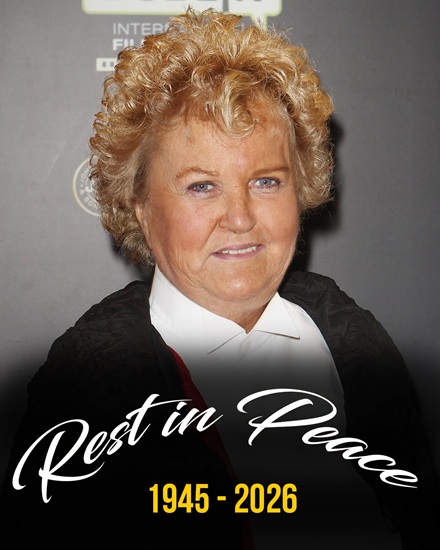
The entertainment world is remembering Brenda Fricker, the acclaimed Irish actress whose remarkable career spanned more than six decades and touched audiences across generations. Known for her extraordinary ability to bring warmth, authenticity, and emotional depth to every role, Fricker earned international recognition through a body of work that ranged from award-winning dramas to beloved family films.
Following confirmation from her agent that she had passed away at the age of 81 after a period of ill health, tributes quickly emerged from fellow actors, filmmakers, and admirers who celebrated not only her remarkable talent but also her lasting contribution to cinema and television. Although many younger audiences immediately associate Brenda Fricker with her touching portrayal of the Pigeon Lady in “Home Alone 2: Lost in New York,” her career had already earned widespread critical respect long before that memorable Christmas classic reached theaters.
Throughout the 1970s and 1980s, she steadily built a reputation as one of Ireland’s finest character actresses, appearing in stage productions, television dramas, and feature films that showcased her remarkable emotional range. Rather than seeking glamorous leading roles, Fricker became known for portraying ordinary people with extraordinary humanity, giving every character authenticity and emotional honesty that resonated deeply with audiences.
Born in Dublin, Ireland, in 1945, Brenda Fricker grew up in a family connected to journalism, with both of her parents working in the newspaper industry. Before pursuing acting professionally, she briefly worked as an assistant at The Irish Times. Her passion for performance, however, eventually led her toward theater and television, where she began building the foundation of what would become one of Ireland’s most respected acting careers. Through years of dedication, she developed a reputation for careful preparation, emotional intelligence, and an ability to make supporting characters feel just as memorable as leading roles.
Fricker’s professional breakthrough came after years of consistent work in British and Irish television productions. She appeared in numerous dramas and became familiar to television audiences through acclaimed programs, including the long-running BBC medical drama “Casualty,” where she was among the original cast members. These performances demonstrated her versatility and helped establish her as a dependable and highly respected performer capable of handling both emotionally demanding dramatic roles and more understated character-driven stories. Her reputation within the industry continued to grow steadily as directors increasingly recognized her remarkable ability to communicate complex emotions with subtle performances.
The defining moment of Brenda Fricker’s career arrived with the release of “My Left Foot” in 1989, the acclaimed Irish drama based on the life of writer and artist Christy Brown, who was born with cerebral palsy. In the film, Fricker portrayed Bridget Fagan Brown, Christy’s devoted mother, opposite Daniel Day-Lewis, whose performance earned him the Academy Award for Best Actor.
Fricker’s portrayal of a determined and compassionate mother received overwhelming praise from critics around the world. Rather than relying on dramatic speeches or exaggerated emotion, she conveyed quiet strength, resilience, and unconditional love through a deeply natural performance that became one of the most admired supporting roles of its era.
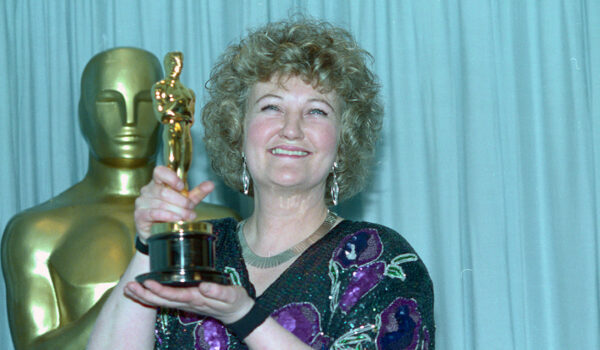
Her work in “My Left Foot” earned Brenda Fricker the Academy Award for Best Supporting Actress in 1990, making her the first Irish actress ever to win an Oscar. The achievement represented not only a milestone in her own career but also an important moment for Irish cinema, bringing international attention to the country’s growing film industry. During her acceptance speech, Fricker paid tribute to Christy Brown and his remarkable mother, acknowledging the extraordinary story that inspired the film. Her Oscar victory remains one of the defining moments in the history of Irish filmmaking and continues to be remembered as a source of national pride.
Following her Academy Award success, Fricker continued accepting diverse roles rather than limiting herself to a single type of character. During the 1990s she appeared in respected productions including “The Field,” “A Time to Kill,” “Angels in the Outfield,” and “So I Married an Axe Murderer.” Each performance reflected her ability to move comfortably between drama, comedy, and family entertainment while maintaining the authenticity that had become her signature as an actress. Whether portraying compassionate mothers, determined professionals, or emotionally complex supporting characters, she consistently elevated every project through her thoughtful performances.
For many viewers around the world, however, one of her most beloved performances remains the Pigeon Lady in “Home Alone 2: Lost in New York.” Released in 1992, the holiday film introduced audiences to a lonely woman living among the pigeons in New York City’s Central Park. At first misunderstood and feared, the character gradually forms a meaningful friendship with Kevin McCallister, played by Macaulay Culkin. Through gentle conversations and acts of kindness, the Pigeon Lady becomes one of the emotional centers of the story, reminding viewers that compassion often begins by looking beyond appearances. Although her screen time was limited, Fricker’s heartfelt performance transformed the character into one of the film’s most memorable figures.
Over the years, generations of families have continued watching “Home Alone 2” during the holiday season, introducing Brenda Fricker’s performance to new audiences. Many viewers have noted that the scenes between Kevin and the Pigeon Lady provide some of the film’s most touching moments, emphasizing themes of loneliness, friendship, forgiveness, and hope. Fricker approached the role with remarkable sensitivity, avoiding stereotypes while portraying a character whose quiet dignity left a lasting impression. The performance remains one of the reasons her work continues to resonate decades after the film’s original release.
Beyond her professional achievements, Brenda Fricker earned admiration for her honesty in discussing the realities of aging and health later in life. In interviews, she spoke openly about some of the challenges that gradually reduced her public appearances while expressing gratitude for the career she had enjoyed. Despite spending less time in front of the camera during her later years, admiration for her work never diminished. Fellow actors, directors, critics, and audiences continued recognizing her as one of Ireland’s finest performers—a character actress whose authenticity consistently brought emotional truth to every role she accepted.
Although Brenda Fricker gradually stepped away from the spotlight during the later years of her career, her influence on film and television never faded. Her performances continued to reach new audiences through television broadcasts, streaming platforms, and classic film collections, allowing younger generations to discover the remarkable talent that had earned her international acclaim. Unlike many performers remembered for a single role, Fricker built a career filled with diverse characters that reflected compassion, resilience, humor, and emotional honesty. Her ability to bring authenticity to every performance ensured that her work remained relevant long after each production first reached audiences.
One of the qualities most frequently praised by directors and critics was her remarkable ability to make supporting characters feel essential to a story. Whether appearing in a brief scene or throughout an entire film, Fricker consistently gave her characters emotional depth that helped audiences connect with them. Rather than seeking attention through dramatic performances, she often relied on subtle facial expressions, carefully delivered dialogue, and natural emotion. This understated style became one of the defining characteristics of her acting and contributed to the lasting respect she earned throughout the entertainment industry.
Her Academy Award-winning performance in “My Left Foot” continues to be studied as one of the finest supporting performances in modern cinema. The relationship between Christy Brown and his mother forms the emotional heart of the film, and Fricker’s portrayal of Bridget Brown remains widely recognized for its warmth, quiet strength, and unwavering compassion. Film historians often note that her performance demonstrated how supporting roles can profoundly shape a story, proving that emotional authenticity sometimes leaves a greater impact than the largest or most visible role.
At the same time, her role as the Pigeon Lady in “Home Alone 2: Lost in New York” introduced her to millions of families worldwide. While the film is remembered primarily as a holiday comedy, many viewers have long regarded the conversations between Kevin McCallister and the Pigeon Lady as some of its most meaningful moments. Through kindness, understanding, and empathy, the character reminds Kevin—and the audience—not to judge people solely by appearances. These themes of friendship, loneliness, forgiveness, and compassion have helped the film remain popular with families for decades, making Fricker’s performance an enduring part of holiday movie traditions.
Throughout her career, Brenda Fricker also demonstrated impressive versatility by moving comfortably between film, television, and stage productions. Her credits included acclaimed dramas, family films, literary adaptations, and television series, each allowing her to explore different types of characters. Productions such as “The Field,” “A Time to Kill,” “Angels in the Outfield,” “Casualty,” and “Coronation Street” showcased the broad range of her abilities. Rather than becoming associated with only one genre, she consistently accepted roles that challenged her creatively and highlighted her exceptional talent as a character actress.
In later interviews, Fricker spoke honestly about the realities of aging and the health challenges that gradually reduced her acting work. Her openness about these experiences was widely appreciated because it reflected the same sincerity that audiences had admired throughout her career. Even as she appeared less frequently on screen, admiration for her work remained strong among fellow actors, filmmakers, and film enthusiasts who continued celebrating the lasting impact of her performances. Her legacy became defined not only by awards but also by the respect she earned through decades of dedication to her craft.
Following the announcement of her passing, tributes from colleagues, organizations, and fans reflected the profound influence she had on generations of moviegoers. Many remembered her as an actress capable of expressing powerful emotions with remarkable subtlety, while others recalled the kindness and humanity that seemed present in every character she portrayed. Numerous tributes highlighted both her historic Academy Award achievement and the enduring popularity of her performances, particularly those that continue to be revisited by audiences around the world during every holiday season.
Brenda Fricker’s contribution to Irish cinema also remains especially significant. Becoming the first Irish actress to win an Academy Award represented an important milestone that inspired many performers who followed. Her success demonstrated that exceptional talent and dedication could earn international recognition regardless of where an actor began their career. For many aspiring Irish actors, Fricker’s accomplishments continue to serve as an example of perseverance, professionalism, and artistic excellence.
Today, her films continue introducing new audiences to her remarkable work. Classic cinema enthusiasts revisit “My Left Foot” for its powerful storytelling, while families watching “Home Alone 2” each holiday season continue discovering the warmth and compassion she brought to the unforgettable character of the Pigeon Lady. These performances remain enduring reminders that memorable acting is not measured by the amount of screen time but by the emotional connection created with audiences.
Brenda Fricker leaves behind a body of work that reflects more than six decades of dedication to acting. Her performances combined technical skill with emotional authenticity, allowing audiences to see genuine humanity in every character she portrayed. From award-winning dramatic roles to beloved family classics, she consistently demonstrated that thoughtful storytelling has the power to resonate across generations. Her legacy continues through the films and television productions that remain widely appreciated today, ensuring that future audiences will continue to discover and celebrate her extraordinary contribution to the performing arts.

