
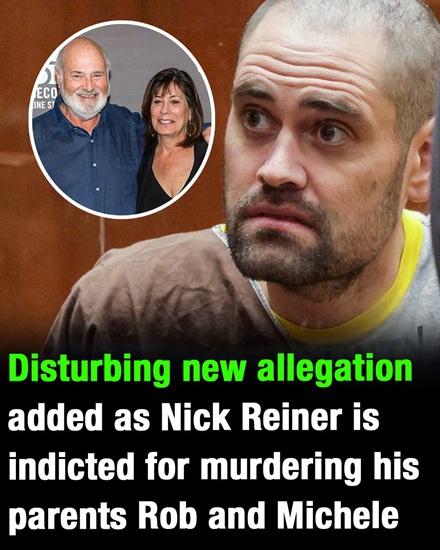
A significant new development has emerged in the criminal proceedings involving Nick Reiner, the 32-year-old son of filmmaker and actor Rob Reiner and photographer and producer Michele Singer Reiner. Nick has been indicted by a Los Angeles County grand jury on two counts of first-degree murder in connection with the deaths of his parents. The indictment contains several special-circumstance allegations, including multiple murders and an allegation that the killings involved “lying in wait.”
These remain allegations made by prosecutors, not established facts. Nick Reiner has pleaded not guilty and remains legally presumed innocent unless prosecutors prove the charges against him beyond a reasonable doubt. The indictment was returned by the grand jury on July 20, 2026, before being unsealed on August 12. Its release provided additional information about how prosecutors intend to pursue the case. Grand jury proceedings generally occur outside public view, and an indictment allows the prosecution to move forward without the type of public preliminary hearing that can otherwise precede a murder trial.
While this represents an important procedural step, an indictment does not determine whether the defendant is guilty. That question remains unresolved and is subject to the judicial process. The case stems from the deaths of Rob Reiner and Michele Singer Reiner, who were found dead at their home in the Brentwood area of Los Angeles on December 14, 2025. Authorities subsequently reported that both had suffered multiple sharp-force injuries. The Los Angeles Police Department’s Robbery-Homicide Division investigated the deaths, and Nick was arrested later that day. The circumstances immediately attracted widespread attention because of Rob Reiner’s decades-long career as an actor, filmmaker and producer.
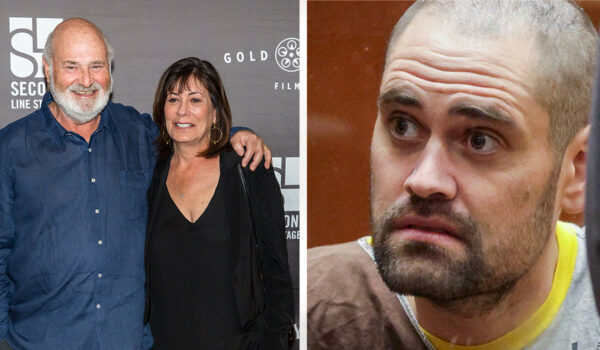
The Los Angeles County District Attorney’s Office initially announced murder charges against Nick shortly after his arrest. Prosecutors accused him of killing both parents and included a special-circumstance allegation involving multiple murders. They also alleged the personal use of a knife. Those claims form part of the prosecution’s case and will have to withstand legal challenges and ultimately be proven if the proceedings reach a criminal trial.
The newly unsealed indictment adds the allegation that Nick committed the killings through “lying in wait.” That phrase carries a specific legal meaning within criminal proceedings and should not be treated merely as a dramatic description of events. Prosecutors will have the responsibility of establishing the facts required to support the allegation. Because the evidence has not yet been fully tested before a trial jury, it would be inaccurate to state that Nick definitively waited for or ambushed his parents.
The indictment also contains allegations describing the offenses as involving significant violence and a high degree of cruelty, and it characterizes the victims as particularly vulnerable. Again, these statements represent allegations contained in a prosecution document. They should not be confused with findings reached after a completed trial. Nick’s defense team will have opportunities to dispute the government’s interpretation of the evidence and challenge aspects of the prosecution’s case through the court process.
Los Angeles County District Attorney Nathan J. Hochman described the alleged killings as a “profound betrayal” involving people who loved and trusted the person accused of causing their deaths. His statement reflects the position of the District Attorney’s Office as the prosecuting authority. It does not replace the role of the court or jury in determining guilt. Maintaining that distinction is particularly important in a case attracting substantial public attention.
The special-circumstance allegations also create the possibility of extremely serious penalties if Nick is eventually convicted as charged. Depending on the outcome and decisions made by prosecutors, the case could potentially involve life imprisonment without the possibility of parole or capital punishment. However, prosecutors have not announced a final decision to seek the death penalty. The fact that a defendant may be legally eligible for a particular punishment is different from prosecutors deciding to request it and different again from a court ultimately imposing it.
Nick has remained in custody while the case moves through the judicial system. He has entered a not-guilty plea, meaning the prosecution continues to carry the burden of proving its allegations. A not-guilty plea does not require the defendant to establish innocence. In the American criminal justice system, prosecutors must prove the charged offenses beyond a reasonable doubt before a conviction can be returned.
The grand jury indictment changes the procedural route of the case but does not change that fundamental standard. Jurors in a grand jury proceeding determine whether sufficient grounds exist to issue criminal charges based on the material presented to them. They do not conduct the same proceeding as a trial jury deciding guilt or innocence after hearing both sides of a criminal case. Consequently, describing the indictment as proof that Nick committed the killings would be inaccurate.
The case is expected to continue with additional pretrial proceedings, including a hearing scheduled for September 15, 2026. Such hearings can address scheduling, evidence and other legal matters that need to be resolved before a possible trial. Criminal cases involving multiple serious charges can take considerable time to reach trial, particularly when attorneys raise complicated evidentiary or procedural questions. The scheduled hearing therefore should not be interpreted as a trial date or as an indication that a verdict is imminent.
Public interest in the proceedings has been intensified by Rob Reiner’s prominent place in American film and television history. Long before establishing himself as a director, Reiner became widely recognized for portraying Michael “Meathead” Stivic in the groundbreaking television sitcom All in the Family. His performance brought major recognition and helped establish the career that would later move increasingly behind the camera.
As a filmmaker, Reiner demonstrated an unusual ability to work successfully across very different genres. His directing credits include This Is Spinal Tap, Stand by Me, The Princess Bride, When Harry Met Sally…, Misery and A Few Good Men. Those films range from mockumentary comedy and coming-of-age drama to romance, fantasy and psychological thriller. The variety of his work made him one of the most recognizable American directors of his generation.
Michele Singer Reiner had a creative career of her own and worked as a photographer and producer. She and Rob were married for more than three decades and shared three children. Following their deaths, people who had known or worked with the couple expressed grief and remembered their personal and professional contributions. The criminal case involving their son subsequently placed an intensely private family tragedy under extensive public scrutiny.
That scrutiny makes careful language particularly important. Nick is their son, but the family relationship does not make the accusations against him automatically true. Likewise, the seriousness of the allegations does not change the legal requirement that guilt must be established through evidence. Reporting can accurately describe the deaths, arrest, charges and indictment without presenting disputed allegations as settled facts.
The same caution applies to information circulating outside official records and established reporting. High-profile criminal cases often produce rumors about motives, private conversations and events allegedly occurring before a crime. Unless such claims are supported by reliable evidence or introduced through appropriate court proceedings, they should not be incorporated into a factual account. At present, publicly confirmed information does not justify constructing a detailed narrative about exactly what happened inside the Reiner residence beyond what investigators and court documents have established.
The allegation involving a knife should be treated in the same manner. Prosecutors have alleged that Nick personally used a knife in connection with the killings, while authorities have reported that Rob and Michele died from sharp-force injuries. Those details are relevant to the criminal case, but determining how they relate to Nick’s legal responsibility is ultimately part of the evidence that prosecutors must establish.
Similarly, the phrase “lying in wait” has attracted attention because it adds another serious dimension to the indictment. Yet it should remain clearly identified as an allegation. Prosecutors may present evidence intended to demonstrate why they believe that legal circumstance applies. Defense attorneys may challenge that evidence or its interpretation. Only after the judicial process has taken place can conclusions properly be drawn about whether prosecutors proved the allegation.
The case therefore remains far from a final resolution. An arrest has occurred, formal charges have been filed, a grand jury has returned an indictment and the defendant has entered a not-guilty plea. Those are significant developments, but none is equivalent to a conviction. Further court proceedings will determine what evidence is admissible and how the prosecution and defense present their competing positions.
Another unresolved question concerns punishment. Because special circumstances are alleged, discussion of a possible death sentence has appeared in coverage of the case. However, there is an important difference between saying that the charges could make a defendant eligible for capital punishment and saying that the prosecution is seeking it. Until prosecutors announce such a decision, reports should not suggest that a death-penalty prosecution has already been confirmed.
For Rob Reiner’s longtime audience, the case inevitably intersects with memories of a career extending across generations. His performances and films became part of American popular culture long before the events now being examined in court. Yet his celebrity should not turn the criminal proceedings into entertainment. At their center are the deaths of two people and a defendant facing exceptionally serious accusations.
Michele’s life likewise should not be reduced solely to being the wife of a famous filmmaker or a victim named in a criminal indictment. She had her own professional and personal identity, and she shared decades of family life with Rob. Responsible accounts of the case can acknowledge public interest while avoiding unnecessary speculation about private family matters that have not been established through reliable evidence.
The Reiner family’s remaining relatives are also living through circumstances that have become the subject of international attention. That reality is another reason to distinguish between verified developments and speculation. Criminal proceedings will generate documents, hearings and arguments that can be reported as they occur. There is no need to fill gaps in the public record with assumptions about motives or private relationships.
As of the current stage of the proceedings, several facts are clear. Rob and Michele Reiner were found dead in their Brentwood home in December 2025. Authorities determined that both suffered fatal sharp-force injuries. Nick Reiner was arrested and subsequently charged with their killings. A Los Angeles County grand jury has now indicted him on two counts of first-degree murder and included additional special-circumstance allegations.
It is equally important to state what has not been established. No trial jury has found Nick guilty. The “lying in wait” allegation has not been proven at trial. Prosecutors have not made a final public decision about seeking the death penalty. Nick has pleaded not guilty and remains entitled to the presumption of innocence throughout the proceedings.
The September hearing will mark another step rather than the conclusion of the case. Additional developments could emerge as attorneys address evidence and prepare for possible trial. Some details currently included in allegations may later be challenged, clarified or interpreted differently through testimony and court rulings. Accurate reporting should therefore continue to distinguish new procedural developments from proven factual findings.
For now, the most precise description is that Nick Reiner has been indicted and accused of killing his parents, Rob and Michele Reiner, and prosecutors have added serious allegations concerning the circumstances of their deaths. He denies the charges through his not-guilty plea. The ultimate determination of criminal responsibility belongs to the judicial process, not to headlines or public speculation.
The newly unsealed indictment unquestionably represents an important development because it provides additional information about the prosecution’s theory and allows the case to continue toward further proceedings. But it does not answer the central legal question. Until the evidence has been presented and evaluated according to the required legal standards, Nick Reiner remains presumed innocent. The next stages of the case will determine whether prosecutors can prove the grave allegations they have brought against him.

