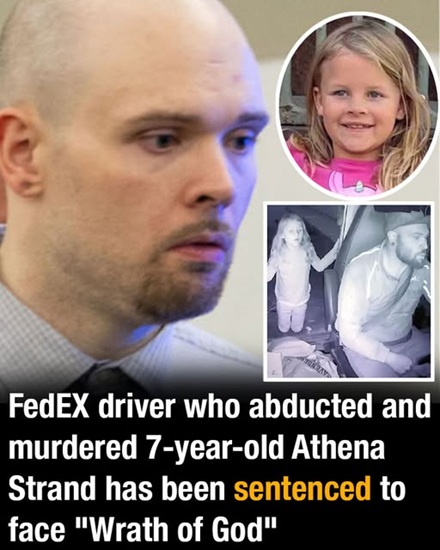
In late November 2022, the small community in Wise County, Texas, was shaken by the disappearance of 7-year-old Athena Strand. According to official reports and court records, Athena was reported missing on November 30, 2022, after she was last seen outside her family home. The sudden nature of her disappearance triggered an immediate and large-scale search effort involving local law enforcement, state agencies, and community volunteers who worked tirelessly to locate the child.
From the earliest stages of the investigation, authorities treated the case as a high-priority child abduction. The urgency reflected both the age of the victim and the circumstances under which she vanished. Search teams combed residential areas, nearby roads, and surrounding rural land while investigators worked to reconstruct the timeline of events leading up to her disappearance.
Investigation and Identification of a Suspect
As the investigation progressed, law enforcement officials began analyzing delivery routes, surveillance footage, and digital tracking data from the area. These efforts led investigators to identify Tanner Lynn Horner, a delivery driver working for a contractor associated with FedEx services, as a person of interest in the case. Authorities later confirmed that Horner had been in the vicinity of Athena’s home on the day she disappeared.
According to official statements, Horner was interviewed by investigators and later became the primary suspect based on evidence collected during the early stages of the inquiry. His role as a delivery driver made the case particularly alarming, as it involved a person entering residential neighborhoods during routine package deliveries. FedEx clarified in public statements that Horner was employed by a third-party contractor and not directly by the company itself.
The Abduction and Search Efforts
Law enforcement reports indicated that Athena was taken shortly after a delivery interaction near her residence. Investigators reconstructed the sequence of events using surveillance footage, GPS data, and forensic evidence. These findings suggested that she was placed inside a vehicle and removed from the area shortly after the initial encounter.
Once the abduction was confirmed, search operations intensified across Wise County and surrounding regions. Authorities deployed ground teams, aerial units, and specialized search personnel to locate the missing child. Despite these efforts, the investigation quickly shifted from a missing person case to a criminal homicide investigation as evidence began to point toward a fatal outcome.
Discovery and Confirmation of the Tragedy
According to official reports, investigators later discovered Athena’s body in a rural area not far from where she was last seen. The discovery marked a devastating turning point in the case, confirming fears that the child had been killed shortly after her abduction. Law enforcement agencies processed the scene and collected forensic evidence as part of the ongoing criminal investigation.
The confirmation of her death deeply affected the local community and prompted widespread public attention across the United States. Vigils and memorials were organized in her honor, and her name quickly became central to national conversations about child safety and violent crime prevention.
Legal Proceedings and Guilty Plea
As the investigation continued, Tanner Horner was formally charged with capital murder and aggravated kidnapping. Court records show that he later pleaded guilty to both charges on April 7, 2023, shortly before his trial was scheduled to begin. The guilty plea meant that the case moved directly into the sentencing phase, where a jury would determine whether the appropriate punishment would be life imprisonment without parole or the death penalty.
During court proceedings, prosecutors presented evidence gathered during the investigation, including forensic findings and digital records. The courtroom process was described in media reports as highly emotional, with jurors and family members reacting strongly to the evidence presented.
Sentencing and Jury Decision
After hearing arguments from both the prosecution and defense, the jury deliberated before delivering its final decision. Horner was sentenced to death by lethal injection under Texas law. Reports from the courtroom indicated that he showed little visible reaction when the sentence was announced.
The sentencing phase also included emotional statements from members of Athena’s family. According to media coverage, relatives addressed the court to express grief and describe the impact of the loss. Their statements reflected the deep emotional toll the crime had caused and emphasized the lasting absence of the child in their lives.
Courtroom Reactions and Emotional Impact
Courtroom proceedings in cases involving child victims are often emotionally intense, and this case was no exception. Reports from journalists present in court described moments where family members had to leave the room due to the graphic nature of some evidence presented during the trial phase. Jurors were also reported to have been visibly affected by testimony and exhibits shown during proceedings.

District Attorney James Stainton reportedly prepared jurors for the difficult nature of the evidence, emphasizing the seriousness of the case and the importance of understanding the full scope of the events under review. The courtroom atmosphere reflected both the legal gravity of the case and the emotional weight carried by those involved.
Public Reaction and National Attention
The case of Athena Strand drew widespread attention across the United States, with media outlets, public figures, and community members expressing shock and sadness. Many discussions focused on the vulnerability of children and the importance of safety measures in residential areas. The involvement of a delivery driver in the case also led to broader conversations about background checks and contractor oversight in delivery services.
Public tributes and memorial messages for Athena appeared across social media platforms, highlighting her age and the tragic nature of her death. The case became part of a larger national dialogue about violent crime and child protection policies.
Broader Legal and Social Context
Beyond the individual circumstances of the case, legal experts noted that it highlighted important aspects of capital punishment law in Texas. Capital murder cases in the state can result in the death penalty when juries determine that aggravating factors justify the sentence. The legal process involves multiple stages, including investigation, trial preparation, plea decisions, and sentencing hearings.
The case also underscored the role of due process in ensuring that convictions are based on evidence presented in court. While public reaction often focuses on emotional responses, the judicial system relies on structured procedures to reach final verdicts in criminal cases of this severity.
Remembering Athena Strand
Following the conclusion of the trial, Athena Strand’s name continued to be remembered in public tributes and community memorials. Her family and community members described her as a joyful and loved child whose life was tragically cut short. Memorial events and messages emphasized the importance of remembering her life rather than focusing solely on the circumstances of her death.
Her case remains a reference point in discussions about child safety and criminal justice in the United States. It continues to be cited in media reports and public conversations about how communities and legal systems respond to violent crime involving children.
The case of Athena Strand remains one of the most widely reported and emotionally significant criminal cases in Texas in recent years. It combined elements of child safety, criminal investigation, judicial proceedings, and public grief. While the legal process has reached a conclusion with sentencing, the emotional impact continues to resonate within the community and beyond.
For many, the case serves as a reminder of the importance of vigilance, legal accountability, and community awareness. It also highlights the role of the justice system in addressing the most serious crimes through structured legal processes. Above all, it remains a deeply tragic case that left a lasting mark on all those affected.
