
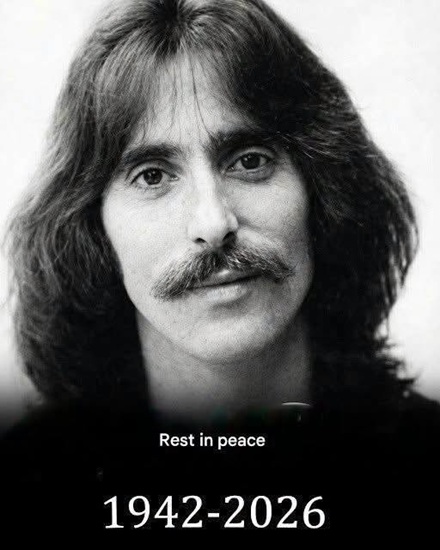
The death of a musician whose work has been heard for decades can bring back memories that reach far beyond the original era of the recordings. Chuck Negron, a founding member and one of the original lead singers of Three Dog Night, died on February 2, 2026, at the age of 83. His publicist said that Negron died at his home in Studio City, California, from complications related to heart failure and chronic obstructive pulmonary disease, or COPD. For generations of listeners, his voice was closely connected with some of Three Dog Night’s most recognizable recordings.
His story, however, included much more than commercial success. It also involved personal hardship, addiction, recovery, family, health challenges, and a long effort to rebuild his life and career. Chuck Negron was born Charles Negron II on June 8, 1942, and grew up in the Bronx in New York City. Music became important to him while he was young, and he participated in the doo-wop scene that influenced many singers of his generation.
Basketball was another major part of his early years and eventually helped create an opportunity for him to move west. He attended Allan Hancock College in California before continuing his journey in Los Angeles. Being in California placed him closer to the developing music industry at a time when popular music was undergoing enormous changes. Singing gradually became the path that would define his professional life. Within several years, Negron would become part of a group whose recordings reached millions of listeners.
In 1967, Negron joined Danny Hutton and Cory Wells in the vocal partnership that developed into Three Dog Night. The group became distinctive partly because it featured three lead singers rather than depending on a single frontman for every recording. Each singer brought different vocal qualities, allowing the band to choose a voice that suited a particular song. The classic lineup also included musicians who played an important role in creating the group’s recognizable sound.
Instead of writing every hit themselves, Three Dog Night frequently recorded compositions created by other talented songwriters. This approach introduced large audiences to songs written by figures including Harry Nilsson, Randy Newman, Hoyt Axton, Laura Nyro, and Paul Williams. The band’s ability to interpret those compositions became one of its greatest strengths. Negron’s voice became especially recognizable through Three Dog Night’s recording of “One,” a song written by Harry Nilsson.
The recording became one of the group’s important early successes and helped establish Three Dog Night with a broad audience. Negron’s performance demonstrated the vocal qualities that would become associated with his work, combining emotional intensity with the ability to deliver powerful passages. As the group gained momentum, successful singles followed rapidly. Between 1969 and 1975, Three Dog Night placed 21 songs in the Top 40 of Billboard’s Hot 100. The band also achieved three number-one singles during its remarkable commercial run. Those results established Three Dog Night as one of the most commercially successful American groups of its period.
Perhaps no recording became more closely connected with Negron than “Joy to the World.” Written by Hoyt Axton, the song became a major hit for Three Dog Night and reached number one in the United States. Negron’s energetic lead vocal became an essential element of the recording’s identity. Long after its original chart success, the song continued to be heard through radio, films, television, compilations, and later digital platforms. Its continued popularity allowed listeners who were not alive during Three Dog Night’s peak years to encounter Negron’s voice. That kind of longevity is one reason recordings can remain culturally familiar even after the period in which they were created has passed. Music can repeatedly find new audiences without changing the original performance.
Negron also provided lead vocals on other important Three Dog Night recordings, including “Easy to Be Hard” and “The Show Must Go On.” The group’s broader catalog contained many other recognizable songs, among them “Mama Told Me (Not to Come),” “Black and White,” “Shambala,” “Never Been to Spain,” and “An Old Fashioned Love Song.” Different members handled lead vocals on different recordings, making the contrast among the three singers a defining feature of the band. Together, their performances helped transform songs from numerous writers into widely known recordings. Three Dog Night therefore occupied an interesting position in popular music history as highly successful interpreters of songwriting from multiple sources. Their commercial success also helped introduce some compositions to audiences far larger than those songs might otherwise have reached.
The scale of that success can sometimes make the difficult parts of a performer’s life less visible. Behind Three Dog Night’s chart achievements, Negron experienced serious personal problems that eventually affected his health, finances, relationships, and career. Drug addiction became one of the most damaging challenges of his life. The band’s original period of extraordinary success eventually came to an end, with Three Dog Night breaking up in 1976. Although different versions and reunions followed, Negron’s personal circumstances continued deteriorating. He later spoke openly about how severe his addiction became. His experience demonstrated that commercial success and public recognition do not automatically protect a person from serious personal difficulties.
Negron’s struggles eventually brought dramatic consequences. In later accounts of his life, he described periods when his circumstances had deteriorated to the point that he spent time on Los Angeles’ Skid Row. He made repeated attempts to overcome addiction before eventually achieving lasting sobriety in September 1991. Recovery became a major dividing point between two very different periods of his life. The years that followed allowed him to rebuild relationships, return to professional music, and speak publicly about what he had experienced. His recovery did not erase the consequences of earlier years, but it gave him the opportunity to create a different future. That second chapter became an important part of how many people came to understand his story.
Negron’s experience with recovery should not be simplified into a universal formula, because addiction and treatment can affect individuals differently. What worked within one person’s circumstances does not necessarily describe another person’s path. In Negron’s documented story, however, achieving sobriety enabled him to restore significant parts of his personal and professional life. He eventually used his experiences to discuss addiction and recovery publicly. Instead of presenting his past only through the glamorous memories of rock success, he acknowledged periods that were painful and destructive. This openness added considerable complexity to his public identity. Fans who initially knew him only as the voice of famous recordings were able to learn about the challenges that existed behind the performances.
After becoming sober, Negron gradually returned to recording and performing. His solo career provided a way to reconnect with audiences while establishing an identity outside the original Three Dog Night lineup. His first solo album, Am I Still in Your Heart?, was released in 1995. Additional recordings and performances followed in later years. His concerts often included songs associated with Three Dog Night alongside material from his solo career. For longtime fans, hearing those songs performed by Negron provided a direct connection to recordings they had known for decades. For Negron himself, continuing to perform represented a remarkable change from the difficult circumstances he had experienced before achieving sobriety.
His autobiography, Three Dog Nightmare, provided a much more detailed account of those contrasting periods. In the book, Negron discussed fame, Three Dog Night, addiction, personal decline, treatment, and recovery. The memoir offered readers a view of the entertainment industry that was far removed from the polished image often associated with successful musicians. Negron did not restrict his story to sold-out concerts and chart achievements. He also described the consequences of addiction and the long process of trying to rebuild his life. Updated versions of the autobiography allowed him to continue the story as new chapters developed. The book became another important way for him to communicate with people beyond music.
Negron also maintained connections with recovery-related organizations and spoke about the support he received during his own journey. Cri-Help in North Hollywood was particularly important in accounts of his recovery. His later public discussions about addiction reflected experiences he had personally lived rather than an abstract subject. Those conversations gave another purpose to a story that might otherwise have ended with the difficulties of his earlier years. He could acknowledge the seriousness of what happened while also discussing the possibility of rebuilding. His experience remained personal rather than universal, but sharing it allowed others to understand how dramatically his life had changed after 1991.
Family also became increasingly visible in Negron’s later musical work. His 2017 project Negron Generations included collaborations with two of his daughters, Charlotte and Annabelle. Recording with members of his family represented a very different environment from the intense commercial world he had experienced during Three Dog Night’s peak. The project also demonstrated that Negron remained interested in creating music many decades after his first major success. By that point, listeners who had discovered his voice in the late 1960s could have children or even grandchildren who were encountering the same catalog. The title Negron Generations therefore carried an appropriate meaning for both his family and his long musical career.
As he grew older, Negron also dealt with substantial health problems. He lived with COPD for many years and discussed performing while using oxygen therapy. Despite those challenges, he continued appearing before audiences for a significant period of his later life. The COVID-19 pandemic eventually brought that chapter of regular touring to an end. His experience should not be interpreted as suggesting that serious medical conditions should be ignored or minimized. Decisions involving illness and physical activity depend on individual circumstances and medical guidance. In Negron’s case, the documented record shows that music remained important to him while he managed considerable health limitations.
Another meaningful development came late in his life through his relationship with Danny Hutton. Negron and his former Three Dog Night colleague had experienced decades of estrangement after sharing extraordinary success during their younger years. In 2025, the two reconciled. The reunion did not change the complicated history that came before it, but it provided a new final chapter to a relationship extending back to the formation of Three Dog Night. For people who had followed the band for decades, news of their reconciliation carried particular significance. It demonstrated that even relationships marked by long periods of distance can continue changing with time.
When news of Negron’s death was announced in February 2026, many listeners naturally returned to the music that first made him famous. This reaction is common when a familiar artist dies because recordings preserve something that ordinary memory cannot reproduce exactly. The same voice, arrangement, and performance can be heard decades after the original recording session. A person listening today can experience essentially the same recorded performance that audiences encountered when the song was new. What changes is the listener and the context surrounding the music. Over time, songs accumulate personal associations that can become as important to listeners as the history of the recording itself.
For someone who heard Three Dog Night during childhood, a song may bring back memories of family, school, travel, or a particular period of life. Another listener might associate the same recording with discovering older music through a parent. Younger audiences may encounter the songs through movies, streaming services, radio, or recommendations without having any memories of the band’s original era. All of those experiences can coexist around the same recording. That ability to connect people separated by decades helps explain why certain musical performances continue to matter. A song does not remain culturally present simply because it once appeared on a chart; listeners must continue finding reasons to play it.
Three Dog Night’s chart record nevertheless provides important historical context for understanding Negron’s career. Achieving 21 Top 40 singles between 1969 and 1975 represents an unusually concentrated period of commercial success. The band’s three number-one recordings further demonstrate the scale of its popularity. Yet numbers alone cannot explain why individual listeners remain attached to particular songs. Charts document popularity during a defined period, while personal memories can continue for an entire lifetime. Both perspectives are useful when examining an artist’s legacy. One provides measurable historical information, while the other explains why the work remains emotionally significant.
Negron’s life also illustrates how a public career can contain radically different chapters. During his younger years, he experienced fame and success on a scale that few musicians achieve. Later, addiction contributed to severe personal decline. Recovery then allowed him to build another phase involving solo recordings, performances, writing, advocacy, and family collaborations. None of these chapters needs to be exaggerated to make the story compelling. The documented contrast between them already demonstrates how dramatically circumstances can change over the course of one life. Remembering only the hit records would leave out an important part of his experience, while focusing only on his struggles would ignore the musical achievements that made his voice familiar.
Responsible remembrance also requires separating verified information from speculation. When a public figure dies, social media can quickly fill with rumors, exaggerated claims, old material presented without context, and unsupported explanations. In Negron’s case, his publicist provided specific information concerning his death, including his age and the reported medical complications involved. There is no need to add dramatic assumptions beyond confirmed information. Accuracy respects both the individual being remembered and the audience reading about that person’s life. It also allows the genuine achievements and challenges of a career to stand without unnecessary sensationalism.
It is equally important to remember that public mourning and private grief are different experiences. Fans may feel genuine sadness because an artist’s music has accompanied important moments in their lives. Family members and close friends, however, experience the loss through personal relationships that audiences cannot fully know. Respectful coverage can acknowledge the significance of both without claiming knowledge of private emotions. Negron is survived by his wife, Ami Albea Negron, children, and grandchildren. Their relationship with him extends far beyond the recordings through which most members of the public knew him. Recognizing that distinction is part of treating the death of a public figure with appropriate care.
The continuing availability of Three Dog Night’s recordings ensures that Negron’s work can reach listeners who know little or nothing about his biography. Someone can hear “One” or “Joy to the World” for the first time without knowing about the Bronx, basketball, Three Dog Night’s formation, addiction, recovery, or his later solo career. If curiosity follows, the listener can then discover the complicated story behind the voice. That process is one way musical legacies continue developing after an artist’s lifetime. Each generation approaches the material from a different cultural and personal perspective. The original recordings remain fixed while their audiences continually change.
For longtime listeners, the experience can work in the opposite direction. They already know the music and may now revisit it with a greater understanding of what happened in Negron’s life. A familiar performance can take on additional meaning when the history behind it becomes clearer. His recovery, for example, provides context for the extraordinary difference between some of his most difficult years and his later return to performing. His autobiography provides another perspective on the consequences of fame and addiction. His work with his daughters illustrates yet another stage. Together, these elements create a fuller portrait than any single famous song can provide.
Chuck Negron’s legacy is therefore not confined to nostalgia. Nostalgia is certainly part of why many listeners remain emotionally connected to Three Dog Night, but the historical importance of the recordings exists independently of individual memories. The band’s success belongs to the documented history of popular music, while Negron’s personal journey adds a human story behind those achievements. His later willingness to discuss addiction and recovery made that journey visible rather than leaving audiences with only the image of a successful rock singer. His continued musical work demonstrated that his career did not end when Three Dog Night’s original period of dominance concluded.
At the same time, remembering Negron does not require portraying every chapter as inspirational. Some parts of his life involved serious consequences and difficult circumstances. A balanced account can recognize perseverance without minimizing the damage addiction caused. It can celebrate recovery without implying that every person’s experience follows the same path. It can acknowledge commercial success without pretending fame prevented hardship. Presenting those realities together provides a more accurate understanding of his life. Complexity does not weaken a legacy; in many cases, it makes the story more understandable.
His recordings remain the most accessible evidence of the talent that initially brought him public attention. Decades after they were created, listeners can still hear the vocal performances that helped make Three Dog Night successful. Those recordings exist alongside his later solo albums, autobiography, interviews, and other material documenting his life after the group’s commercial peak. Together they preserve different sides of the same person. One captures the young singer during a remarkable period of musical success, while another shows an older man reflecting on the consequences and lessons of what followed.
Chuck Negron died at 83 after a life that moved through music, fame, serious personal difficulties, recovery, renewed creativity, family connections, and health challenges. His story cannot be summarized accurately by a single hit song or one difficult period. He was a founding member of Three Dog Night and a distinctive lead voice on recordings that became part of popular music history. He later rebuilt his life after addiction, developed a solo career, wrote about his experiences, and continued connecting with audiences. Near the end of his life, even a decades-long estrangement with a former bandmate reached a different conclusion through reconciliation.
What remains now is the work and the documented story surrounding it. Longtime fans can continue returning to the songs that became part of their lives, while new listeners can discover those recordings without having experienced the era in which they were released. Negron’s journey also remains available through his own accounts of success, addiction, recovery, and rebuilding. None of that requires turning his life into a legend or adding claims that cannot be verified. The facts themselves describe an eventful and complicated career spanning many decades.
In the end, Chuck Negron’s enduring connection with audiences begins with something remarkably simple: a voice captured on recordings. Technology has changed, musical trends have changed, and generations of listeners have changed, but those performances remain available. Each replay can revive an old memory for one person while creating an entirely new one for someone else. That continuing relationship between recorded music and its audience is one reason artists can remain culturally present after their lives have ended. Negron’s voice helped define several of Three Dog Night’s best-known recordings, while the experiences that followed gave his biography a much broader dimension. His life ended in February 2026, but the music, history, and memories connected with his work continue.

