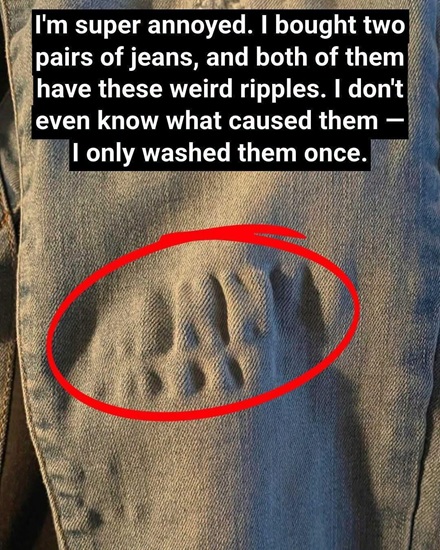
It can be frustrating to wash a favorite pair of jeans and discover that the fabric suddenly looks wavy, rippled, or slightly twisted afterward. These changes often appear around the thighs, side seams, knees, waistband, pockets, or other areas where the denim is thicker. In most cases, the jeans are not ruined. Denim naturally reacts to water, heat, movement, and drying, and different parts of the garment can respond in slightly different ways. Cotton fibers can shrink, seams can tighten, and stretch materials may behave differently from the surrounding fabric.
Once those factors are understood, the appearance becomes much easier to explain. One of the most common reasons for post-wash ripples is uneven shrinkage. Many jeans are made primarily from cotton, and cotton can contract when exposed to moisture and heat. The amount of shrinkage varies depending on how the fabric was manufactured, whether it was pre-shrunk, and how the jeans were washed and dried. Flat sections of denim may shrink differently from seams, hems, belt loops, pockets, and reinforced panels.
When one area contracts more than another, the surrounding material can begin to bunch or pucker. That uneven tension is what often creates the wavy appearance. Hot water can make this effect more noticeable. Washing jeans at high temperatures may encourage greater shrinkage, especially if the fabric has not been fully stabilized during manufacturing. Cooler water is generally gentler on denim and can help reduce unnecessary dimensional changes.
That does not mean every pair of jeans will dramatically shrink in warm or hot water, because modern fabrics vary considerably. Some are treated specifically to limit shrinkage before sale. Even so, following the care label and avoiding unnecessarily high temperatures is usually the safer approach. Dryer heat can have an even greater impact on shape.
A damp pair of jeans exposed to high heat may shrink further as the fibers dry. If the fabric is already twisted or folded while tumbling, the heat can help set those distortions in place. This is especially important with stretch denim, because elastic fibers are generally more sensitive to repeated high-temperature drying. Over time, excessive heat can reduce their ability to return to their original shape. Low heat or air drying is therefore often a better option.
The seams themselves are another frequent source of rippling. Jeans contain many areas where several layers of denim are sewn together, and those areas are thicker than the surrounding fabric. The thread, seam allowance, and denim layers may all react differently during washing and drying. If the main fabric shrinks slightly while the stitched section remains more stable, puckering can appear along the seam. This is often visible as a row of small waves rather than one large wrinkle. Mild seam puckering is common in many garments and does not automatically indicate poor quality.
Manufacturing tension can also become more visible after the first few washes. During sewing, layers of fabric are guided through industrial machines under tension. If one layer moves slightly faster than another, some stress can remain in the finished garment. The jeans may still look completely smooth in the store because the fabric has not yet been washed. Once water allows the fibers to relax, the imbalance can show up as pulling, twisting, or rippling. This is one reason some garments change shape after laundering even when they appeared perfect beforehand.
Stretch denim introduces another layer of complexity. Many contemporary jeans include a small percentage of elastane or spandex so the fabric can move more comfortably with the body. Cotton and elastic fibers do not respond to heat and moisture in exactly the same way. After repeated washing and drying, the difference between those fibers may become more visible. Some areas may remain firm while others loosen slightly. That uneven response can create waves, especially around the knees, thighs, hips, and seat.
Repeated exposure to high dryer temperatures can be particularly hard on stretch jeans. Elastane provides recovery, meaning it helps the material return to shape after being stretched. Excessive heat can gradually reduce that performance. Once the elastic fibers weaken, the denim may appear looser or more rippled in high-stress areas. This is usually a gradual process rather than something that happens after one normal wash. Still, gentle washing and lower drying temperatures can help slow it down.
The natural twill construction of denim can also contribute to twisting. Denim is woven with a diagonal structure, and that construction can create internal tension. After washing, some fabrics may shift slightly and cause what is commonly called leg twist. This happens when the side seam moves toward the front or back of the leg instead of remaining perfectly centered. The surrounding fabric may then appear wavy even if there is no actual damage. Some types of raw or minimally processed denim are more likely to show this effect.
Not all leg twist is considered a defect. In some vintage-inspired denim, a small amount of twisting is accepted as part of the fabric’s character. In ordinary everyday jeans, however, severe twisting can be undesirable. Reshaping the legs before drying can help reduce how noticeable it becomes. Gently pulling the fabric straight while it is still damp can allow it to dry in a more natural position. High heat should be avoided if the legs are already twisted.
Overloading the washing machine is another preventable cause of strange post-wash texture. Wet denim is heavy and needs enough space to move through the water. When the drum is packed too tightly, garments can twist around one another and become compressed into awkward shapes. Jeans may wrap around towels, sweatshirts, or other bulky items. That can create deep creases and temporary distortion. Washing smaller, balanced loads gives the denim more room to move freely.
Very aggressive wash cycles can also make the problem worse. Strong agitation and fast spinning place more mechanical stress on the fabric than a gentler cycle. While this may be useful for heavily soiled workwear, it is often unnecessary for normal everyday jeans. Less aggressive washing reduces twisting, friction, and surface wear. It can also help preserve darker denim colors. Turning the jeans inside out before washing provides additional protection against rubbing.
Detergent quantity matters as well. Using too much detergent does not necessarily make clothing cleaner and can sometimes leave residue behind. Residue can make denim feel stiff, especially in areas with mineral-rich water. Stiffer fabric can hold puckers and folds more noticeably after drying. Using the amount recommended for the load size and water conditions is generally more effective. Extra detergent should not be used simply because denim is heavy.
Fabric softener can also affect certain types of jeans. Some softeners leave coatings on fibers, and repeated use may alter the feel or performance of stretch materials. This is especially relevant when elastane or other synthetic fibers are present. The effect depends on the product and fabric blend, so the garment label is the best guide. If the manufacturer advises against fabric softener, following that recommendation can help preserve the intended stretch and texture. For ordinary cotton denim, simple washing is often enough.
How jeans are handled immediately after washing can influence the final result. Leaving them crumpled in the washer for a long period can allow creases to settle into the damp fabric. Removing them promptly is better. Shaking the jeans out, straightening the legs, smoothing the seams, and aligning the waistband can make a noticeable difference. These steps are simple but help the garment dry in a more natural shape. They are especially useful when the jeans will be air dried.
Air drying is one of the gentlest methods for denim. Jeans can be hung by the waistband or laid flat, depending on available space and care instructions. The legs should be straight and not folded over one another. If the fabric is slightly rippled, smoothing it by hand while damp can help. Air drying avoids the high heat that encourages shrinkage and can stress elastic fibers. It also tends to be gentler on color.
If a dryer is preferred, low heat is usually a safer choice than high heat. Removing the jeans while they are still slightly damp can also help preserve shape. Once out of the dryer, they can be reshaped by hand and left to finish drying naturally. This reduces the amount of time the fabric spends under heat. It can also prevent overdrying, which may make denim feel stiff. A shorter, cooler cycle is often sufficient for everyday use.
Overdrying can gradually affect both rigid and stretch denim. Cotton may become rougher or more prone to holding hard creases. Stretch fibers can lose some of their resilience after repeated excessive heat exposure. Jeans may also become more difficult to smooth if they remain compressed and very dry in the drum. Checking the garment before the cycle ends can reduce this problem. The care label should always take priority over general advice.
Some ripples disappear naturally after the jeans are worn. Body warmth and normal movement can help cotton relax, particularly when the distortion is only a temporary wrinkle. This is more likely in soft denim than in very stiff, heavily structured fabric. A pair that looks slightly puckered when first dry may settle after a few hours of wear. That is why it can be useful to try the jeans on before deciding that the shape has permanently changed. Mild rippling is often less serious than it first appears.
Steam can help with wrinkles that do not disappear on their own. Moisture and moderate heat allow cotton fibers to relax. A garment steamer can be used carefully while the jeans hang in a straight position. The fabric can then be smoothed gently by hand. Stretch denim should not be exposed to concentrated high heat for too long. Steam is best for ordinary wrinkles and minor puckering rather than severe structural distortion.
Ironing may also help if the care label allows it. Turning jeans inside out can reduce the chance of shiny marks appearing on dark denim. A moderate temperature is usually preferable to the highest setting. Steam from the iron can help flatten small waves around seams. The iron should be kept moving rather than held in one place. Stretch blends may require lower temperatures than 100 percent cotton.
When severe rippling appears after only one wash, it helps to review how the jeans were cleaned. If the label recommended cold water and low heat but the garment was washed and dried at very high temperatures, shrinkage may explain the change. If the care instructions were followed carefully and the distortion is extreme, manufacturing tension or construction may be involved. A newly purchased pair that changes dramatically despite correct care may be worth discussing with the retailer. Policies differ from one store or manufacturer to another. Keeping the receipt can be helpful.
Different types of denim need different care. Rigid cotton denim, raw denim, stretch jeans, coated denim, and heavily treated fashion jeans may all respond differently to laundering. Raw denim can shrink more noticeably, depending on how it was produced. Stretch denim is more sensitive to repeated high heat because of its elastic content. Coated fabrics may require special care to preserve the finish. One universal washing method does not work perfectly for every pair.
Pre-shrinking processes used in manufacturing can reduce later changes. One common process is sanforization, which mechanically reduces potential shrinkage before the fabric is made into clothing. Sanforized denim usually changes less dramatically after washing than untreated fabric, though some shrinkage can still occur. Unsanforized denim may contract more during the first wash. Specialty denim brands often provide specific instructions because of this difference. Those instructions should be followed closely.
Color preservation is another reason to use gentler washing methods. Dark indigo denim can fade over time, especially with strong agitation and warmer water. Turning jeans inside out helps reduce visible surface friction. Cooler water can also slow unnecessary dye loss. This does not mean jeans should never be washed. They should still be cleaned when dirty, sweaty, or noticeably odorous. The goal is simply to avoid harsher treatment than needed.
Washing jeans with similarly weighted garments can also help. Heavy towels and bulky sweatshirts can place additional stress on denim during spinning. Lightweight clothing may get trapped inside the legs and contribute to twisting. A balanced load allows the washer to distribute movement more evenly. There should still be enough free space in the drum for clothing to circulate. Washer capacity guidelines are useful for this reason.
Age and repeated wear naturally change denim too. Older jeans have gone through many cycles of bending, stretching, washing, and drying. Fibers gradually weaken, especially around the knees, thighs, pockets, seat, and crotch. Stretch denim may become more wavy as elastic fibers lose some recovery. This is ordinary wear and does not always mean the garment has been cared for incorrectly. Clothing materials simply change with time.
Movement during wear also creates temporary waves. Jeans repeatedly bend at the knees and hips throughout the day. The fabric stretches in some places and compresses in others. Washing can make these existing stress patterns more visible because the denim becomes firmer as it dries. Once worn again, the material may adapt to the body and soften. This is another reason some ripples are temporary.
Storage habits can contribute to stubborn creases. Jeans should be fully dry before being folded into a drawer or placed under other clothing. Folding them while slightly damp can set deeper lines into the fabric. Hanging by the waistband helps maintain a straighter shape, though properly folded dry jeans are also fine. Avoid pressing heavy objects onto damp denim. Moisture and pressure together can create difficult wrinkles.
If ripples have already developed, the safest approach is to start gently. Lightly dampen the affected area and smooth it by hand. Straighten the seams and allow the jeans to dry naturally. If that does not work, gentle steam can be tried. Ironing may be the next step if the label permits it. Repeatedly washing and drying the jeans on high heat in an attempt to fix the problem can make the distortion worse.
It is also useful to distinguish normal wrinkling from damaged elastic fibers. Ordinary wrinkles usually respond to moisture, steam, movement, or ironing. Worn-out elastane often creates waves that return quickly after being smoothed. The fabric may also feel unusually loose in certain areas. Once elastic fibers have significantly degraded, there is no simple home method that can fully restore them. Prevention is therefore more effective than repair.
Finishing treatments applied before jeans reach the store may also affect how the fabric behaves later. Many jeans are washed, faded, softened, distressed, or treated to produce a particular look. Those processes can create different levels of stress across the garment. After home laundering, those differences may become slightly more visible. Minor variations in texture are therefore common. They do not necessarily indicate a flaw.
For many everyday jeans, a simple care routine works well. Turn them inside out, close the zipper or buttons, and wash them in a reasonably sized load. Use cool or cold water when the care label allows it. Select a normal or gentle cycle depending on the level of dirt. Add an appropriate amount of detergent rather than excessive product. Remove the jeans promptly when the wash finishes.
After washing, shake the jeans gently and straighten the legs. Smooth the side seams, waistband, pockets, and any obvious folds. Air drying is generally the most fabric-friendly option. If machine drying is necessary, use a lower temperature and avoid leaving them in until they are extremely dry. Removing them slightly damp and reshaping them can help. These habits reduce unnecessary shrinkage and stress.
A few ripples after washing do not automatically mean the jeans are low quality. Even expensive denim can wrinkle, pucker, or twist depending on fabric construction and care. At the same time, inexpensive jeans can sometimes keep their shape very well. Price alone does not determine how a garment will respond to water and heat. Fabric composition, sewing quality, finishing, and laundering all play a role. Looking at the whole picture is more useful than judging by cost.
Where the waves appear can provide clues about the cause. Ripples directly beside seams often point to seam tension or uneven shrinkage. A side seam that has shifted around the leg may indicate leg twist. Loose waves around the knees or thighs in stretch jeans may reflect repeated wear or weakening elastic fibers. Random deep creases may simply come from twisting in an overloaded washer. Identifying the pattern makes it easier to choose the right solution.
Jeans are durable, but they are not unaffected by laundry conditions. Cotton responds to moisture and heat, elastane reacts differently, stitching adds tension, and twill fabric can naturally shift. High heat and crowded wash loads can make those effects more noticeable. Gentler care reduces the amount of unnecessary stress placed on the garment. It can also help preserve color and comfort. Small changes in laundry habits can therefore make a meaningful difference.
If a favorite pair comes out of the wash looking slightly strange, there is usually no need to assume it is permanently damaged. Let the jeans dry completely, smooth the fabric, and try them on. Some ripples may relax with wear. Others can improve with gentle steam or careful ironing. Avoid aggressive attempts to fix the problem with more heat. Patience and mild reshaping are usually safer.
In the end, the wavy appearance that sometimes develops after washing is usually the result of normal fabric behavior rather than a mysterious defect. Denim can shrink unevenly, seams can pucker, legs can twist, and stretch fibers can change over time. Washing conditions, drying temperature, construction, and age all influence the final appearance. Understanding those factors helps prevent unnecessary worry. It also makes proper care much easier.
The best long-term strategy is straightforward: follow the care label, avoid unnecessarily hot water, do not overload the washer, and use moderate drying temperatures. Turn jeans inside out, remove them promptly after washing, and reshape them before they dry. Air drying whenever practical can reduce heat-related stress. These habits will not prevent every wrinkle or ripple, but they can significantly reduce the chances of severe distortion. With sensible care, jeans can keep their shape, comfort, and appearance for many years.
