
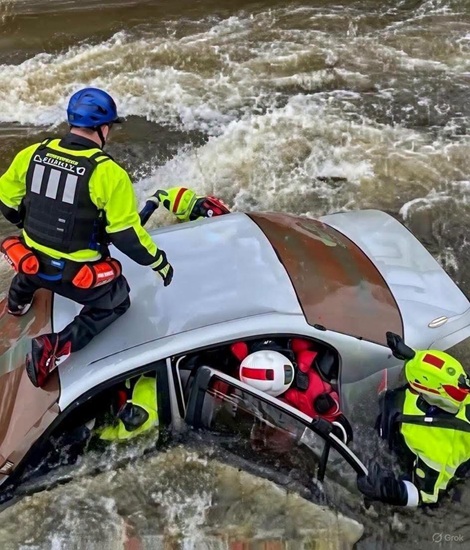
A family’s journey that began with hope and medical urgency ended in profound tragedy, leaving behind grief, unanswered questions, and a shaken community. The family had been traveling early in the morning for a surgical procedure scheduled for young Miguel, a trip that was meant to bring relief and healing. Instead, it became the final chapter of their lives together, as a devastating road accident cut their journey short in the most sudden and irreversible way.
According to available details, the accident occurred around 7 a.m. when the vehicle left the roadway and plunged into a stream near Sítio Piripiri. The conditions proved catastrophic, as the water was approximately five meters deep, making both escape and rescue extremely difficult. Despite a rapid response, the environment complicated recovery efforts, and all three family members lost their lives at the scene.
Authorities have launched an investigation into the circumstances surrounding the crash. At this stage, the cause remains unclear, but the emotional impact has already spread through the local community. Residents have expressed shock and sorrow, particularly because the trip itself was intended to save a child’s life.
The Fragility of Medical Travel Journeys
Sadly, this type of tragedy is not entirely isolated. Around the world, families frequently travel long distances for medical procedures, especially when specialized care is not available locally. These journeys, while hopeful in intention, carry inherent risks—fatigue, early-morning travel, unfamiliar roads, and unpredictable conditions can all contribute to accidents.
In many regions, road safety experts emphasize that the combination of time-sensitive medical appointments and long-distance travel can increase stress on drivers. Early departures before sunrise, like in this case, may reduce visibility and reaction time, especially on rural or less-maintained roads.
Even when no single cause is immediately identified, investigators often consider multiple factors such as road layout, weather conditions, vehicle condition, and driver fatigue. In many similar tragedies worldwide, it is not one issue alone but a combination of small risks that leads to devastating outcomes.
Water-Related Road Accidents and Their Dangers
One of the most dangerous scenarios in road safety is when vehicles leave the roadway and enter bodies of water such as rivers, streams, or irrigation channels. These incidents are particularly deadly because they combine impact trauma with the rapid threat of drowning and vehicle entrapment.
In situations where water depth is significant, like the reported five-meter depth in this incident, escape becomes extremely difficult. Doors may become impossible to open due to water pressure, windows may be blocked by mechanical damage, and passengers may lose precious seconds trying to orient themselves.
Emergency response teams often face additional challenges as well. Water currents, low visibility, and unstable terrain can slow down rescue operations. Even when help arrives quickly, conditions may already be beyond survivability, especially if occupants are trapped inside the vehicle.
The Emotional Weight Left Behind
Beyond the physical facts of the accident, the emotional consequences ripple far wider. Families affected by sudden road tragedies often experience not only grief but also confusion and a sense of disbelief. The idea that a routine journey—especially one meant for medical care—can end in loss is difficult to comprehend.
Communities, too, are deeply affected. Small towns and rural areas often feel these tragedies more intensely because of close social ties. When a child is involved, the emotional response becomes even stronger, as hope for recovery is replaced by mourning.
In many similar cases worldwide, local residents hold vigils, offer prayers, and support grieving families through collective mourning. Even those who did not know the victims personally often feel impacted, reflecting on the unpredictability of life and the importance of road safety awareness.
Patterns Seen in Similar Road Tragedies
While each accident is unique, transportation safety reports globally have identified recurring patterns in fatal rural road incidents. These often include:
- Early morning or late-night travel hours with reduced visibility
- Rural roads with limited barriers or signage
- Vehicles leaving the roadway due to momentary loss of control
- Proximity to water sources that increase fatal risk after departure from the road
- Delayed or difficult rescue conditions due to terrain
Such patterns do not assign blame but help safety experts understand how to reduce future risks. Improved road barriers, better signage near waterways, and increased driver awareness campaigns have been shown in various regions to reduce similar incidents.
The Investigation and Search for Answers
In the aftermath of the crash near Sítio Piripiri, authorities continue to investigate what led the vehicle off the road. Investigations of this nature typically examine road conditions, vehicle performance, possible mechanical failure, and external environmental factors.
Even when answers are eventually found, they rarely ease the emotional pain experienced by families. However, they can contribute to broader safety improvements that may prevent future tragedies.
A Reminder of Life’s Unpredictability
This heartbreaking event serves as a reminder of how quickly life can change. A journey that begins with hope for healing can, in rare and tragic cases, end in loss. The unpredictability of such moments is what makes them especially difficult for families and communities to process.
Medical travel, while essential for many families, highlights the importance of safe driving practices, proper vehicle maintenance, and awareness of road conditions—especially during early hours or in rural environments.
Final Reflection
As the community continues to mourn, tributes and condolences have poured in for the family whose lives were cut short. While the investigation may eventually provide technical explanations, it cannot replace what has been lost.
Their journey, meant to bring healing, instead became a moment of profound sorrow. Yet in remembering them, many are also reminded of the value of caution, preparation, and safety on the road—especially during moments when life already feels fragile.

