
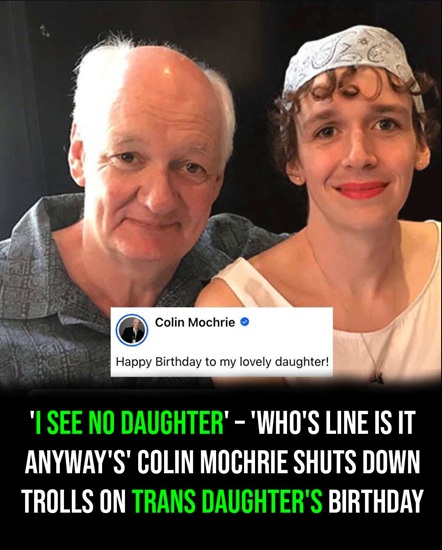
Colin Mochrie, widely recognized for his long-running role on the improvisational comedy series Whose Line Is It Anyway?, has built a career based on humor, spontaneity, and quick thinking. Known for the show’s iconic format where “everything is made up and the points don’t matter,” Mochrie has remained a beloved figure in comedy for decades. Beyond his professional life, however, he has also gained attention for something far more personal and meaningful: his strong support for his family, especially his daughter.
In recent discussions online, Mochrie has been praised for his response to his daughter coming out as transgender. His daughter, Kinley Mochrie, shared her identity with her father, and according to the statements circulating publicly, she was met with acceptance and unconditional support. This moment, while deeply personal for the family, also became part of a wider conversation about acceptance, parenting, and the treatment of transgender individuals in society.
Mochrie himself has been vocal in expressing love and pride for his child. In a public message shared on social platforms, he referred to Kinley as his daughter and celebrated her birthday with warm words, describing her as “everything we’ve ever hoped for in a child.” This statement received a large amount of attention online, both positive and negative, reflecting the ongoing debates that often surround public figures who speak openly about LGBTQ+ support.

As with many public posts involving transgender topics, the comments section became divided. While many fans praised Mochrie for his acceptance and love as a parent, others responded with criticism or negative remarks. This prompted Mochrie to respond again, addressing the tone of the reactions. In his follow-up message, he thanked supportive fans for “being human” and expressed frustration toward those spreading hostility. His response highlighted the emotional reality many public figures face when discussing sensitive social issues.
Supporters of Mochrie quickly stepped forward in the comments, many praising his parenting approach. Some shared personal experiences, including parents of transgender children who emphasized how important acceptance is for mental health and family stability. Others pointed out that rejection from family is one of the leading causes of homelessness among transgender youth, reinforcing the idea that supportive parenting can have life-changing impacts.
Kinley Mochrie herself has also spoken about her experience. According to statements attributed to her, she was not fearful about how her parents would react when she came out. Instead, she expressed confidence that she would be accepted and supported. She described the process as something that took time emotionally, but ultimately reinforced her belief in her family’s love and understanding.
Colin Mochrie has previously discussed broader ideas about identity and parenting in interviews. He reflected on how some parents struggle with the idea of change when a child transitions, but emphasized that the core person remains the same. In his view, the identity of the child does not disappear but rather evolves, while the emotional connection between parent and child stays intact. This perspective has resonated with many people who value inclusive and supportive family relationships.
The public response to Mochrie’s openness has largely been positive among fans who appreciate his honesty and compassion. Many have expressed that public figures like him can help normalize acceptance and encourage others to approach similar situations with empathy rather than judgment. His willingness to speak openly about his daughter has contributed to broader discussions about understanding and supporting transgender individuals in everyday life.
At the same time, the situation also reflects the challenges faced by families in the public eye. Social media platforms often amplify both support and criticism, making personal family matters part of larger cultural debates. For Mochrie, this has meant balancing his private life with public visibility while continuing to support his daughter in a way that aligns with his values.
Kinley’s own words also add an important perspective to the story. She has expressed that she felt supported and secure within her family environment, which allowed her to navigate her transition with confidence. This sense of safety is something many advocates emphasize as crucial for transgender individuals, especially young people, as they navigate identity and social acceptance.
Overall, the story of Colin Mochrie and his daughter Kinley highlights themes of acceptance, family love, and the importance of unconditional support. While public reactions may vary, the central message that emerges from their shared statements is one of understanding and unity within a family, even as they face external criticism.
In a broader sense, stories like this continue to shape conversations about LGBTQ+ visibility and acceptance in media and entertainment. Public figures who choose to speak openly about their experiences often influence how audiences perceive and discuss these topics. For many supporters, Mochrie’s response represents a compassionate and grounded approach to parenting in a changing social landscape.

