
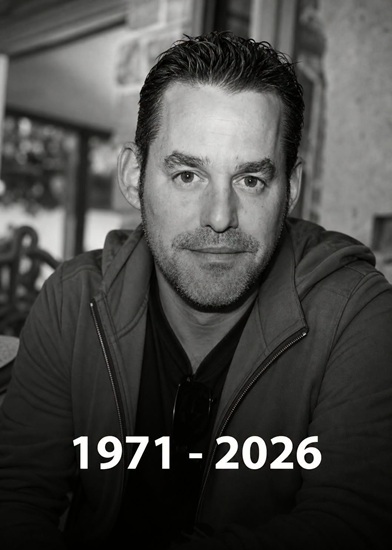
Nicholas Brendon was best known to television audiences for playing Xander Harris on Buffy the Vampire Slayer and later Kevin Lynch on Criminal Minds. His death in March 2026 brought renewed attention to a career that had remained familiar to viewers for decades. Brendon died on March 20, 2026, at the age of 54, at his home in Indiana. His family initially said that he died in his sleep from natural causes. Later information from the Putnam County Coroner identified atherosclerotic and hypertensive cardiovascular disease as the primary cause of death.
Acute pneumonia and a previous myocardial infarction were also listed as contributing medical factors. For many fans, the news was difficult because Brendon had played characters closely connected with long-running television series. Television creates a particular kind of familiarity because performers can become part of viewers’ routines for years. People may watch the same character during adolescence, adulthood, family life, or other important periods.
When an actor associated with those memories dies, the reaction is often connected as much to personal nostalgia as to the public career itself. Old episodes can suddenly feel different because the performer is no longer alive. At the same time, those episodes continue preserving the work exactly as audiences originally experienced it. Brendon was born Nicholas Brendon Schultz on April 12, 1971, in Los Angeles, California. He grew up with an identical twin brother, Kelly Donovan, and had an early interest in baseball.
Before acting became his main profession, Brendon hoped to pursue athletics more seriously. An arm injury changed that direction and contributed to his eventual focus on performance. He also dealt with a stutter while growing up and later spoke publicly about that experience. Acting became one way for him to develop greater confidence in speaking and performing. His career changed significantly when he was cast as Alexander “Xander” Harris on Buffy the Vampire Slayer in 1997.
The series centered on Buffy Summers, played by Sarah Michelle Gellar, a teenager responsible for fighting supernatural threats while trying to maintain an ordinary life. Xander became one of Buffy’s closest friends and a core member of the group later referred to by fans as the Scooby Gang. Unlike several other central characters, Xander did not possess supernatural powers. That difference became an important part of his identity throughout the series. He often represented the ordinary human perspective inside a world filled with vampires, demons, magic, and extraordinary danger.
Xander’s lack of supernatural abilities did not make him irrelevant to the story. His importance frequently came from loyalty, humor, persistence, and his willingness to return when his friends needed help. The character could be insecure, impulsive, sarcastic, jealous, courageous, and caring, sometimes within the same storyline. He was not presented as perfect, and his mistakes were often visible to the audience. That imperfection made him relatable to viewers who did not necessarily identify with characters who had special powers or exceptional abilities. Brendon played the role in a way that allowed humor and vulnerability to exist together.
Comedy was one of the strongest parts of Brendon’s performance on Buffy. The series regularly shifted between horror, emotional drama, romance, tragedy, and humor. Xander often helped relieve tension when scenes became particularly dark. His jokes could come from nervousness, sarcasm, insecurity, or simply an attempt to make an uncomfortable situation easier. Brendon’s timing helped make those moments feel natural within the larger story. Even when Xander was not the central character in an episode, his reactions often helped shape the tone of the group.
Brendon remained with Buffy the Vampire Slayer throughout all seven seasons, from 1997 until the series ended in 2003. Appearing across nearly the entire run gave him an unusually long period to develop the character. Viewers watched Xander move from high school into adulthood while his relationships and responsibilities changed. He experienced romance, disappointment, fear, friendship, loss, work, and increasing responsibility. His growth did not depend on gaining magical powers. Instead, much of the development involved learning how to remain useful and emotionally present in circumstances where others were more powerful.
One memorable episode also involved Brendon’s real-life twin brother. Kelly Donovan appeared in the Season 5 episode “The Replacement,” which involved two versions of Xander existing at the same time. Using Brendon’s identical twin helped the production create scenes that would otherwise have required more technical visual work. The episode also gave the story an opportunity to explore different sides of Xander’s personality. One version appeared more confident and successful while the other seemed uncertain and frustrated. The storyline ultimately emphasized that both sides belonged to the same person.
After Buffy ended, Brendon continued appearing in television and film. In 2005, he joined the cast of Kitchen Confidential, a television comedy loosely inspired by Anthony Bourdain’s writing. Brendon played Seth Richman as part of the ensemble. The series had a relatively short run, but it provided another example of his ability to work in comedy outside the supernatural format that had made him famous. His career after Buffy became more varied, including guest appearances, recurring roles, independent productions, and film work. He continued to be strongly associated with Xander, but his professional identity was not limited to one character.
A later role introduced Brendon to another large television audience. Beginning in 2007, he appeared on Criminal Minds as Kevin Lynch, a computer specialist who became romantically involved with Penelope Garcia, played by Kirsten Vangsness. Kevin was technically skilled, intelligent, and generally warmer in tone than the disturbing criminal cases that formed the center of the series. His appearances helped create quieter interpersonal moments within a show known for intense investigations. The role also allowed Brendon to use humor in a different way from Xander. Kevin’s personality was generally more relaxed and less defensive.
The relationship between Kevin and Garcia developed across repeated appearances rather than existing only as a single guest storyline. Their shared technical abilities created an immediate connection, while their personal relationship added another layer to Garcia’s life outside the Behavioral Analysis Unit. The scenes often provided relief from the darker material surrounding the investigations. Brendon returned to the role across multiple seasons through 2014. Although Kevin was not a main member of the cast, he became a recognizable recurring character. For some viewers, Criminal Minds was their first introduction to Brendon.
He also appeared in films, including the 2000 comedy Psycho Beach Party and the 2013 science-fiction film Coherence. Coherence became particularly well known among fans of independent science-fiction. The film followed a group of people attending a dinner party as increasingly unusual events unfolded. Rather than depending on large visual effects, the story relied heavily on conversation, confusion, character reactions, and psychological tension. Brendon played Mike in the ensemble cast. The film later developed a strong reputation among viewers who enjoy low-budget science-fiction built around complex ideas.
Brendon’s public life also included difficult periods. He spoke openly about struggles involving alcohol, substance use, mental health, and other personal challenges. He also experienced legal problems that received media attention. These events became part of his public history and should not be ignored in a factual account. At the same time, reducing his entire life to those difficulties would also provide an incomplete picture. His career, creative work, personal struggles, health problems, and later artistic interests all existed together.
Health issues became increasingly important during Brendon’s later years. He underwent procedures related to spinal problems and experienced serious cardiovascular concerns. Reports from 2022 indicated that he had been hospitalized for tachycardia, which refers to an unusually rapid heart rate. He also experienced a heart attack in 2023. These earlier medical issues became especially relevant after the official cause of his death was released. They showed that cardiovascular problems had already been part of his recent health history.
When his family announced his death in March 2026, they described him as having died peacefully in his sleep from natural causes. Initial family announcements after a death often provide only limited information. More detailed findings can become available after medical examination. In Brendon’s case, the Putnam County Coroner later identified atherosclerotic and hypertensive cardiovascular disease as the primary cause of death. Acute pneumonia and a previous myocardial infarction were also listed as contributing conditions. The manner of death was classified as natural.
This later clarification matters because accurate reporting should distinguish early information from final official findings. There is no need to add theories or unsupported explanations when a medical determination has already been made public. A responsible account can simply state what was initially reported and what was later confirmed. That approach avoids creating unnecessary speculation around a sensitive event. It also respects the distinction between public interest and private grief. Brendon’s relatives and close friends experienced a personal loss that audiences can recognize without pretending to know every private detail.
His family also highlighted something that had become increasingly important to him in later years: visual art. Painting had become a significant creative outlet outside acting. Brendon spent time creating and sharing artwork with supporters, friends, and family. For viewers who knew him primarily from television, this part of his creative life may have been less familiar. It showed that his artistic interests continued even when acting was no longer the only major part of his public identity. Creativity remained present in another form.
Brendon’s experience with stuttering also remained an important part of his public story. He had discussed dealing with speech difficulties earlier in life and later supported efforts connected with the Stuttering Foundation. His personal experience gave him a reason to speak publicly about a subject many people experience in very different ways. His own story should not be treated as a universal example, because stuttering varies significantly from person to person. Still, his willingness to discuss it helped bring more attention to the issue. That advocacy became another part of his life beyond acting.
For longtime fans, however, Xander Harris remains the role most strongly associated with Brendon. The character spent seven seasons surrounded by people who were often physically or magically more powerful. Xander repeatedly had to confront the fact that he was ordinary in a world where extraordinary abilities were common. Sometimes that created insecurity, while other times it highlighted his loyalty. His contribution was often based on remaining present when leaving would have been easier. That theme became part of why many viewers remembered him so clearly.
The character was also complicated enough to generate disagreement. Some viewers remember Xander primarily for humor, friendship, and courage. Others criticize decisions he made or aspects of certain storylines. Those different reactions are normal for a character written across many seasons. A long-running television role can be appreciated without pretending every action was admirable. In fact, continued discussion often reflects the fact that the character was memorable enough to remain relevant years later. Brendon’s performance gave viewers material that could be interpreted in more than one way.
Kevin Lynch represented a different kind of character. Instead of being the ordinary member of a supernatural friendship group, Kevin was a skilled technical specialist entering an established crime procedural. His intelligence and humor helped create a softer tone during moments that were otherwise surrounded by disturbing investigations. His scenes with Garcia focused more heavily on personal connection and workplace relationships. This allowed Brendon to show a quieter version of the comedic instincts associated with his earlier work. The role remained supporting rather than central, but it became memorable to many fans.
Supporting characters can have enormous importance in television even when they do not dominate every episode. They help build relationships and make fictional worlds feel complete. Brendon’s two best-known characters both served that function in different ways. Xander helped ground the supernatural world of Buffy in ordinary human behavior. Kevin brought warmth and humor into the procedural atmosphere of Criminal Minds. Neither role depended entirely on spectacle. Their impact came from interaction with the surrounding characters.
Brendon’s work in Coherence demonstrated yet another side of his acting. The film required a more contained performance built around uncertainty and group tension. Its science-fiction concept gradually became more complicated as the characters tried to understand what was happening around them. Brendon was part of an ensemble where conversation carried much of the suspense. The project became a favorite among viewers interested in unconventional science-fiction. It remains one of the better-known examples of his work outside network television.
The continuing availability of these productions means Brendon’s performances can still reach people who were not watching when they were first released. Streaming services, reruns, physical media, and digital purchases allow older television to remain accessible. A young viewer today can encounter Xander Harris without knowing what television culture was like in 1997. Another person can discover Kevin Lynch years after the original Criminal Minds episodes aired. The performances remain the same even though the audiences continue changing. That is one of the distinctive features of recorded acting.
For older fans, those same episodes may hold very different meaning. A person who watched Buffy as a teenager may now revisit it decades later with an entirely different perspective. Characters that once seemed funny may feel more complicated. Emotional scenes may carry different weight. The death of a performer can intensify those changes because viewers become more conscious of the distance between the recorded image and the present. Television preserves youth while real life continues.
Brendon’s death at 54 felt early to many people who associated him with characters they had watched for years. Seeing him preserved as a young actor on screen can make the passage of time feel less obvious. News of his death suddenly creates a contrast between the age of the character in the episode and the reality of the actor’s later life. That can make familiar material feel newly emotional. At the same time, the work can provide comfort because it remains available. The performance is still there whenever viewers return to it.
A careful remembrance should avoid turning Brendon into either a flawless figure or a person defined only by difficulty. His public history included professional success, creative work, health problems, personal struggles, legal issues, advocacy, and later visual art. All of those elements belong to the documented record. A balanced account can acknowledge difficult facts without using them for sensationalism. It can also recognize achievements without ignoring complexity. That approach usually provides a more accurate picture of a real person.
The circumstances of his death should be treated with the same restraint. Official findings now provide a specific medical explanation. Repeating vague rumors or inventing emotional details would not improve the story. Brendon died from documented cardiovascular disease, with additional contributing medical conditions identified by the coroner. The death was classified as natural. These facts are sufficient. Anything beyond them should be clearly identified as unknown rather than presented as truth.
The medical findings also should not be turned into generalized health advice. Atherosclerotic cardiovascular disease and hypertension are well-established medical conditions, but Brendon’s individual history does not predict another person’s health. His case belongs to his own medical circumstances. Readers concerned about similar symptoms or risk factors should rely on qualified healthcare professionals rather than conclusions drawn from a celebrity death. Responsible reporting keeps those boundaries clear. It informs without exaggerating.
Fans are more likely to remember specific creative moments than medical terminology. One person may remember Xander making a joke during a tense episode. Another may remember Kevin interacting with Garcia. Someone else may know Brendon primarily from Coherence, conventions, interviews, or his artwork. Public legacy is rarely identical for every audience. Different people connect with different parts of a career. That variety helps explain why reactions to the death of an actor can be so personal.
His family emphasized creativity in its public statement, and that description reflects the breadth of his interests. Acting gave him his greatest public recognition, but it was not his only form of expression. Painting became increasingly important in his later life. He also remained connected with fan communities that had followed his work for years. Those interactions allowed people to encounter him outside scripted television roles. They added another layer to how supporters understood him.
The lasting popularity of Buffy the Vampire Slayer will likely keep Brendon’s name visible. The series continues to be discussed because of its influence on genre television, serialized storytelling, and character-driven supernatural drama. Xander remains part of those conversations because he was present throughout nearly the entire series. New viewers continue discovering the show, while longtime fans revisit it. Every new viewing gives Brendon’s performance another life beyond the original broadcast era. That continuity is one of television’s most durable forms of legacy.
The same applies to his recurring work on Criminal Minds. The franchise has maintained a large audience through years of reruns and streaming. Viewers moving through older seasons can encounter Kevin Lynch without first knowing Brendon’s earlier television history. Some may recognize him immediately from Buffy, while others may discover that connection later. His appearances therefore link two very different television audiences. That kind of crossover keeps an actor’s work visible long after individual episodes first air.
Brendon’s career was not always stable, and the years after his most famous role contained difficult chapters. Even so, his work continued appearing in different forms. Television, film, visual art, advocacy, and fan appearances became parts of a broader public identity. His story demonstrates how a performer’s life can move in many directions after a breakthrough role. Fame can open opportunities, but it does not protect someone from personal or medical difficulties. Both realities can exist at the same time.
Remembering him accurately means allowing that complexity to remain. Xander Harris was a major part of television history for a generation of viewers. Kevin Lynch brought another type of warmth to a very different series. Coherence preserved a separate example of Brendon’s work in independent film. His paintings documented creativity outside acting. His personal difficulties and health problems were also real parts of his life.
Nicholas Brendon died on March 20, 2026, but the performances that made him recognizable remain accessible. Viewers can still watch Xander struggle, joke, make mistakes, and support his friends. They can still see Kevin Lynch bring humor and kindness into darker stories. They can revisit his film work or discover his paintings. Recorded art continues after the life of the person who created it. That fact is one reason the death of a familiar actor can feel both final and strangely incomplete.
In the end, Brendon’s legacy is best understood through the full range of his documented work and experiences. He was an actor closely associated with two memorable television characters, a performer in independent film, a person who discussed stuttering publicly, and an artist who later devoted more attention to painting. He also lived through serious personal and medical challenges. None of those facts needs to be exaggerated. Together, they describe a complicated career and life.
For fans, the most enduring connection will probably remain the screen. A television episode can preserve a voice, expression, joke, or quiet reaction for decades. New viewers can encounter the same performance that older audiences watched years earlier. That continuing availability allows creative work to survive beyond the person who made it. Nicholas Brendon is no longer alive, but the characters, performances, and artwork associated with him continue to give audiences something tangible to remember.

