
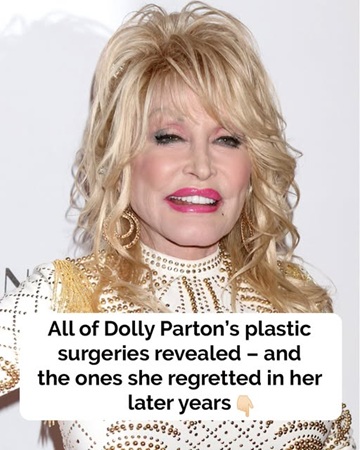
Dolly Parton has spent decades building one of the most recognizable images in entertainment. Her towering blonde hair, sparkling outfits, dramatic makeup and glamorous stage costumes became almost as familiar to audiences as her distinctive singing voice. While many celebrities prefer to keep discussions about cosmetic procedures private, Parton has frequently taken a different approach. She has spoken publicly about several procedures and treatments she has received, often addressing the subject with the humor that has become an important part of her public personality.
Rather than pretending that her appearance required no maintenance, she has repeatedly acknowledged the work involved in creating and preserving the image associated with her career. That glamorous image represents an extraordinary contrast with Parton’s modest childhood. Dolly Rebecca Parton was born on January 19, 1946, in Tennessee and grew up as one of 12 children in the Parton family. Her parents were Robert Lee Parton and Avie Lee Owens Parton, and money was limited throughout much of Dolly’s childhood.
Her father worked hard to support the large family, while her mother cared for the children and filled their home with stories and music. Those early experiences later became an important source of inspiration for Dolly’s songwriting and public identity. Parton never attempted to hide the poverty her family experienced. Instead, she transformed some of those memories into music, most famously through “Coat of Many Colors.”
The song was inspired by a childhood experience involving a coat Dolly’s mother made for her from pieces of fabric. Although the family had little money, Dolly remembered the love with which the garment was created. The story became one of her most enduring songs because it connected material hardship with dignity, imagination and family affection rather than presenting poverty only through sadness.
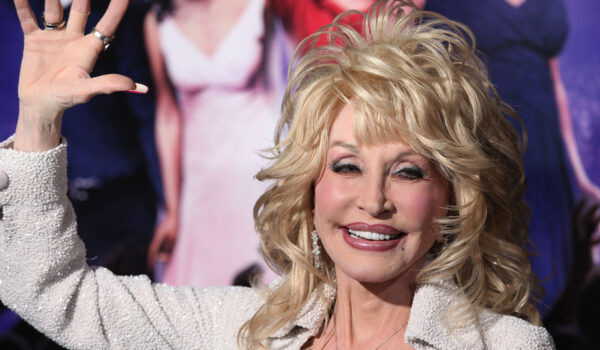
Her upbringing also influenced the unusual glamorous appearance she eventually created for herself. Parton has repeatedly told a story about being fascinated as a child by a heavily made-up woman in her community. Dolly remembered the woman’s bleached-blonde hair, lipstick, fingernails, high heels and attention-grabbing clothing. Adults around young Dolly apparently did not regard the woman as an appropriate style inspiration, but Dolly saw something completely different. She thought the woman looked beautiful and decided that this dramatic kind of femininity was exactly what appealed to her.
That childhood memory became especially meaningful once Dolly developed her professional image. Instead of following conventional ideas about understated elegance, she embraced exaggeration. Big blonde hair became bigger, rhinestones became brighter and stage costumes became increasingly elaborate. Dolly understood that her appearance could be theatrical while her personality and songwriting remained sincere. Over time, she became famous for joking about that apparent contradiction between an intentionally artificial exterior and the authenticity she wanted people to find underneath it.
Parton’s sense of humor also shaped the way she discussed cosmetic procedures. She did not generally present those choices as embarrassing secrets. In interviews, she acknowledged having various procedures and treatments and often turned questions about them into jokes. Her approach allowed her to control the conversation surrounding her appearance rather than leaving every physical change to speculation. She could recognize the artificial elements of her image while simultaneously making clear that those elements were choices she enjoyed.
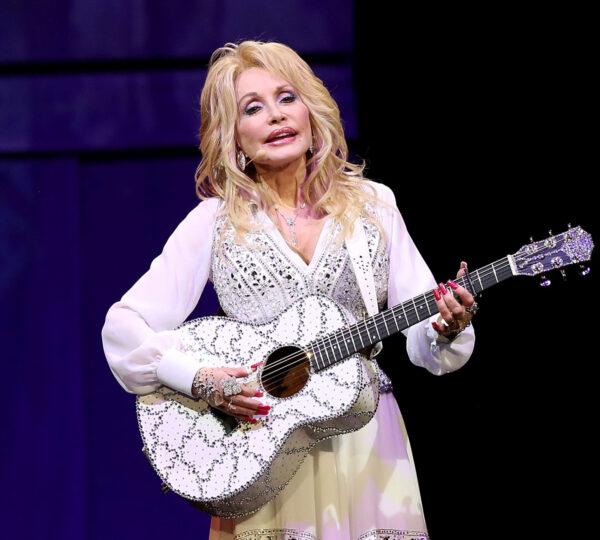
During a 2003 interview with Larry King, Parton was asked directly about cosmetic surgery and why she was willing to discuss it. Her response reflected the practical and humorous attitude she had expressed elsewhere. Dolly essentially explained that when she noticed something about her appearance that she wanted changed, she was prepared to address it. Her frequently repeated jokes about things “sagging,” “dragging” or “bagging” became part of the way she publicly discussed maintaining her appearance.
During that conversation, Parton discussed procedures including work on her face and eyes as well as treatments involving her lips. She also talked about Botox, liposuction and the removal of excess skin. Instead of acting uncomfortable with the questions, she answered in the playful style audiences had come to expect from her. For Dolly, acknowledging cosmetic work did not undermine her identity. If anything, openly discussing it reinforced the impression that she understood exactly how her public image had been constructed.
Her chest has also attracted considerable attention throughout her career. Parton frequently responded to questions and jokes about her figure with humor of her own. She pointed out that because she has a relatively small frame, her proportions can appear especially pronounced. Rather than allowing constant discussion of her body to embarrass her, she often turned those conversations into comedy. Her attitude was generally that she liked her appearance and was comfortable making decisions about her own body.
That confidence was important because Dolly’s appearance has been analyzed for decades. Female entertainers in particular can face contradictory expectations about aging. They may be criticized for appearing older while simultaneously being criticized if they use cosmetic procedures to maintain a particular look. Parton largely refused to participate in that impossible standard. She acknowledged the choices she made and did not pretend that her appearance was entirely untouched by cosmetic treatment.
Parton also discussed cosmetic work during an appearance with Oprah Winfrey in 2003. She acknowledged having undergone what she jokingly characterized as various “nips,” “pulls” and “tucks.” Once again, humor was central to her answer. She even joked about having been familiar with plastic surgery while some younger female performers were still children. The joke allowed Dolly to acknowledge both her age and her cosmetic history without presenting either as something shameful.
That attitude became one of the most distinctive aspects of her relationship with aging. Dolly never built her public image around the idea that she naturally looked exactly the same decade after decade. She was willing to acknowledge that maintaining her appearance involved effort. At the same time, she did not allow those procedures to become the defining subject of her career. They were simply one part of a much larger identity involving songwriting, singing, acting, business and philanthropy.
In an interview with The Guardian published in 2011, Parton again addressed her appearance with characteristic humor. She made one of the observations most closely associated with her philosophy about image: she might look artificial on the outside, but she considered herself genuine in the ways that mattered. The comment summarized the distinction she had spent much of her career making. The hair, makeup, costumes and cosmetic treatments could be deliberately theatrical, while the person underneath them could still be sincere.
Parton has never claimed that cosmetic procedures should be approached casually. Her later comments have emphasized the importance of being careful about what is done and who performs it. During an appearance on “The Howard Stern Show,” she discussed treatments including Botox and fillers. She explained that she preferred smaller changes rather than dramatically altering everything at once. Her goal, according to her own description, was maintenance rather than transforming herself into an entirely different person.
She also stressed the importance of choosing qualified medical professionals carefully. That point sometimes receives less attention than her jokes, but it is an important part of what she has said publicly. Cosmetic procedures are still medical interventions and can involve complications. Dolly’s willingness to joke about her own experiences did not mean she considered every procedure simple or risk-free. She has acknowledged that decisions involving cosmetic treatment require caution.
Parton has also discussed the possibility of unwanted effects. In interviews about cosmetic treatments, she has mentioned complications such as swelling and hematomas. She explained that an unexpected reaction could interfere with her professional schedule because recovery might take longer than anticipated. For a performer whose career depended on recordings, television appearances, concerts and other commitments, additional recovery time could have practical consequences beyond appearance alone.
Her comments are particularly notable because she did not present cosmetic surgery as a magical process without disadvantages. Parton enjoyed maintaining her glamorous image, but she also understood that procedures could involve discomfort, recovery and unexpected outcomes. This made her public position more nuanced than simply being “for” or “against” plastic surgery. She treated it as a personal choice that she had made while acknowledging that those choices could have complications.
Another subject that has generated years of discussion is whether Parton underwent procedures she never personally confirmed. Her nose, for example, has occasionally been analyzed by outside commentators and cosmetic surgeons who were not necessarily involved in her care. Such speculation should not be treated as confirmation. A physician or observer looking at photographs cannot establish a celebrity’s private medical history simply by describing perceived changes in appearance.
The distinction between confirmed information and speculation is important when discussing any public figure. Parton has been unusually open about several procedures, which makes it unnecessary to present unverified claims as established facts. When Dolly herself publicly acknowledged a treatment, that statement can reasonably be attributed to her. When a procedure exists only as speculation from outsiders, it should remain identified as speculation rather than being added to her medical history.
Parton’s attitude toward her appearance was ultimately connected to something larger than cosmetic surgery. She viewed glamour as a form of self-expression. Her wigs, makeup and elaborate clothing were not attempts to convince audiences that she naturally woke up looking like her stage persona. The artificiality was part of the fun. Dolly understood that she was creating a recognizable character around the person she actually was, and she repeatedly invited audiences to enjoy the joke with her.
Her extensive collection of wigs became another famous part of that image. The blonde hairstyles changed over the years, but volume remained a consistent theme. Dolly has joked extensively about her hair and beauty routines, demonstrating an unusual ability to make herself the subject of the joke without diminishing her accomplishments. That self-awareness helped make an otherwise extravagant appearance feel approachable rather than distant.
The rhinestones and elaborate costumes served a similar purpose. Dolly’s wardrobe was designed to be noticed. She was never attempting to disappear into a crowd or embody minimalist fashion. The visual excess became a recognizable component of the Dolly Parton brand, particularly when combined with her Tennessee accent, quick humor and autobiographical songwriting. Few entertainers have maintained such a consistent visual identity across so many decades.
Yet focusing exclusively on Dolly’s appearance would overlook why she became famous in the first place. Long before cosmetic procedures became a recurring interview topic, Parton had established herself as an exceptional songwriter. Her catalog includes “Jolene,” “Coat of Many Colors,” “9 to 5” and “I Will Always Love You,” among numerous other compositions. Her ability to write memorable stories and emotions into songs gave her career a foundation that hairstyles and costumes alone could never have created.
“I Will Always Love You” provides one of the strongest examples of her songwriting reach. Dolly wrote and originally recorded the song in the 1970s. Years later, Whitney Houston’s recording for “The Bodyguard” became an enormous international success. The dramatically different interpretations demonstrated how a song rooted in Dolly’s personal and professional experience could transcend its original country setting and reach audiences around the world.
“Jolene” achieved a similar kind of longevity. Its instantly recognizable melody and story have inspired countless performances and reinterpretations. The song continued reaching new generations long after its original release. Dolly’s appearance may have helped make her instantly recognizable, but songs like these explain why audiences continued paying attention to her for decades.
Her acting career further expanded that audience. Parton appeared in movies including “9 to 5,” “The Best Little Whorehouse in Texas” and “Steel Magnolias.” Her screen performances allowed audiences to experience the humor and charisma already familiar to people who had watched her interviews. Dolly proved capable of moving between recording studios, concert stages and film sets without losing the personality at the center of her appeal.
Business ventures became another significant part of her story. Dollywood, the Tennessee theme park associated with her name, became one of the most recognizable attractions connected with a musical performer. The project also strengthened Dolly’s connection to the region where she grew up. Despite becoming internationally famous, she continued to emphasize her East Tennessee roots throughout her career.
Her philanthropic work has been equally significant. Dolly Parton’s Imagination Library, launched through the Dollywood Foundation in 1995, grew from a local initiative into a major book-gifting program. It provides books to young children in participating communities and has distributed an extraordinary number of books over the years. The program reflects Dolly’s long-standing interest in childhood literacy and her desire to create opportunities for families.
That work also offers useful perspective when discussing the difference between Dolly’s public image and personal values. Someone encountering only a photograph might see the wigs, dramatic makeup and rhinestones first. Someone studying her career finds a songwriter, businesswoman and philanthropist who spent decades developing projects beyond entertainment. Dolly understood this contrast and frequently joked about it herself.
Her childhood poverty remained part of that perspective. She did not erase her early experiences after becoming wealthy and famous. Instead, stories about growing up in a large family with limited resources repeatedly appeared in her songs and interviews. Dolly’s ability to remember those experiences without allowing them to restrict her ambitions became an important component of her public story.
The woman from Dolly’s childhood who inspired her glamorous aesthetic fits into that narrative particularly well. Other people apparently saw someone whose appearance violated conventional standards of respectability. Young Dolly saw beauty, confidence and excitement. That difference in perspective helped create an image that she would later carry onto some of the biggest stages in entertainment.
Her cosmetic choices therefore cannot be separated entirely from her broader approach to self-presentation. Dolly had spent her life consciously designing an exaggerated appearance. Cosmetic treatments became one more tool available to maintain that image as she aged. She did not generally describe them as an attempt to become someone else. She wanted to remain recognizably Dolly.
At the same time, her experiences should not be interpreted as medical advice for others. Botox, dermal fillers and surgical cosmetic procedures can carry risks and may not be appropriate for everyone. Decisions about such treatments should involve qualified medical professionals who can assess an individual’s circumstances. A celebrity’s personal satisfaction with a particular procedure does not establish whether that treatment is appropriate for another person.
Dolly’s comments are best understood as statements about her own choices. She was comfortable with cosmetic enhancement, she enjoyed glamour and she was prepared to discuss both subjects publicly. She also acknowledged that treatments sometimes produced complications or required additional recovery. That combination of enthusiasm and caution is more accurate than portraying her views as an unconditional endorsement of cosmetic procedures.
It also explains why her interviews about appearance became memorable. Dolly rarely responded defensively when asked whether she had undergone cosmetic work. Instead, she frequently turned the question into an opportunity for humor. The result was an unusual level of transparency for a subject that can generate significant anxiety and secrecy within entertainment.
That transparency did not require her to disclose every medical detail of her life. Public figures maintain the same right to medical privacy as anyone else. Dolly chose to discuss certain treatments and procedures, while other claims about her appearance remained unconfirmed. Responsible accounts of her cosmetic history should respect that boundary rather than treating every rumor as evidence.
Her willingness to acknowledge cosmetic work also challenged the unrealistic idea that famous people simply do not age. Professional lighting, makeup, hairstyling, clothing, photography and cosmetic treatments can all influence how celebrities appear publicly. Dolly was unusually willing to acknowledge at least some of those elements. She never insisted that her famous appearance happened effortlessly.
That honesty became another extension of the humor running throughout her career. Dolly understood that people were curious about her appearance, and she generally appeared willing to participate in the conversation on her own terms. She could make jokes about her body, hair or cosmetic procedures while retaining control over how she described herself.
Most importantly, she never allowed discussions of beauty to replace discussions of talent. The glamorous exterior attracted attention, but the songs created the career. Her compositions were recorded by other performers, her voice became instantly recognizable and her storytelling connected with audiences far beyond Tennessee. The visual identity strengthened the brand rather than serving as a substitute for artistic ability.
Dolly’s journey from a financially struggling childhood in Tennessee to international fame is therefore about far more than physical transformation. It is a story involving ambition, songwriting, business judgment, humor and a carefully constructed public identity. Her beauty choices became one colorful component of that much larger journey.
The contrast between her childhood and adult image may actually help explain why Dolly embraced glamour so enthusiastically. As a girl with limited material resources, she admired a style that represented excitement and confidence. Once she had the ability to determine her own appearance, she did not choose subtlety. She created the larger-than-life version of glamour that had fascinated her from an early age.
Decades later, that look became inseparable from her name. A blonde wig, rhinestone-covered outfit and dramatic makeup could immediately evoke Dolly Parton even without music playing. Few performers ever achieve that degree of visual recognition. Even fewer maintain it while remaining willing to laugh at themselves.
Her openness about cosmetic procedures contributed to that authenticity. Dolly never needed audiences to believe that every aspect of her appearance was natural. She wanted them to understand that the presentation was intentional. Her famous humor about looking artificial while being genuine where it matters captured that philosophy better than almost any detailed explanation could.
The result was a public image built around an apparent contradiction that Dolly herself fully understood. She could love artificial hair, makeup, rhinestones and cosmetic treatments while writing deeply sincere songs about poverty, heartbreak, love and ambition. The exterior and interior did not need to match according to somebody else’s definition of authenticity.
That may be one reason conversations about Dolly Parton’s appearance have endured without completely overshadowing her work. She addressed the subject openly enough that there was little need to pretend glamour had nothing to do with her success, yet she built a body of work substantial enough that appearance could never explain that success on its own.
Ultimately, Dolly Parton’s approach to beauty was unmistakably personal. She liked an exaggerated style, made choices to maintain it and discussed several of those choices publicly. She also recognized that cosmetic procedures can have drawbacks and repeatedly emphasized being careful. Her experience belonged to her, just as another person’s decisions about aging and appearance belong to them.
The larger lesson from Dolly’s story is not that people need cosmetic procedures to remain attractive or successful. Her career demonstrates something quite different: she decided what she wanted her own image to represent and refused to be embarrassed by that decision. Whether discussing a glamorous childhood inspiration, an elaborate wig or a cosmetic treatment, she approached the subject with remarkable consistency.
Behind all the jokes was an entertainer who knew exactly what she was doing. Dolly Parton created a visual identity capable of surviving changing fashions and generations, while her songwriting gave that image lasting substance. Her openness about cosmetic procedures became memorable because it reflected the same qualities audiences had encountered elsewhere in her career: humor, self-awareness and an unwillingness to let other people decide how she should present herself.
From the Tennessee girl fascinated by dramatic blonde hair and red lipstick to the internationally recognizable performer covered in rhinestones, Dolly’s style evolved without abandoning its original inspiration. She never pretended that maintaining such a distinctive image required no effort. Instead, she acknowledged some of that effort publicly and frequently found a way to make audiences laugh while doing so.
That combination of glamour and candor remains one of the most recognizable elements of Dolly Parton’s public persona. Her cosmetic procedures are only a small part of a much larger story, but her willingness to

