
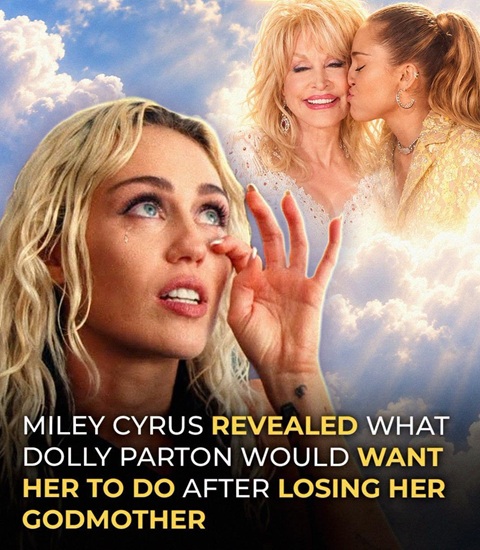
Dolly Parton’s relationship with Billy Ray Cyrus and Miley Cyrus has long represented one of the most recognizable friendships connecting different generations of country and pop music. Over the years, Dolly spoke warmly about both artists, while Billy Ray and Miley repeatedly described the influence she had on their personal and professional lives. Their connection was built through music, family friendship, humor, mutual respect, and experiences that stretched across several decades.
Rather than being simply a relationship between famous entertainers, the bond became especially meaningful because Miley grew up regarding Dolly as part of her extended family. She has frequently referred to the country legend affectionately as “Aunt Dolly.” Billy Ray Cyrus has explained that his admiration for Dolly began long before he became a successful recording artist himself. Like millions of people who grew up listening to country music, he was familiar with her songs and television appearances from childhood.
By the early 1990s, Billy Ray had become a major country star following the enormous success of “Achy Breaky Heart.” His sudden rise to fame also brought intense media attention, including stories about his personal life. Dolly, already an established music icon by that point, understood better than most performers how quickly celebrity gossip could spread. One story Billy Ray has publicly shared dates to 1992, when rumors circulated suggesting that he and Dolly were romantically involved.
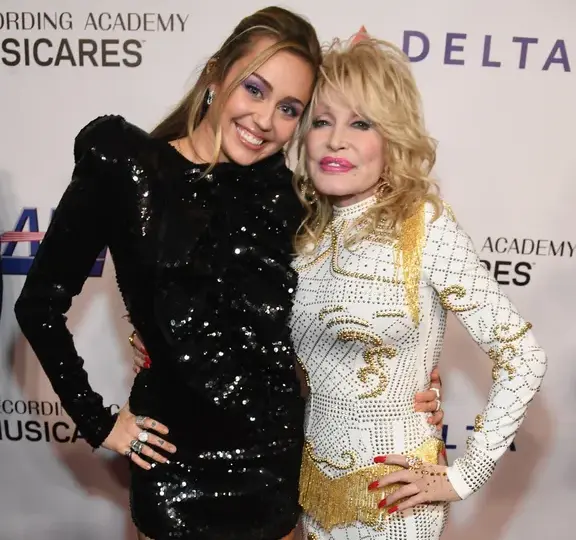
Billy Ray later recalled going into Dolly’s dressing room because he wanted to apologize for the unwanted attention surrounding the reports. According to his account, Dolly did not respond with anger or resentment. Instead, she used humor to dismiss the situation, reportedly telling him, “Honey, this trash sells records!” The anecdote became one of Billy Ray’s favorite examples of Dolly’s ability to handle celebrity gossip without allowing it to define an important friendship.
Their relationship continued after that period, and Dolly eventually became an especially important figure in the life of Billy Ray’s daughter Miley. When Miley was born in 1992, Dolly became her godmother. Their connection was not based on a biological family relationship, but it developed into something Miley has consistently described in deeply familial terms. As Miley grew older and entered entertainment herself, Dolly became someone who could understand the unusual pressures associated with becoming famous at a young age. Few people were better positioned to offer that perspective.
Miley became internationally known through Disney Channel’s “Hannah Montana,” which premiered in 2006. The series transformed her from the teenage daughter of a country singer into one of the most recognizable young entertainers in the world. Dolly later appeared on the program as Aunt Dolly, creating an entertaining reflection of the relationship the pair already shared away from the cameras. Her appearances introduced Dolly to another generation of viewers while allowing Miley to work alongside someone she had known and admired since childhood.
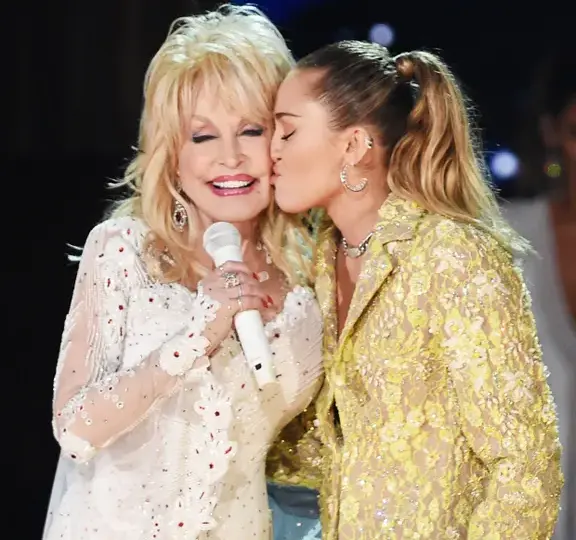
Dolly spoke proudly about watching Miley develop as a performer. She recognized Miley’s professionalism and musical ability while also understanding that growing up publicly could be complicated. Miley has similarly credited Dolly with teaching her lessons that extended beyond performing. One of the qualities Miley has repeatedly praised is Dolly’s treatment of other people, regardless of their position or status. For Miley, watching Dolly interact respectfully with everyone around her became an example of how someone could achieve extraordinary fame without treating success as permission to look down on others.
That lesson became particularly significant as Miley moved beyond her “Hannah Montana” years. Her transition from child star to adult performer generated extensive media coverage and criticism, especially when she adopted a more provocative public image. Dolly did not join those publicly condemning her goddaughter. Instead, she defended Miley’s intelligence and talent while emphasizing that the younger singer was attempting to discover her own identity. Dolly understood that artists sometimes need room to experiment before determining exactly who they want to become.
Her approach was supportive rather than controlling. Dolly indicated that she was available to offer advice when Miley wanted it, but she did not believe her role was to dictate every professional decision her goddaughter made. That distinction became an important feature of their relationship. Miley could regard Dolly as a mentor without being expected to imitate her career. Dolly could disagree with particular decisions while still supporting Miley as a person and artist. Their relationship therefore survived the transformations that frequently accompany a career lasting from adolescence into adulthood.
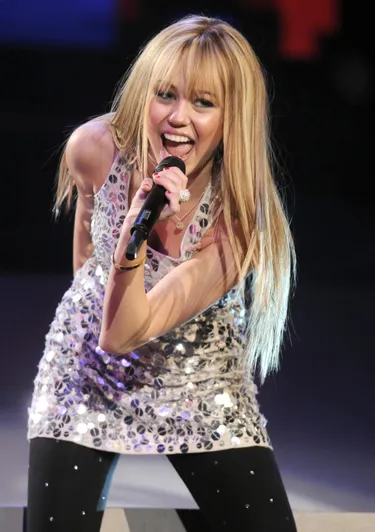
Miley eventually developed a musical identity substantially different from the character that originally made her famous. Her work incorporated pop, rock, country and other influences, while Dolly remained one of the people she openly identified as an inspiration. Their musical worlds repeatedly crossed. They performed together on television, appeared at special events and recorded music together. Those collaborations demonstrated that their relationship was not limited to nostalgic memories of Miley’s childhood.
One particularly memorable collaboration came when Dolly recorded a version of Miley’s “Wrecking Ball” featuring Miley herself. The song appeared on Dolly’s 2023 rock album “Rockstar.” For Miley, hearing one of the most celebrated figures in country music perform a song so closely associated with her own career carried considerable emotional significance. Dolly likewise expressed admiration for Miley’s abilities, making clear that her pride extended beyond their recording together to the relationship they had built.
Their chemistry was also visible during “Miley’s New Year’s Eve Party,” broadcast by NBC as 2022 transitioned into 2023. Dolly joined Miley as co-host, giving audiences an opportunity to see their contrasting but complementary personalities. They performed together and joked with one another throughout the program. Their interactions felt familiar because the two had known each other for years rather than being celebrities paired together solely for a television production.
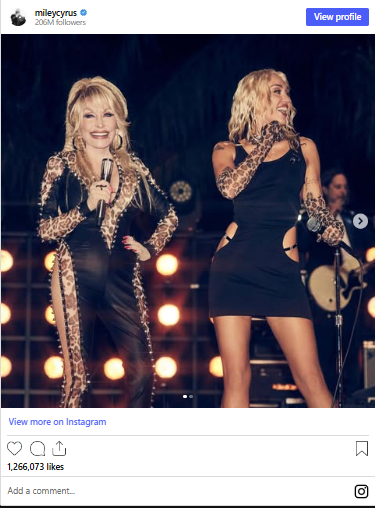
Miley has even shared humorous examples of Dolly’s influence on her appearance. She recalled telling Dolly that she was considering changing her familiar blonde hair and becoming brunette. According to Miley, Dolly reacted dramatically and discouraged the idea, joking in a way that reflected how strongly she associated their shared blonde image. The exchange was lighthearted, but it illustrated the comfortable relationship that allowed them to speak to each other more like relatives than distant professional colleagues.
Dolly’s role as Miley’s godmother also carries additional significance because Dolly and her longtime husband, Carl Dean, did not have children. Dolly married Dean on May 30, 1966, and their marriage lasted until his death in March 2025 at the age of 82. Despite Dolly’s enormous public profile, Dean generally remained outside the entertainment spotlight. Their marriage became famous partly because they managed to maintain considerable privacy while Dolly spent decades as one of the world’s most recognizable performers.
Dolly discussed the subject of motherhood on several occasions during her life. She explained that she and Dean had once imagined what having children might be like and had even considered possible names. In a 2014 interview with The Guardian, Dolly recalled that they had talked about the name Carla for a daughter. Parenthood therefore was not something she had always dismissed. Her circumstances and health, however, eventually took her life in a different direction.
Dolly experienced serious gynecological health problems during the early 1980s. She underwent a partial hysterectomy in 1984, which meant she would not be able to become pregnant. She later discussed the emotional difficulty of that period and said she experienced depression while also reevaluating the pace of her career and personal life. In later interviews, Dolly interpreted her experience through her personal faith, expressing the belief that her life had followed a different purpose than the one she once imagined.
Rather than focusing only on what she had not experienced, Dolly often spoke about the enormous number of children she was able to reach in other ways. That philosophy became especially visible through her philanthropic work. In 1995, she launched Dolly Parton’s Imagination Library through the Dollywood Foundation. The program began in her home county in Tennessee and eventually expanded dramatically, providing free books to young children in participating communities. It became one of the most significant parts of her legacy outside music.
Her relationship with Miley reflected another form of that same generosity. Being a godmother gave Dolly an opportunity to provide encouragement and guidance without attempting to replace Miley’s parents. Billy Ray’s longstanding friendship with Dolly created the original connection, but Miley and Dolly eventually developed a relationship that stood independently. As Miley became an adult, they were able to relate not only as godmother and goddaughter but also as fellow songwriters, singers and professional performers.
Miley has repeatedly described Dolly as both an idol and a role model. When writing about Dolly for TIME’s 100 Most Influential People list in 2021, Miley emphasized qualities that went beyond record sales or awards. She highlighted Dolly’s kindness, values, songwriting ability and extraordinary capacity to connect with people. Miley also suggested that Dolly possesses a rare ability to make people feel welcome, which helps explain why her popularity crosses musical, geographic and generational boundaries.
Dolly’s career provides plenty of reasons for that admiration. Beginning with her early years in Tennessee and her breakthrough in Nashville, she created a catalog containing songs such as “Jolene,” “Coat of Many Colors,” “9 to 5” and “I Will Always Love You.” Her songwriting became as important to her reputation as her distinctive voice and public personality. She also expanded successfully into acting, television, business and philanthropy while maintaining a recognizable identity throughout decades of changing entertainment trends.
“I Will Always Love You” became particularly significant because it demonstrated the extraordinary reach of Dolly’s songwriting. Dolly originally wrote and recorded the song in the 1970s, while Whitney Houston’s later interpretation for “The Bodyguard” became a worldwide phenomenon. The success of both versions showed how a deeply personal country composition could be transformed across genres and generations. That ability to create songs capable of surviving reinterpretation is one reason younger artists, including Miley, have continued to admire Dolly’s work.
Dolly also maintained an unusual relationship with celebrity itself. Her elaborate hairstyles, sparkling costumes and instantly recognizable appearance were deliberately theatrical, yet interviews often revealed a practical understanding of fame. She could joke about her image while taking her songwriting and business responsibilities seriously. The 1992 story recalled by Billy Ray fits comfortably into that larger pattern. Instead of allowing gossip to dominate the situation, Dolly reportedly responded with humor and continued with the friendship.
That distinction is important when discussing stories surrounding public figures. Celebrity relationships often become surrounded by rumors that can eventually be repeated as though they were established facts. Billy Ray’s recollection of the 1992 tabloid reports is valuable precisely because it demonstrates the difference between gossip published at the time and the friendship he says actually existed. Their continued relationship, together with Dolly’s later role in Miley’s life, became far more consequential than the old speculation.
The same care is necessary when discussing highly recent reports about a celebrity’s health, private communications or death. Claims involving final messages, final conversations and private family moments should be attributed to the people who publicly disclosed them rather than expanded with imagined details. Unless participants reveal additional information themselves, there is no reliable basis for reconstructing private conversations word for word or claiming to know what occurred behind closed doors.
What can be documented over many years is the affection repeatedly expressed between Dolly, Billy Ray and Miley. Their public comments consistently describe a relationship grounded in friendship and respect. Billy Ray has spoken about Dolly as someone he admired before knowing her personally. Miley has described Dolly as family, mentor, musical collaborator and role model. Dolly, in turn, repeatedly praised Miley’s talent and expressed pride in the woman and performer she became.
The relationship also demonstrates how mentorship can work without requiring two artists to follow identical paths. Dolly built her career primarily from country music traditions before expanding into other areas of entertainment. Miley began with country influences and children’s television before developing a broader pop and rock identity. Their styles, generations and professional experiences differ substantially, yet those differences did not prevent them from collaborating or maintaining a close personal connection.
For Miley, one of Dolly’s most important examples appears to have been consistency of character. Fame can change the environment surrounding a performer almost overnight, particularly for someone who becomes successful as a teenager. Miley witnessed Dolly operate at an extraordinary level of celebrity while continuing to emphasize courtesy and gratitude. Those everyday behaviors may not attract as much attention as major performances or awards, but Miley has indicated that they were among the lessons she valued most.
Dolly’s support during Miley’s controversial periods also reinforced that example. Public support does not necessarily mean agreeing with every decision another person makes. In Dolly’s case, it meant recognizing Miley’s right to develop independently while refusing to reduce her to a particular headline or performance. She consistently emphasized Miley’s intelligence, musical ability and potential. That approach gave Miley room to change without suggesting that their personal relationship depended on maintaining a particular public image.
As the years passed, Miley no longer needed to be introduced primarily as Billy Ray Cyrus’s daughter or the teenage star of “Hannah Montana.” Songs such as “Wrecking Ball,” “The Climb” and later “Flowers” helped establish a career with its own identity. Her collaborations with Dolly therefore acquired a different meaning. Instead of an established legend appearing alongside a young television star, the performances increasingly brought together two successful artists from different generations.
Dolly appeared equally comfortable with that evolution. She never seemed interested in keeping Miley permanently associated with childhood. Instead, her public comments acknowledged Miley’s growth as a songwriter and performer. Their relationship could therefore evolve alongside Miley’s career. The affectionate title “Aunt Dolly” remained, but Miley eventually stood beside her godmother as an accomplished musician in her own right.
That history helps explain why stories involving the two women attract such widespread attention. Their connection spans family friendship, childhood memories, television, music, mentorship and adulthood. It is not a relationship created recently for publicity. There is a documented history stretching back to Miley’s childhood and Billy Ray’s early years as a country star. Numerous interviews, television appearances and musical collaborations provide public evidence of that connection.
At the same time, the most personal parts of any relationship remain private. Miley has frequently balanced openness about her admiration for Dolly with respect for moments that belong only to them. That boundary is important. Public figures can share meaningful memories without turning every private interaction into entertainment. When discussing their relationship, the most responsible approach is therefore to distinguish clearly between statements they have made publicly and details that remain unknown.
The story of Dolly Parton, Billy Ray Cyrus and Miley Cyrus ultimately extends far beyond one rumor, one television appearance or one duet. It is a decades-long story of friendship that eventually connected two generations of the Cyrus family with one of country music’s most influential artists. Billy Ray found in Dolly a colleague capable of responding to the pressures of fame with humor. Miley found a godmother who could offer guidance from personal experience while still allowing her to build an independent identity.
Dolly, meanwhile, found another way to express the nurturing role she often discussed despite never having biological children. Through Miley, her Imagination Library and her relationships with younger performers, she demonstrated that influence can take many forms. Parenthood was not the only way she could encourage a younger generation. Mentorship, generosity, education and friendship became important parts of the broader legacy she created alongside her music.
Their shared performances provide some of the clearest public illustrations of that relationship. Whether appearing together on “Hannah Montana,” sharing a New Year’s Eve stage or recording “Wrecking Ball,” Dolly and Miley repeatedly transformed their private affection into musical moments audiences could understand. The performances worked because there was already a history behind them. Their warmth did not need to be manufactured solely for television cameras.
Miley’s description of Dolly as a role model is therefore understandable in a broader context. Dolly’s career demonstrates longevity, artistic independence and an unusual ability to remain culturally relevant without abandoning the identity that made her famous. Her philanthropy added another dimension to that influence. For a younger performer navigating an industry that constantly demands reinvention, Dolly offered an example of how change and authenticity can coexist.
Billy Ray’s old dressing-room story captures another side of the same personality. Faced with embarrassing tabloid speculation, Dolly reportedly responded with a joke rather than allowing the rumor to destroy a friendship. Whether discussing that moment, her mentorship of Miley or their many musical collaborations, the consistent theme is resilience. Dolly understood that public attention could be unpredictable, but she did not allow every headline to determine how she treated the people around her.
For readers looking back on this remarkable connection, the documented history is already powerful without embellishment. Dolly Parton’s relationship with the Cyrus family involved decades of friendship, guidance, music and mutual admiration. Billy Ray helped create the connection, but Miley and Dolly ultimately formed a bond of their own. It became one of the most recognizable godmother-goddaughter relationships in modern entertainment.
Their story also serves as a reminder that celebrity relationships are often more complicated than the headlines surrounding them. The 1992 rumors disappeared, while the friendship endured. Miley grew beyond the child-star identity through which millions first encountered her, while Dolly remained a trusted presence in her life. Music provided the public soundtrack to that relationship, but respect appears to have been the element that sustained it.
Ultimately, Dolly’s influence on Miley cannot be measured by a single performance, quote or career decision. It can be seen across years of interviews in which Miley has returned to the same themes: kindness, professionalism, confidence, generosity and respect for others. Those lessons accompanied the musical guidance Dolly offered and helped turn a childhood connection into an adult friendship between two artists.
That is what makes the relationship worth remembering. Behind the glamorous costumes, famous songs and television appearances was a bond that developed over decades. Billy Ray Cyrus’s friendship with Dolly opened the door, but Miley and Dolly built their own history from there. Their collaborations became milestones in two very different careers, while their public words about one another consistently reflected affection and admiration.
Whatever headlines surround famous people at any particular moment, the most reliable account of this relationship remains the documented history they chose to share publicly. Dolly Parton, Billy Ray Cyrus and Miley Cyrus repeatedly spoke about one another with warmth over many years. Their connection survived changing careers, intense media attention and different generations of audiences. In an entertainment culture often dominated by temporary stories, that longevity may be the most meaningful part of their story.

