
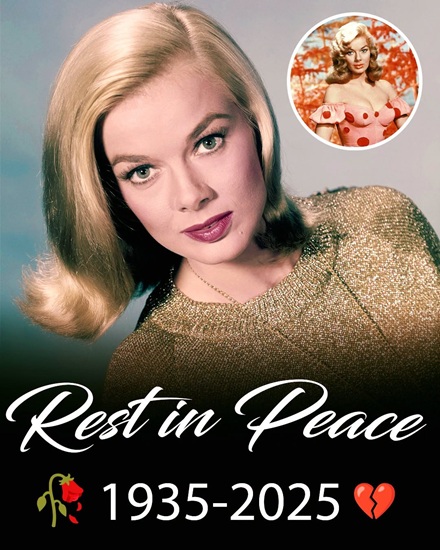
Leslie Parrish built a career that placed her inside some of the most recognizable films and television programs of mid-century American entertainment. She appeared in projects connected with The Manchurian Candidate, Batman, Star Trek, Perry Mason, and several other well-known productions. Yet her life eventually became defined by much more than acting. After years in Hollywood, Parrish devoted increasing attention to political causes, civic work, and environmental conservation.
Her death at age 90 brought renewed attention not only to the roles audiences remembered, but also to the work she chose to pursue after leaving the screen. Parrish died in Washington state in late 2025, although the news did not become widely public until August 2026. Erica Berdan, the daughter of Parrish’s former husband Richard Bach, confirmed the death to The Hollywood Reporter. Because the announcement came months after Parrish had died, many readers encountered the news as though it were recent.
The delay is important because it prevents an older event from being presented inaccurately as something that had just happened. She was born Marjorie Hellen on March 18, 1935, in Melrose, Massachusetts. Her childhood included a period in rural Pennsylvania after her parents divorced. Parrish later described an upbringing that felt unusually isolated in some respects, especially compared with life in larger nearby cities. Music became one of her strongest early interests, and she originally imagined a future centered on piano rather than acting.
As a young woman, Parrish studied piano and composition and became connected with the Philadelphia Conservatory of Music. Financial difficulties made it hard to continue formal study indefinitely. She worked to support herself and eventually explored other opportunities. That shift led her toward modeling, a field she had not originally considered the central direction of her life.
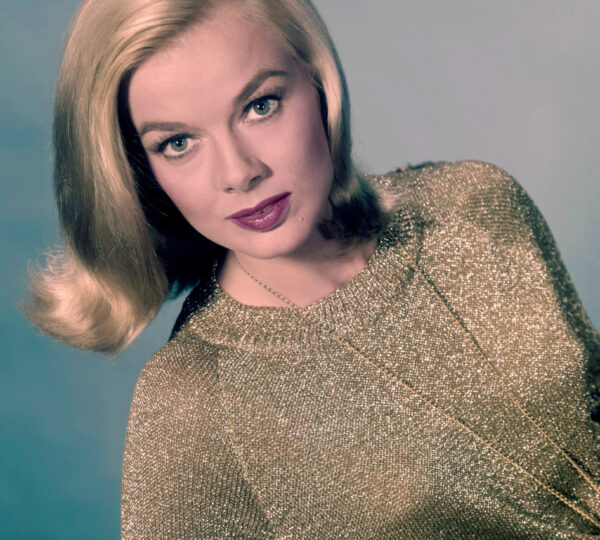
Modeling brought Parrish to New York and introduced her to people connected with the entertainment industry. During the 1950s, Hollywood studios were still actively searching for young performers who could be developed under contract. Parrish was noticed by a studio scout and eventually moved into film work. Her professional path had changed dramatically in only a few years.
She began appearing in films in 1955. Early credits included A Man Called Peter and Daddy Long Legs, the musical starring Fred Astaire and Leslie Caron. These were not yet the performances most closely associated with her name, but they placed her inside major studio productions at a time when Hollywood was changing rapidly.
Parrish initially worked under her birth name before adopting the professional name Leslie Parrish. Stage names were common during that era, when studios and performers often sought names considered easier to market or remember. By the end of the 1950s, Leslie Parrish had become the identity audiences would recognize.
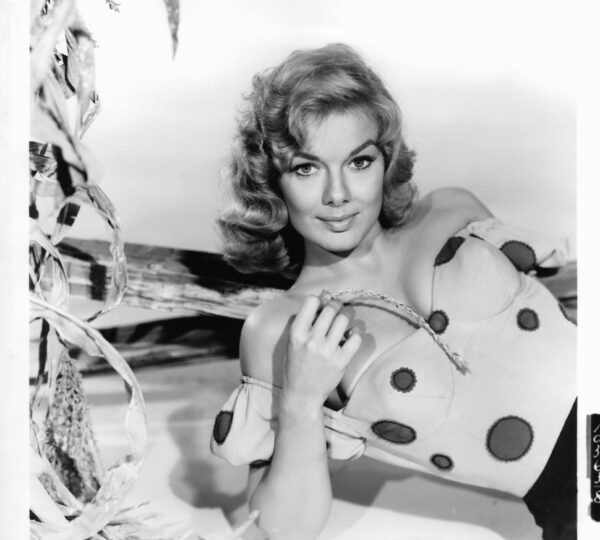
One of her first especially prominent roles came in the 1959 film adaptation of Li’l Abner. She played Daisy Mae, a character already familiar from Al Capp’s comic strip and the Broadway musical. The role gave Parrish a much more visible presence and helped establish her as more than a background or supporting performer.
Her career expanded steadily during the 1960s. Parrish worked in both film and television, moving between genres with the flexibility required of many working actors during that period. She appeared in comedy, drama, crime stories, thrillers, science fiction, westerns, and adventure programs.
Her most celebrated film role came in 1962 with The Manchurian Candidate. Directed by John Frankenheimer, the political thriller starred Frank Sinatra, Laurence Harvey, Janet Leigh, and Angela Lansbury. Parrish played Jocelyn Jordan, the fiancée of Raymond Shaw, portrayed by Harvey.
The film became one of the most enduring political thrillers of its era. Its themes of manipulation, psychological control, Cold War tension, and political violence attracted decades of analysis. Parrish’s character was central to several of the film’s most emotionally significant scenes.
That role helped ensure that Parrish remained visible to later generations. Even after she retired from acting, The Manchurian Candidate continued to be shown, discussed, restored, and studied. Her performance therefore became part of a much longer cultural life than anyone involved in the original production could have predicted.
Parrish also appeared in Sex and the Single Girl, Three on a Couch, Portrait of a Mobster, and other films. Her work with Jerry Lewis in Three on a Couch showed another side of her range, moving away from political drama and into comedy.
Television became an even larger part of her career. Parrish appeared in numerous series that later became staples of classic television. Her credits included Perry Mason, Bat Masterson, The Man From U.N.C.L.E., Batman, The Wild Wild West, Adam-12, and McCloud.
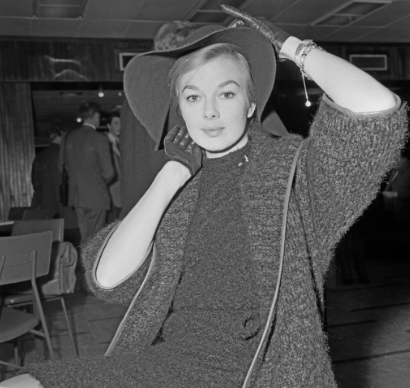
These guest roles were an important part of television production during the 1960s and 1970s. Performers frequently moved between programs, sometimes appearing in several major series without becoming permanently attached to one. Parrish became one of those faces viewers might recognize even when they did not immediately remember her name.
Her appearance in Batman remains particularly memorable. She played Glacia Glaze, a character associated with Mr. Freeze. The Adam West series became famous for its colorful sets, exaggerated villains, playful dialogue, and deliberately heightened style.
Parrish’s Batman appearance was very different from her work in The Manchurian Candidate. That contrast illustrates how varied her professional life had become. One project could involve political tension and psychological drama, while another could place her inside one of television’s most stylized comic-book worlds.
She also appeared in the original Star Trek, where she played Lieutenant Carolyn Palamas. The correct episode was “Who Mourns for Adonais?”, first broadcast in 1967. Some later articles have incorrectly identified the episode as “The Apple,” but that is not accurate.
In “Who Mourns for Adonais?”, the crew of the USS Enterprise encounters a powerful being who claims to be Apollo from ancient Greek mythology. Parrish’s character becomes especially important because Apollo develops a strong interest in her. The episode combines mythology, science fiction, and questions about humanity’s relationship with beings once regarded as gods.
The role became one of Parrish’s most recognizable television appearances because Star Trek developed an enormous following after its original network run. Reruns, conventions, home video, streaming, and fan communities kept individual episodes alive for decades.
That longevity gave Parrish a connection to a franchise that continued growing long after she left acting. A guest role recorded in the 1960s became part of a global science-fiction legacy still watched by new audiences generations later.
Her filmography also included the 1975 science-fiction and horror production The Giant Spider Invasion. The movie developed a cult reputation among fans of low-budget genre films. It was far removed from the polished studio productions that had launched her career, but it became another unusual chapter in her résumé.
By the late 1970s, Parrish was gradually stepping away from acting. Her final credited work came in 1978. After more than two decades in entertainment, she effectively ended the professional acting career that had begun in the mid-1950s.
Her life did not become less active after Hollywood.
Parrish had already become increasingly involved in antiwar activism during the Vietnam era. She participated in organized opposition to the Vietnam War and became associated with groups seeking to use public speakers and entertainers to support peace activism.
She founded Speakers and Talent Organized for Peace, often abbreviated as STOP. The organization brought together public figures and entertainers opposed to the war. This was historical political activism connected to the events of the 1960s and 1970s, not a present-day political campaign.
Parrish also participated in the Jeannette Rankin Brigade, a women’s antiwar organization named after the first woman elected to the U.S. Congress. Her involvement placed her within a broader movement of activists, artists, and public figures protesting U.S. involvement in Vietnam.
Describing that activism accurately requires historical context. The Vietnam War was deeply divisive, and Americans held sharply different views about both the war and the protest movement. Parrish chose to become publicly involved in opposition to it. That fact is part of her biography without requiring a modern article to endorse or reject her views.
Her political involvement extended to local civic affairs in Los Angeles. Parrish supported Tom Bradley, who later became the city’s first Black mayor. Bradley’s 1973 victory marked a major moment in Los Angeles political history.
After Bradley took office, Parrish was appointed to a Blue Ribbon Commission. Her participation reflected a level of civic engagement beyond celebrity endorsement. She was involved in the practical work surrounding municipal government and appointments.
These activities showed how dramatically her priorities were changing.
Hollywood was becoming only one part of her identity.
Parrish also became increasingly interested in environmental conservation. This later stage of her life became closely connected with Washington state and the San Juan Islands.
Her second husband was author Richard Bach, best known for Jonathan Livingston Seagull. Their relationship linked Parrish with Orcas Island, where conservation work eventually became one of the most significant projects of her life.
Parrish became associated with the Spring Hill Wildlife Sanctuary on Orcas Island. The property covered a large area of forest and habitat on Mount Woolard. Over several years, conservation agreements were used to protect substantial portions of the land.
The San Juan Preservation Trust records conservation easements connected with Spring Hill in the 1990s and early 2000s. Those agreements ultimately protected 168 acres of forest and wildlife habitat.
The figure should be understood carefully. The broader Spring Hill property was larger than 168 acres. The 168-acre number refers to land protected through conservation easements, not necessarily the total size of every parcel connected with the sanctuary.
Conservation easements are legal agreements designed to protect land over the long term. They can restrict development, subdivision, logging, or other activities depending on the terms. The property may remain privately owned while its conservation values receive permanent protection.
For Parrish, this work was deeply meaningful.
She spoke about the importance of thinking far beyond a single lifetime when making decisions about land. Her conservation philosophy emphasized preserving forest and wildlife habitat for future generations rather than focusing only on immediate economic value.
Parrish reportedly described the conservation work as one of the accomplishments she was most proud of. That comment is revealing because it came from someone whose acting career included appearances in productions that remained internationally famous.
By the time she reached later life, protecting land appears to have mattered to her at least as much as maintaining a Hollywood legacy.
That shift gives her biography unusual depth.
She began with ambitions to become a pianist.
She became a model.
Then an actress.
Then an activist.
Then a conservationist.
Each chapter built on a different part of her interests and priorities.
Her life therefore cannot be summarized fairly with a single television role or movie title.
For some viewers, she will always be Jocelyn Jordan from The Manchurian Candidate.
For others, she is Lieutenant Carolyn Palamas from Star Trek.
Classic television fans may remember Glacia Glaze from Batman.
Film fans may think first of Daisy Mae in Li’l Abner.
Conservationists connected with Orcas Island may remember an entirely different Leslie Parrish.
All of those memories are valid.
They simply reflect different chapters of the same life.
Parrish’s career also spanned an important transition in entertainment history. She entered Hollywood when the traditional studio system still held considerable influence. By the time she retired from acting, television had become central to American popular culture and the old studio model had changed dramatically.
That transition gave her an unusually broad résumé.
She worked in major studio films.
Network television.
Genre pictures.
Crime dramas.
Science fiction.
Comedy.
Superhero television.
Political thrillers.
Few performers remain connected with that many different corners of popular culture.
Her long absence from acting after 1978 is equally important. Parrish lived for nearly half a century after her final screen credit. The years outside Hollywood were therefore longer than the professional acting career itself.
That makes it inaccurate to describe the later portion of her life simply as retirement.
She continued engaging with public causes and conservation work.
Her environmental legacy became physically rooted in protected land.
Unlike a film role, conservation does not depend on audiences remembering a performance. The effect exists through legal protection of habitat and forest.
That may be one reason Parrish viewed the work with such pride.
Hollywood preserves images.
Conservation preserves places.
She ultimately became connected with both.
The way news of her death emerged also reflects how far she had moved from the entertainment spotlight. Parrish died in Washington state in late 2025, but broad media coverage did not appear until August 2026.
There was no major immediate celebrity announcement.
No large public campaign.
Months passed before her death became widely known.
That delay suggests the private nature of her later years.
When the news finally emerged, entertainment outlets naturally revisited the roles that made her famous. Obituaries emphasized The Manchurian Candidate, Batman, Star Trek, Perry Mason, and Li’l Abner.
Those titles gave readers recognizable entry points.
But Parrish’s life after Hollywood gave the obituary a much wider scope.
Her political activism was part of her historical identity.
Her conservation work was part of her later legacy.
Her early musical ambitions explained that acting itself had once been an unexpected turn.
The result was a life built through repeated reinvention.
There is also something remarkable about how technology preserved her performances.
When Parrish filmed Star Trek, episodes were originally intended for scheduled television broadcast.
Later they moved into syndication.
Then VHS.
DVD.
Streaming.
Digital restoration.
A performance made in 1967 can now be watched instantly around the world.
The same is true of her films.
That means her younger image remains permanently available even though her real life moved far beyond Hollywood.
This contrast is common among classic film and television performers.
The audience remembers a face frozen in time.
The person continues aging, changing, and developing interests that may have little connection with the role.
Parrish’s biography makes that difference especially clear.
The glamorous blonde actress audiences remember from studio publicity photographs eventually became a woman focused heavily on land preservation.
Neither identity erases the other.
The conservationist was the same person who appeared opposite major stars.
The activist was the same person who played characters in Batman and Star Trek.
The pianist who once worried about paying for lessons eventually became a Hollywood performer.
Those contrasts make the story more interesting.
Her involvement with Tom Bradley also demonstrates the extent to which some actors of that era became involved in political life outside the studio system.
Parrish did not restrict herself to appearing at campaign events.
She later served on a municipal commission after Bradley became mayor.
This was civic activity rather than acting.
Still, it remains important to describe it historically and neutrally.
A modern biography should not use Parrish’s political choices to instruct readers what they should believe today.
The facts are sufficient.
She opposed the Vietnam War.
She helped organize antiwar speakers and talent.
She supported Bradley.
She later served on a commission.
Those actions were part of her life.
The reader can understand them without editorial persuasion.
Her environmental work deserves the same factual approach.
The protected acreage at Spring Hill can be documented.
The conservation easements can be documented.
Her expressed pride in the project can be documented.
There is no need to exaggerate the story beyond those facts.
The result is already significant.
Land conservation requires long-term decisions.
Once development rights are restricted through a conservation easement, future owners may remain bound by those protections.
That means a choice made by one generation can affect the landscape decades later.
Parrish understood that concept.
She spoke about thinking hundreds of years into the future.
For a former actress, that was a very different measure of legacy.
Screen careers are usually evaluated through credits, awards, reviews, box office, and audience memory.
Conservation is evaluated through what remains protected.
Parrish experienced both forms of legacy.
Her career credits survive.
So does protected forest.
That unusual combination may ultimately be the most complete way to understand her life.
She belonged to Hollywood history, but she also deliberately built a life outside Hollywood.
Her death at age 90 therefore marks more than the passing of another classic television performer.
It marks the end of a life that crossed entertainment, politics, civic participation, and environmental preservation.
The phrase “Hollywood has lost another familiar face” is true, but incomplete.
Hollywood was only one chapter.
Parrish herself appears to have understood that.
She had spent enough time in front of cameras to know the value and limits of fame.
Later, she chose activities that operated with far less public attention.
The preservation of land does not generate applause like a film premiere.
But it can last for generations.
That appears to have mattered to her.
The historical significance of her acting career remains strong.
The Manchurian Candidate continues to be discussed as an important American thriller.
The original Star Trek remains a foundational science-fiction series.
Batman remains one of the most recognizable pop-culture television programs of the 1960s.
Appearing in all three gave Parrish a rare connection with several highly durable works.
Those credits alone would have given her a lasting place in entertainment history.
Her later life added something different.
It showed that public recognition did not have to remain the central focus.
She could walk away from acting.
She could devote time to activism.
She could help protect land.
She could define success differently from the industry that first made her famous.
That is what makes Leslie Parrish’s story larger than a list of screen appearances.
Her path was not linear.
It changed several times.
Each change reflected different circumstances and priorities.
A young musician became an actress.
An actress became an organizer.
An organizer became a conservationist.
And decades later, the public rediscovered those chapters when news of her death finally became known.
Parrish was 90 when she died.
No widely reported medical cause was established in the initial public coverage, so speculation about the circumstances of her death should be avoided.
The same applies to an exact date unless it is directly documented by a reliable source.
What is clear is that she died in Washington state in late 2025.
The news became public in August 2026.
Those details are enough to place the event accurately in time.
Her legacy does not depend on dramatic claims about her final days.
It rests on a documented life that already contained more than enough substance.
She left behind decades of film and television work.
She participated in historically significant political movements.
She became involved in Los Angeles civic affairs.
She helped protect forest and wildlife habitat in Washington.
Those are tangible chapters.
Together, they form a fuller picture than nostalgia alone.
For viewers revisiting her work today, the screen performances remain the easiest way to encounter Leslie Parrish.
They show the actress at different stages of a career that stretched across more than twenty years.
But they do not show the woman who later invested time in activism and conservation.
That part of the story has to be told separately.
And it deserves to be remembered just as carefully.
Leslie Parrish’s life demonstrates how a public career can become only one part of a much larger identity.
She achieved the kind of recognition many performers spend years pursuing.
Then she gradually chose other priorities.
She did not erase Hollywood.
She simply moved beyond it.
In the end, that may be the most meaningful way to remember her.
Not only as Daisy Mae.
Not only as Jocelyn Jordan.
Not only as Carolyn Palamas or Glacia Glaze.
But as a woman whose life continued evolving long after the cameras stopped.
Her performances remain preserved.
Her historical activism remains part of the record.
And the protected land associated with Spring Hill remains part of the physical world.
Few careers produce such different forms of legacy.
Leslie Parrish did.
And that is why her story extends far beyond the familiar face audiences remember from classic film and television.

