
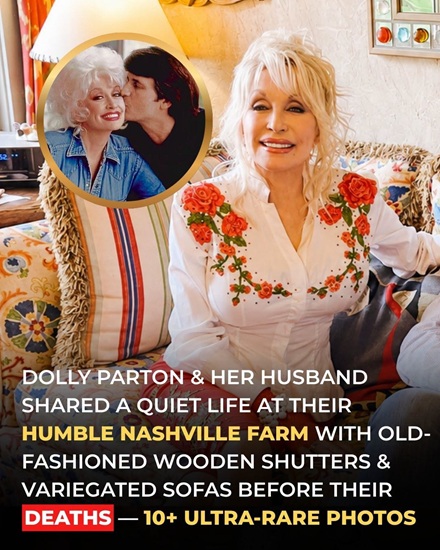
Dolly Parton spent most of her adult life in the public eye, but the man she loved chose almost the opposite path. Carl Dean rarely appeared at award shows, avoided interviews, and stayed away from the entertainment world that surrounded his wife. Their marriage lasted from May 30, 1966, until Dean’s death on March 3, 2025, giving them nearly 59 years together as husband and wife. Parton often explained that one reason their relationship endured was that they respected each other’s independence.
She embraced a highly public career, while Dean protected a quiet private life. Rather than allowing those differences to divide them, they built their marriage around them. Their story began in Nashville in 1964, shortly after Parton arrived in the city to pursue her dream of becoming a professional songwriter and singer. She was 18 years old and had recently finished high school. Dean was 21. They met outside the Wishy Washy Laundromat, an ordinary location that later became part of one of country music’s most famous love stories.
Parton recalled that Dean spoke to her naturally and seemed interested in getting to know her rather than simply reacting to her appearance. Parton had gone to Nashville because of music, not because she was searching for a husband. She already had enormous ambitions and was determined to build a career. Dean, by contrast, had no interest in becoming part of show business. He was comfortable with a quieter lifestyle and would remain that way even after his wife became one of the most recognizable entertainers in the world.
They dated for about two years before deciding to marry. On May 30, 1966, Parton and Dean traveled to Ringgold, Georgia, for a small private ceremony. Parton’s mother, Avie Lee, accompanied them. The wedding was extremely simple, with only a few people present. There were no celebrity photographers, television cameras, or elaborate decorations.
At the time, Parton was 20 and Dean was 23.
Her biggest professional successes were still ahead.
The couple could not have known that the young woman getting married in Georgia would eventually become an international superstar.
Parton’s career accelerated quickly during the years that followed. Her work with Porter Wagoner brought her wider recognition, and her songwriting and recording career eventually produced classics including “Jolene,” “I Will Always Love You,” and “9 to 5.” She later expanded into movies, television, business, publishing, and philanthropy.
Dean watched that rise from a distance.
He did not try to become famous alongside her.
That choice became one of the defining features of their marriage.
Parton repeatedly said Dean had married her, not the entertainment business. He had no desire to become a public personality simply because his wife was famous. She respected that boundary and avoided forcing him into a lifestyle he had never chosen.
His privacy became so complete that people occasionally joked that he might not exist.
Parton herself addressed those rumors with humor.
She explained that Dean was very real but simply preferred not to be photographed or interviewed.
For him, privacy was not a publicity strategy.
It was how he wanted to live.
Parton said she understood that distinction and wanted to protect it.
She knew what celebrity attention could do to someone’s private life because she experienced it every day.
Dean did not.
She therefore tried to keep their relationship separate from the professional world whenever possible.
Parton sometimes described their arrangement as having lives that were both together and separate.
She could travel for work.
Dean could remain home.
She could attend industry events.
He could avoid them.
Neither expected the other to become a different person.
That independence became part of their success as a couple.
Parton often joked that their marriage lasted because she was away so frequently.
The joke had a serious idea behind it.
She believed not being in each other’s space every minute helped them appreciate the time they did spend together.
Distance did not automatically mean emotional separation.
In their case, it created room for each person to maintain an independent identity.
Parton also credited humor with helping their marriage.
She repeatedly described Dean as funny and said they enjoyed making each other laugh.
Their personalities were different, but they shared a strong sense of amusement about life.
That mattered during a marriage lasting almost six decades.
Respect was another theme Parton returned to frequently.
She appreciated the fact that Dean was secure enough not to feel threatened by her career.
Her professional life involved travel, male co-stars, musicians, producers, and constant public attention.
Dean did not respond by trying to control that world.
He trusted her.
Parton valued that deeply.
She once explained that she believed finding someone with Dean’s combination of confidence, humor, and understanding would have been extremely difficult.
So they held on to each other.
Their marriage was not built around becoming a public celebrity couple.
In fact, they almost deliberately avoided that model.
Parton walked red carpets without Dean.
She accepted awards without him.
She performed around the world while he remained largely invisible to fans.
Yet she consistently said that his absence from those events did not reflect a lack of support.
He simply disliked the entertainment environment.
Parton understood.
She did not need him to become a fan in public.
She needed him to be her partner in private.
Their home life often sounded surprisingly ordinary compared with Parton’s glamorous public image.
She was famous for elaborate costumes, rhinestones, big hair, and theatrical performances.
At home, she described much simpler pleasures.
She and Dean enjoyed drives, quiet meals, short trips, and spending time away from crowds.
Parton spoke fondly about traveling with Dean in a camper or RV.
They might drive through Tennessee or Kentucky and stop somewhere that interested them.
Sometimes they ate at drive-through restaurants.
Sometimes they found a quiet place to enjoy food they had brought with them.
They did not need every outing to become a luxury vacation.
That simplicity was part of what Parton loved.
She could spend one part of her life performing for thousands of people and another part sitting quietly with her husband.
Those two worlds were very different.
Both mattered to her.
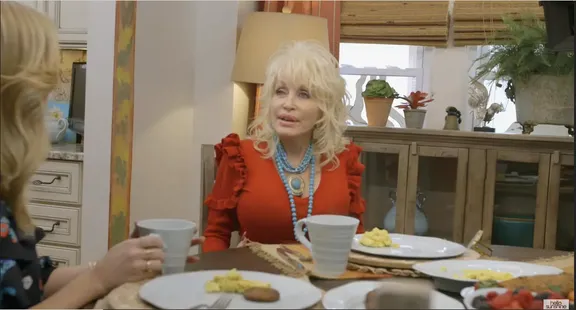
Cooking was another part of their shared life.
Parton enjoyed preparing meals at home and spoke about making ordinary evenings feel special.
A private dinner could matter more than an elaborate public event.
The couple’s relationship was built on many moments that were never photographed.
That was exactly the point.
Their home near Nashville became a refuge from Parton’s professional life.
Dean had his own interests and business history.
He operated an asphalt-paving business and later retired.
He enjoyed maintaining a private routine and had no need to turn his connection to Parton into a commercial identity.
This contributed to the mystery surrounding him.
But Parton suggested there was nothing particularly mysterious about the reality.
He simply liked being left alone.
As Parton’s fame grew, Dean’s refusal to seek attention became increasingly unusual.
Many people connected with famous partners eventually develop public profiles of their own.
Dean did not.
He remained largely outside the spotlight from the 1960s through the final years of his life.
Parton admired him for staying true to himself.
She had chosen fame.
He had not.
Their ability to respect that difference became one of the most consistent themes in her interviews about marriage.
The couple did not have children.
Parton discussed that fact openly over the years.
She occasionally wondered what motherhood might have been like, but she did not frame her life as incomplete because she and Dean had no children.
Instead, she came to believe that her life had taken a different path.
She said not becoming a mother gave her more freedom to travel, work, write, record, perform, and devote time to philanthropy.
Her schedule over the decades was extraordinary.
Raising children would almost certainly have changed the way she managed that career.
Parton recognized that reality without suggesting that one choice was better than another.
It was simply the life she lived.
She also had a very large extended family.
Parton grew up as one of 12 children and remained closely connected with siblings, nieces, nephews, and other relatives.
She was therefore surrounded by family even without children of her own.
Later, her work through the Imagination Library also gave her a special connection with children around the world.
Parton sometimes said she believed she may have been able to help more children because she did not have children of her own.
That was her personal interpretation of how her life unfolded.
It was not presented as a universal rule.
Her relationship with Dean remained the central private partnership in that life.
Dean knew her before most of the world did.
He met her when she was still a young woman newly arrived in Nashville.
He was present before the awards.
Before the films.
Before Dollywood.
Before the global fame.
That history gave their relationship a foundation that existed separately from celebrity.
Dean did not fall in love with an established superstar.
He fell in love with Dolly before the wider public understood how significant her career would become.
That difference mattered.
Parton knew he had experienced the entire journey beside her.
He saw the beginnings.
He saw the breakthroughs.
He saw decades of success.
And he remained mostly away from the cameras throughout all of it.
Their 50th wedding anniversary in 2016 became an important milestone.
The couple renewed their vows to mark half a century of marriage.
Parton had spoken beforehand about wanting a more traditional wedding celebration than the small ceremony they had in 1966.
The renewal gave them a chance to celebrate the relationship after fifty years of shared history.
It also produced some of the relatively rare public photographs of Dean.
Fans were fascinated because they had heard about him for decades but had seen very little of him.
Even then, Dean did not suddenly become a public figure.
The anniversary did not change his basic relationship with fame.
He returned to the private life he preferred.
Parton continued respecting that.
Their marriage became unusual not because they never faced differences, but because they allowed those differences to exist.
Parton loved traveling and working.
Dean enjoyed being home.
Parton was comfortable performing for enormous crowds.
Dean preferred anonymity.
Parton built businesses and public projects.
Dean stayed largely outside them.
Instead of forcing similarity, they created space.
Parton repeatedly suggested that this helped them remain interested in each other.
They always had separate experiences to bring back into the relationship.
She could return from a tour and tell Dean stories.
He could remain connected to the home life that gave her stability.
That contrast became part of their rhythm.
As the decades passed, Parton began reducing the amount of extended touring she wanted to do.
In 2022, she said she did not expect to return to a full-scale touring schedule.
She still planned performances and projects, but the long months on the road no longer appealed to her in the same way.
Part of the reason was practical.
Tours required enormous amounts of energy.
Part of it was personal.
She wanted to stay closer to home with Dean as they both grew older.
This did not mean Parton stopped creating.
She continued recording music.
She continued writing.
She continued launching projects.
She remained professionally active.
But the structure of her work changed.
Home became more important.
After decades of traveling extensively, staying near Dean carried greater emotional value.
The couple had already spent years balancing time apart and time together.
Later life shifted that balance.
Dean’s health became increasingly private as he aged.
Parton did not turn his medical circumstances into public entertainment.
She continued protecting the details of his life in the same way she had protected them for decades.
That approach remained consistent until his death.
Carl Dean died on March 3, 2025, at the age of 82.
Parton announced the loss while emphasizing the love they had shared across nearly six decades.
Their marriage had lasted almost 59 years.
Their relationship itself had lasted even longer.
They had known each other since 1964.
That meant Dean had been part of Parton’s life for more than six decades.
His death therefore represented much more than the loss of a spouse.
It ended the longest and most constant relationship in her adult life.
Parton later spoke about the grief openly.
She described the marriage as a great love story and acknowledged how difficult it was adjusting to his absence.
The public had rarely seen Dean.
For Parton, however, he had been part of everyday life for almost her entire career.
That contrast became especially clear after his death.
To fans, he was the famously private husband.
To Parton, he was the man she came home to.
The quiet evenings mattered.
The jokes mattered.
The road trips mattered.
The meals mattered.
The ordinary routines mattered.
Those private details formed the emotional background to a very public life.
Parton’s career was built around visibility.
Her marriage was built largely around privacy.
The two existed together for decades.
She seemed to understand that protecting one from the other was essential.
That may be why the relationship remained intriguing to the public.
People wanted to know more.
Parton deliberately kept much of it private.
The mystery was not an accident.
It was the result of a boundary.
Parton believed some things belonged only to them.
Dean’s refusal to chase fame also gave Parton something unusual.
He did not seem impressed by celebrity status in the way strangers often were.
He could see her as a person rather than an icon.
That kind of normality may have been especially valuable for someone living such an abnormal professional life.
Parton could be one of the world’s most famous singers outside the house.
At home, she was simply Dolly.
Dean did not need the stage persona.
He knew the person underneath it.
Their different worlds also meant each had room to grow independently.
A long marriage can become difficult when one person’s identity completely consumes the other’s.
Parton and Dean avoided much of that.
Her career remained hers.
His private life remained his.
The marriage existed between them.
This made their relationship a useful example of how partnership does not necessarily require identical lifestyles.
They could love each other without doing everything together.
They could spend time apart without assuming something was wrong.
They could disagree without treating every difference as a threat.
Humor helped.
Trust helped.
Respect helped.
And experience helped.
After decades together, they understood one another’s habits and personalities.
Parton often described Dean as someone who knew exactly who he was.
That self-confidence mattered.
He did not need to compete with her public achievements.
He did not need to become more visible because she was visible.
He did not need to prove anything through the marriage.
Parton valued that independence.
It gave her freedom to become the performer she wanted to be.
At the same time, Dean knew that her career demands did not mean she valued him less.
That mutual understanding allowed their unusual arrangement to continue.
Even Parton’s jokes about spending time away from home reflected this deeper trust.
The humor worked because the relationship underneath it was secure.
She could joke about staying away because both understood she would return.
Their marriage survived changes that would have been impossible to predict in 1966.
Music changed.
Hollywood changed.
The country changed.
Technology changed.
Celebrity culture changed dramatically.
Parton’s career expanded into areas nobody could have imagined when she was twenty.
Dean remained beside her through all of it.
He also remained largely invisible through all of it.
That consistency was remarkable.
By the 2000s and 2010s, celebrity couples were increasingly expected to share their relationships publicly through interviews and social media.
Parton and Dean did not follow that trend.
They maintained a model developed decades earlier.
Privacy first.
Public curiosity second.
That choice likely protected Dean from the scrutiny he had always disliked.
It also gave Parton one area of her life that was not constantly available for public consumption.
For someone with very little true privacy, that may have been invaluable.
Their decision not to have children also contributed to the freedom of their household.
Parton could accept long tours and filming schedules.
Dean could maintain his own routines.
Their life did not follow a conventional family structure.
Yet it clearly worked for them.
Parton never presented their marriage as a formula everyone else should copy.
She simply described what worked in her own relationship.
A sense of humor.
Trust.
Space.
Independence.
Respect.
And affection.
These remained the themes she returned to most often.
Her descriptions were usually less about grand romance than about everyday compatibility.
That makes the story more believable.
Long marriages are built through ordinary days as much as milestone anniversaries.
Parton and Dean had tens of thousands of those ordinary days.
Many were lived completely outside public view.
Their nearly 59 years of marriage contained moments the public will never know.
That privacy was part of the relationship itself.
After Dean’s death, the story took on a different meaning.
Parton could no longer return home to the same person who had been there since the beginning.
The man who had witnessed nearly her entire adult life was gone.
She continued working and creating, but the private foundation had changed permanently.
When Parton herself died in August 2026, their story became complete.
The young couple who met outside a laundromat in 1964 had both reached the end of lives that took very different public forms.
Dean remained private almost to the end.
Parton remained internationally famous almost to the end.
Yet the relationship connecting those opposite lives lasted more than six decades.
That is why their story continues to stand out.
It was never built around being a celebrity couple.
It survived despite celebrity rather than because of it.
Parton did not need Dean to accompany her into the spotlight.
Dean did not need Parton to abandon it.
They allowed each other to live authentically.
Then they returned to the relationship they had chosen together.
Perhaps that is the clearest lesson contained in Parton’s own reflections.
Their differences were not necessarily problems to eliminate.
They were part of what kept the relationship balanced.
She was public.
He was private.
She traveled.
He stayed home.
She thrived on performance.
He preferred peace.
And for nearly 59 years of marriage, those two lives continued meeting in the same place.
Behind all the rhinestones, songs, awards, movies, businesses, and international fame was a relationship that remained surprisingly simple.
Two people who met when they were young.
Two people who stayed together while everything around them changed.
And two people who protected the private world they built from an industry that could easily have consumed it.
For Dolly Parton, Carl Dean was never simply the mysterious husband fans rarely saw.
He was the man who knew her before the world did.
The man who gave her a private life when almost everything else became public.
And the man she continued describing with affection long after their quiet wedding in Georgia had become part of country-music history.

