
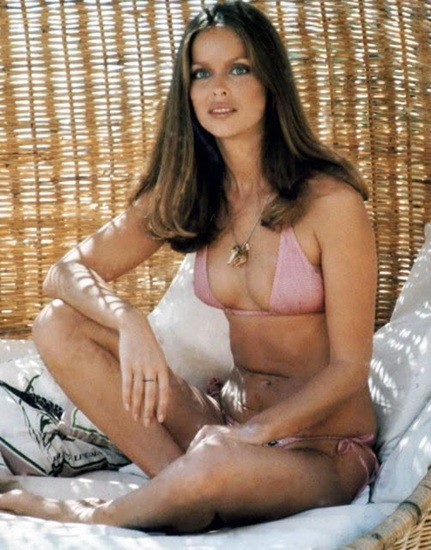
For many film fans, Barbara Bach will always be remembered as Major Anya Amasova—better known by the codename Triple X—the intelligent Soviet agent who appeared opposite Roger Moore in the 1977 James Bond film The Spy Who Loved Me. Her performance introduced audiences to a Bond heroine who was capable, confident, and central to the story rather than simply serving as a supporting character. Decades after the film’s release, it remains one of the most celebrated entries in the James Bond franchise, and Bach’s portrayal continues to be recognized as one of the series’ most memorable performances.
Although millions of viewers first came to know Barbara Bach through the world of James Bond, her career had already begun years earlier. Born Barbara Goldbach in Queens, New York, she initially found success as a fashion model before moving into acting. During the late 1960s and early 1970s, she appeared in several European productions, particularly Italian films, where she steadily gained experience working with international casts and directors. These early projects helped establish her reputation and prepared her for the role that would eventually bring worldwide recognition.
Among her early film appearances was Black Belly of the Tarantula (1971), an Italian mystery thriller featuring several actresses who would later become associated with the James Bond series. The film represented one step in a steadily growing international career that eventually attracted the attention of Bond producers. By the middle of the decade, Barbara Bach had become known for her elegance, screen presence, and ability to perform in productions filmed across multiple countries and languages.
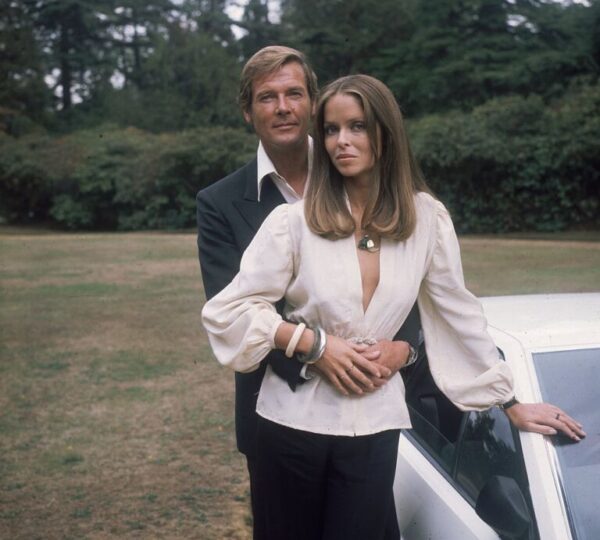
Her breakthrough arrived when she was cast opposite Roger Moore in The Spy Who Loved Me. Released in 1977, the film introduced audiences to Major Anya Amasova, a skilled Soviet intelligence officer whose objectives often paralleled—and occasionally conflicted with—those of James Bond. Unlike many earlier female characters in the franchise, Amasova was portrayed as an accomplished professional with her own mission, intelligence, and determination. Film historians frequently describe the role as one of the most significant Bond heroines of the Roger Moore era because she shared much of the narrative responsibility alongside Bond rather than remaining in the background.
Barbara Bach later offered thoughtful observations about the Bond character during interviews. In remarks widely quoted over the years, she described James Bond as a “chauvinist pig,” reflecting changing conversations during that era about gender roles in action films. Roger Moore himself acknowledged that the character represented an older style of fictional hero whose attitudes reflected the period in which the novels and films were originally created. These comments have often been discussed by film historians as examples of how perceptions of popular characters evolve over time while the films themselves remain part of cinema history.
Following the success of The Spy Who Loved Me, Barbara Bach continued acting in both American and international productions. She appeared in Mad Magazine Presents Up the Academy and later accepted a role in the prehistoric comedy Caveman (1981). Although the film itself received mixed reviews from critics, it became one of the most important projects of her personal life because it introduced her to the man who would become her husband—Ringo Starr, the legendary drummer of The Beatles.
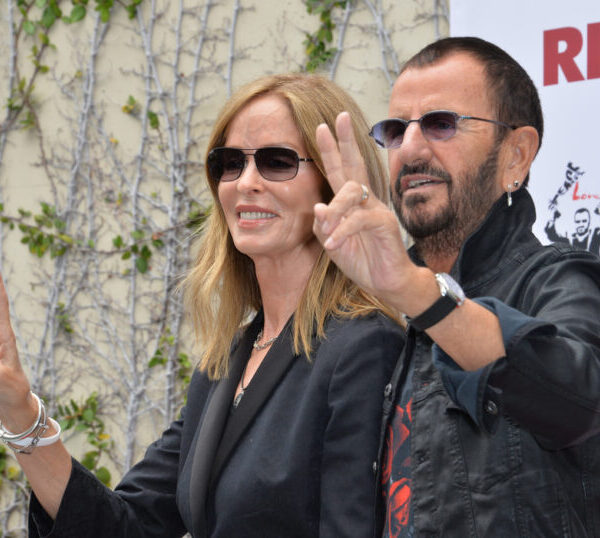
Their first meeting has become one of the most frequently retold stories in celebrity history. Both Barbara Bach and Ringo Starr later explained in interviews that they first noticed one another while traveling through Los Angeles International Airport (LAX) on their way to Mexico, where Caveman was scheduled to begin filming. At the time, both were involved in other relationships, and neither expected that the trip would eventually change the course of their lives. According to both of them, their friendship developed gradually during production before unexpectedly turning into a romantic relationship near the end of filming.
Barbara Bach later explained in interviews that many media reports about the beginning of their romance were inaccurate. She said they remained friends for most of the production and only realized their feelings during the final stages of filming. Their recollections have remained remarkably consistent over the years, with both describing the relationship as something that developed naturally rather than beginning as a dramatic Hollywood romance. Their willingness to correct sensational stories helped establish a reputation for valuing privacy despite their international fame.
For Ringo Starr, the relationship represented a new chapter following years of extraordinary public attention as one of the members of The Beatles, widely regarded as one of the most influential bands in modern music history. During the 1960s, Starr performed alongside John Lennon, Paul McCartney, and George Harrison, helping transform popular music across the world. Barbara Bach, meanwhile, had followed a very different professional path through modeling and international cinema before their lives unexpectedly crossed.
An interesting coincidence connected Barbara to Beatle history long before she met Ringo Starr. She attended The Beatles’ famous 1965 concert at Shea Stadium in New York, one of the landmark performances of Beatlemania. Years later, she recalled that while she enjoyed the concert, her musical tastes at the time leaned more toward artists such as Bob Dylan, Ray Charles, and The Rolling Stones. She also remembered that her sister, Marjorie, was the true Beatles enthusiast in the family and attended wearing a Beatles wig, illustrating the extraordinary excitement surrounding the band during that period.
Another unexpected family connection later emerged when Barbara’s sister Marjorie married Joe Walsh, the guitarist who would become a member of The Eagles in 1975. Walsh would eventually perform alongside his brother-in-law Ringo Starr in Ringo Starr & His All-Starr Band, creating an unusual musical link between two of the most successful rock groups in history. Although these relationships developed over many years, they illustrate how closely connected several influential figures in rock music eventually became.
By the conclusion of Caveman, Barbara Bach and Ringo Starr had begun a relationship that would soon develop into one of the entertainment industry’s longest-lasting marriages. Their romance quickly attracted media attention because both were internationally recognized public figures, yet they consistently emphasized that their relationship had grown from friendship, mutual respect, and shared experiences rather than publicity. What began as an unexpected meeting at an airport was about to become a lifelong partnership that has now endured for more than four decades.
After filming Caveman, Barbara Bach and Ringo Starr’s relationship developed quickly. Although both had established successful careers before meeting, they often described their connection as something that grew naturally through spending time together rather than through dramatic circumstances. In later interviews, they explained that friendship formed the foundation of their relationship before romance followed. Their consistent description of those early months has remained largely unchanged over the decades, contributing to the public perception that their partnership was built on mutual respect rather than celebrity publicity.
The couple married on April 27, 1981, in London during a ceremony attended by family members and close friends. Among the guests were fellow Beatles Paul McCartney and George Harrison, making the wedding an important gathering for people closely connected to one of the most influential bands in music history. The ceremony attracted considerable media attention, but photographs from the occasion reflected a relatively intimate celebration compared with many high-profile celebrity weddings of the era.
Only a short time before their wedding, Barbara Bach and Ringo Starr were involved in a serious road accident while traveling together. According to accounts both have shared publicly, the vehicle they were in swerved while attempting to avoid another vehicle and rolled several times before coming to a stop. Both survived without life-threatening injuries. Ringo later said that the experience reinforced how important their relationship had already become, leading them to value spending time together even more than before.
In interviews over the years, Ringo Starr has often spoken openly about how the accident influenced his perspective. He explained that surviving the crash encouraged both of them to appreciate the time they shared and to avoid spending long periods apart whenever possible. While every long marriage faces ordinary challenges, the couple has repeatedly described that period as one that strengthened their commitment to building a lasting life together rather than simply maintaining a celebrity relationship.
Both Barbara Bach and Ringo Starr also spoke candidly about another significant chapter in their lives. During the 1980s, they acknowledged experiencing problems related to alcohol and substance use. In 1988, they entered a rehabilitation program together and later discussed the experience publicly as an important turning point. Since then, both have consistently stated that sobriety became one of the most meaningful decisions they made as individuals and as a couple. Their willingness to speak openly about recovery has often been viewed as an effort to reduce stigma surrounding addiction and encourage understanding of the recovery process.
Following rehabilitation, Barbara gradually stepped away from acting and largely withdrew from the entertainment industry. Rather than pursuing additional major film roles, she chose a more private life while occasionally accompanying Ringo to concerts, charity events, award ceremonies, and public appearances. Although she remained well known because of her earlier career, she generally avoided extensive media attention and rarely sought publicity for herself, preferring instead to focus on family life and charitable work.
Their family life brought together children from previous marriages. Ringo Starr had three children from his first marriage to Maureen Cox, while Barbara Bach had two children from her previous marriage to Italian businessman Augusto Gregorini. Although they created what is often described as a blended family, both have generally kept their private family relationships out of the public spotlight, allowing their children to live with a greater degree of privacy than is common for celebrity families.
One of the couple’s most enduring shared projects has been The Lotus Foundation, a charitable organization established to support a variety of humanitarian causes. According to information released by the foundation, it provides assistance to organizations working in areas including homelessness, substance-use recovery, animal welfare, medical research, education, and other charitable initiatives. Ringo Starr has also stated publicly that proceeds from sales of his artwork are donated to support the foundation’s charitable activities, reflecting the couple’s long-standing interest in philanthropy.
Throughout the years, Ringo Starr has frequently expressed his admiration for Barbara during interviews. Speaking publicly about their relationship, he has repeatedly described himself as fortunate to have met her and emphasized that he remains grateful for their marriage. Barbara has likewise spoken warmly about her husband, often describing their relationship in simple terms centered on love, trust, and friendship rather than celebrity status. These public comments have contributed to the perception of their marriage as one built on consistency rather than publicity.
In 2021, the couple celebrated their 40th wedding anniversary, an occasion Ringo marked by sharing a photograph from their wedding day. Alongside the image, he wrote that “the love of my life said yes, yes, yes,” referencing both the anniversary and a familiar Beatles phrase. The message was widely reported because it reflected the affectionate tone that has characterized many of his public comments about Barbara over the years. Although the couple generally keeps their private life out of the spotlight, anniversaries have occasionally offered glimpses into the enduring nature of their relationship.
As the years have passed, Barbara Bach’s legacy has come to represent more than a single film role. While many audiences first remember her as Major Anya Amasova from The Spy Who Loved Me, her career also reflects the broader history of international cinema during the 1970s and early 1980s. At the same time, her long marriage to Ringo Starr has become one of the entertainment industry’s most enduring partnerships, demonstrating that lasting relationships can exist even under the constant attention that accompanies worldwide fame.
Film historians continue to regard The Spy Who Loved Me as one of the defining James Bond films of the Roger Moore era, and Barbara Bach’s portrayal of Anya Amasova remains widely recognized for presenting a capable and independent intelligence officer. Meanwhile, Ringo Starr continues to be celebrated for his contributions to The Beatles and for his later musical career. Although each achieved international recognition independently, their shared story has become an important part of both of their public biographies.
More than four decades after they first met while traveling to the set of Caveman, Barbara Bach and Ringo Starr remain among the entertainment world’s longest-married couples. Their journey has included professional success, personal challenges, recovery, family life, and charitable work. Rather than defining themselves solely through past achievements, they have consistently emphasized the importance of friendship, mutual support, and gratitude. Those qualities, reflected in many of their public interviews, continue to shape how their relationship is viewed today.

