

For years, the ordinary-looking house at 25 Cromwell Street in Gloucester concealed crimes that would eventually become the subject of one of Britain’s most disturbing criminal investigations. Fred and Rosemary “Rose” West raised a large family, took in lodgers, and appeared to many people around them to be living an unconventional but otherwise unremarkable domestic life. Behind that public appearance, however, children and young women were subjected to sustained abuse, and several victims were killed and secretly buried.
When investigators began excavating the property in 1994, the discoveries transformed a family-abuse inquiry into a major murder investigation. Rose West was ultimately convicted in November 1995 of murdering ten girls and young women, including her eight-year-old stepdaughter Charmaine and her teenage daughter Heather. She received life sentences, and the seriousness of the crimes resulted in an order that she should never be released. Fred West died by suicide in custody on January 1, 1995, before he could stand trial, meaning the allegations against him were never examined through a completed criminal trial.
Police statements, his admissions, physical evidence, and Rose’s convictions nevertheless established the central outline of the case. The case is sometimes described broadly as the work of a married pair responsible for at least twelve deaths, but that phrasing requires careful qualification. Rose was convicted of ten murders, while Fred was associated by investigators with twelve victims and made varying admissions during questioning.
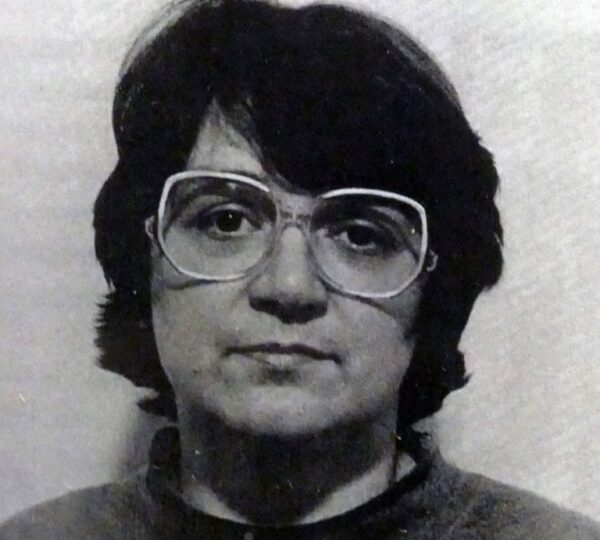
According to police information later reported by ABC, Fred verbally admitted and wrote a statement accepting responsibility for eleven murders, although his accounts changed and he sometimes denied involvement. Because he died before trial, it is important not to describe every allegation against him as a judicial conviction.
Rosemary Pauline Letts was born in North Devon on November 29, 1953, and grew up in a large family. Later books and documentaries described instability, mental-health difficulties, and alleged abuse within her childhood home. Some accounts state that her mother underwent electroconvulsive therapy while pregnant, while other biographical claims concern alleged abuse by relatives. These details have often been used in attempts to explain Rose’s adult behavior, but they do not provide a scientifically established cause for her crimes, and several rely on family testimony or secondary accounts rather than findings reached during her murder trial.
It would therefore be misleading to suggest that prenatal medical treatment, childhood mannerisms, or a parent’s psychiatric condition transformed Rose into a murderer. There is no simple clinical path from a difficult childhood to serial violence, and countless people who experience trauma or mental illness never harm anyone. Background information may help historians understand the environment in which a person developed, but it cannot excuse deliberate criminal acts or replace evidence about the choices that person later made. Rose’s legal responsibility rested on testimony and evidence relating to specific murders, not on speculative theories about her infancy.
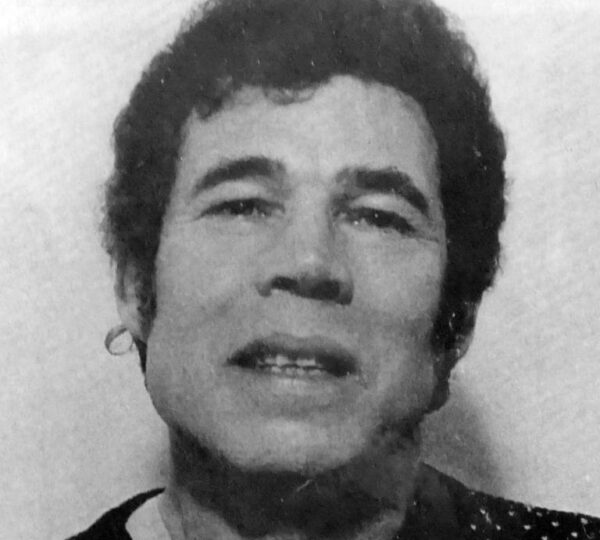
Rose met Frederick West while she was still a teenager. Public accounts generally state that she was 15 and he was approximately 27, already separated from his first wife and responsible for two young daughters. Rose became involved in caring for the children and soon entered a relationship with him. The substantial age difference and Fred’s greater life experience have frequently been discussed by biographers, but the later trial did not accept the defense position that Rose was merely an uninformed or powerless participant in the household.
Before meeting Rose, Fred had already displayed serious criminal and abusive behavior, according to later investigations and testimony. His first wife, Catherine “Rena” Costello, and a young woman named Ann McFall were among the victims later associated with him. Because those deaths predated the established period of Rose’s participation, accounts of the couple’s crimes must distinguish between acts attributed to Fred alone and murders for which Rose was convicted. Combining all victims into one undifferentiated list can exaggerate or obscure the evidence against each person.
Fred and Rose married in 1972, although they had already begun living together and had a child before the wedding. Their household included children from Fred’s earlier relationship as well as children born to the couple. The home was marked by coercion, physical violence, sexual abuse, secrecy, and strict control. Surviving children later provided testimony about their experiences, and some of that evidence became central to the prosecution’s effort to demonstrate that Rose was not simply unaware of what occurred around her.
One of the earliest murders for which Rose was convicted was that of Charmaine West, Fred’s eight-year-old daughter from his first marriage. Charmaine disappeared in 1971 while Fred was serving a prison sentence, a circumstance that became important because it prevented him from being physically responsible for the killing at that time. The child’s remains were later recovered from a property where the family had lived before moving to Cromwell Street. Rose’s conviction for Charmaine’s murder directly contradicted the suggestion that every killing had been committed by Fred without her participation.
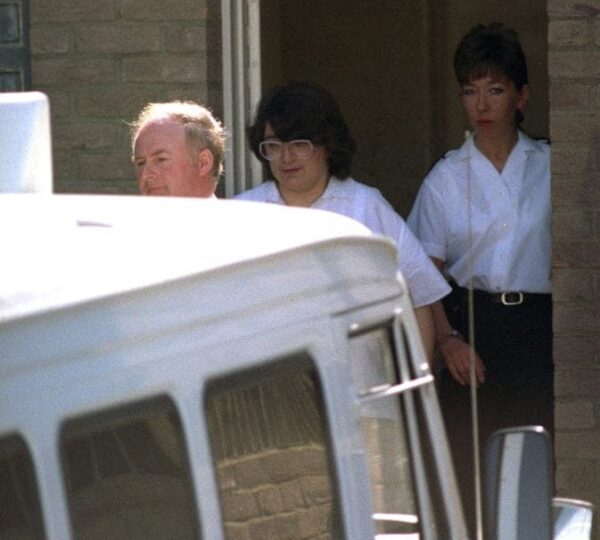
During the 1970s, a number of young women disappeared after coming into contact with the West household. Some had been offered accommodation, employment, or help; others were acquaintances or vulnerable young people looking for stability. The victims connected to the Cromwell Street investigation included Lynda Gough, Carol Ann Cooper, Lucy Partington, Thérèse Siegenthaler, Shirley Hubbard, Juanita Mott, Shirley Robinson, and Alison Chambers. Rose was later convicted of participating in their murders, together with the killings of Charmaine and Heather.
Responsible reporting should keep the victims at the center of the history rather than treating the case only as a story about two notorious offenders. The murdered women and girls had families, friendships, plans, and identities beyond the circumstances of their deaths. Lucy Partington, for example, was a university student; others were teenagers or young adults navigating difficult personal situations. Sensational labels may attract attention, but they can reduce real people to entries on a killer’s list and shift focus away from the loss suffered by their families.
The West children were also subjected to serious mistreatment within the household. Later testimony described an environment in which violence and abuse were normalized, while fear discouraged disclosure. Reports that the children had repeated contact with medical services have led to long-running questions about whether opportunities for intervention were missed. However, exact figures and descriptions of institutional failures vary between secondary sources, so they should not be presented without access to the underlying medical and social-service records.
Heather West, Fred and Rose’s daughter, disappeared in 1987 when she was 16. For years, her parents gave differing explanations about where she had gone. Family members also recalled Fred making comments that she was “under the patio,” remarks initially treated as a grim joke. Investigators eventually focused on Heather’s disappearance after allegations concerning the abuse of other children in the family brought the household to police attention.
The investigation did not begin because authorities immediately knew that multiple bodies were hidden at Cromwell Street. It developed gradually from reports of child abuse and statements provided by family members. As detectives examined the accounts, they found that several young people connected to the family had disappeared and that the explanations given for Heather’s absence were unreliable. These inconsistencies created grounds for a wider inquiry and ultimately for a search of the property.
In February 1994, police obtained authority to search 25 Cromwell Street. Excavation began in the garden and beneath parts of the building, including the patio and cellar areas. The first discoveries confirmed that Heather had not simply left home as her parents had claimed. Additional remains were then located, leading investigators to review other disappearances and search properties previously occupied by Fred and Rose.
Fred was questioned extensively and provided a series of changing accounts. At different points, he admitted involvement in multiple killings and directed investigators toward burial sites, although he also withdrew or contradicted portions of what he had said. The physical discoveries, rather than his statements alone, enabled police to identify victims and construct a wider chronology. The investigation eventually connected twelve deaths to Fred, while prosecutors prepared ten murder charges against Rose.
Rose was arrested in April 1994 as the investigation expanded. Five children who were still minors were taken into protective care following the arrests. The case attracted enormous media attention, but the prosecution still had to establish Rose’s individual responsibility rather than relying on the public reputation of the couple. Fred’s death before trial made that task more complicated because he could neither be cross-examined nor formally tried alongside her.
The prosecution relied on a combination of physical evidence, the circumstances surrounding each disappearance, testimony from survivors and relatives, and evidence about the roles Fred and Rose played inside the household. Rose denied murdering anyone and presented herself as a woman controlled by an older, violent husband. Her lawyers argued that Fred had hidden his actions from her and that she had not understood what was occurring in restricted areas of the house.
That defense required the jury to consider a difficult but essential question: whether Rose had merely lived alongside a violent murderer or had knowingly participated in the crimes. Prosecutors argued that the evidence showed active involvement, not passive ignorance. Charmaine’s murder while Fred was imprisoned was particularly significant, as were the accounts of surviving witnesses and evidence concerning the treatment of victims inside the home.
The murders also exposed how a household can appear ordinary from the outside while concealing coercive control and severe abuse. Neighbors may see routine activities, children going to school, adults working, and visitors entering a property without knowing what happens behind closed doors. This does not mean that members of a community are responsible for failing to discover hidden crimes, but it demonstrates why credible disclosures of abuse should be taken seriously and investigated carefully.
At the same time, the West case should not be used to encourage suspicion toward unconventional families, people with mental-health conditions, or survivors of traumatic childhoods. Rose and Fred were responsible for specific conduct supported by evidence; their crimes cannot be generalized to others who share isolated aspects of their backgrounds. Ethical true-crime reporting avoids stereotypes, protects the dignity of victims, and distinguishes established facts from psychological speculation.
By the time Rose’s case reached Winchester Crown Court in 1995, Britain had already been confronted with months of disturbing discoveries and intense press coverage. The trial would last several weeks and include testimony from individuals who had survived life within or around the West household. Its central purpose was not to determine whether Fred had been a violent criminal—his death had ended the possibility of trying him—but whether the prosecution had proved Rose’s guilt for each of the ten murders charged against her.
The verdict would establish Rose West as a convicted multiple murderer in her own right, rather than merely the spouse of an accused killer. It would also begin a lengthy legal and public debate about culpability, missed opportunities to protect children, the treatment of survivors, and the ethical limits of media interest in violent crime. Those issues, together with the evidence presented at trial, the sentence imposed, and the later history of the Cromwell Street property, form the next part of the story.

