Few artists have transformed global popular music over the past decade as dramatically as Bad Bunny, whose real name is Benito Antonio Martínez Ocasio. From uploading songs online while working at a supermarket in Puerto Rico to becoming one of the world’s most-streamed recording artists, his career has been marked by creativity, determination, and a willingness to challenge expectations.
In 2026, he reached another historic milestone by becoming the first artist to win the Grammy Award for Album of the Year with a Spanish-language album, Debí Tirar Más Fotos, a moment widely recognized as a landmark achievement for Latin music on the global stage. Born on March 10, 1994, in Vega Baja, Puerto Rico, Bad Bunny grew up surrounded by music from an early age. His family introduced him to a wide variety of musical styles, while local Puerto Rican culture exposed him to reggaeton, Latin trap, salsa, and other genres that would later influence his own sound.
Before international fame arrived, he worked as a grocery store bagger while studying audiovisual communication at university. During that period, he uploaded original songs to SoundCloud, where his distinctive voice and musical style gradually attracted attention from producers and listeners alike. Those early years demonstrated the persistence that would later become one of the defining characteristics of his career.
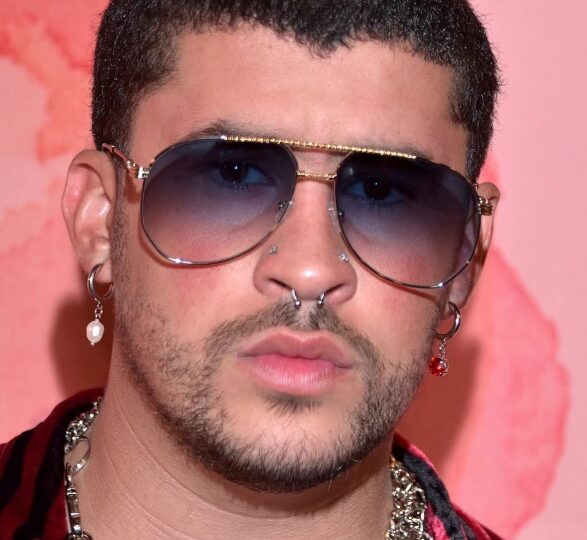
His breakthrough came in the late 2010s with songs that blended reggaeton, Latin trap, and contemporary pop influences. Rather than following established formulas, Bad Bunny developed an artistic identity that combined catchy melodies with personal storytelling and a willingness to experiment across musical genres. Albums such as X 100PRE, YHLQMDLG, El Último Tour del Mundo, Un Verano Sin Ti, and later Debí Tirar Más Fotos expanded his audience far beyond Spanish-speaking countries. As streaming platforms connected listeners across the world, Bad Bunny became one of the most recognizable international artists of his generation.
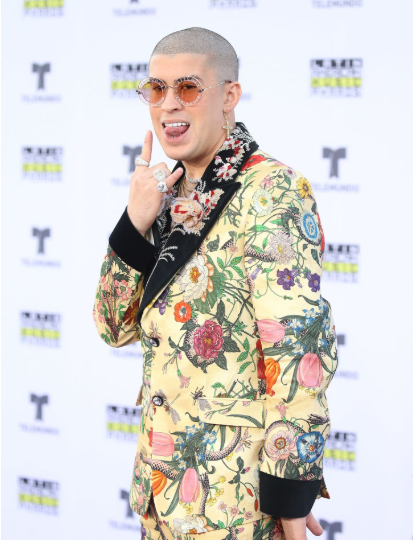
Music has never been the only way Bad Bunny expresses himself creatively. Throughout his career, fashion has become another important aspect of his public identity. From colorful suits and bold accessories to high-fashion runway appearances, he has consistently embraced clothing that reflects his personal taste rather than conventional expectations. In multiple interviews, he has explained that style represents a form of self-expression, encouraging people to feel comfortable wearing clothing that reflects their own personalities. His approach has earned recognition not only within music but also throughout the fashion industry.
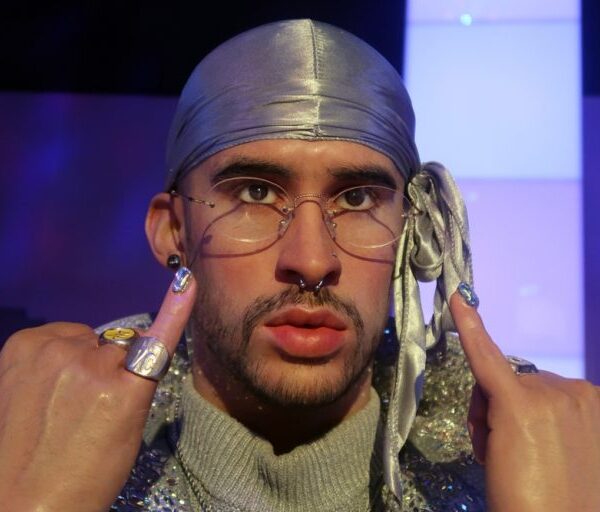
One example of his artistic philosophy came during the 2018 American Music Awards, where he appeared with a painted third eye on his forehead. At the time, Bad Bunny explained that the symbol represented vision, confidence, growth, and the ability to see possibilities that others might overlook. Rather than using fashion simply to attract attention, he described his appearance as another extension of his creative identity. In later interviews, he continued emphasizing authenticity, saying that his clothing choices reflected who he genuinely is rather than a marketing strategy designed to generate publicity.
That philosophy continued in later collaborations with leading fashion publications and luxury brands. His appearance on the cover of Harper’s Bazaar in 2022, where he wore a bridal-inspired look, generated extensive discussion across fashion media. Bad Bunny explained that he wanted to take advantage of a period in his life when he felt free to express himself creatively without allowing outside expectations to determine his choices. Throughout his career, he has consistently encouraged artistic freedom and individuality, emphasizing that creativity should not be limited by traditional ideas about personal style.
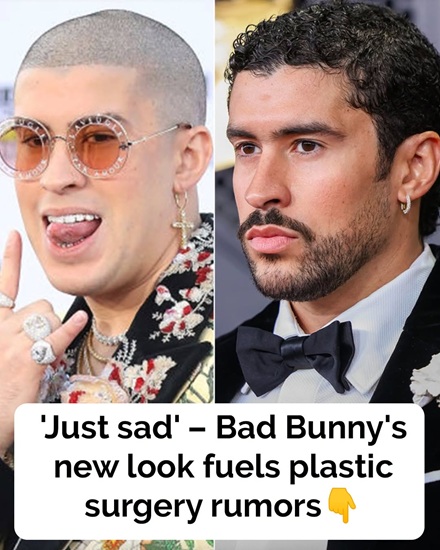
In recent years, many fans have also commented on Bad Bunny’s noticeably more athletic appearance. Photographs from award ceremonies, concerts, magazine shoots, and promotional campaigns have highlighted changes in his physique compared with his earlier career. These observations have led to considerable discussion across social media.
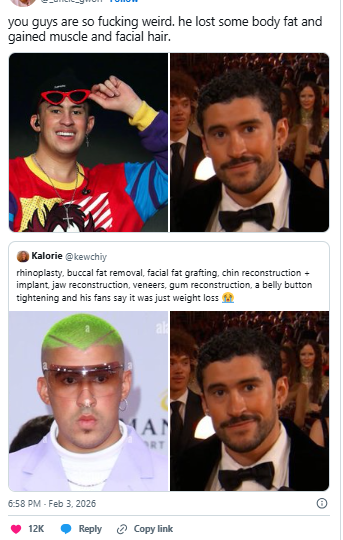
Some online users have speculated about cosmetic procedures, while others have attributed his appearance to fitness, natural aging, grooming, improved styling, and healthier habits. Importantly, Bad Bunny has not publicly confirmed undergoing cosmetic surgery, and speculation shared online should not be presented as established fact. Public photographs alone cannot reliably determine whether someone has had cosmetic procedures.
What Bad Bunny has discussed publicly is his commitment to physical fitness. During interviews promoting his Calvin Klein campaign, he explained that he followed a disciplined exercise routine and carefully managed his nutrition while preparing for the project. He described focusing on consistent training and healthy eating in order to reach his fitness goals. His comments reflected a broader commitment to maintaining physical health as his career expanded into demanding live performances, international tours, acting projects, and athletic appearances.
His physical preparation also extended beyond music. Bad Bunny devoted significant time to training for appearances in WWE, where he participated in professional wrestling events that required conditioning, choreography, and athletic endurance. He also trained extensively for his action role in Bullet Train alongside Brad Pitt, with members of the stunt team publicly praising his work ethic and willingness to learn demanding fight choreography. These experiences required months of preparation and demonstrated that maintaining physical fitness had become an increasingly important part of his professional life as well as his public image.