
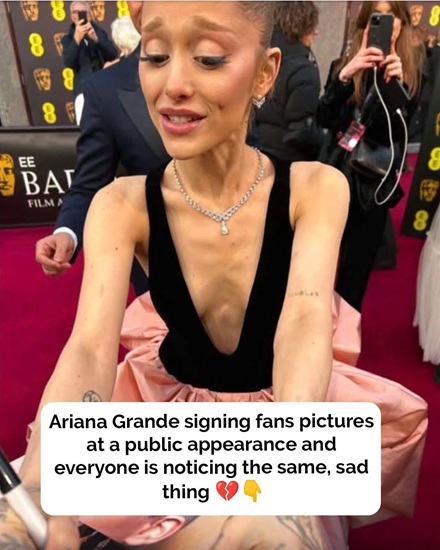
Ariana Grande has lived much of her life in front of cameras, first gaining widespread recognition as a young actress before becoming one of the most successful pop artists of her generation. In recent years, she has also returned to acting in a major way through her role as Glinda in Wicked. Her performance earned significant awards recognition, including a Supporting Actress nomination at the 2025 BAFTA Film Awards. Yet alongside conversations about her professional achievements, another subject has repeatedly followed Grande online: public commentary about her appearance.
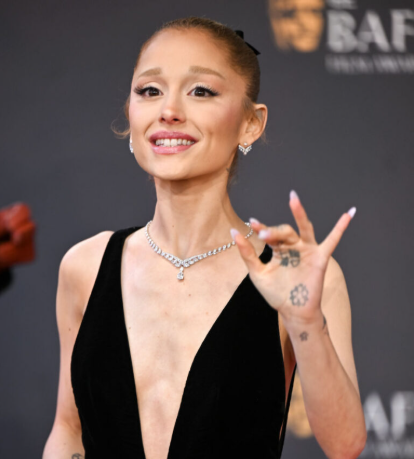
Photographs of Grande from premieres, award ceremonies and promotional events have generated extensive discussion on social media. Her appearance at the 2025 BAFTA Film Awards was another example, with some users expressing concern about what they perceived as changes in her body. Others went considerably further, attempting to identify specific health conditions based on photographs. While people may express genuine concern, it is important to distinguish personal reactions from verified medical information.
A photograph cannot establish whether someone has an eating disorder or another medical condition. Diagnosing a person requires appropriate professional evaluation and information that members of the public simply do not have. Statements posted online claiming that Grande “clearly” has a particular condition are therefore speculation rather than established fact. Body size or visible changes in appearance alone are not enough to determine someone’s overall health.
Grande herself has previously addressed this type of discussion. In 2023, she shared a video asking people to be more thoughtful about commenting on other people’s bodies. She explained that people had been comparing her appearance at the time with an earlier version of herself that they considered healthier. According to Grande, however, the body being used as that supposed standard actually represented an unhealthy period in her own life.
That disclosure demonstrated why assumptions based on appearance can be misleading. A person whom outsiders believe looks healthy may privately be experiencing circumstances they know nothing about. Conversely, a body that looks different from what audiences remember does not automatically indicate illness. Grande’s message was not limited to herself; she encouraged people generally to avoid making unsolicited judgments about other people’s bodies because they rarely know the complete circumstances behind someone’s appearance.
The issue surfaced again during the promotional period for Wicked. In a December 2024 interview, Grande became emotional while discussing the scrutiny she has experienced throughout her career. She explained that public commentary about her appearance began when she was still a teenager. Since then, she has encountered countless opinions about her body, face, clothing and other aspects of how she looks.
Grande described a culture in which people have become unusually comfortable discussing another person’s appearance. Her point was broader than the experience of celebrities. Similar comments can happen in ordinary families, workplaces and social situations when someone casually remarks that another person has gained or lost weight. Even when those observations are intended as compliments or expressions of concern, the person receiving them may experience them very differently.
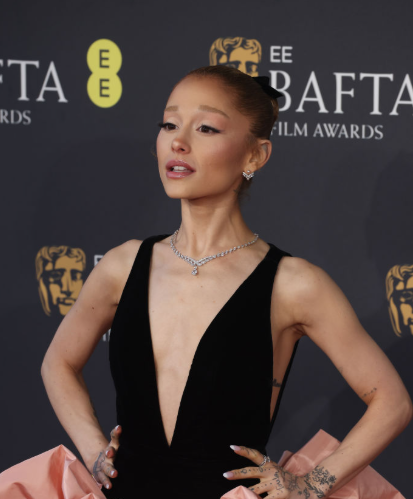
Her comments provide useful context for the reactions surrounding her BAFTA appearance. Grande attended the February 2025 ceremony after receiving her first BAFTA performance nomination for playing Glinda in Wicked. While much of the event centered on cinema and the year’s nominated performances, photographs of Grande inevitably circulated online and generated renewed discussion about her body.
Some commenters said they were worried about her well-being. Others used more extreme language or attempted to diagnose an eating disorder from the images. Those statements should not be treated as medical facts. Grande has not given the public permission to diagnose her health from red-carpet photographs, and an individual’s medical circumstances cannot reliably be determined simply by looking at their body.
Photography itself can also provide an incomplete representation of someone’s appearance. Camera lenses, lighting, posture, clothing, makeup and the angle from which an image is taken can influence how a person appears in a particular photograph. Even when genuine physical changes are visible, however, photographs cannot reveal why those changes occurred. There can be many reasons for variations in someone’s appearance, and guessing at a diagnosis adds information that the photograph itself does not provide.
The situation illustrates a larger pattern affecting female celebrities in particular. Women in entertainment can receive criticism when their bodies become larger and another form of criticism when they become smaller. They may be expected to look youthful but natural, glamorous but effortless, fit but not excessively muscular, and thin without appearing “too thin.” Those contradictory expectations make it nearly impossible to satisfy every observer.
Social media intensifies the scrutiny because individual photographs can reach enormous audiences within hours. A single frame from a red carpet may be reposted repeatedly without the surrounding context. Comments then become screenshots and new posts, producing additional discussions that can eventually become larger than the event where the photograph was originally taken.
The repetition of an allegation can also create confusion between speculation and fact. If thousands of users repeat a claim about someone’s health, the claim may begin to appear established even when everyone is relying on the same photographs. Popularity is not evidence. A medical conclusion does not become accurate simply because it has been repeated frequently on social media.
This distinction matters when discussing Grande. There is a factual basis for saying that people have publicly commented on her appearance and that some have expressed concern. There is also a factual basis for discussing what Grande herself has said about body commentary. What cannot responsibly be stated without evidence is that she has a particular eating disorder or medical condition simply because online observers believe she looks different.
Grande has explained that years of public scrutiny have influenced how she deals with criticism. During her Wicked-era interviews, she spoke about protecting herself from unwanted commentary and surrounding herself with people she trusts. Rather than attempting to satisfy every opinion about her appearance, she indicated that she has learned to limit how much access those judgments have to her personal life.
At the same time, her professional achievements have continued. Her portrayal of Glinda introduced her to audiences in a major film role and earned recognition from prominent awards organizations. The BAFTA nomination represented an important milestone in that part of her career. Focusing exclusively on her body can therefore overshadow the work that actually brought her to events such as the BAFTAs in the first place.
There is nothing inherently wrong with hoping that a public figure is doing well. Fans often feel connected to artists whose music or performances have accompanied important moments in their lives. But concern does not require speculation. Someone can wish Grande happiness and good health without assigning her a diagnosis or analyzing every photograph for signs of a condition.
This is particularly relevant because Grande has explicitly asked for greater sensitivity. Her previous comments demonstrate that outside assumptions about her body have sometimes been incorrect. When she addressed comparisons with her earlier appearance, she explained that what observers had perceived as a healthier version of her was not necessarily healthy according to her own experience.
Her remarks highlight an important principle that applies beyond celebrity culture. Appearance is not a complete medical record. People can experience health issues without obvious physical signs, while visible changes do not automatically indicate disease. Determining someone’s health requires far more information than strangers can obtain from a photograph, video clip or red-carpet appearance.
Grande’s experience also demonstrates the unusual relationship audiences can develop with celebrities they have watched for many years. Because she entered entertainment at a young age, longtime viewers have seen her appearance evolve from adolescence into adulthood. Physical change across those years is inevitable, but familiarity can sometimes create an expectation that a famous person should continue looking like an earlier version of themselves.
Ultimately, the most accurate approach is also the simplest. Ariana Grande’s appearance has generated substantial public discussion, and some people have expressed concern about her. Grande has previously responded to broader body commentary by asking people to be kinder and reminding audiences that they do not know what another person is experiencing. Those are documented elements of the conversation.
Claims about specific illnesses are a different matter and should not be presented as established facts without reliable confirmation. Grande’s private health belongs to her unless she chooses to disclose additional information publicly. Her own message has consistently encouraged less judgment and greater consideration when discussing bodies.
For audiences following her career, there is already plenty to discuss without attempting to diagnose her from photographs. Her music, acting, Wicked performance and awards recognition are all public aspects of her professional life. Respecting the boundary between those public achievements and unsupported assumptions about private health allows the conversation surrounding Ariana Grande to remain more accurate, responsible and respectful.

