
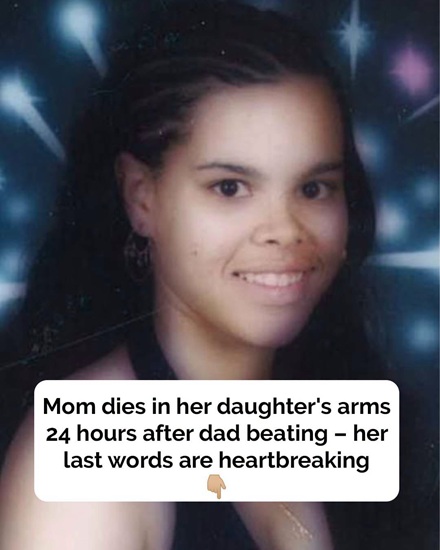
Years before tragedy entered her family’s life, Aleisha Brown remembered a much happier moment involving her parents. When she was eight years old, her mother, Shawntae Brown, took Aleisha, her younger brother and their newborn sister on a trip from Oklahoma City to Texas. They were traveling to see the children’s father, Joshua Brown, graduate from military basic training. During the trip, the children learned that their parents, who had been high-school sweethearts, were getting married.
Aleisha later recalled seeing her mother genuinely happy about the future they believed they were building together. Around that time, Shawntae had a private conversation with her oldest daughter that Aleisha would remember years later. She told Aleisha that whatever might happen between her and Joshua in the future, her children would always remain her priority. To an eight-year-old, those words may have seemed like nothing more than reassurance from a loving mother. After Shawntae’s death seven years later, however, Aleisha said the memory took on a much deeper significance.
According to Aleisha’s later account to PEOPLE, conditions inside the family’s home changed after Joshua returned from a deployment in Afghanistan in 2016. She remembered her father becoming increasingly irritable, angry and aggressive. She said her parents had argued verbally before then, but she recalled physical abuse against her mother becoming a serious problem around that period. Although Aleisha said Joshua did not physically abuse her or her siblings, the children were nevertheless living in an environment affected by fear and domestic violence.

Aleisha described the atmosphere as one in which family members felt they needed to be extremely careful about what they said or did. She also recalled her father becoming increasingly suspicious and installing cameras inside the home. According to her account, family conversations and daily activities could be monitored. As she grew older and reflected on those experiences, Aleisha came to believe that there were likely aspects of what her mother endured that the children did not fully understand at the time.
The situation reached a devastating point in late September 2020. Aleisha was 15 years old, while her younger siblings were 14 and seven. According to investigative records and later reporting, Shawntae was subjected to prolonged violence inside the family home. The children were present during the period in which the abuse occurred. Because the case involved extremely serious injuries, many reports contain disturbing details, but the central documented fact is that Shawntae suffered fatal injuries after being repeatedly assaulted.
Aleisha later described recognizing a frightening change in her father’s behavior as events escalated. She recalled feeling that the person she knew as her father was no longer behaving like the parent she recognized. Investigative documents described accusations and suspicions Joshua held about his wife, while Aleisha characterized some of his beliefs as paranoid and unfounded. None of those beliefs justified the violence that followed, and the criminal proceedings ultimately established Joshua’s responsibility for Shawntae’s death.

The children were also placed in an extraordinarily traumatic position afterward. According to the accounts reported from the investigation, Joshua instructed them to help clean blood from parts of the house. Aleisha also said he wanted her to provide authorities with a false explanation for her mother’s injuries, suggesting that Shawntae had taken too many pills and had somehow injured herself. Investigators would ultimately uncover evidence inconsistent with that explanation.
Shortly before 2 a.m. on September 30, 2020, authorities responded to the family’s Oklahoma City-area home. Deputies and emergency personnel found Shawntae unresponsive and discovered extensive evidence of violence inside the residence. Investigators documented injuries consistent with a severe assault, and Joshua was taken into custody. Evidence collected from the house, statements from the children and recordings from cameras inside the residence became significant parts of the investigation.
Those cameras were especially important because they provided investigators with evidence concerning what had occurred inside the home. Reporting based on the criminal case stated that recordings documented repeated violence against Shawntae over an extended period. Investigators also relied on physical evidence and witness accounts when reconstructing the events leading to her death. Joshua was ultimately prosecuted for first-degree murder as well as charges connected with what the children experienced.
For Aleisha, however, one of the memories that remained most powerful was not from a courtroom or police investigation. It was the final period she spent beside her mother. Aleisha later recalled holding Shawntae as her condition deteriorated. She has described the memory as deeply painful while also finding some comfort in knowing that her mother was with someone who loved her during her final moments.
Before Shawntae died, Aleisha said her mother told her that she loved her.
Those words connected painfully with the promise Aleisha remembered hearing years earlier, when her parents were preparing to marry. Shawntae had told her daughter that regardless of what happened between the adults, she would always love and prioritize her children. Seven years later, according to Aleisha’s account, an expression of that same love became one of the final messages she received from her mother.
The consequences for the three children did not end with Shawntae’s death. Their mother was gone, and their father had been arrested. Aleisha, despite being only 15, initially worried about what would happen to her younger siblings. She later recalled wondering whether she would somehow need to find work and become responsible for caring for them herself. The uncertainty added another layer of fear to an already devastating experience.
Extended family members eventually provided the children with stability. PEOPLE reported that Shawntae’s cousin Candice and her husband Joe took the siblings into their home and later adopted them. Their support gave the children a new family structure during a period when they had effectively lost both parents from their everyday lives—Shawntae through her death and Joshua through the criminal proceedings.
The legal case continued for years. On October 29, 2025, Joshua Brown pleaded guilty to first-degree murder and three counts of child abuse as part of a plea agreement. According to reporting about the proceedings, the agreement removed the possibility of the death penalty and included a waiver of his right to appeal. Prosecutors indicated that the wishes of Shawntae’s three children were considered before the agreement was reached.
Joshua received four life sentences in connection with the convictions. Reporting on the sentencing specified that the sentences included the possibility of parole, making it important not to describe the punishment inaccurately as life without parole. Aleisha, who was 20 by the time of the 2025 proceedings, delivered a victim-impact statement and witnessed the criminal case against her father finally reach its conclusion.
Her feelings about the past have understandably remained complicated. Aleisha has acknowledged that she and her siblings once had positive memories involving their father. Those memories exist alongside the reality of what he later did to their mother. For children affected by domestic violence, those conflicting experiences can be particularly difficult because the person responsible for causing serious harm may also have previously been someone they trusted and loved.
Aleisha has nevertheless worked toward building a future beyond what happened in 2020. By 2025, PEOPLE reported that she was studying mass communications at Rose State College. She has spoken publicly about her experiences while emphasizing that she does not want the tragedy to define every aspect of who she is. Remembering Shawntae and pursuing the future her mother wanted for her have become important parts of that process.
The case should ultimately be understood as a serious example of the devastating consequences domestic violence can have not only for the person directly targeted but also for children who witness it. There is no need to exaggerate the documented events or turn Shawntae’s final hours into entertainment. The verified circumstances are already deeply troubling, and responsible discussion should preserve the distinction between established facts, court records and personal recollections.
Years after Shawntae’s death, one memory remains particularly meaningful in Aleisha’s account. Long before the violence reached its fatal conclusion, her mother had promised that her children would always come first. In her final moments, according to Aleisha, Shawntae once again expressed her love for her daughter. The criminal case eventually ended with Joshua’s guilty plea and life sentences, but for Aleisha and her siblings, their mother’s final message represents something no court judgment could replace: the lasting memory of how deeply she loved them.

