
Daniel first met Cara during his opening week at college. He arrived at a crowded sociology lecture only to discover that she had taken the seat where he intended to sit. Instead of moving, Cara looked at the notebook in his hands and jokingly offered a compromise: he could sit beside her as long as his notes were worth borrowing. Daniel accepted, amused by her confidence. By the end of that first class, they were already talking like old friends, and before long their unexpected introduction developed into something much deeper.
For the next three years, Cara and Daniel were rarely apart. They studied in the library until closing time, experimented with inexpensive recipes in their tiny kitchen and competed over crossword puzzles on quiet Sunday mornings. Cara dreamed of eventually living in an older house with green shutters and a garden. Daniel imagined graduate school, research projects and years of traveling before settling down. Their plans were not identical, but they were young enough to believe there would always be plenty of time to make everything fit together.
The relationship changed during what initially appeared to be an ordinary conversation. Daniel had recently been accepted into graduate school and enthusiastically described everything he wanted to accomplish afterward. Cara listened quietly before asking when he imagined them having children. Daniel answered without much hesitation. Children, he said, were something he could imagine eventually, but certainly not for several years because there was still too much he wanted to experience first.
Cara’s expression immediately changed.
Daniel assumed she was angry because she wanted to start a family sooner. Cara insisted that he was not listening to what she was really asking, while Daniel accused her of placing unnecessary pressure on their future. Neither understood what the other person was actually experiencing. The argument ended badly, and both went to sleep without apologizing.
The following morning, Cara was gone.
Her side of the closet had been emptied, her belongings had disappeared and her telephone number soon stopped working. Daniel contacted people who knew her, searching desperately for an explanation. He spoke with friends, former classmates and anyone he believed might know where she had gone. Nothing provided the answers he wanted.
Eventually, weeks became months and months became years.
Daniel continued building his life. He completed his education, changed jobs and moved more than once. He also tried dating again, but Cara remained an unresolved part of his past. He sometimes caught himself looking at strangers in crowded places because a hairstyle or familiar movement reminded him of her. Friends encouraged him to accept that the relationship was over, yet accepting that someone was gone was very different from understanding why they had disappeared.
A decade later, on a rainy evening, his doorbell rang.
When Daniel opened the door, Cara was standing outside.
Time had changed her appearance, and she looked exhausted and physically fragile, but Daniel recognized her immediately. Every question he had rehearsed during the previous ten years seemed to disappear. Cara quietly asked whether she could come inside, and despite his confusion and anger, Daniel moved aside.
Once seated in his living room, Cara explained that she was seriously ill. Her condition was terminal, she said, and doctors had told her that her remaining time could be limited. Daniel was still trying to process the information when she revealed the real reason she had come.
Cara wanted him to marry her.
Daniel initially thought the request was impossible. She had disappeared for ten years without providing an explanation and was now asking him to become her husband. He demanded to know why she had returned to him after so much silence. Cara apologized but still struggled to explain everything. She promised there were reasons and said she would eventually tell him.
Despite everything, Daniel agreed.
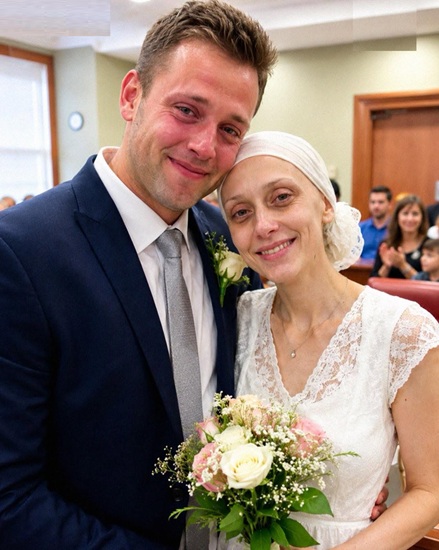
Two days later, they married in a quiet courthouse ceremony. Cara wore a simple blue dress and needed Daniel’s support while they exchanged their vows. There was no elaborate celebration or large group of guests. For a brief moment, however, Daniel recognized the woman he had loved during college in the smile she gave him after the ceremony.
Their marriage lasted only five days.
They spent those days quietly together, eating breakfast in bed, watching old movies and remembering their younger years. Daniel continued asking Cara why she had disappeared, but she repeatedly postponed the conversation. There would be time later, she assured him.
There wasn’t.
Cara died peacefully in her sleep beside him.
After her funeral, Daniel was approached by a woman he did not recognize. She introduced herself as Mara and explained that she had been Cara’s roommate and close friend. Before leaving the cemetery, Mara handed Daniel an envelope containing a small brass key and a message that created even more questions.
Cara had written 127 letters to him during their years apart.
She had never mailed them.
Mara took Daniel to the apartment where Cara had lived. Inside her bedroom was an old wooden trunk containing bundles of carefully dated envelopes. Daniel’s name appeared across each one in handwriting he recognized instantly. Following Cara’s instructions, he opened the oldest letter first.
It had been written only days after she disappeared.
Cara began with a revelation Daniel never expected: she had discovered that she was pregnant shortly before their final argument.
Suddenly, their conversation about children had an entirely different meaning. While Daniel believed they were discussing a distant future, Cara had already been confronting an immediate reality. When he talked enthusiastically about graduate school, travel and waiting years before becoming a parent, she panicked. She convinced herself that revealing the pregnancy would force Daniel to abandon everything he wanted.
Rather than telling him, Cara left.
According to her letters, she originally intended the separation to be temporary. She planned to stay with her mother, collect her thoughts and eventually return when she knew what to say. Before she managed to do that, however, the pregnancy ended unexpectedly.
Cara described becoming overwhelmed by grief, guilt and fear.
She repeatedly considered contacting Daniel. One letter promised she would call the following morning. Another described purchasing a ticket to travel back to him. In another, she wrote that she had found his workplace telephone number.
But every attempt ended the same way.
She became afraid and changed her mind.
As more time passed, returning became increasingly difficult. Cara convinced herself that Daniel would hate her or that he had already moved forward with someone else. Silence became easier in the short term, even as it created greater damage over the years.
Daniel’s sadness gradually became anger as he continued reading.
The letters revealed that Cara had known far more about his life than he realized. Through mutual acquaintances and occasional searches, she learned about career changes, moves and some of his relationships. On two occasions, she even traveled to his city intending to finally approach him.
Both times, she turned back.
Daniel struggled with what the letters revealed. Cara had clearly continued loving him, but love did not erase the consequences of her choices. She had known where he was while he spent years wondering what had happened. Her fear helped explain her silence, but it could not undo the pain that silence had caused.
Mara did not try to offer a simple defense of her friend.
Instead, she told Daniel that two uncomfortable truths could exist simultaneously. Cara could have genuinely loved him while still making decisions that deeply hurt him. Understanding why someone behaved badly did not automatically require pretending that the behavior was harmless.
Eventually, Daniel discovered one final item among Cara’s belongings: an old ultrasound photograph accompanied by her last letter.
Cara wrote that receiving a terminal diagnosis had finally forced her to confront the role fear had played throughout her adult life. She knew returning could never replace the ten years she had taken from their relationship. She did not expect Daniel to forgive everything.
She simply refused to allow fear to make one final decision for her.
That was why she returned.
The five days they spent married could never compensate for a lost decade, Cara acknowledged. They were simply the only completely honest days she still had available to offer him.
Daniel spent several weeks finishing all 127 letters. Some made him laugh because they reminded him of the woman he had known in college. Others left him devastated. Several made him furious enough to stop reading for hours.
Eventually, he stopped searching for one simple emotion that could explain everything.
He loved Cara.
He was angry with Cara.
He missed her, understood parts of her fear and still wished she had trusted him enough to tell the truth.
None of those feelings canceled the others.
Over time, Daniel decided that something constructive could come from what he had learned. In this fictional story, he worked with their former college to establish a modest emergency assistance fund for students facing pregnancy, serious illness or difficult medical circumstances without adequate support.
He deliberately did not name it after Cara.
He called it the Open Door Fund.
Later, one application came from a frightened student who was pregnant and uncertain whom she could safely approach for support. Reading her words immediately reminded Daniel of Cara at twenty years old, standing in their kitchen and trying unsuccessfully to communicate something far more important than he realized.
When Daniel eventually met the student, he did not tell her Cara’s story. He offered no opinion about what she should do and made no attempt to make decisions for her. Her circumstances and choices belonged to her.
Instead, he gave her the approved assistance paperwork and offered one simple reassurance.
“You don’t have to decide everything by yourself.”
Years earlier, fear had convinced Cara that silence was safer than honesty. Daniel could never know how differently their lives might have unfolded if she had spoken openly that night in their college apartment.
He could not recover those missing years, and five days of marriage could not replace them.
What he could do was accept the complicated truth Cara had left behind: love can be genuine without being perfect, understanding someone’s reasons does not erase the harm they caused, and forgiveness does not always arrive as a permanent decision.
Sometimes moving forward means carrying several conflicting truths at once.
And for Daniel, learning to live with those truths finally became the closure he had spent ten years searching for.

