
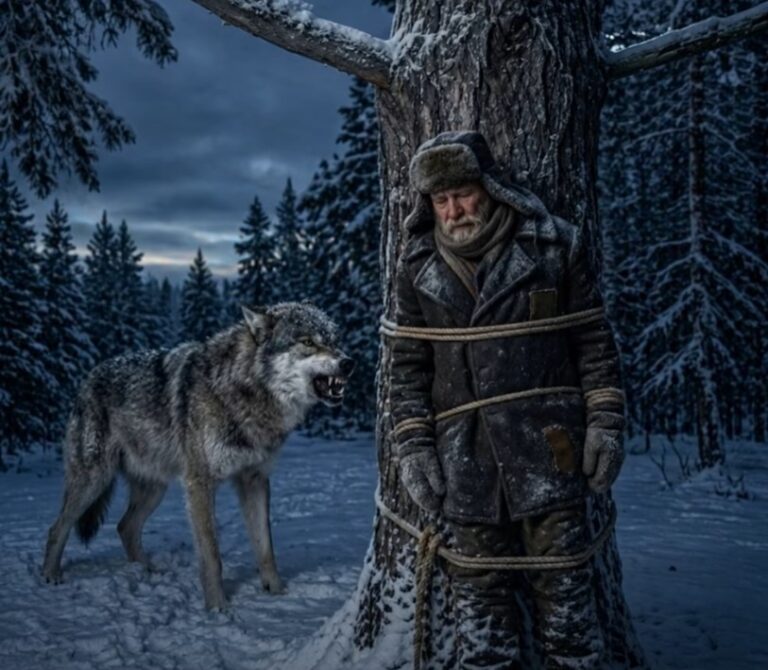
Deep in the vast, icy expanse of the Karelian taiga, an aging gamekeeper named Alexei Orlov had spent nearly his entire life protecting the forest. Over the years, the wilderness had become more than just his duty—it was his home, his identity, and the place where he understood every path, sound, and trace left behind by wildlife. His work was rooted in decades of experience, observing nature and protecting it from illegal exploitation.
During one especially harsh winter patrol, Alexei set out to investigate reports of suspected poaching activity deep inside the forest. The conditions were severe, with heavy snowfall, freezing winds, and limited visibility. Despite the danger, he followed subtle clues scattered across the terrain, signs that suggested organized human activity disturbing the natural balance of the taiga.
Eventually, he came across hidden encampments concealed within the forest. There were remnants of animals, traps placed in remote areas, and clear indications of illegal hunting operations tied to individuals with influence in the region. Recognizing the seriousness of what he had discovered, Alexei carefully began gathering evidence to report the situation.
Before he could leave the area or secure the information, everything changed suddenly. Three unknown men emerged from the forest and ambushed him without warning. They overpowered the elderly gamekeeper, confiscated the materials he had collected, and destroyed his communication devices. In a cruel attempt to silence him, they restrained him and left him exposed in the freezing wilderness during a snowstorm.
As darkness fell over the taiga, temperatures dropped rapidly. Alexei found himself injured, isolated, and unable to free himself. The storm grew stronger, covering the forest in thick snow and making survival increasingly difficult. The attackers had taken everything he carried—his tools, his evidence, and any means of calling for help—believing the storm would erase any trace of their actions.
However, deep within the silence of the forest, something unexpected began to move. Months earlier, Alexei had rescued a wounded wolf caught in an old metal trap. Instead of ignoring it, he had carefully freed the animal, treated its injured leg, and allowed it to recover before it eventually returned to the wild. That wolf, known in his memory as Sever, had survived because of that act of kindness.
Against all odds, Sever returned during the storm. Moving silently through the snow-covered trees, the wolf approached the struggling man. Without hesitation, it began working against the restraints holding Alexei, biting and pulling at the metal until it finally gave way. The release sent the old gamekeeper collapsing into the snow, but he was no longer completely alone.
Sever remained close, refusing to leave him behind. Despite his injuries and weakened condition, Alexei relied on the wolf’s presence as they slowly began moving through the deep snow together. The journey was slow and difficult, with the forest stretching endlessly around them and the storm continuing to rage overhead.
In the distance, the sound of engines and search dogs echoed through the trees. The men responsible for the attack were still searching the area, attempting to ensure their actions remained hidden. At one point, Sever guided Alexei toward a rocky gorge where sound traveled in unusual ways. The wolf’s howl echoed across the cliffs, confusing the pursuing dogs and disrupting their coordination.
This moment of confusion created a critical window of time. Rescue efforts, already in motion due to partial alerts and missing communications, were able to locate Alexei before it was too late. He was eventually found alive, though in serious condition, suffering from frostbite, broken ribs, head trauma, and injuries caused by exposure and restraint.
Even though part of the original evidence had been taken or destroyed, investigators were able to continue the case using backup files, photographs, and supporting materials. Combined with additional digital traces and testimonies, authorities reconstructed the illegal poaching operation that had been active in the region.
As the investigation progressed, those responsible were identified and faced legal consequences for their actions. The case uncovered a broader network involving environmental crimes, corruption, and violent attempts to silence opposition. Arrests were made, and charges were brought forward based on the collected evidence.
Over time, Alexei recovered physically, but the experience left a lasting emotional imprint. He often reflected on the events of that night in the frozen forest and the unexpected presence that had helped save his life. Sever, the wolf he had once rescued, became a symbol in his memory of the fragile but powerful connection between humans and nature.
Unlike a domesticated animal, Sever was never considered a companion in the traditional sense. The wolf remained wild and independent, occasionally appearing near the edges of the forest close to Alexei’s cabin. These rare sightings were unpredictable, but they reinforced the idea that wild creatures can remember acts of survival and coexistence.
In later years, the story of Alexei Orlov began to spread among younger forest rangers and conservation workers. It was shared as an example of respect for wildlife, the dangers of illegal exploitation, and the unpredictable ways nature can respond to human actions. The tale became part of informal lessons about balance, responsibility, and survival in extreme environments.
Today, the story of the old gamekeeper and the wolf known as Sever continues to circulate as a powerful narrative of endurance, trust, and the connection between humans and the natural world. Whether viewed as a symbolic tale or a reflection on real environmental challenges, it remains a reminder of how deeply actions in nature can echo over time.

