
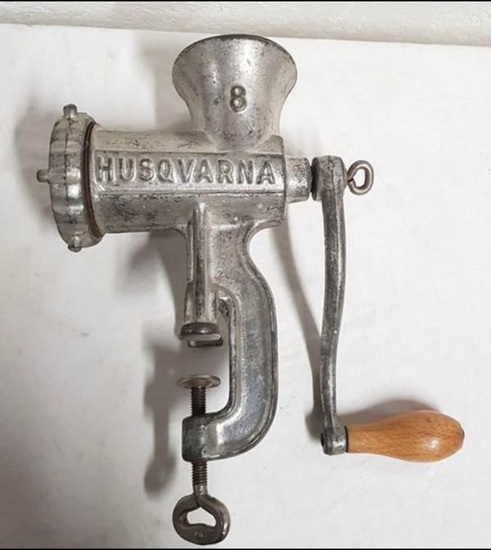
In today’s digital world, it is very common for people to come across unfamiliar objects and immediately turn to the internet for answers. Many times, old tools, industrial parts, or forgotten household items appear strange when seen without context. These discoveries often spark curiosity and lead to discussions where users try to identify what the object actually is. One frequently shared example is a metal kitchen device that often leaves people confused when they first see it.
At first glance, it may look like some type of machine or mechanical equipment with no clear purpose. However, online communities usually respond quickly and help explain its real function. This object is known as a meat mincer, also widely called a meat grinder. Although it may look unusual to some people today, it has a long and practical history in food preparation.
Understanding What a Meat Mincer Is
A meat mincer is a kitchen tool used for grinding meat into smaller, finely chopped pieces. It can be operated manually or through an electric motor, depending on the model. The device is usually made from durable metal and is designed to handle raw or cooked food safely and efficiently.
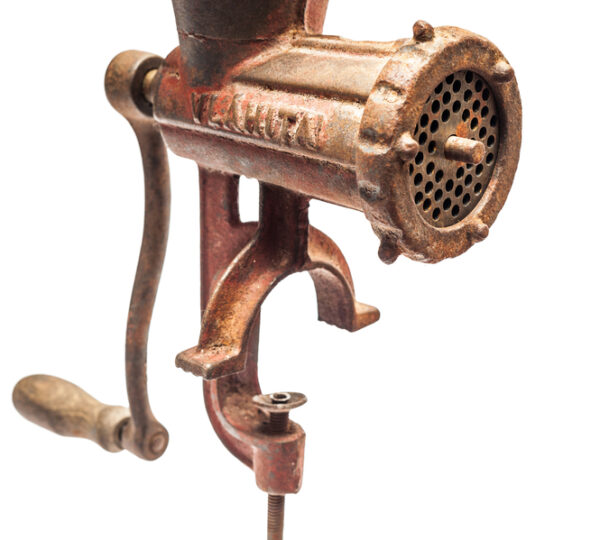
The basic structure includes a feeding opening, an internal grinding mechanism, and a perforated metal plate where the processed meat comes out. As the meat is pushed through the system, it is cut and shaped into fine strands or small pieces.
Earlier versions of this tool required manual operation, while modern versions are mostly electric and much faster. Despite these improvements, the core function of the device has remained the same over time.
The History Behind the Meat Grinder
The origin of meat grinding tools goes back to the 1800s, a time when many household inventions were being developed to improve daily life. Early designs were simple but highly effective for their purpose.
An important figure linked to early mechanical inventions is Karl Drais, a German inventor known for developing various mechanical devices during that period. Early meat grinders were inspired by similar mechanical principles used in other tools of the time.
These early models were made from strong materials like cast iron and steel. They were commonly attached to tables, and users would operate them by turning a hand crank. This allowed people to prepare fresh minced meat at home or in small shops without needing industrial machines.
Over time, improvements in engineering and manufacturing helped make these devices more efficient and easier to use.
How Manual Meat Mincers Work
A traditional manual meat mincer works through a simple mechanical process. First, pieces of meat are placed into the top opening of the device. Then, the user rotates a handle that activates an internal screw mechanism.
As the screw turns, it slowly pushes the meat toward a sharp cutting blade. The blade slices the meat and forces it through a metal plate with small holes. The final result is minced meat that comes out in controlled texture depending on the plate used.
This method requires physical effort, but it is reliable and does not depend on electricity. Because of this, manual grinders were widely used in homes for many years.
The Development of Electric Versions
With the introduction of electricity in households, many kitchen tools were upgraded, including the meat grinder. Electric models replaced manual cranking with motor-powered systems, making the process faster and easier.
Electric meat grinders use the same basic cutting principle but rely on a motor to rotate the internal mechanism. This allows users to process larger amounts of meat in a shorter time.
Modern devices often come with additional features such as multiple grinding plates, sausage-making attachments, and different speed settings. Some models are designed for home use, while others are built for commercial kitchens and food production facilities.
Why This Tool Was Important in Everyday Life
Before modern appliances became common, preparing minced meat by hand was time-consuming and inconsistent. The meat mincer changed this by offering a simple and efficient solution for households and butchers.
It allowed people to prepare fresh meat products at home, which improved both quality and hygiene. It also made it easier to create popular foods such as meatballs, sausages, and various traditional dishes that rely on ground meat.
Because of its usefulness, the meat grinder became a standard kitchen tool in many homes across Europe and other regions.
Why People Find It Strange Today
In modern kitchens, electric appliances have replaced most manual tools, which is why younger generations may not recognize older devices like the meat mincer. When these objects appear online or in storage spaces, they can seem confusing or even mysterious.
Their heavy metal construction and mechanical parts often make them look more like industrial equipment than kitchen tools. This is why they often become topics of discussion on social media, where users try to identify them.
Once explained, however, most people are surprised to learn how practical and common these devices once were.
The Internet’s Role in Solving Everyday Mysteries
One interesting aspect of online communities is how quickly people come together to identify unknown objects. A single image can attract many responses from individuals who recognize the item or have knowledge about its use.
This collective sharing of information helps turn confusion into learning. It also shows how the internet can be a valuable place for education and historical awareness, not just entertainment.
These moments often highlight how much everyday knowledge can still surprise people when placed out of context.
Although a meat mincer may look unfamiliar to some people today, it is actually a practical and historically important kitchen tool. Its design has evolved over time, but its purpose has remained consistent: to make food preparation easier and more efficient.
From its early manual versions in the 19th century to the modern electric machines used today, it has played an important role in kitchens around the world. What once seemed like a mysterious object is now understood as a clever and useful invention that helped shape cooking practices for generations.

