
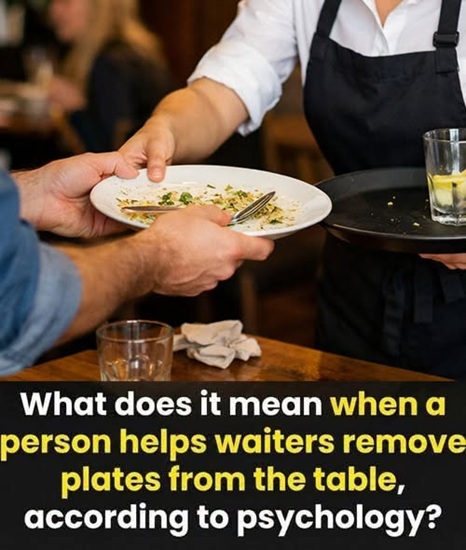
In daily life, the smallest actions often reveal the most about human behavior. One example can be seen in restaurants when a guest quietly stacks plates, gathers empty glasses, or organizes the table before the server returns. At first, this may look like simple manners or basic politeness, but psychologists suggest that these subtle behaviors may reflect deeper levels of empathy and social awareness.
Restaurants are fast-paced environments filled with constant movement, conversation, and pressure. Servers often manage multiple tables at once while carrying food, taking orders, and handling requests. In such busy surroundings, even minor help from customers can make a noticeable difference. What appears to be a simple gesture can actually carry meaningful psychological significance.
Micro Acts of Kindness and Human Behavior
Psychologists describe these behaviors as micro-acts of kindness—small, spontaneous actions that help another person without expecting any reward. These acts are usually not planned or performed for attention. Instead, they happen naturally when someone notices another person’s effort or difficulty.
Research in human behavior suggests that these actions are closely connected to empathy. When a person recognizes that a server is busy or under pressure and decides to help by organizing items on the table, it often reflects an intuitive understanding of shared human experience.
Although these actions may seem minor, they contribute to smoother social interactions and can improve the overall atmosphere in shared spaces like restaurants.
Empathy and Social Awareness
Empathy plays a key role in shaping prosocial behavior, which refers to voluntary actions that benefit others. In restaurant settings, this can include stacking plates, moving dishes closer to the edge of the table, or assisting with small tasks that make service easier.
Psychologists, including Dr. Martin L. Hoffman, who studied empathy and moral development, have noted that empathetic individuals are more likely to engage in supportive behaviors without being asked. These actions are often automatic responses rather than conscious decisions.
People who demonstrate this kind of awareness are typically sensitive to social cues and can quickly recognize when someone may need help.
How Personal Experience Influences Behavior
For many people, the habit of helping restaurant staff comes from past experience. Former servers or restaurant workers often continue these behaviors long after leaving the industry. Having worked in fast-paced environments themselves, they understand how demanding the job can be.
Long shifts, constant multitasking, and maintaining a friendly attitude under pressure can make restaurant work physically and emotionally exhausting. Because of this, individuals with such experience often develop a natural tendency to reduce stress for others in similar roles.
Even those without direct experience may adopt the habit simply by observing and recognizing the effort involved in service work.
Different Views on the Same Action
Although many people see assisting servers as a positive gesture, opinions can differ depending on cultural norms and personal beliefs. Some individuals believe that handling dishes or organizing tables is part of the server’s job, while others view it as a respectful and considerate act.
Online discussions often highlight these contrasting viewpoints. For some, it represents kindness and humility. For others, it may seem unnecessary or outside expected customer behavior. These differences show how social context influences the interpretation of simple actions.
Despite varying opinions, the intention behind the behavior is generally rooted in awareness and consideration for others.
Prosocial Behavior in Psychology
In psychological terms, helping a server clear a table falls under prosocial behavior. This refers to voluntary actions intended to benefit another person or support social harmony without expecting compensation or recognition.
Studies in behavioral science show that people who engage in prosocial behavior are often more attuned to nonverbal signals. They can notice when someone is busy, stressed, or in need of assistance, even without being directly told.
These small actions may not seem significant individually, but they contribute to smoother interactions and a more positive shared environment.
The Effect on Service Workers
For restaurant employees, even small gestures of help can have a meaningful impact. A neatly stacked set of plates or organized tableware can save time and reduce physical effort during busy shifts. More importantly, it can also provide a sense of appreciation.
Working in customer service often requires maintaining professionalism while managing stress and time pressure. In such conditions, small acts of kindness from customers can serve as a reminder that their effort is noticed.
While these gestures do not replace proper working conditions, they can still offer brief moments of encouragement during demanding hours.
Kindness, Well-Being, and Human Connection
Psychological research suggests that individuals who regularly engage in kind and helpful behaviors often report higher levels of emotional well-being and life satisfaction. Helping others can activate positive emotional responses and strengthen social connection.
These benefits are not limited to major actions. Even small, everyday behaviors—such as assisting a server—can contribute to a more positive mindset over time.
This connection between kindness and mental well-being highlights how deeply human behavior is influenced by social interaction and mutual support.
A Simple Reminder of Shared Humanity
In a time when much of communication happens through digital screens, small real-life gestures stand out even more. They are natural, unplanned, and genuine reflections of human behavior.
Helping a server clear a table may seem like a minor act, but it represents awareness of others and a willingness to contribute in small ways. These actions are not performed for attention but arise from simple human understanding.
Ultimately, such gestures remind us that kindness does not need to be large or dramatic to be meaningful. Even the smallest acts in everyday situations can reflect empathy and strengthen human connection.

