
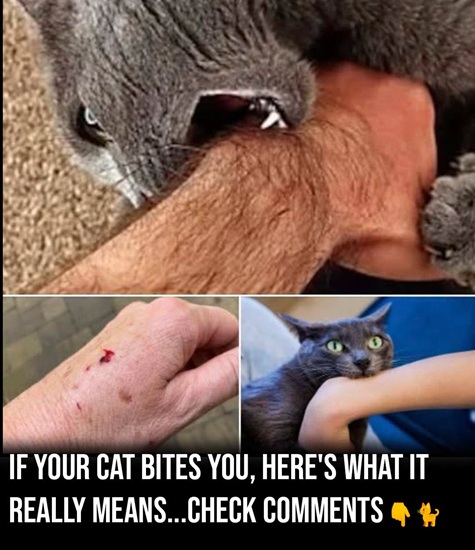
Living with a cat often means getting used to a personality that can be affectionate, independent, playful, and occasionally surprising. A cat may curl up beside you, purr happily, and then suddenly give your hand a quick nip. That behavior can feel confusing, especially when the bite does not appear aggressive. In reality, cats use their mouths for many different reasons, and biting can mean different things depending on the situation. A gentle nibble during play is very different from a defensive bite delivered by a frightened animal.
Paying attention to the cat’s body language and what happened just before the bite can help explain the behavior. Play is one of the most common reasons cats bite. Cats are natural hunters, and their instincts encourage them to chase, grab, pounce, scratch, and bite moving objects. Even indoor cats that never hunt outside still carry these behaviors. During play, a cat may suddenly attack a toy, a shoelace, or a moving hand because the motion triggers hunting instincts.
These playful bites are often quick and may not involve the same tense body language seen during genuine aggression. Still, allowing a cat to use human hands as toys can create problems over time. Kittens are especially likely to bite during play because they are still learning how to interact with the world. Young cats explore with their mouths and practice hunting behavior by wrestling with siblings.

During those interactions, kittens gradually learn how much pressure is acceptable. If one kitten bites another too hard, the other may stop playing or react immediately. That feedback helps teach boundaries. Human owners can support the same learning process by redirecting biting toward appropriate toys rather than allowing hands and feet to become targets.
A small kitten biting fingers may seem harmless because the pressure is usually light. As the cat grows, however, its jaws become stronger and its teeth become capable of causing painful puncture wounds. A habit that seemed adorable at three months old may become uncomfortable or unsafe in adulthood. This is why it is better to establish clear play boundaries early. Toys such as feather wands, toy mice, balls, and other interactive objects allow a cat to chase and bite without learning that human skin is part of the game.
Some cats give very soft bites while they are relaxed and enjoying attention. Owners often call these “love bites.” A cat may gently nibble a hand while purring, rubbing against a person, or receiving affection. In some cases, this may be part of normal social behavior. Cats sometimes use gentle mouth contact while grooming one another, and similar behavior can occasionally be directed toward people they trust. Even so, a soft bite should not automatically be interpreted as a declaration of affection.
A gentle bite can also be a warning that the cat is beginning to feel overstimulated. A cat may enjoy petting at first but eventually reach a point where continued touching becomes uncomfortable. The change can happen quickly. One moment the animal appears relaxed, and the next it turns its head and gives a short nip. The bite may be the cat’s way of communicating that it has had enough attention for the moment.
There are often warning signs before petting-related biting happens. The tail may begin twitching more rapidly, the skin along the back may ripple, the ears may move backward, or the cat may suddenly turn its head toward the person’s hand. The body can become noticeably tense. Recognizing these signals allows the person to stop petting before the cat feels the need to bite. Over time, owners often learn exactly how much physical attention their individual cat prefers.
Not every cat enjoys long petting sessions. One cat may happily remain on a lap for an hour, while another may tolerate only a minute or two before wanting space. This difference does not mean one animal is more affectionate than the other. Cats have individual preferences just as people do. Respecting those preferences usually improves trust and reduces unwanted behavior.

Where a cat is touched can also affect its reaction. Many cats enjoy gentle contact around the cheeks, head, and chin. Some are much less comfortable with their belly, tail, paws, or lower back being touched. A cat rolling onto its back does not always mean it wants a belly rub. The posture may simply indicate relaxation or trust. Reaching toward the stomach can sometimes trigger a defensive grab or bite.
Overstimulation can also occur during intense play. A cat chasing a moving toy can become increasingly excited as the session continues. That excitement may eventually spill over into grabbing nearby hands or feet. Ending play while the cat is still engaged but before it becomes overly aroused can help. Giving the cat a toy it can physically catch and bite at the end of the game may also provide a satisfying conclusion.
Fear is another major reason cats bite. A frightened cat may feel that biting is necessary when escape seems impossible. Loud noises, unfamiliar people, veterinary visits, sudden movements, or being physically restrained can all trigger defensive behavior. In these situations, the bite is not necessarily an attempt to attack someone. It may simply be the animal’s effort to create distance from something it perceives as threatening.
A fearful cat often communicates discomfort before using its teeth. The ears may flatten against the head, the pupils may become large, and the body may crouch close to the ground. Hissing, growling, swatting, or attempting to hide can also occur. Continuing to approach after these signs appear may increase the risk of a bite. Giving the animal space is usually safer and more respectful.
Stress can produce similar reactions. Moving to a new home, introducing another pet, changing routines, having unfamiliar visitors, or experiencing loud construction can all affect a cat’s behavior. A cat that normally enjoys attention may become less tolerant during a stressful period. The increased irritability may disappear when the environment becomes calmer.
Some cats also show redirected aggression. This happens when the cat becomes highly aroused by something it cannot reach and then directs that energy toward another target. For example, a cat may see another animal outside a window and become intensely excited or frustrated. If a person reaches down to pet the cat at that moment, the person may suddenly be bitten or scratched. The cat was not originally angry with the person, but the emotional arousal was redirected.
In these situations, the safest response is often to leave the cat alone until it has fully calmed down. Attempting to comfort or restrain an intensely aroused animal can make the situation worse. Once the cat is relaxed again, the original trigger can be addressed if possible. Blocking access to a particular window or reducing visual contact with outdoor animals may help in recurring cases.
Pain is another important explanation for unexpected biting. Cats are often very good at hiding physical discomfort. A sudden change in behavior can therefore be one of the earliest signs that something is wrong. If a normally calm cat suddenly bites when touched in a particular area, pain should be considered.
Dental problems can make a cat react when its face or mouth is touched. Arthritis can make handling around the hips or spine uncomfortable. Skin conditions, injuries, abdominal pain, urinary problems, and other illnesses can also change a cat’s tolerance for contact. Because the animal cannot explain what hurts, biting may become one of the ways it protects a painful area.
A sudden increase in aggression should therefore not automatically be treated as a training issue. A veterinary examination can help rule out medical causes. This is especially important for older cats, which are more likely to develop conditions such as arthritis, dental disease, or other chronic problems.
Territorial behavior can also contribute to biting. Cats may become protective of favorite sleeping areas, food, toys, hiding places, or other resources. If someone reaches into a location where the cat feels secure, the animal may respond defensively. This does not necessarily mean the cat is trying to “dominate” the household. Often, it simply wants control over a valued space.
Providing enough resources can reduce this kind of conflict. In homes with several cats, multiple litter boxes, food stations, sleeping areas, and elevated spaces can help prevent competition. Giving each cat access to places where it can rest undisturbed may also reduce defensive behavior.
Cats can sometimes learn to bite because biting produces a result. If a cat nips someone every morning and immediately receives breakfast, the behavior may become reinforced. The cat has learned that the action works. This does not mean the animal is being manipulative in a human sense. It simply means a behavior has been associated with a predictable reward.
A more consistent routine can help in these situations. Feeding at regular times or using an automatic feeder can reduce the connection between biting and food delivery. If the cat bites to demand attention, waiting for calm behavior before responding may also help.
Some cats use their mouths during grooming behavior. A cat may lick a person’s hand and then give a very gentle nibble. Cats that live together sometimes groom each other in similar ways. When the body remains relaxed and the bite is soft, this behavior is usually different from aggression. Still, it is wise not to encourage the cat to increase pressure.
Purring can sometimes confuse people during these interactions. A cat may purr while enjoying attention, but purring is not an absolute sign of happiness. Cats can also purr when nervous, stressed, or unwell. Looking at the entire body is more reliable than relying on one sound.
Tail movement provides useful clues. A slowly moving tail can be part of a relaxed posture, while rapid flicking or strong thumping may indicate increasing irritation. A dramatically puffed tail can indicate fear or intense excitement. These signals vary somewhat between cats, so familiarity with an individual animal helps.
Ear position is another valuable clue. Ears pointing forward or resting naturally often accompany a relaxed or curious cat. Ears that rotate sideways or flatten backward can indicate discomfort, fear, or irritation. If the ears change position while someone is petting the cat, it may be time to stop.
The eyes can also communicate emotion. Large pupils may appear during fear, excitement, or active play. Half-closed eyes can indicate relaxation in many situations. Again, no single signal should be interpreted alone. The best understanding comes from combining posture, movement, sound, and context.
One of the most common mistakes people make is punishing a cat for biting. Shouting, hitting, spraying water, or using other frightening methods can damage trust and may actually make defensive behavior worse. A cat that becomes afraid of its owner is more likely to use biting as protection.
Redirecting behavior is generally more effective. If a kitten bites fingers during play, offer a toy instead. If an adult cat bites after prolonged petting, shorten the petting sessions. If a frightened cat bites when cornered, provide escape routes and hiding places.
Positive reinforcement can also help. Calm behavior can be rewarded with treats, praise, or play. Cats can learn patterns just like other animals, and rewarding desired behavior is often more effective than punishing unwanted behavior.
Daily enrichment can reduce some forms of biting caused by boredom or excess energy. Indoor cats benefit from opportunities to climb, scratch, hunt, explore, and play. Cat trees, shelves, scratching posts, puzzle feeders, and window perches can make the environment more interesting.
Interactive play can be especially helpful for energetic cats. Wand toys allow the cat to chase and pounce while keeping human hands safely away from teeth and claws. Moving the toy like prey can make the game more engaging. Allowing the cat to capture it occasionally keeps the interaction satisfying.
Food puzzles provide another useful activity. Instead of receiving all food in a regular bowl, the cat has to move or manipulate an object to access part of the meal. This encourages problem solving and can make feeding more mentally stimulating.
A predictable daily routine can also reduce stress. Cats often feel more secure when meals, play, and quiet periods happen at reasonably consistent times. Sudden changes are sometimes unavoidable, but maintaining familiar routines where possible may help anxious animals.
Newly adopted cats may need extra patience. Moving into an unfamiliar home can be overwhelming, especially for a shy or previously stressed animal. Providing a quiet room with food, water, a litter box, hiding places, and comfortable bedding can make the adjustment easier.
Some cats begin exploring within hours. Others may take days or weeks to feel secure. Forcing physical interaction usually does not speed up the process. Allowing the cat to approach on its own can build trust more effectively.
Visitors should also avoid forcing attention on a nervous cat. Some cats enjoy meeting new people, while others prefer to hide until the house becomes quiet again. Both responses can be normal. Giving the animal control over when it interacts can prevent defensive biting.
Children need guidance around cats as well. Young children may accidentally squeeze, chase, or corner an animal because they do not recognize signs of discomfort. Teaching children to pet gently and allow the cat to walk away can protect both the child and the animal.
Supervision is especially important when very young children interact with pets. Even a normally calm cat can defend itself if frightened or hurt. Preventing stressful interactions is safer than expecting the animal to tolerate everything.
Veterinary visits can also cause defensive biting. Cats may become frightened by carriers, cars, unfamiliar smells, other animals, and physical examinations. Helping a cat become comfortable with its carrier before veterinary visits can reduce some stress.
Leaving the carrier open at home with comfortable bedding inside can make it part of the normal environment. Treats or toys can be placed inside occasionally. This prevents the carrier from appearing only when something frightening is about to happen.
Gentle handling practice can also help. Touching the paws, ears, and body briefly while rewarding calm behavior may make examinations easier later. The sessions should remain short and stop if the cat becomes uncomfortable.
When biting becomes frequent, severe, or unpredictable, professional help may be useful. A veterinarian should usually be consulted first to rule out pain or illness. If the cat is medically healthy, a qualified feline behavior professional can help identify triggers and develop a safer plan.
Keeping a record of incidents can help identify patterns. Owners can note when the bite happened, what the cat was doing beforehand, how long it had been touched, and what body language was visible. Patterns may reveal that biting occurs before meals, during evening play, or after a specific type of handling.
This information can also help veterinarians or behavior specialists. A detailed description is more useful than simply saying that the cat “bites randomly.” In many cases, behavior that appears random becomes more understandable once the circumstances are documented.
While understanding cat behavior is important, any bite that breaks human skin also deserves attention from a health perspective. Cat teeth are narrow and sharp. They can create deep punctures while leaving only small marks on the surface.
This shape allows bacteria from the mouth to enter deeper tissues. Because the opening can be small, the wound may close quickly while bacteria remain underneath the skin. That is one reason cat bites can sometimes become infected.
Basic first aid usually begins with washing the wound thoroughly with soap and running water. Cleaning should happen as soon as possible after the bite. A clean dressing can then be placed over the area.
If the wound is bleeding heavily, firm but gentle pressure with clean material may help control it. Severe bleeding, deep tissue damage, or bites to sensitive areas require prompt medical attention.
Deep punctures deserve particular caution. A tiny hole on the surface does not necessarily mean the injury is minor. Cat teeth can reach structures beneath the skin that are difficult to clean properly at home.
Bites to the hands can be especially concerning. Tendons, joints, and other important structures lie close to the surface. An infection near a joint or tendon can become more complicated than an ordinary superficial wound.
Signs of infection can include increasing redness, warmth, swelling, pain, drainage, or pus. Fever or feeling generally ill can also indicate that infection is becoming more serious. These symptoms should not be ignored.
A wound that looks increasingly worse over several hours should be evaluated rather than waiting several days. Cat-bite infections can sometimes progress quickly.
People with diabetes, weakened immune systems, poor circulation, or other conditions that affect healing may face greater risk. They should generally seek medical advice sooner after an animal bite.
Tetanus vaccination status may also matter. Depending on the wound and the timing of previous vaccinations, a medical professional may recommend a booster. Anyone uncertain about their vaccination history should mention that during evaluation.
Rabies risk depends on the circumstances. A healthy indoor cat with current vaccinations is different from an unknown stray or wild animal. Geographic location also matters because rabies prevalence varies.
If the animal is unknown, behaving abnormally, or cannot be observed, professional medical or public-health advice should be sought promptly. Rabies decisions should be based on local guidance rather than assumptions.
Keeping pets appropriately vaccinated helps protect both animals and people. Regular veterinary care can also identify health problems that might contribute to sudden changes in behavior.
Not every bite requires emergency care, but people should use good judgment. A very shallow scratch or light nip that does not break the skin is different from a deep puncture.
When skin is broken, cleaning the wound promptly is important. Medical attention is especially appropriate for deep bites, wounds on the hand or face, signs of infection, serious bleeding, or uncertainty about tetanus or rabies.
The health risk should not make people afraid of living with cats. Most cats do not regularly cause serious bites, and many incidents can be prevented through better understanding of behavior.
Learning when a cat has had enough petting is one of the easiest preventive steps. If the animal starts flicking its tail or turning toward the hand, stopping immediately can prevent the next step.
Providing regular play can reduce ankle attacks and rough behavior. A cat with appropriate opportunities to chase and pounce may be less likely to create its own games using human feet.
Avoiding hand wrestling is another simple rule. Even if the cat appears to understand that it is “only playing,” the habit teaches it that biting skin is acceptable.
Respecting hiding places also reduces defensive incidents. A cat under a bed or inside a box may be trying to create distance. Reaching into that area can make the animal feel trapped.
Allowing cats to initiate some interactions can improve communication. A person can offer a hand for the cat to sniff and wait for the animal to move closer. If it rubs against the hand, gentle petting may be welcome.
If the cat moves away, the interaction can simply end. There is no need to follow it around and continue touching it.
This kind of choice can strengthen trust because the cat learns that its signals are respected.
A good relationship with a cat does not depend on constant physical contact. Some cats show attachment by sitting nearby rather than sitting directly on a person.
Others follow their owners from room to room without wanting to be held.
Some sleep beside people but dislike being picked up.
Understanding these differences prevents unrealistic expectations.
The same principle applies to biting. There is no single explanation that fits every incident.
A quick playful nip may reflect hunting instincts.
A soft nibble may happen during social contact.
A sudden bite after long petting may mean overstimulation.
A hard bite accompanied by hissing may indicate fear.
An unexpected reaction when touched may indicate pain.
A bite near mealtime may have become a learned behavior.
Context provides the answer more reliably than the bite itself.
The best response is therefore to observe before reacting.
What was happening just before the bite?
Was the cat playing?
Was it being touched?
Was another animal nearby?
Was it trying to escape?
Did the person touch a sensitive area?
Has the cat recently changed behavior?
These questions can reveal far more than simply labeling the animal aggressive.
Cats communicate continuously, even when people do not notice.
Their ears move.
Their tails change speed.
Their muscles tighten.
Their pupils change.
They turn their heads.
They move closer or farther away.
Learning to notice those changes makes their behavior easier to understand.
It also reduces the number of situations in which a bite seems to come from nowhere.
For owners, the goal should not be to remove every natural behavior. Cats are predators and will always use their mouths during certain activities.
The goal is to give those behaviors appropriate outlets and keep interactions safe.
Toys are for biting.
Human hands are not.
Hiding places are for retreating.
A frightened cat should not be forced out.
Petting continues only while the cat appears comfortable.
Painful behavior changes deserve veterinary attention.
These simple boundaries can prevent many problems.
When a bite does occur, the response should match the situation.
A playful nip that does not break the skin may only require redirecting the cat.
A repeated behavioral problem may require changes in routine or enrichment.
A sudden unexplained bite may justify a veterinary check.
A deep puncture to human skin may require medical evaluation.
Both the cat’s behavior and the human wound matter.
Ignoring the behavioral cause may allow biting to continue.
Ignoring the medical risk may allow an infection to develop.
Responsible cat ownership means paying attention to both.
Cats may always remain a little mysterious.
That unpredictability is part of what many people enjoy about them.
But most biting behavior has an explanation.
It may be excitement.
It may be fear.
It may be overstimulation.
It may be discomfort.
It may be learned behavior.
Or it may simply be a young cat still learning boundaries.
Understanding the reason allows people to respond with patience rather than punishment.
And when cats learn that their signals are respected, they often have less reason to escalate from subtle warnings to teeth.
A gentle nibble does not always mean the same thing, but it almost always carries information.
The better we become at reading that information, the easier it becomes to share our homes safely and comfortably with the cats we love.

