
When the infant was approximately eight months old, the parents began noticing subtle but persistent respiratory symptoms that initially appeared to be mild and temporary. At first, the baby exhibited a soft, dry cough that resembled a common viral infection frequently seen in early childhood. Because infants are highly susceptible to seasonal viruses, the symptoms did not immediately raise alarm. However, over time, the pattern of the cough became more concerning.
Instead of resolving within a few days, the cough continued and gradually intensified, particularly during nighttime hours. The baby’s breathing occasionally sounded uneven, and periods of restlessness during sleep became more frequent. These changes prompted closer monitoring by the parents. As the symptoms persisted beyond the expected duration of a typical cold, the family decided to seek medical advice to ensure there were no underlying respiratory complications.
Medical Evaluation and Early Diagnosis
During the initial pediatric evaluations, the infant underwent a full physical examination, including lung auscultation and assessment of breathing patterns. The doctor carefully reviewed the symptoms, noting the absence of fever but the presence of ongoing coughing episodes and mild respiratory distress at night.
Given the presentation, the initial working diagnosis leaned toward early childhood asthma or reactive airway sensitivity. This is not uncommon in infants, as their respiratory systems are still developing and can react strongly to environmental triggers such as dust, allergens, or mild irritants.
A treatment plan was recommended that included inhaled medication designed to reduce airway inflammation and improve breathing comfort. The parents followed the prescribed treatment diligently, hoping for gradual improvement over the following weeks.
Lack of Improvement and Environmental Suspicion
Despite consistent adherence to the treatment plan, the infant’s condition did not show the expected level of improvement. While there were occasional brief periods of relief, the overall pattern of coughing and disrupted sleep continued. In some instances, the symptoms appeared to worsen, especially during the night.
In addition to respiratory concerns, the parents noticed behavioral changes in the baby. Feeding patterns became slightly irregular, and the infant appeared more fatigued during the day. These signs suggested that something beyond a simple viral or reactive condition might be contributing to the ongoing symptoms.
At this stage, the family began considering whether environmental factors within the home could be playing a role. Indoor air quality, hidden moisture, or allergens were considered as possible contributing factors, even though no obvious signs were initially visible.
Sudden Behavioral Change in the Family Dog
Around the same period, the family observed a significant change in the behavior of their golden retriever. The dog, which had always been calm, affectionate, and well-adjusted, began acting unusually focused on the baby’s room.
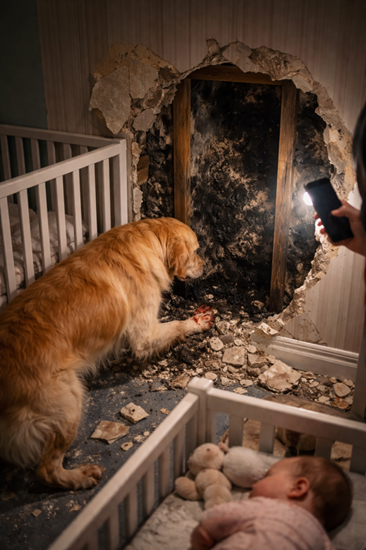
The dog repeatedly positioned itself near the crib and began scratching persistently at a specific section of the wall directly behind it. This behavior was not random or playful. Instead, it appeared targeted, repetitive, and concentrated on the same exact area over multiple days.
At first, the behavior was interpreted as stress, curiosity, or attention-seeking. However, the persistence and intensity of the action made it increasingly difficult to ignore.
Escalation and Repeated Attempts to Intervene
As the behavior continued, the parents attempted to discourage the dog from entering the nursery or scratching the wall. Verbal correction and physical removal from the room were used in an effort to stop the activity. Despite these measures, the dog consistently returned to the same location whenever possible.
To prevent further disturbance, a safety gate was installed to restrict access to the nursery. Even with this barrier in place, the dog demonstrated determination to reach the room and resume scratching at the same section of the wall.
Over time, the repeated scratching began to cause visible damage to the wall surface, including marks, peeling paint, and weakening of the material. The intensity of the behavior suggested that the dog was reacting to something it perceived as significant.
Physical Impact and Growing Concern
As the behavior continued over several days, the dog’s actions became increasingly forceful. The repeated scratching began to affect the dog physically, resulting in minor injuries to its paws. Despite visible discomfort, the dog did not stop returning to the same area.
This persistence added to the concern within the household, as both the child’s health condition and the dog’s behavior were becoming difficult to explain. The situation created emotional stress for the family, who were trying to manage medical uncertainty while also addressing unexpected damage within the home.
At this point, attention shifted more seriously toward the possibility of an unseen issue behind the wall.
Discovery of Structural Damage
One evening, the situation escalated when part of the wall section that had been repeatedly scratched finally gave way. The dog’s persistent activity had weakened the material enough that a noticeable opening had formed.
Inside the exposed area, debris from the wall was scattered, and a strong, unusual odor became immediately noticeable. The smell was damp, earthy, and musty, suggesting long-term moisture accumulation.
Concerned by the discovery, the parents carefully examined the opening further to understand what lay behind the damaged section.
Identification of Mold Growth
Upon closer inspection, visible signs of extensive mold growth were discovered within the wall cavity. Dark, irregular patches had formed across the wooden structures and insulation material, indicating prolonged exposure to moisture.
This type of mold growth is typically associated with hidden water leaks or poor ventilation conditions. The extent of the contamination suggested that the issue had been developing over an extended period without detection.
Given the location behind the infant’s crib, the discovery raised immediate concerns about indoor air quality and potential respiratory exposure.
Source of Moisture and Hidden Plumbing Leak
Further investigation identified a likely source of the moisture: a slow and continuous leak from a nearby plumbing pipe connected to a bathroom line. Because the leak was concealed within the structure of the wall, it had gone unnoticed during routine household use.
Over time, even small amounts of leaking water can accumulate within wall cavities, creating persistent damp conditions. These conditions are ideal for mold development, particularly in enclosed spaces with limited airflow.
The combination of moisture, warmth, and darkness inside the wall allowed the mold to spread gradually without visible external warning signs.
Possible Connection to the Infant’s Symptoms
Once the environmental issue was identified, attention turned toward its possible impact on the infant’s respiratory health. Mold exposure is known to potentially irritate the respiratory system, particularly in infants and young children who are more sensitive to airborne particles.
Although no direct causal conclusion can be made without formal medical testing, the timing and proximity of the mold growth raised reasonable concerns. The infant’s sleeping area had been located very close to the affected wall, increasing potential exposure to airborne particles.
This discovery provided a new perspective on the previously unexplained persistence of respiratory symptoms.
Reinterpretation of the Dog’s Behavior
In light of the discovery, the dog’s earlier behavior was reconsidered. Dogs have a significantly stronger sense of smell compared to humans and are capable of detecting environmental changes that are otherwise imperceptible.
It is possible that the dog detected the presence of moisture, decay, or mold long before it became visible. Its repeated focus on the same area suggests a consistent response to a specific environmental stimulus rather than random behavior.
While this cannot be confirmed with certainty, it highlights how animal behavior can sometimes align with hidden environmental issues.
Resolution and Environmental Remediation
Following the discovery, immediate steps were taken to address the situation. The damaged wall section was opened fully for inspection, the mold-affected materials were removed, and professional remediation procedures were initiated to ensure safe cleaning and restoration.
The plumbing leak was repaired to prevent further moisture intrusion. Additional steps were taken to improve ventilation and ensure that no residual contamination remained in the nursery area.
These corrective actions were essential to restoring a safe environment for the infant and preventing future recurrence of similar issues.
This case highlights how health symptoms, environmental conditions, and even animal behavior can sometimes intersect in unexpected ways. While the infant’s respiratory symptoms initially suggested a common medical condition, the eventual discovery of hidden mold provided a broader environmental explanation that required urgent attention.
It also demonstrates the importance of considering indoor environmental factors when dealing with persistent, unexplained health issues in children. Additionally, it shows how animals may sometimes respond to subtle environmental changes before humans are aware of them.
Ultimately, the resolution of the situation required both medical evaluation and environmental correction, ensuring the safety and well-being of the child and the household.

