
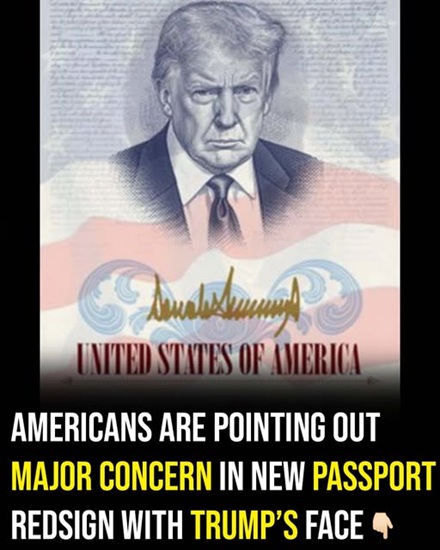
Recent online discussions and media commentary have focused on claims regarding a possible commemorative U.S. passport design connected to the country’s upcoming 250th anniversary. According to these discussions, the concept involves a special edition passport featuring patriotic imagery linked to the Constitution and the nation’s founding era. Some reports circulating online also suggest that President Donald Trump’s image is included within the proposed visual design concept.
The topic gained rapid attention on social media platforms, where users reacted strongly to the idea of a redesigned passport that could incorporate modern political figures alongside traditional national symbols. Supporters of the concept described it as part of broader semiquincentennial celebrations marking 250 years since the founding of the United States. They viewed it as a symbolic gesture reflecting national pride and historical commemoration.
Critics, however, raised concerns about the appropriateness of including any contemporary political figure in a federal identification document. Passports are traditionally designed to remain politically neutral, focusing on universally recognized national symbols such as seals, emblems, and historical imagery. This neutrality is considered important because passports are used internationally and represent the country as a whole rather than any individual administration.
As the discussion spread online, reactions became increasingly divided. Some users viewed the reported design as a patriotic collectible tied to a historic milestone, while others saw it as a potential departure from long-standing government design traditions. The debate highlighted differing perspectives on how national identity should be represented in official documentation.
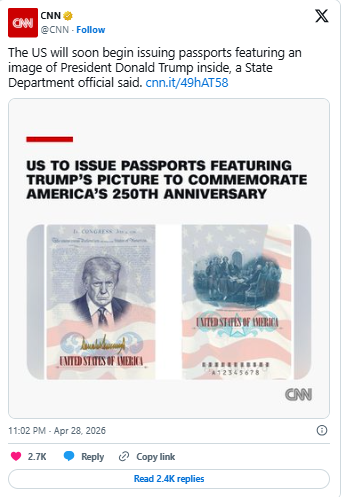
In addition to symbolic concerns, some commentators raised questions about international perception. Because passports are used for global travel, any change in design that includes politically sensitive elements could potentially lead to discussion or interpretation abroad. Critics argued that maintaining a consistent, neutral design helps ensure smooth recognition and acceptance across international borders.
At the same time, supporters pointed out that governments often release commemorative items during major anniversaries. These can include coins, stamps, artwork, and ceremonial designs that celebrate historical milestones. From this perspective, a special edition passport concept was seen by some as an extension of these traditions, even if its practicality and implementation remain uncertain.
However, it is important to note that as of current publicly verified information, there is no widely confirmed official rollout of a redesigned U.S. passport featuring a sitting or former president as part of standard issuance. Much of the discussion appears to stem from online claims, commentary, or interpretations of broader anniversary-related branding initiatives rather than confirmed federal policy.
The conversation also expanded into broader political discourse, with users debating the role of symbolism in government-issued documents. Some argued that national celebrations provide opportunities for creative representation of history and leadership. Others maintained that official documents should remain strictly functional and free from political personalization.
Social media platforms played a significant role in amplifying the topic, with users sharing opinions, mockups, and reactions. As often happens with politically sensitive topics, interpretations varied widely depending on political perspective and personal views. This led to a rapid spread of both supportive and critical commentary across different online communities.
In discussions about national documentation standards, experts generally emphasize that passports serve a functional and diplomatic role. Their design is intended to ensure consistency, security, and international recognition. Any proposed changes typically undergo extensive review and must align with federal standards and international travel requirements.
The reported concept tied to the 250th anniversary reflects a broader pattern in which national milestones inspire public debate about symbolism and identity. Large anniversaries often generate proposals for commemorative initiatives, some of which remain conceptual or symbolic rather than officially implemented. This case appears to follow a similar pattern of public discussion and interpretation.
In conclusion, the reported discussions about a redesigned U.S. passport associated with the country’s 250th anniversary have generated significant public attention and debate. While supporters interpret the idea as a patriotic celebration of national history, critics emphasize the importance of maintaining neutrality in official government documents. At present, much of the conversation remains based on claims and public reaction rather than confirmed policy implementation.

