
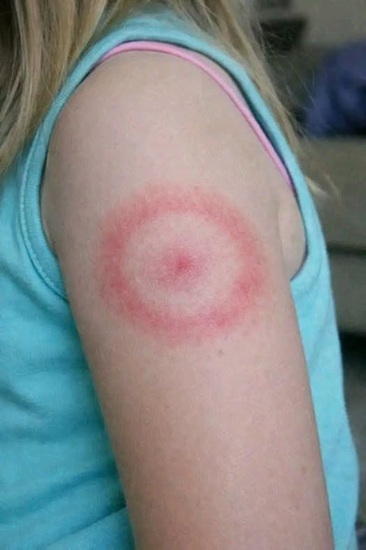
Waking up to find an unfamiliar rash on a child’s skin can be one of the most unsettling experiences for any parent. The sudden appearance of redness, swelling, or an unusual pattern on the skin often triggers immediate concern and emotional distress. In many cases, the mind quickly jumps to worst-case scenarios, especially when the rash appears unusual in shape or color. However, medical professionals emphasize that not all rashes indicate serious illness.
Skin reactions in children are extremely common and can be caused by a wide range of factors, including minor irritations, insect bites, allergic reactions, heat exposure, or mild fungal infections. While some conditions do require medical attention, many are harmless and resolve on their own. The initial emotional response is natural. Parents are instinctively protective, and any unexpected change in a child’s health can create anxiety.
This reaction often leads to confusion between urgent symptoms and those that can be safely observed over time. Understanding how to assess the situation calmly is an important part of responsible caregiving.
First Reactions and Emotional Response
When a parent first notices a rash, especially one that appears red, circular, or expanding, the immediate reaction is often fear. The uncertainty of not knowing the cause can feel overwhelming. In such moments, it is easy for thoughts to shift toward rare but serious conditions, even if they are unlikely.
Medical professionals note that emotional stress can sometimes interfere with clear decision-making. Panic may lead to unnecessary urgency, while hesitation may delay needed care. Finding a balanced response is essential. The goal is not to ignore the symptom, but to observe it with clarity rather than fear.
A calm environment helps both the parent and the child. Children are often sensitive to emotional cues, and staying composed can help reduce their anxiety as well. Before making any decisions, it is generally recommended to take a moment to assess the child’s overall condition beyond the visible skin change.
Observing Overall Symptoms
One of the most important steps is to evaluate whether the child is showing any additional symptoms beyond the rash. Medical guidance often focuses on the overall behavior and physical condition of the child rather than the rash alone.
If the child is alert, active, eating normally, and not showing signs such as fever, extreme fatigue, or unusual irritability, this is often a reassuring sign. Many minor skin reactions occur without any systemic illness and remain localized to the skin.
On the other hand, if the rash is accompanied by fever, persistent pain, swelling, or changes in behavior, medical attention is generally recommended. These accompanying symptoms can help healthcare professionals determine whether further evaluation or treatment is needed.
Documentation as a Useful Tool
In modern healthcare, observation and documentation can be extremely helpful. One practical step that many healthcare providers recommend is monitoring the rash over time. Taking clear photographs can help track changes in appearance, size, or color.
This visual record allows parents and doctors to compare how the rash evolves. Changes over several hours or days can provide valuable information during a medical consultation. In many cases, skin conditions are diagnosed not from a single moment, but from how they develop over time.
While documentation is helpful, it should not replace medical advice when symptoms are concerning. It is a supportive tool, not a diagnostic method. Parents are encouraged to use it as part of a broader approach to observation.
Common Causes of Rashes in Children
There are many possible explanations for a rash in children, and most are not serious. Insect bites are among the most common causes, often resulting in localized redness or swelling. These reactions can sometimes appear in circular patterns, depending on the type of bite or irritation.
Allergic reactions are another frequent cause. These may be triggered by food, environmental factors such as pollen, or contact with certain fabrics or soaps. Allergic rashes often appear suddenly and may change in intensity over time.
Fungal infections, such as ringworm, can also cause circular or ring-shaped rashes. Despite the name, ringworm is not caused by a worm but by a common fungal infection that affects the skin. It is generally treatable and not dangerous when properly managed.
Heat-related rashes may occur in warm weather, especially when sweat becomes trapped under the skin. These are typically mild and resolve when the skin is kept cool and dry.
Because of this wide range of possibilities, visual appearance alone is not always enough to determine the cause of a rash. Medical evaluation is often needed for accurate identification.
When Medical Attention Is Needed
While many rashes are harmless, there are certain signs that indicate the need for medical evaluation. A rash that spreads rapidly, changes appearance significantly, or is accompanied by systemic symptoms should be assessed by a healthcare professional.
Fever is one of the most important warning signs when combined with a rash. Other concerning symptoms include joint pain, difficulty moving, swelling, or persistent discomfort. Any signs of the child feeling significantly unwell should not be ignored.
In these situations, healthcare providers can perform a physical examination and, if necessary, run tests to determine the cause. Early evaluation can help prevent complications and ensure appropriate treatment if needed.
The Importance of Balanced Decision-Making
Parents often face the challenge of deciding when to seek urgent care and when to monitor symptoms at home. This decision is not always simple, especially when information online can vary widely in reliability.
Medical experts emphasize that balanced judgment is key. Acting too quickly can sometimes lead to unnecessary stress and medical visits, while waiting too long in serious cases can delay treatment. The goal is to find a reasonable middle ground based on symptoms and overall condition.
Trusting professional medical advice is essential. Pediatricians are trained to evaluate symptoms in context, considering both visible signs and underlying health factors. When in doubt, consulting a healthcare provider is always the safest option.
Managing Anxiety as a Parent
It is important to recognize the emotional burden that comes with monitoring a child’s health. Anxiety in such situations is completely natural. However, staying informed and following structured steps can help reduce uncertainty.
Simple actions such as observing behavior, documenting changes, and seeking professional advice when needed can provide a sense of control. This structured approach often helps parents move from panic to practical action.
Support from healthcare professionals, family members, or trusted resources can also ease emotional stress during uncertain moments.
An unexplained rash on a child can be alarming, but it is important to approach the situation calmly and methodically. Many skin changes in children are minor and temporary, but careful observation is essential to ensure that more serious conditions are not overlooked.
By focusing on overall symptoms, documenting changes, and seeking medical advice when necessary, parents can make informed decisions that prioritize their child’s health and safety.
Ultimately, responsible observation combined with professional guidance provides the best path forward in situations involving uncertainty. While anxiety is a natural response, knowledge and calm action are powerful tools in ensuring the well-being of a child.

