
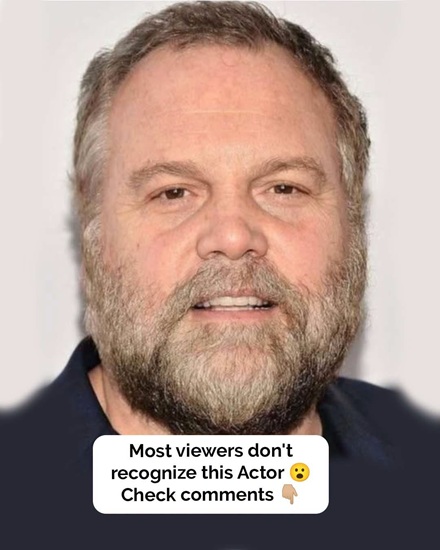
Vincent D’Onofrio has spent decades building a reputation as one of Hollywood’s most versatile character actors. Born in Brooklyn, New York, on June 30, 1959, he became widely recognized through performances that often required significant changes in his appearance, voice and mannerisms. His filmography includes crime dramas, comedies, science fiction productions and major television series. Yet one of his earliest breakthrough performances remains among his most memorable: Private Leonard “Gomer Pyle” Lawrence in Stanley Kubrick’s 1987 war film Full Metal Jacket.
Long before working with Kubrick, D’Onofrio was trying to establish himself through theater. He performed in stage productions in New York while taking other jobs to support himself financially. Like many actors at the beginning of their careers, he could not depend entirely on performing for an income. Accounts of those years describe him working jobs including nightclub security and making deliveries while continuing to study acting and audition for roles.
His early career provided little indication that he was approaching a part that would dramatically change his professional future. D’Onofrio had appeared in smaller projects, but he was still far from being a major Hollywood name. The opportunity that eventually connected him with Kubrick came partly through fellow actor Matthew Modine, who was already involved with Full Metal Jacket.
Modine encouraged D’Onofrio to audition for the film. D’Onofrio submitted audition material, beginning a process that ultimately put him in contact with Kubrick’s production team. The filmmaker was searching for someone capable of portraying Leonard Lawrence, an inexperienced Marine recruit whose psychological condition deteriorates during an extremely harsh period of basic training.
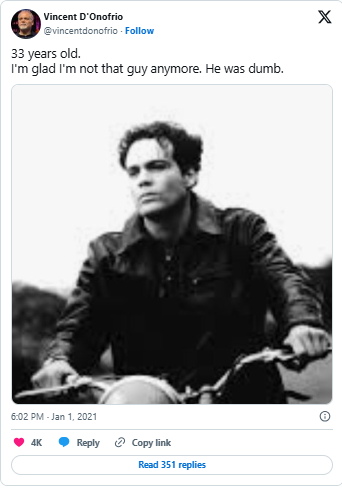
D’Onofrio eventually won the role.
Getting the part, however, came with an unusual physical requirement.
Kubrick Wanted a Major Transformation
Before filming, D’Onofrio stood approximately 6 feet 3 inches tall and had a lean, athletic physique. That was not how Kubrick imagined Leonard appearing on screen. The director wanted the character to be considerably heavier, creating a physical contrast between Leonard and many of the other recruits.
D’Onofrio has explained in interviews that Kubrick asked whether he would be willing to gain substantial weight. He initially added around 30 pounds, but the director reportedly believed that the actor still looked physically capable and imposing rather than vulnerable in the way the character required.
More weight followed.
D’Onofrio has said that his weight eventually increased from roughly 200 pounds to approximately 280 pounds. Depending on the interview or source, the transformation is commonly described as a gain of around 70 to 80 pounds.
He also shaved his head.
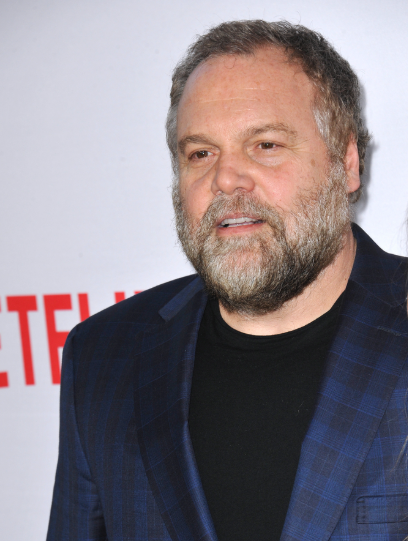
The combination created an appearance dramatically different from the young actor who had originally auditioned.
The transformation became especially challenging because D’Onofrio was not simply required to stand in front of a camera at his new weight. Full Metal Jacket included demanding boot-camp sequences involving running, climbing and obstacle courses.
Exercises that might previously have been manageable became considerably more difficult while carrying the additional weight.
D’Onofrio also injured his knee during production, adding another physical challenge to an already demanding role.
Becoming Leonard “Gomer Pyle” Lawrence
The physical changes were only one part of the performance.
Leonard begins Full Metal Jacket as a recruit struggling to adapt to military training. His difficulties quickly make him a target of Gunnery Sergeant Hartman, portrayed by R. Lee Ermey.
Hartman gives him the nickname “Gomer Pyle” and repeatedly singles him out.
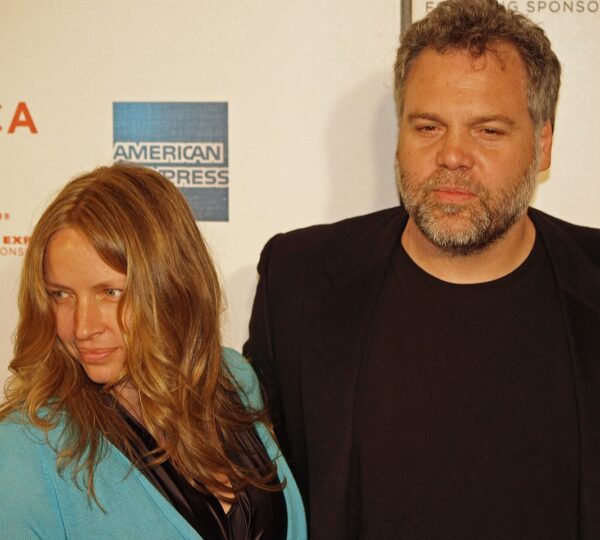
As the training continues, Leonard becomes increasingly isolated from the other recruits. The character gradually changes from awkward and overwhelmed to emotionally detached and psychologically unstable.
D’Onofrio’s performance required that transition to happen slowly enough for audiences to believe it.
His posture changes.
His expressions become different.
Even the way he looks at the people around him gradually becomes more unsettling.
By the conclusion of the film’s boot-camp section, the Leonard seen on screen feels dramatically different from the recruit who arrived at the beginning.
That transformation became one of the most widely remembered elements of Full Metal Jacket.
People Began Treating D’Onofrio Differently
The weight gain also had unexpected consequences away from the film set.
D’Onofrio later recalled that strangers treated him differently when he was heavier and had a shaved head. His appearance had changed so substantially that reactions from people around him changed as well.
He said that women who previously might have noticed him no longer responded in the same way.
More troublingly, he recalled people sometimes speaking to him as though they assumed he was less intelligent.
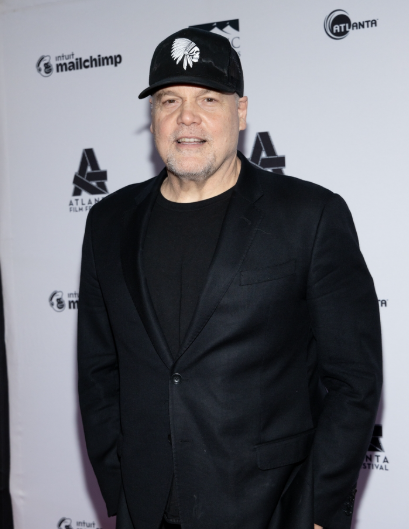
The experience demonstrated how quickly assumptions can be formed from someone’s appearance.
D’Onofrio was still the same young actor underneath the transformation, but strangers encountered a large, bald man whose appearance closely resembled the character he was playing.
For someone whose profession depends heavily on understanding human behavior, the experience provided an unusual perspective on how appearance can influence social interactions.
After filming ended, D’Onofrio gradually lost the weight.
His hair grew back as well.
Before long, he looked dramatically different from Leonard again.
Full Metal Jacket Opened Doors Rather Than Ending His Career
Some accounts of D’Onofrio’s career have suggested that his popularity declined after Full Metal Jacket. His subsequent filmography, however, shows something considerably more complicated.
The Kubrick movie became his breakthrough.
Rather than disappearing afterward, D’Onofrio began accumulating an unusually diverse collection of film and television roles.
He appeared in Adventures in Babysitting shortly after Full Metal Jacket. Because his appearance had changed so dramatically, audiences unfamiliar with his name might not immediately have realized they were watching the same actor.
He later appeared in Mystic Pizza, another film associated with the early careers of several notable performers, including Julia Roberts.
Additional projects followed throughout the 1990s.
D’Onofrio developed a reputation for taking characters that allowed him to experiment rather than maintaining one consistent leading-man image.
That approach became an important characteristic of his career.
Another Transformation in Men in Black
One of D’Onofrio’s most recognizable film performances after Full Metal Jacket came in the 1997 science-fiction comedy Men in Black.
He played Edgar, a farmer whose body is taken over by an alien creature.
The performance again depended heavily on physical acting.
D’Onofrio created an intentionally uncomfortable walk and unusual mannerisms designed to suggest that something nonhuman was unsuccessfully operating a human body.
The character looked and behaved nothing like Leonard Lawrence.
It was another demonstration of D’Onofrio’s willingness to transform himself rather than rely on his natural appearance.
The movie became a major commercial success and introduced him to another enormous audience.
His career during this period also included films such as The Player, The Whole Wide World and The Cell, among many others.
Rather than being tied permanently to Kubrick’s movie, he continued moving between genres.
Robert Goren Became Another Defining Role
In 2001, D’Onofrio began another major chapter when he joined Law & Order: Criminal Intent as Detective Robert Goren.
For television audiences, Goren eventually became every bit as recognizable as Leonard Lawrence had been to movie viewers.
The character was an unconventional investigator with an extraordinary ability to notice small details and analyze human behavior.
Goren frequently approached interrogations more like psychological puzzles than straightforward police questioning.
D’Onofrio gave the character distinctive physical mannerisms, sometimes leaning dramatically into a suspect’s space or changing his posture during conversations.
Those choices helped separate Goren from the more traditional detectives appearing elsewhere in the Law & Order franchise.
The series became a long-running success.
D’Onofrio remained closely associated with it for years, demonstrating that his career could extend far beyond the breakthrough performance Kubrick had given him.
The demanding production schedule was not always easy, however.
During the show’s run, D’Onofrio experienced health problems associated with exhaustion and eventually worked under a modified schedule.
Nevertheless, Robert Goren became one of the signature performances of his career.
A New Generation Discovered Him as Kingpin
Decades after Full Metal Jacket, D’Onofrio found another defining character.
This time, it came from Marvel.
He was cast as Wilson Fisk, also known as Kingpin, in Daredevil.
Fisk is physically intimidating, but D’Onofrio’s performance went beyond portraying a conventional comic-book villain. His version of the character combined carefully controlled speech and emotional vulnerability with sudden moments of extreme aggression.
The role introduced D’Onofrio to viewers who may never have seen his earlier films or television work.
His interpretation of Fisk became popular enough for Marvel to continue using the character in subsequent productions.
D’Onofrio later returned as Fisk in other Marvel projects and again became a central figure alongside Charlie Cox’s Matt Murdock in Daredevil: Born Again.
By 2026, he remained prominently connected with the character.
That longevity makes the idea that D’Onofrio’s career simply declined after Full Metal Jacket particularly misleading.
Nearly four decades after Kubrick cast him, he was still playing major roles in internationally recognized productions.
D’Onofrio Credits Kubrick With Changing His Life
Despite everything that came afterward, D’Onofrio has never minimized the importance of Full Metal Jacket.
He has credited Stanley Kubrick with providing the opportunity that changed the direction of his professional life.
Before Leonard Lawrence, D’Onofrio was an actor still trying to establish himself.
Afterward, filmmakers knew what he could do.
The role demonstrated not only his willingness to undergo a major physical transformation but also his ability to portray a psychologically demanding character.
That combination opened doors to projects that might otherwise never have reached him.
D’Onofrio subsequently accumulated dozens of film and television credits.
Rather than attempting to recreate Leonard repeatedly, he used the attention from Kubrick’s movie to pursue very different characters.
That willingness to change may explain much of his longevity.
His Childhood and Interest in Performance
D’Onofrio’s path toward acting began long before Hollywood.
His parents divorced when he was young, and his family circumstances changed considerably during his childhood.
He spent part of his youth in Florida, where he developed interests that included magic and sleight of hand.
D’Onofrio has described himself as relatively quiet during those years.
Performance eventually gave him a creative direction.
After returning to New York, acting became increasingly important.
Theater offered an opportunity to develop his craft long before major film roles became available.
Those years also taught him persistence.
His later success can appear inevitable when viewed backward through Full Metal Jacket, Law & Order and Marvel, but the beginning was far less certain.
He spent years balancing auditions and stage work with jobs necessary to pay his bills.
Family and Relationships
Away from acting, D’Onofrio is a father of three.
During his relationship with actress Greta Scacchi, the couple welcomed daughter Leila George in 1992.
George eventually followed her parents into acting and developed a professional career of her own.
D’Onofrio later married Dutch model Carin van der Donk in 1997.
The couple had two sons together.
Their marriage experienced periods of separation and reconciliation over the years.
In June 2023, reports confirmed that D’Onofrio had filed for divorce after approximately 26 years of marriage.
His personal relationships have generally received far less attention than his work, particularly compared with performers whose private lives become central to their public identities.
D’Onofrio has instead remained primarily associated with the characters he creates.
An Actor Known for Disappearing Into Roles
One reason D’Onofrio remains difficult to categorize is that many of his best-known characters look and behave almost nothing alike.
Leonard Lawrence is vulnerable and increasingly psychologically disturbed.
Robert Goren is cerebral, observant and unconventional.
Edgar in Men in Black is deliberately awkward and almost cartoonishly physical.
Wilson Fisk is controlled, intimidating and capable of explosive violence.
Seeing those performances side by side demonstrates why D’Onofrio developed such a strong reputation as a character actor.
He does not simply change costumes.
He changes posture, rhythm, voice and movement.
Sometimes his physical appearance changes so dramatically that casual viewers may not immediately recognize him.
That ability was already apparent when Kubrick cast him.
The Lasting Impact of Leonard Lawrence
Full Metal Jacket remains one of Stanley Kubrick’s most discussed films, and Leonard continues to be one of its defining characters.
The first half of the movie depends heavily on the relationship between Leonard, the other recruits and Gunnery Sergeant Hartman.
D’Onofrio’s transformation gives that section much of its emotional weight.
At first, Leonard can appear almost comedic because of his inability to follow instructions.
Gradually, the humor disappears.
His isolation becomes increasingly serious, and the psychological consequences become impossible to ignore.
The performance works because D’Onofrio does not make the transformation happen all at once.
He allows audiences to watch Leonard change.
That gradual deterioration is one reason the character remains memorable decades after the film’s release.
More Than One Famous Performance
Still, describing D’Onofrio only as the actor from Full Metal Jacket overlooks the extraordinary range of work that followed.
He successfully moved from Kubrick to mainstream Hollywood films.
Then he became the lead performer in a long-running television crime drama.
Years later, he reinvented himself again as one of Marvel television’s most recognizable antagonists.
Few actors maintain significant roles across so many different periods of entertainment.
D’Onofrio’s career demonstrates how a performer can use one breakthrough without allowing that role to become a permanent limitation.
Leonard introduced him to Hollywood.
Robert Goren introduced him to another television audience.
Wilson Fisk brought yet another generation.
Each role became important for different reasons.
Nearly Four Decades After Kubrick
Today, the transformation D’Onofrio underwent for Full Metal Jacket remains one of the most frequently discussed stories from his early career.
Going from approximately 200 pounds to around 280 pounds fundamentally changed his appearance.
Shaving his head completed the transformation.
Performing demanding physical scenes at that size made the experience even more difficult.
Yet the most significant result was not the weight itself.
It was what D’Onofrio accomplished with the character once the cameras started rolling.
His portrayal helped convince filmmakers that he could disappear into challenging roles.
The career that followed proved that impression correct.
From Men in Black and The Cell to Law & Order: Criminal Intent and Marvel’s Wilson Fisk, D’Onofrio repeatedly demonstrated that his identity as an actor could not be reduced to one appearance or genre.
The young performer who once worried about getting his next job eventually built a career stretching across decades.
And the physical transformation that temporarily caused strangers to see him differently became part of the performance that made Hollywood see his potential.
Rather than marking the peak of a short-lived career, Full Metal Jacket became the beginning of Vincent D’Onofrio’s long journey as one of the screen’s most distinctive character actors.

