
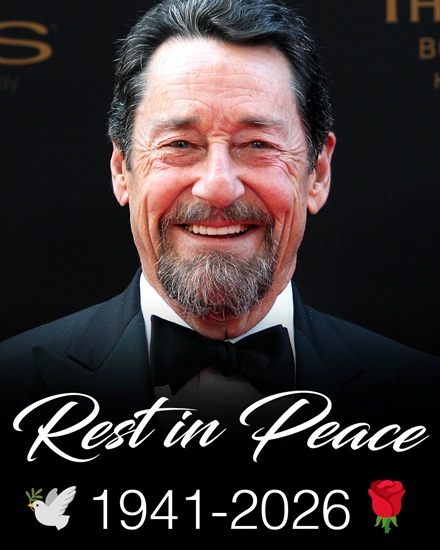
Peter Cullen spent decades giving life to characters that became part of television, movie and animation history. For many viewers, his face may not have been immediately familiar, but his voice was almost impossible to forget. The Canadian-born performer became best known as the voice of Optimus Prime in Transformers, while another generation also knew him as Eeyore from Winnie the Pooh. Cullen died on August 26, 2026, at the age of 85 at his home in Los Angeles. His agent confirmed the news, while his family said he died surrounded by loved ones.
At the time his death was announced, no official cause had been made public. That detail is important because there is no need to speculate about a medical explanation that his family or representatives have not provided. What is confirmed is that Cullen’s death brought an immediate wave of remembrance from fans who had spent decades hearing his work across animation, movies and games. His career lasted long enough to connect several generations of audiences through the same unmistakable voice.
His family asked admirers to honor him by remembering the values they associated with his life and work. Their message emphasized compassion, integrity, loyalty and service to others. They also repeated one phrase that had become inseparable from Cullen’s interpretation of Optimus Prime: the idea of being strong enough to be gentle. That philosophy did not begin with a studio executive or advertising campaign. It came from Cullen’s older brother Larry.
Peter Cullen was born on July 28, 1941, in Montreal, Quebec. Long before Transformers became part of popular culture, Cullen was already developing a professional career using the extraordinary flexibility of his voice. He worked in Canadian and American entertainment and gradually built a reputation as a performer capable of creating very different characters. By the time Optimus Prime entered his life in the 1980s, Cullen was already experienced in television, animation and voice work.
His early career involved a wide variety of projects. Voice acting requires a performer to create personality without relying on facial expression or physical movement visible to the audience. Everything must be communicated through timing, tone, rhythm and emotion. Cullen became particularly skilled at making characters feel distinct from one another even when the same person was performing them. That ability eventually allowed him to move easily between heroes, comic characters and frightening creatures.
The role that changed everything came in 1984. Cullen auditioned for a new animated series called Transformers, in which he was being considered for Optimus Prime, the leader of the heroic Autobots. The character description called for strength and leadership, but Cullen did not want to create a voice that simply sounded loud or aggressive. Before the audition, he spoke with his brother Larry, whose advice became the foundation of the performance.
Larry Cullen had served as a U.S. Marine during the Vietnam War. Peter later explained that his brother’s experience and personality strongly shaped the way he thought about genuine leadership. Larry reportedly encouraged him to avoid playing the hero as someone who constantly shouted or tried to prove how tough he was. A true leader, in Larry’s view, could be powerful while remaining controlled and gentle.
Peter carried that idea into the recording booth. He gave Optimus Prime a deep, commanding voice, but he also gave him restraint. The character rarely sounded as though he needed to prove his authority. Instead, Cullen made him feel like someone other characters would naturally trust. His interpretation combined power with patience, and that combination became one of the defining qualities of Optimus Prime.
The performance stood out because the voice communicated leadership before the character did anything heroic on screen. When Optimus spoke, he sounded calm enough to listen and strong enough to make difficult decisions. That approach made the character feel different from many animated heroes of the period. Cullen’s Optimus was not defined only by physical strength. He was defined by responsibility.
The original Transformers animated series quickly became a major part of children’s television during the 1980s. The concept of robots transforming into vehicles was visually exciting, but the personalities of the characters gave the stories emotional weight. Optimus Prime became the moral center of the Autobots, while Megatron represented the opposing Decepticons. Cullen’s voice helped turn Optimus from a toy-based character into someone children felt they knew.
For many viewers, Optimus became more than the leader of a fictional robot team. He represented fairness, loyalty and courage. Children watching the series may not have understood the technical elements of voice acting, but they understood that Optimus sounded trustworthy. Cullen’s delivery gave the character a sense of safety and stability that became central to his appeal.
That connection became impossible to ignore when Optimus Prime died in The Transformers: The Movie in 1986. Young fans were deeply upset by the character’s death, and the response became one of the most famous examples of how strongly audiences had attached themselves to an animated figure. Optimus was eventually brought back, and Cullen’s voice remained closely connected with the character.
The reaction also demonstrated how much emotional work Cullen had already done through performance. A fictional robot mattered because audiences had come to see him as more than machinery. Cullen had made Optimus sound human in the qualities that mattered most. His voice communicated empathy, responsibility and sacrifice.
Over the years, Transformers continued evolving through new animated series, toys, games and comics. Different performers sometimes voiced Optimus in various productions, but Cullen remained the actor most strongly associated with the original interpretation. For many fans, his version became the standard against which later performances were compared.
Cullen himself later said that Optimus Prime became his favorite character. Part of the reason was the effect the role had on people. He heard from fans who had carried the character’s lessons into adulthood. Some spoke about Optimus as an example of leadership, while others simply associated the voice with the happiest parts of childhood.
That audience response changed the meaning of the role for Cullen. What began as another professional assignment gradually became something much more personal. He understood that the character had become part of people’s memories and values. That knowledge made him hold Optimus especially close among the many characters he had voiced.
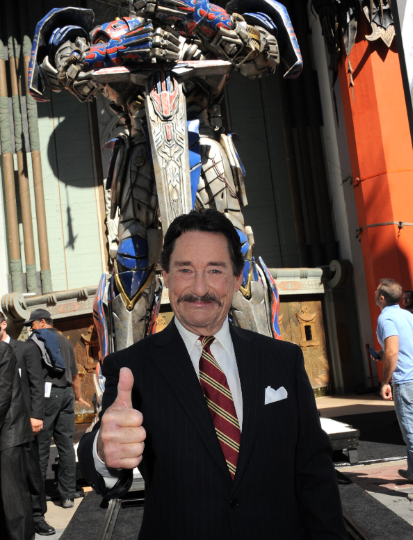
The story took another major turn in the 2000s when Transformers returned as a live-action movie franchise. Michael Bay directed the 2007 film, which introduced highly detailed computer-generated versions of the Autobots and Decepticons to a new generation. Despite the enormous technological changes, producers brought Cullen back as the voice of Optimus Prime.
For longtime fans, hearing him again created immediate continuity. The robot looked different and the movie’s scale was much larger, but the voice connected the new production with the animated series people remembered from childhood. When Cullen spoke, the character still felt familiar.
The 2007 film became a major commercial success, and Cullen continued voicing Optimus in several sequels. He returned for Revenge of the Fallen, Dark of the Moon, Age of Extinction and The Last Knight. He also returned for later films including Bumblebee and Transformers: Rise of the Beasts.
This meant that Cullen remained connected with the same character for nearly four decades. Very few actors have the opportunity to perform one role across such dramatic changes in technology and audience. The children who first watched Optimus in the 1980s grew up and brought their own children to theaters to hear the same voice.
That generational continuity became one of the most unusual parts of Cullen’s career. A parent could recognize Optimus instantly while a child was hearing the character for the first time. The performance became a bridge between two completely different eras of entertainment.
Cullen also voiced Optimus in games and additional animated projects. His association with the character therefore went far beyond a few movies. He remained part of the broader Transformers identity for decades, reinforcing the idea that his voice and Optimus Prime were inseparable.
Yet Cullen’s career was much broader than one role. One of the best demonstrations of his vocal range was Eeyore. In The New Adventures of Winnie the Pooh and other Disney productions, Cullen gave the famously gloomy donkey a voice almost opposite to Optimus Prime.
Eeyore was slow, melancholy and permanently prepared for disappointment. Cullen performed the character with sadness but also warmth. The result was a voice that made Eeyore amusing without turning him into an object of cruelty. Children could laugh at his gloomy personality while still feeling affection for him.
Cullen spoke fondly about Eeyore and the reaction children had when they heard the voice. A short line delivered in character could immediately produce recognition and excitement. That response reminded him that voice acting could create emotional connections even when audiences did not see the performer’s face.
The contrast between Optimus and Eeyore shows how much range Cullen actually had. Optimus sounded authoritative and heroic. Eeyore sounded exhausted and pessimistic. Yet both characters felt emotionally believable because Cullen understood what made each one sympathetic.
Warmth connected the performances in different ways. Optimus expressed it through protection and responsibility. Eeyore expressed it through vulnerability. Neither character needed to sound like the other for audiences to care about both.
Cullen also worked on characters and creatures that required almost no conventional dialogue. His contribution to Predator is one of the most interesting examples. The 1987 science-fiction film introduced an alien hunter whose distinctive sounds became part of the movie’s suspense.
Cullen contributed vocal effects for the Predator, helping create sounds that made the creature feel both intelligent and threatening. The famous clicking noises became part of the character’s identity. Audiences did not need to see the Predator clearly to know when it was nearby because its sound created immediate tension.
This kind of performance was completely different from Optimus Prime or Eeyore. Instead of delivering spoken dialogue, Cullen used vocal texture to help create a nonhuman creature. It showed that voice acting could influence a film even when viewers did not consciously realize who was responsible.
Cullen also contributed creature sounds in other productions, demonstrating an ability to manipulate his voice far beyond ordinary character speech. That flexibility made him valuable in projects requiring unusual or nonhuman vocal performances.
Another fascinating part of his résumé involved Nintendo’s Mario. Cullen voiced Mario in animated Donkey Kong segments connected with Saturday Supercade. This came before the modern video-game version of Mario developed the voice most players recognize today.
That credit has become an interesting piece of animation history because it connects Cullen with another character that eventually became globally famous. It also shows how many different parts of entertainment his career touched over the years.
Cullen voiced KARR in Knight Rider as well, bringing a threatening artificial intelligence to a franchise built around advanced technology. Once again, the role was very different from Optimus despite involving a machine. Cullen could make one mechanical character heroic and another intimidating through performance alone.
He also worked in numerous animated television series and films over the course of his career. The number of characters became so large that Cullen himself once said he could not provide an exact count. He estimated that he had probably performed around a hundred different characters over the years.
His professional credits eventually extended well beyond that rough estimate when background voices, creature effects and recurring roles were included. The scope of the work helps explain why audiences may have heard Cullen far more often than they realized.
Voice actors frequently become invisible behind the characters they create. That invisibility is often a sign that the performance is working. If audiences stop thinking about the actor and begin believing completely in the character, the voice has done its job.
Cullen achieved that with Optimus Prime so completely that many fans eventually began treating the two identities as almost inseparable. They did not simply say Peter Cullen played Optimus. They spoke as though Cullen’s voice was the natural voice Optimus Prime had always possessed.
That association became especially visible at fan conventions. Cullen met adults who had watched Transformers as children and now wanted to explain what the character had meant to them. Some said Optimus had influenced how they thought about leadership or responsibility.
Others simply wanted to hear the voice in person. A few words delivered as Optimus could bring back decades of memory instantly. Cullen seemed to understand how powerful that connection had become and treated those interactions seriously.
The story of his brother Larry remained central whenever Cullen discussed the character. Larry’s influence was not simply a vocal trick used for the first audition. He represented the kind of leadership Peter wanted Optimus to embody.
Cullen remembered his brother as someone shaped by military service and combat but capable of restraint. That emotional memory became part of the voice. The famous idea about being strong enough to be gentle carried the relationship between the brothers into popular culture.
It is remarkable to consider how the chain of influence developed. Larry spoke to Peter. Peter carried the advice into an audition. Optimus Prime then carried those values to millions of viewers. Decades later, those same viewers repeated the lesson back to Cullen.
The family returned to the same idea after Peter’s death. Their request that fans remember compassion, loyalty and gentleness created a direct connection between the person Cullen admired, the character he created and the values his family wanted to preserve.
That continuity gives the phrase much greater significance than a simple quote from a cartoon. It represents something Cullen believed about strength itself.
A leader did not need to humiliate others.
A hero did not need to shout constantly.
Confidence did not require aggression.
Strength could exist alongside kindness.
Those principles shaped Optimus Prime and helped make the character meaningful to audiences who grew up with him.
Cullen’s work also demonstrates how much skill exists behind voice performances that may sound effortless. Every pause, breath and shift in tone requires a choice. The audience usually hears only the final character, not the process used to create it.
For Optimus, Cullen carefully controlled pacing and authority. The character rarely sounded rushed. His words seemed deliberate, as though he considered responsibility before acting. This reinforced the sense of leadership.
For Eeyore, the timing became slower and more resigned. The pauses themselves became part of the humor. Cullen could make a short sentence sound like the character had already accepted disappointment before finishing it.
For the Predator, conventional speech disappeared almost completely. Sound became atmosphere. Cullen used vocal effects to make the creature frightening without relying on understandable language.
Three completely different approaches came from the same performer.
That range explains why reducing Cullen’s career to only Optimus Prime would miss much of what made him important. Optimus was the defining role, but the professional life behind it was remarkably broad.
Cullen also worked during decades when the voice-acting industry itself changed dramatically. Earlier in his career, animation performers often remained largely unknown outside professional circles. Over time, fan conventions and online communities made audiences increasingly curious about the people behind famous voices.
Cullen lived long enough to experience that change directly. He went from being primarily a performer behind a microphone to becoming a respected public figure within fan culture. Audiences wanted interviews, convention appearances and stories about how their favorite characters had been created.
He responded warmly to that attention without trying to overshadow the characters themselves. He understood that fans had developed personal relationships with the voices he performed, and he seemed genuinely grateful for the affection.
His achievements eventually received formal recognition. In 2023, Cullen received a lifetime achievement honor at the Children’s & Family Emmy Awards. The recognition acknowledged a career that had shaped several generations of children’s entertainment.
The timing was appropriate. Nearly four decades had passed since he first spoke as Optimus Prime, and his work had continued influencing new audiences throughout that period.
The award also highlighted the importance of voice actors generally. A performer does not need to appear physically on screen to create a character with enormous cultural impact. Cullen’s career proved that point repeatedly.
His Canadian background remained another part of his identity. Born in Montreal, he eventually built much of his career in the United States and became associated with some of Hollywood’s biggest entertainment properties. His professional life crossed borders as easily as it crossed genres.
Los Angeles ultimately became the place where much of his career and later life were centered. His agent confirmed that Cullen died at his home there, surrounded by family. No medical cause had been made public when the news was announced.
That absence of information should remain exactly that. There is no need to fill it with theories. The facts surrounding his career are already substantial enough without unsupported medical speculation.
What can be stated confidently is that Cullen left behind an extraordinary collection of performances. His work stretched from early television into animation, feature films, video games and giant modern franchises.
He began during an era when traditional animation dominated children’s television. He continued through the rise of blockbuster computer-generated filmmaking. And he remained professionally connected with characters created decades earlier.
Very few careers contain that kind of continuity.
The technology around Optimus Prime changed dramatically.
The audiences changed.
The scale of the productions changed.
But Cullen’s voice remained recognizable.
When he returned in the 2007 film, the effect demonstrated just how deeply one vocal performance can become attached to a character. The new Optimus looked almost nothing like the simplified animated design from 1984, yet Cullen’s voice made him immediately familiar.
The same principle applies to Eeyore. Animation styles can change, but a familiar vocal personality helps audiences recognize the character emotionally.
Cullen understood that character identity often lives as much in sound as in appearance.
This is why the death of a voice actor can affect audiences in a particularly personal way. People may not have seen Peter Cullen every week during childhood, but they heard him.
His voice came through television speakers.
Movie theaters.
Video games.
Commercials.
Toys.
Streaming services.
For many people, that sound became part of ordinary childhood memory.
Years later, hearing it again could bring back the feeling of sitting in front of a television after school or watching a movie with family.
That kind of memory gives voice performances unusual emotional durability.
Cullen’s death does not remove those recordings.
Optimus Prime will still speak in the original series.
Eeyore will still make his gloomy observations.
The Predator will still produce its unsettling sounds.
The work remains available even though the performer is gone.
That is one of the unusual gifts of recorded art.
The artist’s life ends.
The performance does not.
Future generations may hear Cullen without initially knowing anything about him personally. A child might discover Transformers years from now and simply accept that this is what Optimus Prime sounds like.
Later, that child may learn about Peter Cullen.
They may learn about Larry.
They may learn that the famous voice originated from advice one brother gave another before an audition.
That knowledge adds another layer to the performance.
Behind the fictional robot was a real family relationship.
Behind the heroic voice was respect for someone Cullen considered a genuine example of leadership.
That human connection may explain why Optimus never sounded mechanical despite being a machine.
Cullen gave the character emotional weight.
He made power sound thoughtful.
He made authority sound calm.
And he made leadership sound compassionate.
Those qualities were not accidental.
They were the entire idea behind the performance.
This is also why Cullen’s family chose to emphasize values in their farewell rather than simply listing his professional accomplishments.
The résumé was already known.
The characters were famous.
They wanted people to remember something deeper.
Serve others.
Lead with compassion.
Value integrity.
Remain loyal.
And be strong enough to be gentle.
That message takes the memory of Peter Cullen beyond nostalgia.
Watching an old episode remembers the performance.
Practicing those values remembers the philosophy behind it.
For many fans, both forms of remembrance will matter.
Some will return to the original Transformers series.
Others will watch the 2007 movie again.
Some may hear Eeyore and immediately recognize a voice from childhood.
Horror fans may remember that the same man contributed to the terrifying sounds of Predator.
Different audiences will remember different parts of the same career.
That variety is appropriate because Cullen’s work was never limited to one type of character.
He could sound heroic.
Sad.
Threatening.
Mechanical.
Animal-like.
Humorous.
Gentle.
His voice was a remarkably flexible instrument.
Still, Optimus Prime remained the character closest to his heart.
Not only because of the length of the association, but because fans showed him what the character meant.
That relationship between actor and audience became part of the legacy.
Cullen created the voice.
Fans gave it decades of emotional meaning.
And Cullen then came to value the role more deeply because of that response.
It was a cycle that lasted for most of his career.
The first children who watched him became adults.
Some became parents.
Some introduced their own children to Optimus Prime.
The character moved through generations while Cullen remained the familiar voice connecting them.
That kind of continuity is extremely rare in entertainment.
When Cullen finally died at 85, the response therefore came from people of very different ages.
One generation remembered Saturday-morning animation.
Another remembered the live-action films.
Another knew him through newer Transformers productions or streaming.
Still others primarily remembered Eeyore.
All were mourning the same performer.
The sadness surrounding his death does not require exaggeration. There is no need to say every person experienced the loss in the same way. His influence was broad enough that many different forms of remembrance can coexist.
For one fan, Peter Cullen was Optimus Prime.
For another, he was Eeyore.
For someone else, he was the voice behind a frightening creature they never realized was connected to the same actor.
The complete career contains all of those identities.
That is what makes his legacy unusually rich.
He was not simply a performer with one famous trick.
He was an actor who understood how to build character through sound.
His face might not have appeared in the scene.
His presence still did.
That is the essence of great voice acting.
Cullen’s performances prove how powerful the craft can be.
A few carefully chosen vocal qualities can make a giant fictional robot feel like a moral leader.
A change in pace can make a gloomy donkey lovable.
A series of strange clicks can make an alien creature terrifying.
The audience may never see the person creating those sounds.
But they remember the effect.
Peter Cullen created that effect for more than half a century.
His death marks the end of that long professional journey.
His recordings, however, remain.
So does the influence of the characters he shaped.
And so does the lesson he carried from his brother into one of animation’s most famous heroes.
Strength does not have to be cruel.
Authority does not have to be loud.
Leadership does not have to sacrifice compassion.
A person can be powerful and gentle at the same time.
That idea may be the most fitting way to remember Cullen because it connects his personal history with the work that made him famous.
Peter Cullen was born in Montreal in 1941 and died in Los Angeles in 2026.
Between those two dates, he created voices that traveled much farther than he ever could physically.
They entered homes.
Theaters.
Games.
Childhood memories.
And popular culture.
For many people, Optimus Prime will always sound like Peter Cullen.
That association cannot be recreated exactly because it was built across decades.
Future performers can offer their own interpretations.
The franchise can continue.
But Cullen’s version remains the foundation for generations of fans.
The same is true of the memories attached to his other characters.
Recorded voices do not age in the same way people do.
An episode from decades ago still contains the same performance today.
A child watching it now hears the same Peter Cullen audiences heard when it first aired.
That permanence gives his work a form of continuity beyond his lifetime.
The man is gone.
The voice is not.
And for anyone who grew up hearing Optimus Prime speak with patience, strength and compassion, Peter Cullen left behind far more than a famous character.
He left behind an idea of what a hero could sound like.

