
Brigitte Bardot became one of the most recognizable figures in European cinema, but her life eventually grew far beyond the image that made her famous. Born Brigitte Anne-Marie Bardot in Paris on September 28, 1934, she grew up in a financially comfortable family and received a disciplined upbringing. As a young girl, she studied ballet and initially imagined a future connected with dance. Her appearance soon attracted attention from the fashion world, and while still a teenager she began modeling.
At just 15, she appeared on the cover of the French edition of Elle, a moment that helped introduce her to people working in film and entertainment. Her early years in cinema began in the 1950s, when she started appearing in French and European productions. At that stage, Bardot had not yet become the international symbol she would soon be. She was still developing as a performer and learning how to work in front of the camera. Her combination of physical confidence, natural screen presence and a less formal style than many actresses of the time quickly distinguished her.
Audiences and filmmakers began to notice that she brought something different to the screen. The major turning point came in 1956 with And God Created Woman, directed by Roger Vadim, who had also been her first husband. Bardot played Juliette Hardy, and the role transformed her career. The film attracted attention well beyond France and made Bardot an international celebrity. Her screen presence, fashion and attitude became subjects of discussion across Europe and in the United States. The movie also helped establish her as a symbol of changing attitudes toward femininity and sexuality in postwar cinema.
Bardot’s influence extended beyond acting. Her blond hair, heavy eye makeup, relaxed clothing and distinctive style were copied by women around the world. She helped popularize a kind of glamour that felt less rigid and more spontaneous than the polished Hollywood image of the era. Photographers and magazines made her one of the most visible celebrities of the 1950s and 1960s. Her appearance became so recognizable that the initials “B.B.” were enough for many people to know exactly who was being discussed.
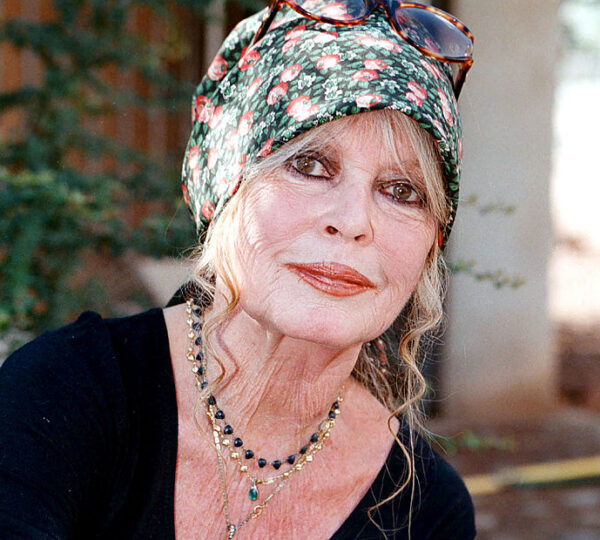
Despite the attention focused on her looks, Bardot’s film career included serious dramatic work. She appeared in The Truth in 1960, which is often regarded as one of the strongest performances of her career. A few years later, she starred in Jean-Luc Godard’s Contempt, another important film in European cinema. She also appeared in comedies, adventures and international productions, demonstrating that her career was broader than the simple image of a glamorous blonde star.
Her work also crossed into English-language productions. Bardot appeared in Doctor at Sea and later worked alongside major international actors. She starred opposite Sean Connery in the 1968 western Shalako. Although some of these English-language films did not achieve the level of success expected from them, they reflected the international demand for Bardot during the height of her fame. Studios understood that her name alone could attract enormous attention.
The fame that seemed so glamorous from the outside eventually became deeply difficult for Bardot. She later spoke openly about how celebrity affected her emotionally. Photographers followed her, magazines examined her private life, and public expectations placed constant pressure on her. She described feeling increasingly trapped by the image that had made her famous. What initially appeared exciting gradually became something she said damaged her well-being.
Bardot also experienced serious emotional struggles during her years as a star. Her life in the spotlight included periods of depression and suicide attempts. These experiences provide important context for her decision to leave acting while she was still young and internationally famous. She did not simply disappear because audiences lost interest. She made a deliberate decision to step away from a way of life she felt had become unhealthy for her.
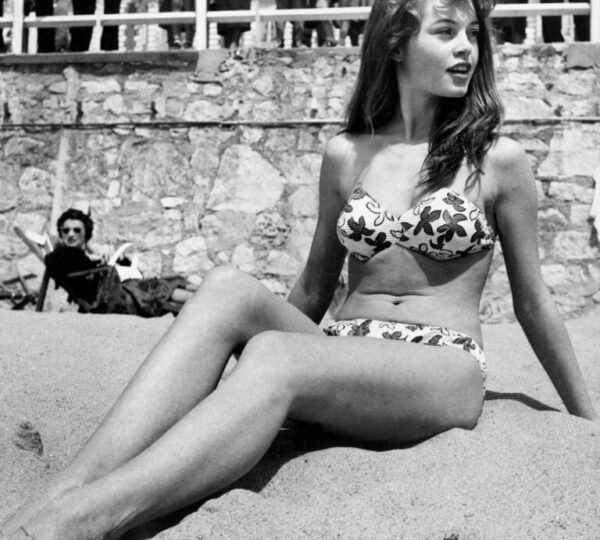
In 1973, at only 39 years old, Bardot announced her retirement from acting. By then she had already appeared in dozens of films and could likely have continued working for many years. Instead, she chose to leave the entertainment industry almost completely. Later in life, she explained that walking away from the constant attention, glamour and pressure had helped protect her from a lifestyle she no longer wanted.
After retirement, Bardot became increasingly associated with Saint-Tropez and her home, La Madrague. She withdrew from the type of public life that had once surrounded her constantly. Yet she did not disappear from public discussion altogether. Instead, she redirected much of her energy toward a cause that became the central focus of her later decades: animal welfare.
Her interest in animals had existed long before retirement. In the early 1960s, she had already begun speaking publicly about animal treatment and slaughter practices. Over time, that concern grew into sustained activism. Bardot realized that the fame she had once found suffocating could also be used to attract attention to issues that otherwise might receive little international coverage.
One of the most widely remembered moments of her activism came in the 1970s, when she traveled to Canada to protest the killing of young seals. Images of Bardot on the ice attracted global attention. By then, the former actress had become increasingly known as an animal advocate rather than simply a retired movie star. She was using the same celebrity status that had once overwhelmed her for a purpose she believed was more meaningful.
In 1986, she formally created the Brigitte Bardot Foundation. The organization was established to protect domestic and wild animals and eventually expanded far beyond France. It supported shelters, rescue operations, international campaigns and conservation programs. The foundation later became officially recognized in France as a public-interest organization.
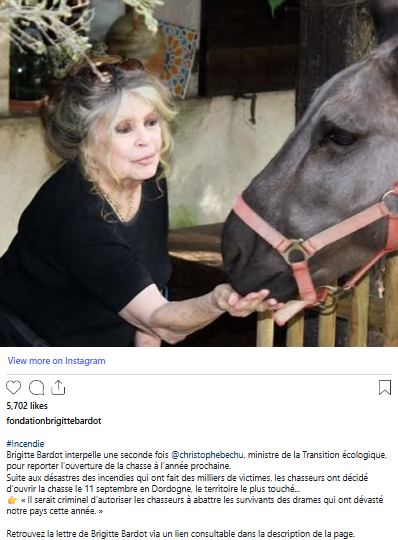
Bardot made substantial personal financial commitments to the foundation. She used her own resources and influence to help the organization develop. Over the years, the foundation became involved in projects around the world. Its work included support for animals suffering from neglect, mistreatment and exploitation, as well as broader campaigns concerning wildlife and animal protection.
Her commitment to animals became the defining work of the second half of her life. In many ways, her animal-rights career lasted longer than her acting career. She continued commenting on animal welfare well into old age and remained closely identified with the foundation that carried her name. Even when mobility became more difficult, she said concern about animal suffering continued to motivate her.
Bardot’s private family life, however, was much more complicated. On January 11, 1960, she gave birth to her only child, Nicolas-Jacques Charrier. His father was actor Jacques Charrier, Bardot’s second husband. Bardot later spoke with extraordinary bluntness about the fact that she had not wanted motherhood and had struggled emotionally with pregnancy and becoming a parent.
Some of her later descriptions of pregnancy and motherhood were extremely harsh. She discussed those experiences in her memoirs, including Initiales B.B.. Her words caused pain and controversy, particularly because they involved not only her own feelings but also the private life of her son and former husband. The subject became one of the most difficult parts of Bardot’s biography.
After Bardot and Jacques Charrier separated, Nicolas was raised primarily by his father and his father’s family. Bardot did not become his main custodial parent. Their relationship remained strained for many years. Nicolas grew up largely away from the constant celebrity environment surrounding his mother and eventually chose a far more private life.
This family history became particularly public after the release of Bardot’s memoir. Nicolas and Jacques Charrier took legal action over passages they considered violations of their privacy. A French court later awarded damages to both men. The case demonstrated that Bardot’s right to tell her own story had legal limits when private details about other people were involved.
The lawsuit also showed how complicated the relationship between celebrity autobiography and family privacy can become. Bardot had spent much of her life having her own private experiences exposed by newspapers and photographers. Yet when she later wrote about family members, they argued that some of their own experiences should remain private. The court agreed that certain boundaries had been crossed.
Nicolas eventually built his adult life in Norway. In 1984, he married Norwegian Anne-Line Bjerkan. The couple had two daughters, making Bardot a grandmother. The daughters are generally identified as Anna-Camilla and Théa-Joséphine. Unlike their internationally famous grandmother, both grew up largely outside the celebrity spotlight.
This is where older claims that Bardot had a granddaughter who simply “followed in her footsteps” need more careful wording. Bardot had two granddaughters, and neither recreated her grandmother’s life as an international film star. Anna-Camilla pursued a professional path connected with law. Théa-Joséphine has been linked with television and video production, giving her some connection with the media world, but largely behind the camera rather than as a globally famous actress.
That distinction is important because a family connection does not automatically mean a person has the same career. Théa’s work in visual media does provide an interesting link with her grandmother’s entertainment history. However, describing her as a new Brigitte Bardot would exaggerate the similarity. Bardot became one of the most photographed performers in the world, while her granddaughter has lived a much more private professional life.
Anna-Camilla’s career provides an even stronger contrast. Rather than moving into acting or modeling, she chose a legal and professional path. That difference highlights how Bardot’s descendants generally avoided the type of public life that had shaped their grandmother. The family did not become a traditional entertainment dynasty with each generation attempting to reproduce the previous one’s fame.
Nicolas himself also remained intensely private. His decision to settle in Norway and stay away from celebrity culture is understandable given how public his childhood and family conflict had become. He rarely sought attention and largely avoided becoming a public personality. His daughters followed a similarly quiet approach compared with Bardot’s extraordinary level of fame.
Over time, Bardot and Nicolas reportedly re-established some contact. Bardot later acknowledged that their early relationship had been painful for both of them. Reports indicated that Nicolas sometimes visited her in France and that Bardot had opportunities to see her granddaughters and later great-grandchildren. This did not erase the difficult history between mother and son, but it suggested that their estrangement was not absolute forever.
In later interviews, Bardot became more cautious about discussing Nicolas publicly. She said she had promised him that she would stop speaking about him in interviews. That decision reflected his longstanding preference for privacy. It also showed some recognition that his story belonged to him as well, not only to his famous mother.
Bardot’s later family life therefore differed dramatically from the glamorous image many people associated with her youth. She became a grandmother and great-grandmother, while her descendants built lives far from the constant public attention she had experienced. The contrast between generations became one of the more interesting parts of her family story.
Her long-term personal life also included her fourth husband, Bernard d’Ormale. They married in 1992 and remained together for the rest of Bardot’s life. By then, her priorities had changed completely from the years when movie premieres and magazine covers dominated her schedule. Animal welfare, privacy and life in Saint-Tropez had become much more central.
Bardot’s later public life was not without major controversy. Her political comments and statements about immigration, Islam and minority groups resulted in repeated legal penalties in France. She was convicted or fined several times under French laws concerning incitement to racial hatred. These episodes became an important part of her later reputation and cannot be ignored in a balanced account of her life.
This made Bardot a highly complicated public figure. Many people admired her work for animals while strongly criticizing her political statements. Others celebrated her film and fashion influence while rejecting parts of her later public commentary. These different reactions can exist at the same time because her legacy contains genuinely conflicting elements.
Her animal advocacy does not erase the controversy surrounding some of her statements. Likewise, her controversial political views do not change the historical reality of her influence on cinema and fashion. A factual account of Bardot’s life needs to include both rather than presenting her only as a heroic activist or only as a controversial celebrity.
The same balance is needed when discussing her relationship with motherhood. Bardot’s own statements make clear that she struggled deeply with becoming a mother. The pain her words caused Nicolas is also part of the public record. At the same time, later contact between them indicates that the relationship evolved over decades rather than remaining frozen in one moment.
Bardot’s life was filled with contradictions. She became famous for beauty while saying she had felt unattractive as a child. She became a symbol of freedom while describing fame itself as suffocating. She was deeply devoted to animals while struggling to feel the maternal connection society expected her to have with her own child.
She rejected celebrity life but continued using celebrity to support causes. She wanted privacy but remained outspoken enough to repeatedly return to public controversy. She lived much of her later life away from cinema while remaining one of the most recognizable names in French cultural history.
These contradictions are part of what makes her biography so difficult to reduce to a simple story. Bardot was not only the glamorous woman seen in photographs from the 1950s. She was also the retired actress who spent decades working for animals, the mother involved in painful family disputes, the grandmother whose descendants largely avoided fame and the controversial public figure whose political remarks attracted legal action.
Her cinematic influence remains undeniable. And God Created Woman changed the scale of her career and became an important cultural event. The Truth demonstrated a more dramatic side of her acting. Contempt placed her in one of the major films associated with European art cinema. Her collaborations with prominent directors ensured that her filmography remained significant beyond celebrity gossip.
Her influence on fashion also survived long after she stopped acting. Hairstyles inspired by Bardot continued appearing in magazines and fashion photography. Her eye makeup, clothing and relaxed approach to glamour remained reference points for designers and photographers. The visual identity created around her became part of twentieth-century style history.
Music was another part of her career. Bardot recorded songs and worked with prominent musicians, including Serge Gainsbourg. Her musical projects reinforced her identity as a broader entertainment figure rather than only a film actress. She moved between acting, modeling, singing and fashion at a time when international celebrity culture was expanding rapidly.
Her retirement at 39 therefore looks even more striking in retrospect. She stepped away while she still possessed enormous public visibility. Instead of trying to preserve youth and celebrity through endless new projects, she deliberately ended that chapter. The decision allowed another identity to emerge.
Animal welfare became that identity. The foundation she created continued growing and eventually became one of the most substantial organizations associated with a former entertainer. Its shelters, campaigns and international work gave Bardot a legacy that existed independently from movies.
That institutional legacy is important because it continues after the person who created it is gone. A film preserves an image of an actress at a particular age. A foundation continues acting in the present. Bardot’s two major legacies therefore operate in very different ways.
One belongs to cultural memory. Audiences can watch her films and examine her impact on fashion and cinema. The other belongs to ongoing advocacy, where staff, volunteers and supporters continue animal-protection work under the foundation’s name.
Her descendants represent a third kind of legacy. They continue the family line but mostly outside celebrity. Nicolas became a husband and father in Norway. Anna-Camilla and Théa-Joséphine built their own adult lives without reproducing their grandmother’s level of fame.
This makes the family story more interesting than a simple claim that one granddaughter became the next Bardot. The reality shows almost the opposite. The woman who experienced overwhelming fame was followed by descendants who largely preferred privacy.
Théa’s media-related work provides one modest connection between generations. Working with television and video means she participates in a visual industry that her grandmother once dominated from the other side of the camera. But the similarities should remain proportional to the facts. A behind-the-scenes media career is not the same as becoming an international sex symbol and film icon.
Anna-Camilla’s legal path further reinforces that point. Her professional identity developed in an entirely different environment. Both granddaughters therefore demonstrate that famous ancestry does not determine the direction of a person’s life.
Their privacy also deserves respect. Neither became a major public figure simply because of family history. Stories about Bardot can accurately mention that she became a grandmother without turning her descendants into celebrities against their will.
The same is true of her great-grandchildren. Public information about younger generations remains limited, and there is no need to invent details. The meaningful point is simply that Bardot lived long enough to see her family continue across multiple generations.
Her death came on December 28, 2025, when she was 91 years old. Older articles that described her as 88 were written years before and are now outdated. She died in Saint-Tropez, the place most closely associated with the later decades of her life. The Brigitte Bardot Foundation announced the death of its founder and president.
The announcement prompted international reflection on an extraordinary and controversial life. Some tributes focused on the young actress who changed French cinema. Others emphasized the animal advocate who spent decades campaigning after leaving film. Critical accounts also noted the political statements and legal convictions that complicated her later reputation.
Her family in Norway was briefly drawn into public attention again during the period surrounding her funeral. Nicolas and members of his family traveled to France to say goodbye. Their presence carried emotional significance because of the long and complicated history between Bardot and her son.
It did not mean that Nicolas or his daughters were suddenly seeking celebrity. They remained private people participating in a family event. That distinction is worth preserving because the public’s curiosity about famous families can sometimes turn private grief into entertainment.
Bardot herself knew better than most people how intrusive public attention could become. She had spent decades describing the damage celebrity scrutiny had caused her. That history makes restraint around her descendants particularly appropriate.
Her life also demonstrates how dramatically a public identity can change. In the 1950s, Bardot was discussed primarily in terms of beauty, cinema and sexuality. In later decades, the conversation increasingly centered on animal rights and political controversy. By old age, she represented several different eras of French cultural history at once.
The photographs of young Bardot never aged. She remained frozen in those images as the glamorous blonde figure who had fascinated audiences in the 1950s and 1960s. The real woman, however, continued living for more than half a century after many of those famous photographs were taken.
She became older, retired, founded an organization, argued publicly about political issues, experienced family changes and watched new generations of relatives grow up. That longer story is easy to overlook when attention remains fixed on the youthful image.
Her legacy therefore cannot be understood only through beauty. Physical appearance helped create the initial fascination, but the influence that followed involved cinema, fashion, activism, controversy and family history.
Nor can her legacy be understood only through animal advocacy. Her foundation became enormously important to her later life, but it existed alongside political positions that drew widespread criticism. A complete account needs both.
The same applies to her relationship with Nicolas. It would be inaccurate to portray Bardot simply as a devoted mother, because her own words contradict that image. It would also be incomplete to describe mother and son as permanently estranged without acknowledging later contact.
Real family relationships can change without becoming completely healed. Bardot and Nicolas appear to have reached some degree of connection later in life, but that did not erase the painful experiences that came before.
This nuance is especially important when writing about celebrity families. Dramatic headlines often prefer a clean conclusion: reunion, estrangement, forgiveness or conflict. Reality is usually more complicated. People can remain hurt while still maintaining contact.
Bardot herself seemed to recognize some of that complexity in later years. Her comments about Nicolas became more affectionate, while she also acknowledged the difficulties of the past. She could describe loving him while still admitting that motherhood had never developed naturally for her in the way society expected.
That honesty remained controversial, but it was consistent with Bardot’s tendency to speak bluntly. Throughout her life, she rarely appeared interested in presenting a perfectly polished version of herself. This directness sometimes made her compelling and sometimes created serious problems.
The same personality that helped make her unconventional on screen also influenced the way she communicated off screen. Bardot often spoke without carefully softening her views. That could produce memorable honesty, but it could also lead to statements that were offensive or legally actionable.
This is another reason her legacy remains difficult to simplify. The characteristics people admired in one context could become damaging in another. Independence could become isolation. Frankness could become cruelty. Passion could become extremity.
Her dedication to animals, however, remained remarkably consistent. Even when other parts of her public image changed, concern for animal suffering stayed central. She repeatedly said that the issue gave purpose to her later life.
For Bardot, animals appeared to offer something she felt human celebrity culture did not. She described them as honest and free from the ambitions and manipulation she associated with fame. That emotional connection helps explain why animal advocacy became so personally important.
The foundation allowed her to transform that emotional connection into organized work. Rather than simply keeping many animals at home, she created a structure capable of campaigns, rescues and international programs.
This distinction helped turn personal concern into long-term impact. Individual compassion can disappear with one person, but an institution can continue. That is why the foundation is likely to remain one of the strongest parts of Bardot’s posthumous legacy.
Her films continue in a different way. They preserve a specific historical moment. Viewers can still see why she attracted such enormous attention and why filmmakers regarded her as a unique presence.
Modern audiences may interpret the films differently from viewers in the 1950s. Attitudes toward gender, sexuality and celebrity have changed. Yet the historical importance of Bardot’s image remains.
She helped change the visual language of European stardom. Her relaxed style, sexuality and rejection of some traditional expectations made her part of a broader cultural shift.
At the same time, her own experience showed the cost of becoming a symbol. The public image could become larger than the person. Bardot eventually felt trapped by the expectations created around her.
That tension between freedom and fame was present throughout her career. Audiences saw her as liberated, while Bardot later described celebrity as suffocating. The woman presented as free on screen sometimes felt deeply restricted off screen.
Her decision to retire can therefore be understood as an attempt to reclaim control. She could not stop people from remembering the image they already knew, but she could decide not to keep feeding the entertainment machine that produced it.
Animal activism gave her something she believed she could control more meaningfully. She could use attention rather than simply endure it.
That transformation may be one of the most significant elements of her life. The same fame that harmed her became a tool for another purpose.
Still, the later controversies demonstrate that public influence always carries consequences. Bardot continued having a platform, and she used it for opinions as well as advocacy. Some of those opinions brought strong criticism and legal penalties.
This means her later public life should not be described only in positive terms. Her animal work was substantial, but so were the controversies around certain statements.
A factual biography can acknowledge both without trying to force readers toward one judgment. It can explain what she accomplished, what she said and how institutions responded.
That neutral approach is especially important for someone as polarizing as Bardot. Her life involved public admiration and public condemnation at different times and sometimes simultaneously.
Her family story deserves the same care. Nicolas’s childhood should not be reduced to sensational descriptions from Bardot’s memoir. The legal dispute confirms that he and his father believed private boundaries had been crossed.
His later life shows that he chose distance from the celebrity world. That choice deserves recognition.
His daughters followed their own directions. Anna-Camilla entered law. Théa-Joséphine moved into media-related work. Neither became another Bardot.
That may actually be the most meaningful difference between generations. Bardot spent much of her life trying to escape overwhelming attention, while her descendants largely succeeded in avoiding it.
In that sense, privacy itself became part of the family legacy.
Bardot’s fame was unavoidable.
Nicolas’s privacy was deliberate.
His daughters’ quieter lives continued that pattern.
The family therefore illustrates two very different responses to celebrity.
One person became globally recognizable.
The next generations chose ordinary professional identities.
Neither choice needs to be treated as more valuable than the other.
Bardot’s career made cultural history.
Her descendants were free to build lives that did not.
When Bardot died at 91, those separate stories briefly came together again. Her public legacy was discussed around the world, while her family gathered privately to mourn.
The actress, activist, mother and grandmother had reached the end of a life that had been examined publicly for more than 70 years.
The public could revisit the films.
The foundation could continue its work.
The family could remember experiences that outsiders would never fully know.
Those three forms of memory do not have to be identical.
For cinema history, Bardot remains a defining star of postwar France.
For animal welfare, she remains the founder of an organization that continues operating.
For her family, she was a much more complicated private person.
All three perspectives belong within the larger story.
The same is true of her granddaughters. They are part of the family story but not extensions of Bardot’s celebrity brand.
Théa’s work in television and video creates an interesting connection with creative media.
Anna’s legal career represents a very different path.
Together, they show that Bardot’s descendants developed identities beyond the famous surname.
That is more accurate than claiming one granddaughter simply followed directly in her footsteps.
Brigitte Bardot’s life was extraordinary enough without exaggeration.
A teenage ballet student became a model.
The model became a movie star.
The movie star became an international symbol.
The symbol became overwhelmed by fame.
The retired actress became an animal activist.
The activist created a foundation.
The woman who struggled with motherhood eventually became a grandmother and great-grandmother.
Along the way came success, controversy, personal pain and public influence.
No single headline can contain all of that.
The youthful photographs may remain the most familiar image.
But Bardot’s real life continued far beyond them.
She lived to 91.
She saw cinema change.
She watched celebrity culture transform.
She devoted decades to animal welfare.
She experienced complicated family relationships that changed over time.
And she left descendants who largely chose a quieter path.
That fuller story is more accurate than the simple image of a glamorous actress whose granddaughter became the next star.
Brigitte Bardot’s legacy is not one straight line.
It is a collection of very different chapters.
Cinema.
Fashion.
Fame.
Retirement.
Animals.
Controversy.
Family.
Privacy.
Each one shaped the way she is remembered.
And together, they offer a far more complete picture of the woman behind the famous initials B.B.
