
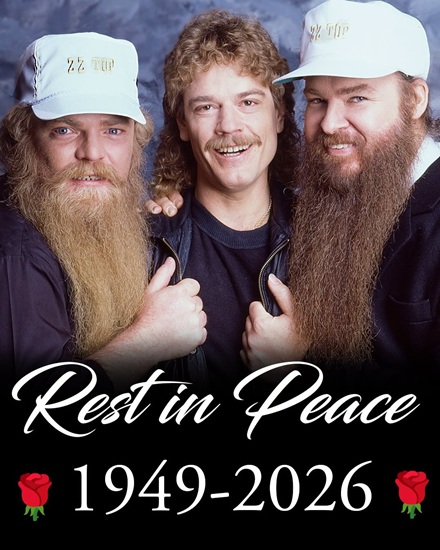
Frank Beard, the longtime drummer whose unmistakable rhythm helped shape the sound of ZZ Top for more than half a century, has died at the age of 77. Beard died on August 17, 2026, at his ranch in Richmond, Texas, where he had been receiving hospice care and was surrounded by members of his family. A specific cause of death has not been publicly announced. His passing represents another significant loss for ZZ Top and for generations of listeners who knew his work through some of the most recognizable blues-rock songs of the past five decades.
The news followed a period of health difficulties that had affected Beard’s ability to perform with the band. ZZ Top had canceled an August 5 appearance at the Hollywood Bowl because of his health, and drummer Michael Monahan had stepped in for Beard during some recent performances. Beard had also missed shows during an earlier period because of health concerns. His family and representatives largely kept the details of his condition private, and no confirmed medical cause should be assumed or reported unless additional information is officially released.
Born Frank Lee Beard in Texas on June 11, 1949, Beard developed an interest in music at a young age and eventually became part of the Texas rock scene. His career changed permanently when he became involved with the musicians who would form ZZ Top’s classic lineup. Guitarist and vocalist Billy Gibbons had founded ZZ Top in Houston in 1969, and Beard soon became the group’s drummer. Bassist Dusty Hill subsequently joined, completing the trio that would remain remarkably stable for decades.
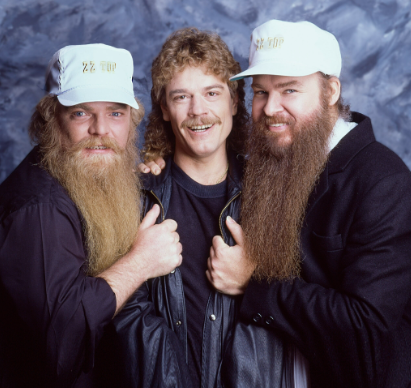
The musical connection between Gibbons, Hill and Beard became the foundation of ZZ Top’s identity. Their sound combined blues, boogie and hard-driving rock while remaining strongly connected to the musical traditions that had influenced them. Gibbons supplied distinctive guitar riffs and vocals, Hill added bass and additional vocals, and Beard provided the disciplined rhythmic foundation beneath them. The chemistry among the three musicians allowed ZZ Top to develop a style that could often be recognized within only a few seconds.
Beard was never a drummer who needed to dominate every recording with elaborate displays of technique. Much of his effectiveness came from knowing exactly what a song required and creating a groove that supported the guitar and bass. His timing, consistency and feel became central elements of ZZ Top recordings. Songs including “La Grange,” “Tush,” “Gimme All Your Lovin’,” “Sharp Dressed Man” and “Legs” demonstrate how important that rhythmic foundation was to the band’s overall sound.
During the 1970s, ZZ Top steadily expanded its audience as both a recording and touring act. The 1973 album Tres Hombres became an important moment in the band’s development and included “La Grange,” one of its best-known early songs. The track highlighted many of the qualities that would become associated with ZZ Top: blues-inspired guitar, a powerful groove and an economical approach that allowed each musician to contribute without overcrowding the arrangement.
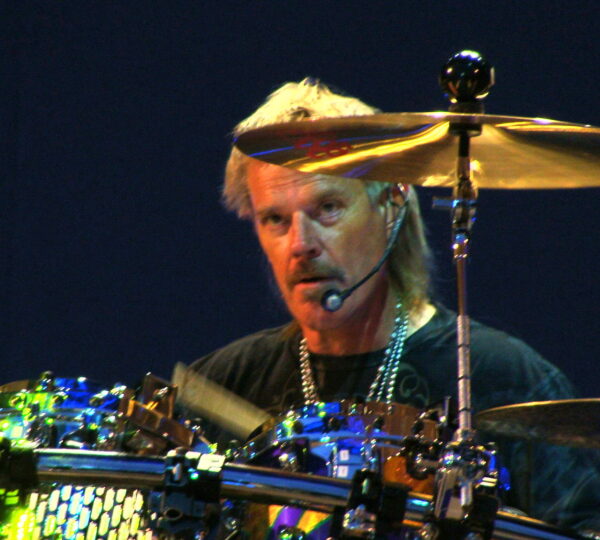
As the group’s popularity increased, Beard remained a constant presence behind the drums. ZZ Top toured extensively and developed a reputation for energetic live performances while continuing to release albums. The musicians also cultivated a distinctly recognizable visual identity, but the music remained at the center of their longevity. Beard’s ability to maintain a dependable rhythmic foundation helped the group move through different stages of its career without losing the basic musical character that audiences associated with ZZ Top.
The band experienced another major transformation during the early 1980s. In 1983, ZZ Top released Eliminator, an album that combined the group’s established blues-rock approach with synthesizers, electronic elements and polished contemporary production. Rather than abandoning its earlier identity, the band found a way to adapt it to a changing musical environment. The result became one of the most commercially successful periods of ZZ Top’s career.
Eliminator produced several songs that became international hits, including “Gimme All Your Lovin’,” “Sharp Dressed Man” and “Legs.” Their accompanying music videos received extensive exposure during the rise of MTV and introduced ZZ Top to millions of younger listeners. The videos frequently featured customized cars, stylish imagery and the instantly recognizable appearance of Gibbons and Hill, whose long beards became part of the band’s public image.
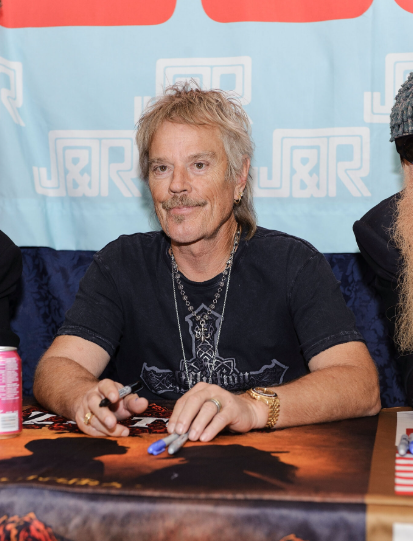
Beard, somewhat humorously, was the member of ZZ Top who did not wear the enormous beard associated with Gibbons and Hill despite his surname. The contrast became one of the group’s familiar visual jokes. Yet his musical role was anything but incidental. Behind the humor and memorable imagery was a drummer responsible for maintaining the rhythmic pulse that connected the group’s blues roots with the more modern production techniques appearing on its biggest 1980s recordings.
The success of Eliminator turned ZZ Top into an even larger international attraction. The group managed something that relatively few bands from its generation accomplished: it adapted to the music-video era without completely abandoning the qualities that had established its reputation during the previous decade. Beard’s drumming remained an important bridge between those periods, providing continuity even as the production surrounding the trio became increasingly sophisticated.
ZZ Top continued recording and touring in the decades that followed. Beard ultimately performed across the band’s studio-album catalog, making his drumming an integral part of its recorded history. Musical trends changed repeatedly during those years, but the trio remained remarkably stable. While many successful bands experienced repeated lineup changes, breakups or reunions, Gibbons, Hill and Beard maintained their partnership for approximately half a century.
Their longevity became nearly as notable as their appearance and music. The three musicians had developed an understanding of one another that came from decades of performing together. Beard later spoke about the importance of finding musicians with whom he felt naturally connected. That sense of musical compatibility can be heard throughout the group’s recordings, where guitar, bass and drums frequently operate as a tightly connected unit rather than competing for attention.
In 2004, ZZ Top received one of rock music’s major institutional honors when the band was inducted into the Rock & Roll Hall of Fame. The recognition celebrated the trio’s long career and its contribution to American rock music. By then, ZZ Top had already influenced generations of musicians while building an extensive catalog that crossed blues rock, boogie, hard rock and the electronic-influenced production of its 1980s recordings.
Beard’s role in that history was sometimes less publicly visible than those of Gibbons and Hill. As the drummer, he usually performed behind his bandmates, and his comparatively private personality meant he was not always the person receiving the greatest amount of media attention. Musically, however, his contribution was fundamental. The familiar ZZ Top groove depended heavily on his ability to maintain a strong, controlled backbeat while leaving enough space for the other instruments.
A major change came in July 2021 when Dusty Hill died at the age of 72. Hill’s death ended the extraordinary run of ZZ Top’s classic three-man lineup. Longtime guitar technician Elwood Francis subsequently assumed bass duties, and the band continued performing with Gibbons and Beard. The decision was consistent with Hill’s wishes that the group continue rather than end after his death.
For Beard, continuing ZZ Top meant carrying forward a musical partnership that had occupied most of his adult life. He and Gibbons remained the two surviving members of the classic lineup, performing alongside Francis and bringing songs created decades earlier to new audiences. Those concerts also demonstrated the lasting popularity of a catalog that had survived enormous changes in popular music.
Beard’s own health eventually began affecting his touring schedule. During periods when he could not perform, other musicians filled in behind the drum kit. More recently, Michael Monahan performed in his place at some ZZ Top shows. The band’s planned August 5, 2026, Hollywood Bowl appearance was canceled because of Beard’s health, signaling that his condition had become serious enough to prevent him from performing.
Beard died on August 17 while receiving hospice care at his Texas ranch, with family members nearby. His family had maintained privacy concerning the details of his illness, and his exact cause of death had not been publicly disclosed at the time the news was reported. For that reason, claims assigning his death to a particular disease or medical condition should be avoided unless confirmed by his family, representatives or another authoritative source.
Following Beard’s death, Billy Gibbons publicly remembered his longtime friend and collaborator and emphasized the importance of Beard’s distinctive backbeat to ZZ Top. The loss carried particular significance for Gibbons, who had now experienced the deaths of both musicians with whom he had built the classic trio. Gibbons also indicated that ZZ Top intended to continue, reflecting Beard’s wishes for the band and its music to carry on.
For fans, Beard’s musical legacy stretches across multiple generations. Some listeners first encountered ZZ Top through the blues-heavy recordings of the 1970s. Others discovered the band through the enormous success of Eliminator and its MTV videos during the 1980s. Younger audiences encountered the group through later tours, streaming platforms, films, television and the continued popularity of songs recorded many years earlier.
What connected all of those eras was rhythm. Beard provided the pulse underneath some of ZZ Top’s most famous guitar riffs, often making complicated musical chemistry sound effortless. His approach demonstrated that a drummer does not have to overwhelm a song to become indispensable to it. Consistency, timing and musical judgment can be equally powerful, and those qualities became central to Beard’s reputation.
His career also illustrates the unusual longevity that ZZ Top achieved. Beard joined the group near the beginning and remained associated with it for more than five decades. Few major rock bands maintained such a recognizable core lineup for so long. Across changing fashions, technologies and generations of audiences, ZZ Top continued performing music built around the chemistry established by Gibbons, Hill and Beard.
That longevity makes Beard’s death more than the loss of an individual musician. It represents another closing chapter in the story of one of rock music’s most durable partnerships. Dusty Hill’s death in 2021 had already ended the original trio’s ability to perform together. Beard’s passing five years later leaves Gibbons as the surviving member of the lineup responsible for the recordings that established ZZ Top’s international reputation.
Beard is survived by his wife, Debbie Meredith, and his children. While his family mourns a husband and father, music listeners around the world remember a drummer whose work became part of rock history. The public may never know every detail of the private person behind the famous band, and respecting that distinction is important. What remains clearly documented is an extensive body of musical work spanning more than half a century.
From the blues-driven atmosphere of “La Grange” to the polished production surrounding “Sharp Dressed Man” and “Legs,” Beard helped ZZ Top evolve without completely losing its musical foundation. Different decades brought different production techniques and audiences, but the rhythmic discipline behind the band remained recognizable. His drums helped give ZZ Top the ability to sound relaxed and powerful at the same time.
Frank Beard’s legacy ultimately exists most clearly in those recordings and performances. Every time a familiar ZZ Top groove begins, listeners can hear the role he played in building the group’s identity. He was part of a trio that transformed influences from blues and rock into a sound recognized far beyond Texas and the United States, eventually reaching audiences around the world.
His death at 77 brings another moment of reflection for a band whose history stretches back to 1969. It is possible to remember that history without exaggerating the circumstances of his passing or adding unconfirmed details. Beard’s documented accomplishments are substantial on their own: more than five decades with ZZ Top, a place in the Rock & Roll Hall of Fame, countless performances and a recorded catalog containing some of the most recognizable songs in American blues-rock.
For more than half a century, Frank Beard sat behind the drum kit while ZZ Top developed from a young Texas blues-rock group into an internationally recognized band. He rarely needed to be the loudest personality in the room for his presence to be felt. His backbeat was woven into the music, providing stability through decades of change and helping create the distinctive sound that millions of listeners came to recognize.
With Beard’s passing, the classic era of ZZ Top moves further into history, but the music created by Beard, Billy Gibbons and Dusty Hill remains widely available to future generations. Albums, concert recordings and familiar songs preserve the partnership they built together. For listeners who appreciated his work, Frank Beard will be remembered not simply as ZZ Top’s drummer, but as one of the musicians who made the group sound unmistakably like ZZ Top.

