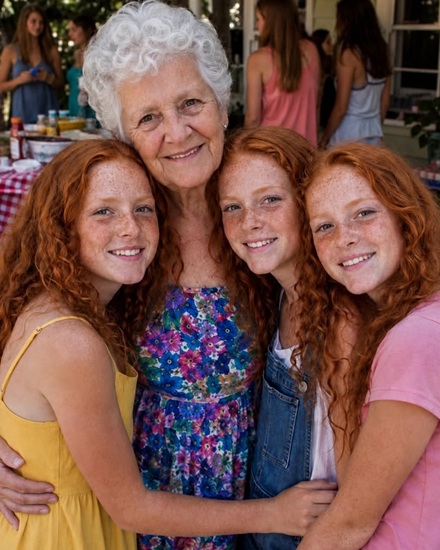
There are some moments in life that remain vivid no matter how many years pass. In this fictional story, the sound of four familiar knocks on the front door carried memories that had never truly faded. Fifteen years had gone by since Amanda had left, yet that pattern of knocking instantly brought back emotions that had long been buried beneath the routines of everyday life. Inside the house, three young women sat together watching a movie, unaware that the evening they expected to be ordinary was about to reopen a chapter of family history that had shaped their entire childhood.
When I opened the door, Amanda stood quietly on the porch. Time had changed many things, but there was still something familiar about her expression. She appeared confident on the surface, yet there was uncertainty behind her smile. She greeted me softly before stepping inside, carefully looking around the modest home that had sheltered her daughters for so many years. Every photograph on the walls, every school certificate displayed on a shelf, and every small decoration represented moments she had not witnessed. The house reflected years of ordinary family life built through patience, sacrifice, and consistency rather than wealth or luxury.
The triplets—Lily, Grace, and Amelia—had grown into thoughtful young women with different personalities but an unmistakable bond. Although they had often wondered what they might say if they ever met their mother again, reality felt very different from imagination. No one rushed forward. No emotional reunion unfolded. Instead, the room remained quiet as everyone tried to understand what this unexpected visit might mean. Years of unanswered questions cannot easily disappear in a single afternoon, and each of them needed a moment to process the emotions that accompanied Amanda’s return.
Amanda attempted to begin a conversation by asking about their studies, interests, and future plans. Her questions were polite, but they highlighted the years she had missed. The young women answered respectfully, yet there was a noticeable distance between them. They were speaking with someone connected to their past but unfamiliar with the countless ordinary moments that had shaped their lives. Childhood memories are built gradually through birthdays, school events, illnesses, celebrations, disappointments, and quiet evenings at home. Those shared experiences cannot simply be recreated after many years apart.
After a few minutes, Lily quietly excused herself and walked upstairs. When she returned, she carried a neatly wrapped white gift bag tied with a simple ribbon. Amanda smiled, perhaps expecting a welcoming gesture or a symbolic gift marking a fresh beginning. Instead, Lily gently placed the bag in her hands without saying a word. The room remained silent as Amanda untied the ribbon and slowly opened the package, uncertain about what she would find inside.
Within the bag were carefully organized bundles of letters, handmade greeting cards, children’s drawings, and small school projects created throughout the girls’ early years. Each envelope was labeled with a date. Some described a first day of school, others celebrated birthdays, holidays, or small personal achievements. There were stories about learning to ride bicycles, losing baby teeth, performing in school plays, and countless ordinary moments that children naturally hope to share with a parent. None of the letters had ever been mailed. They had simply been preserved as reminders of words that had never found their intended recipient.
Amanda began reading quietly. As she moved from one letter to another, she noticed how the handwriting gradually changed from large, uneven childhood print into more confident writing as the girls grew older. Then, without warning, the letters stopped. The final envelope had been written when the girls were ten years old. After that point, there were no more messages. The silence represented not anger but acceptance. At some point, the children had stopped expecting an answer and had chosen to continue their lives without waiting for one.
The atmosphere in the room remained calm. No one raised their voice or revisited old arguments. Instead, the letters themselves quietly illustrated the years that had passed. They represented birthdays celebrated, school graduations attended, family traditions created, and countless evenings spent together. While reading them, Amanda gradually realized that parenting is not measured by a single decision or one emotional reunion. It is built through thousands of ordinary moments shared over many years, moments that cannot simply be recovered once they have passed.
As evening approached, everyone gathered around the dining table for dinner. Conversation slowly shifted toward everyday topics, allowing each person to become more comfortable despite the emotional circumstances. The triplets laughed together over childhood memories, occasionally explaining stories that Amanda had never heard before. Watching those conversations unfold, she began to understand how deeply their shared experiences had shaped the family they had become. Although she was physically present in the room, she was listening to memories that belonged to years she had never experienced.
As dinner continued, the conversation flowed naturally among the three sisters as they recalled school events, family holidays, and everyday memories that had shaped their childhood. They spoke about teachers who had encouraged them, neighbors who had become close friends, and traditions that had developed over the years. Amanda listened quietly, occasionally smiling as she heard stories she had never known. Each memory revealed another chapter of their lives that had unfolded without her presence. Although the atmosphere remained respectful, it also reflected the reality that meaningful family relationships are built gradually through shared experiences over time.
After the meal, the family gathered in the living room where Amelia quietly placed a small wooden box on the coffee table. The box contained handwritten notes that had been carefully preserved over many years. They were not formal letters or important documents, but simple pieces of advice collected throughout childhood. Some offered encouragement during difficult days, while others described ordinary family traditions that had become comforting routines. Together, they represented years of guidance, patience, and everyday conversations that had helped shape the sisters as they grew older.
Amanda slowly read each handwritten note. Rather than focusing on major life events, the messages celebrated small acts of kindness, resilience, and gratitude. They encouraged taking time to listen carefully, helping others without expecting recognition, and appreciating ordinary moments shared with family. Reading them helped illustrate how childhood is influenced not only by significant milestones but also by countless quiet interactions that gradually build trust and emotional security. These simple lessons had become lasting memories because they had been practiced consistently over many years.
The evening gradually became an opportunity for honest conversation. Amanda acknowledged that time had continued moving forward while she had been absent and recognized that returning after many years could not erase the experiences her daughters had lived without her. The sisters, in turn, listened respectfully while maintaining healthy boundaries that reflected the lives they had built together. No one attempted to rewrite the past or pretend difficult years had never existed. Instead, each person accepted that understanding often begins with listening rather than expecting immediate reconciliation.
As the visit drew to a close, Amanda prepared to leave. Before walking toward the front door, Amelia handed her a blank greeting card. Inside was a single handwritten sentence: “Every new chapter begins with the choices we make today.” Amanda quietly read the message several times before carefully placing the card inside her coat pocket. Rather than offering dramatic promises about the future, she simply thanked everyone for allowing her to visit. Sometimes the most meaningful conversations end not with certainty but with the willingness to reflect on what has been learned.
Standing on the front porch, Amanda paused for a final moment before leaving. She looked back at the warmly lit house where laughter could still be heard from inside. Although many years had separated the family, she understood that genuine relationships cannot be rebuilt through gifts, financial success, or carefully chosen words alone. Trust develops gradually through consistent actions, honesty, patience, and respect. Whether future opportunities for reconciliation would arise remained uncertain, but the evening had given everyone an opportunity to express themselves with sincerity and dignity.
After the car disappeared down the street, the sisters returned inside. The house felt quiet, yet peaceful. They reflected on how much their lives had changed over the years and how important it had been to grow up surrounded by stability, encouragement, and unconditional care. Rather than dwelling on disappointment, they focused on the family they had become through shared experiences, mutual support, and resilience. Their conversations reminded them that love is often demonstrated through everyday acts of kindness repeated over many years rather than through extraordinary gestures.
As the evening came to an end, the sisters organized the letters and keepsakes before returning them to their place on the bookshelf. These memories no longer represented unanswered questions but chapters of their personal history that had helped shape who they had become. Looking ahead, they chose to continue building their futures with optimism while respecting the lessons learned from the past. Although difficult experiences cannot be changed, they can encourage greater understanding, compassion, and appreciation for the relationships that remain present in everyday life.
The story concludes with a reminder that families, whether connected by birth or by the bonds created through years of shared care, are strengthened by trust, responsibility, empathy, and consistent support. Every person’s journey is different, and reconciliation, when it occurs, often requires time, honesty, and mutual respect. In this fictional narrative, the greatest lesson is not about regret but about the enduring value of compassion, accountability, and the quiet strength that grows through everyday acts of love and commitment.
