
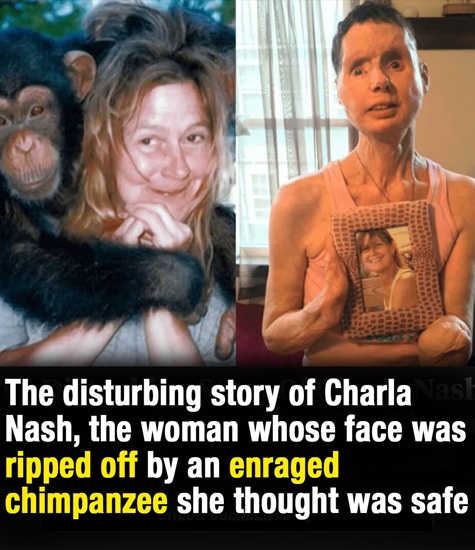
In February 2009, a tragic event in Stamford, Connecticut, shocked the United States and sparked worldwide discussions about the dangers of keeping exotic animals as household pets. At the center of the story was Charla Nash, a compassionate woman who had simply agreed to help a longtime friend. She was not a public figure or someone who sought media attention. Instead, she was known by friends and family as dependable, caring, and always willing to lend a helping hand.
What began as an ordinary act of kindness quickly turned into one of the most widely reported animal attacks in modern American history, changing her life forever. Charla had been close friends with Sandra Herold for many years. Sandra owned a chimpanzee named Travis, whom she had raised almost like a member of her own family. Travis was well known throughout the local community and had appeared in television commercials, participated in public events, and often accompanied Sandra around town.
To many neighbors, he seemed unusually calm and intelligent. Although he was a wild animal by nature, years of living with humans had led many people to believe he behaved more like a person than a chimpanzee. However, wildlife experts have consistently warned that even chimpanzees raised in homes retain their natural instincts and possess extraordinary physical strength that can become dangerous without warning.
On the afternoon of February 16, 2009, Sandra contacted Charla in a state of panic. According to reports, Travis had taken Sandra’s car keys and refused to return inside the house. Knowing that Charla had interacted with Travis before while working at Sandra’s towing business, Sandra hoped her friend might be able to calm him down. Without hesitation, Charla drove to Sandra’s home to help. Like many acts of kindness, the decision seemed simple at the time. Neither woman could have imagined how quickly the situation would escalate into a life-threatening emergency.
Investigators later reported that several factors may have contributed to Travis becoming agitated that day. Charla had arrived driving a different vehicle than usual and was wearing a new hairstyle. She was also carrying an Elmo doll, which reportedly resembled one of Travis’s favorite toys. While researchers cannot say with certainty what triggered his behavior, authorities believe these unfamiliar details may have confused or startled the chimpanzee. Experts have also noted that Travis had previously been diagnosed with Lyme disease, and although rare, some studies have explored possible neurological complications associated with the illness. Even so, no single factor has ever been confirmed as the direct cause of the attack.
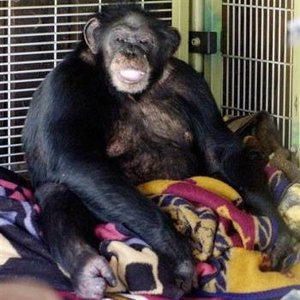
Without warning, Travis suddenly became violently aggressive. The attack happened within moments, leaving Charla with catastrophic injuries. Sandra desperately tried to stop the assault by striking Travis with a shovel and later using a butcher knife in an effort to save her friend’s life. Despite her efforts, she was unable to pull the powerful chimpanzee away. Later interviews revealed how emotionally devastating those moments were for Sandra, who had cared for Travis since he was an infant and considered him part of her family. She would later describe the painful conflict between trying to protect her friend while confronting the animal she had raised for years.
Realizing the situation was beyond her control, Sandra called 911. Recordings of the emergency call later became widely known because of the intense distress heard in her voice. During the call, she repeatedly pleaded for help while explaining that Travis was attacking Charla. At one point, she urgently told the dispatcher that the chimpanzee was continuing the assault, emphasizing how critical the situation had become. Emergency responders immediately headed to the scene, but due to the danger posed by the still-aggressive animal, they waited for police officers to secure the area before approaching the victim.
When officers from the Stamford Police Department arrived, they encountered a scene unlike anything they had experienced before. Travis aggressively approached one of the patrol vehicles, reportedly striking it with tremendous force, pulling at the passenger door, and damaging the side mirror. Officer Frank Chiafari, who later spoke publicly about the incident, described the encounter as one of the most frightening moments of his law enforcement career. Faced with an immediate threat to emergency personnel and the public, he discharged his firearm. Travis retreated into the house, where he later died from his injuries.
Emergency medical teams then reached Charla and immediately recognized the extraordinary severity of her injuries. She was transported to the hospital in critical condition, where doctors began an extensive effort to save her life. Medical professionals later explained that multiple surgical teams worked continuously during the first several days after the attack. The injuries affected nearly every part of her face and both hands, requiring highly specialized reconstructive procedures. According to members of the emergency medical staff, the trauma they witnessed was unlike anything many had encountered during their careers. Some hospital employees were later offered counseling because of the emotional impact of treating such a critically injured patient.
As Charla remained hospitalized, physicians focused first on stabilizing her condition before considering long-term reconstructive options. She was placed into a medically induced coma while specialists worked to repair life-threatening injuries. Over the following days, she underwent numerous complex operations involving plastic surgeons, trauma specialists, ophthalmologists, and other medical experts. Although doctors successfully saved her life, the injuries permanently affected her vision and many aspects of her daily functioning. The road ahead would require years of rehabilitation, medical treatment, and emotional recovery, making this only the beginning of an extraordinary journey that would inspire people around the world.
After surviving the attack, Charla Nash faced an incredibly long and difficult recovery. Doctors continued performing complex reconstructive procedures while carefully monitoring her condition. Specialists from several medical fields worked together to stabilize her injuries and prepare her for the months and years of rehabilitation that lay ahead. Despite the severity of the trauma, Charla demonstrated remarkable determination throughout her recovery. Family members remained by her side, offering constant encouragement while medical professionals focused on helping her regain as much independence as possible. Although the physical challenges were enormous, those closest to her often described her resilience as equally extraordinary.
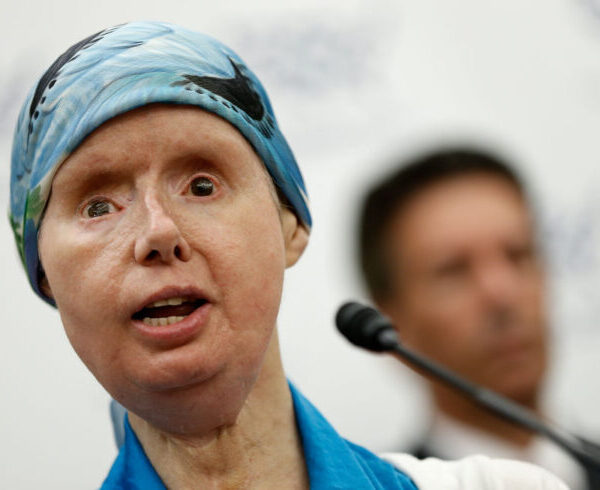
Medical experts later explained that Charla had suffered devastating injuries affecting much of her face and both hands. She permanently lost her eyesight after severe infections damaged both eyes following the attack. In addition to extensive facial trauma, she also lost most of her fingers, requiring years of rehabilitation to adapt to daily life. Physicians described the case as one of the most severe facial injuries ever treated in a living patient. During her hospitalization, doctors performed numerous surgeries involving multiple surgical teams working together to reconstruct damaged tissue while preventing additional complications. Every procedure represented another step toward improving her quality of life.
Following her initial treatment, Charla was transferred to the Cleveland Clinic, where physicians evaluated her for advanced reconstructive procedures. Eventually, specialists determined that she could become a candidate for an experimental full-face transplant. Such operations were still extremely rare at the time and involved years of preparation, extensive medical evaluations, and careful matching of donor tissue.
The possibility of undergoing one of the world’s most complex transplant procedures offered hope, but it also involved significant medical risks. Throughout the process, Charla remained focused on recovery rather than appearance, repeatedly stating that she wanted to regain as much independence as possible.
In November 2009, Charla made her first public appearance since the attack by participating in The Oprah Winfrey Show. During the emotional interview, she spoke honestly about her recovery while avoiding unnecessary focus on the attack itself. Rather than dwelling on the violence she experienced, she explained that she preferred to concentrate on healing and moving forward. She shared that she did not want to relive the traumatic memories but instead hoped to build a future despite the tremendous challenges she now faced. Her courage during the interview inspired countless viewers and highlighted the remarkable resilience that had carried her through months of recovery.
Another major milestone came in 2011, when surgeons at Brigham and Women’s Hospital in Boston successfully performed a full-face transplant on Charla. The groundbreaking operation lasted more than twenty hours and involved a large multidisciplinary medical team. At the time, the procedure represented one of the most advanced reconstructive surgeries ever performed.
Physicians later described the transplant as both a surgical and scientific achievement that required years of planning, coordination, and postoperative care. Although the operation could not restore her eyesight, it significantly improved many essential functions, including breathing, speaking, eating, and facial movement.
Throughout her recovery, Charla chose not to disappear from public life. Instead, she used her experience to educate others about the risks associated with keeping exotic animals as household pets. She appeared on several national television programs, including The Today Show, where she encouraged stronger public awareness and better understanding of the natural behaviors of wild animals.
Her message remained consistent: no matter how gentle an exotic animal may appear, it retains instincts that cannot be completely eliminated through domestication. Wildlife biologists, veterinarians, and primatologists echoed similar concerns, emphasizing that chimpanzees possess tremendous strength and unpredictable behavior that make them unsuitable as pets.
The tragedy also prompted renewed discussions among lawmakers and wildlife organizations regarding regulations governing privately owned primates. Advocacy groups pointed to the Stamford attack as an example of why stronger oversight of exotic animal ownership was necessary. Proposed legislation, including versions of the Captive Primate Safety Act, sought to restrict the interstate sale and private ownership of certain primates. Although legislative efforts evolved over time and faced varying outcomes, Charla’s story remained an important part of the national conversation surrounding public safety, wildlife conservation, and responsible animal care.
Legal proceedings followed the attack as Charla sought compensation for the devastating injuries she had suffered. Her legal representatives filed claims against the estate of Sandra Herold, and in 2012, a settlement was reached. The compensation helped cover some of the extraordinary medical expenses associated with years of treatment, rehabilitation, and ongoing care. Separate legal efforts involving state agencies also brought attention to earlier concerns regarding Travis. Reports noted that the chimpanzee had previously escaped from Sandra’s vehicle in 2003, temporarily disrupting traffic before being safely recovered. Those earlier incidents became part of broader discussions about whether additional preventive measures might have reduced future risks.
The emotional impact of the tragedy extended beyond Charla herself. Officer Frank Chiafari, who was forced to use deadly force to stop the attack, later spoke about the psychological effects the incident had on him. He described struggling with anxiety and emotional distress after the event, drawing attention to the mental health challenges first responders can experience following traumatic emergencies. His experience contributed to discussions about expanding access to psychological support services for law enforcement officers who encounter exceptionally distressing situations while performing their duties.
Years after the attack, Charla Nash’s story continues to be remembered not only because of the extraordinary medical procedures she underwent but also because of the strength she displayed throughout her recovery. Her willingness to speak publicly transformed a deeply personal tragedy into an opportunity to educate others about wildlife safety and the responsibilities associated with exotic animal ownership. While nothing can erase the life-changing injuries she endured, her perseverance has inspired people around the world. Today, her experience remains a powerful reminder that wild animals, regardless of how familiar they may seem, retain natural instincts that deserve both respect and caution, and that extraordinary courage can emerge even from life’s most unimaginable circumstances.

