
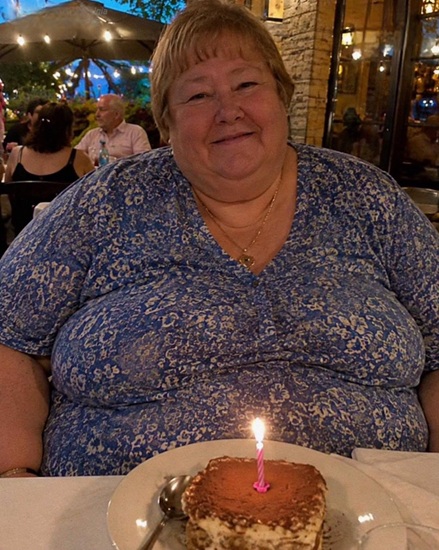
My mother, Molly, used to be the kind of person who could turn an ordinary restaurant visit into an occasion. When I was a child, she would read every item on the menu even if she already knew what she wanted. She asked servers about their favorite dishes, encouraged everyone at the table to share bites and somehow ended most evenings knowing at least one employee’s name. Food was never simply food to her. Sitting around a table was an opportunity to talk, laugh and spend time with people she cared about.
Over the years, however, something slowly changed. As Molly’s body changed, strangers occasionally began offering opinions she had never requested. Some simply stared at her while she ate. Others whispered to the people sitting beside them. A few were bold enough to comment directly on what was on her plate or suggest that she should choose something different. Molly always tried to pretend it didn’t matter. “They don’t know me,” she would say afterward.
She was right.
But knowing that didn’t stop the words from hurting.
Gradually, I noticed that she stopped suggesting restaurants.
When someone invited her out, there was usually an explanation for why staying home would be easier. Maybe she was tired. Maybe her stomach was bothering her. Maybe parking would be difficult. Sometimes she claimed she had forgotten about another commitment.
Eventually, I realized those excuses had something in common.
At home, nobody judged her plate.
Nobody stared at her body.
Nobody disguised an insult as concern.
By the time her 65th birthday approached, Molly had barely eaten inside a restaurant for months.
I wanted this birthday to be different.
There was a small Italian restaurant she had loved years earlier. It had never been fashionable or luxurious, which was part of its charm. Old photographs covered the walls, the tables were close together and the smell of fresh bread and garlic seemed to reach the sidewalk whenever someone opened the door.
When I suggested going there, Molly immediately resisted.
“We can order food,” she said.
“That’s what we did last year.”
“It worked perfectly.”
“You ate pasta in pajamas.”
“Another advantage.”
I kept asking.
Eventually she surrendered.
“One condition.”
“No singing?”
“No singing.”
“Deal.”
“No waiter appearing with candles.”
“Fine.”
“And don’t secretly tell everyone it’s my birthday.”
“I won’t.”
She studied me suspiciously.
“You’re lying.”
“I am absolutely not lying.”
On the evening of her birthday, Molly came downstairs wearing dark trousers and a blue blouse. She had also put on a silver necklace and matching earrings that my father had given her many years earlier.
I hadn’t seen her wear them in a long time.
“You look beautiful.”
She immediately dismissed the compliment.
“I look sixty-five.”
“Those things aren’t mutually exclusive.”
That earned me a smile.
The confidence lasted until we reached the restaurant.
Molly stopped outside the entrance.
Through the window, we could see families eating, couples talking and servers moving between tables.
I waited.
Finally, she took a slow breath.
“I’m sixty-five,” she said.
“Yes.”
“If I’ve survived sixty-five years, I can survive one plate of pasta.”
I smiled.
“That’s the spirit.”
We walked inside.
For almost an hour, everything went perfectly.
Molly began relaxing almost immediately.
Our server was friendly without being intrusive. The bread arrived warm. Molly stole a piece from my side of the basket and then denied doing it despite still holding the evidence.
“You have your own bread.”
“Yours looked better.”
“They’re from the same basket.”
“That’s your opinion.”
Then she surprised me.
She ordered tiramisu before the main course.
“Dessert first?” I asked.
“I’m celebrating.”
“You used to tell me dessert came after dinner.”
“I was younger and foolish.”
When it arrived, she took one bite and smiled.
For a moment, she looked like the version of my mother I remembered from childhood.
Then she said something I had been hoping to hear for years.
“You know, maybe I should start doing this again.”
“Eating dessert first?”
“Going out.”
I didn’t want to react too strongly and frighten the thought away.
“I’d like that.”
“So would I.”
That should have been the moment I remembered most clearly.
Instead, I noticed the woman sitting at the next table.
She had been looking at us repeatedly.
More accurately, she had been looking at Molly.
Her attention moved from my mother’s face to the dessert plate and back again.
I tried to ignore it.
Then the woman spoke.
“You might want to skip dessert.”
She wasn’t speaking quietly.
Several conversations nearby stopped.
Molly’s spoon froze halfway to her mouth.
I stared at the woman.
“Excuse me?”
She shrugged.
“I’m only trying to help.”
“Nobody asked for your help.”
Beside me, Molly slowly placed the spoon down.
Her face had changed completely.
A few seconds earlier she had been discussing going to restaurants again.
Now she reached for her purse.
“We should leave.”
“No, Mom.”
“It’s fine.”
It wasn’t fine.
The stranger laughed.
“She’ll appreciate the advice someday.”
I stood.
“Do you normally give strangers unsolicited opinions about their bodies?”
The woman rolled her eyes.
“People are too sensitive. Somebody has to be honest.”
Before I could answer, the doors leading to the kitchen opened.
A man in a chef’s coat walked quickly into the dining room.
He appeared to be around Molly’s age. His expression was stern as he looked toward the disturbance.
Then he saw my mother.
He stopped.
His expression changed instantly.
“Molly?”
My mother looked toward him.
Confusion crossed her face.
Then recognition followed.
“Alaric?”
For several seconds, they simply stared at each other.
The woman interrupted.
“Are you the manager?”
Alaric turned toward her.
“I’m the owner.”
“Good. This woman and her daughter are creating a scene.”
“I heard what happened.”
“Then you understand.”
“I do.”
The woman smiled.
Alaric continued.
“I’m asking you to leave.”
Her smile disappeared.
“What?”
“You made another guest uncomfortable after commenting publicly on her body. I’m asking you to leave the restaurant.”
“I was helping her.”
“She didn’t request your help.”
The woman looked around the dining room.
Nobody joined her argument.
“This is ridiculous.”
Alaric remained calm.
“You’re welcome to disagree outside.”
She stood angrily and began gathering her belongings.
Then Alaric turned back toward my mother.
“I cannot believe you’re sitting here.”
Molly was still processing what she was seeing.
“You own this restaurant?”
“For more than thirty years.”
She looked around.
“This is yours?”
He smiled.
“Eventually.”
I looked between them.
“You two know each other?”
Molly laughed softly.
“A very long time ago.”
More than forty years earlier, when both were in their early twenties, Molly and Alaric had worked at the same neighborhood diner.
Molly worked the front of the restaurant.
Alaric wanted desperately to become a cook.
Unfortunately, the owner didn’t think he was ready.
“He wasn’t,” Molly told me.
Alaric looked offended.
“I was talented.”
“You burned soup.”
“Once.”
“Three times.”
“It was complicated soup.”
Despite everything that had just happened, Molly started laughing.
Alaric explained that he used to remain in the kitchen after closing and experiment with recipes whenever the owner allowed him.
Molly became his unofficial taste tester.
Sometimes she praised his food.
Frequently, she didn’t.
“You once told me my chicken tasted confused,” he reminded her.
“It did.”
“How does chicken taste confused?”
“I don’t know, but yours managed it.”
They both laughed again.
But Molly had done something more important than criticize his recipes.
She believed he could become a professional chef.
Whenever the diner owner dismissed his ambitions, Molly argued that he deserved a chance.
Eventually, Alaric was allowed to work regularly in the kitchen.
Then everything went wrong.
One evening, Alaric discovered seafood he believed should not be served.
He argued with the owner.
The argument became heated.
Alaric picked up a pan and threw it.
Molly interrupted him.
“You’re leaving out where it landed.”
“I missed him.”
“Barely.”
“It wasn’t intentional.”
“You were twenty-two and dramatic.”
Alaric nodded.
“That part is accurate.”
He was fired immediately.
At the time, Alaric believed he had destroyed his only opportunity to work professionally in a kitchen.
Molly refused to accept that.
She knew someone working at another restaurant and called them.
She convinced them to interview him.
Alaric got the job.
That restaurant became his real beginning.
He learned from more experienced chefs, moved through several kitchens and eventually became capable of running one himself.
Years later, he opened this restaurant.
“You helped start everything,” he told Molly.
She shook her head.
“I made a phone call.”
“You made it when nobody else would.”
“You did the work.”
“Maybe. But you gave me somewhere to do it.”
Molly looked down, visibly uncomfortable with the attention.
Meanwhile, the rude customer had reached the entrance.
Before leaving, she turned around.
“I still think people shouldn’t get angry at the truth.”
Molly looked at her.
This time she didn’t retreat.
She stood.
Her hands were visibly trembling.
“You don’t know the truth about me.”
The woman stared at her.
“You know what I look like,” Molly continued. “That’s all.”
Nobody spoke.
“You don’t know my health history. You don’t know what medication I take. You don’t know what my doctors tell me. You don’t know what has happened to my body over sixty-five years.”
The stranger attempted to respond.
Molly continued.
“And even if you knew every detail, embarrassing someone in front of a room full of strangers would not become kindness.”
The woman looked away.
Molly’s voice remained calm.
“You saw my body. You didn’t see my life.”
The woman left.
Molly immediately sat down.
Her hands were still shaking.
“I thought my knees were going to stop working.”
I reached across the table.
“You were brave.”
“I was terrified.”
“Those aren’t opposites.”
She looked at me for a moment.
Then she smiled.
Alaric pulled out a chair.
“There is something else you need to see.”
He pointed toward the far wall.
Dozens of photographs covered it.
Some showed the restaurant’s opening.
Others showed employees, customers and family celebrations.
One photograph was much older.
A young man stood inside a cramped kitchen.
Beside him was a woman with long hair tied behind her head.
Molly.
My mother walked toward it.
Below the photograph was a small plaque.
She read it silently.
Then she covered her mouth.
The inscription thanked Molly for telling a young cook that he belonged in a kitchen before he had learned to believe it himself.
“You kept this photograph?”
“Of course.”
“For forty years?”
“More or less.”
“Why?”
Alaric looked at her.
“Because people remember the ones who believed in them before there was anything impressive to believe in.”
Molly’s eyes filled with tears.
“I lost touch with you.”
“We both did.”
“I’m sorry.”
“Don’t be.”
Life had simply happened.
Careers changed.
People moved.
Families grew.
Responsibilities accumulated.
There hadn’t been one dramatic event that ended their friendship.
Time had simply carried them in different directions.
Alaric eventually returned to the kitchen.
About twenty minutes later, he emerged carrying our food himself.
There was fresh pasta, vegetables and warm bread.
Then he placed another plate beside Molly.
Tiramisu.
She stared at him.
“I already had dessert.”
“I know.”
“Then why is there another one?”
Alaric smiled.
“I heard somebody suggest you should skip dessert.”
Molly raised an eyebrow.
“So?”
“So I thought we should correct the evening.”
Several people at nearby tables laughed.
Molly did too.
Then she picked up her fork.
She ate another bite.
And for the first time since the stranger had spoken, her shoulders relaxed.
Nobody applauded.
Nobody delivered a speech.
The restaurant simply returned to normal.
That somehow made the moment more meaningful.
Molly didn’t need the entire room celebrating her.
She needed to know she didn’t have to leave.
We stayed until the plates were empty.
On the drive home, Molly watched the city lights through the passenger window.
After several minutes, she spoke.
“Remember what I said before that woman opened her mouth?”
“You said several things.”
“About going out again.”
I looked at her.
“Yes.”
“I still mean it.”
I couldn’t hide my smile.
“Good.”
She pointed at me.
“Don’t make a big deal out of it.”
“I’m not.”
“You’re smiling like an idiot.”
“I’m driving. You’re supposed to look at the road, not me.”
“I’m not driving.”
“Exactly.”
She laughed.
A few weeks later, my phone rang.
It was Molly.
“Are you free Saturday?”
“I think so.”
“I found a Greek restaurant.”
For a moment, I didn’t answer.
“Hello?”
“I’m here.”
“Then why aren’t you talking?”
I smiled.
“I was waiting for you to finish.”
“They supposedly have excellent dessert.”
“Dessert first?”
There was a pause.
“Obviously.”
That was when I understood what the birthday dinner had actually changed.
One evening had not erased every hurtful comment Molly had heard.
Alaric could not undo years of self-consciousness.
Neither could I.
But something important had shifted.
A stranger had tried to make Molly feel that occupying space in public required someone else’s approval.
This time, she had stayed.
She had finished dinner.
She had spoken for herself.
And then she had ordered another night out.
Perhaps courage isn’t always dramatic.
Sometimes it is simply returning to a place you once loved after fear convinced you that you no longer belonged there.
Sometimes it is sitting back down when every instinct tells you to leave.
And sometimes it is as ordinary as picking up a fork, taking another bite of tiramisu and deciding that a stranger’s opinion will not determine how small your life becomes.

