
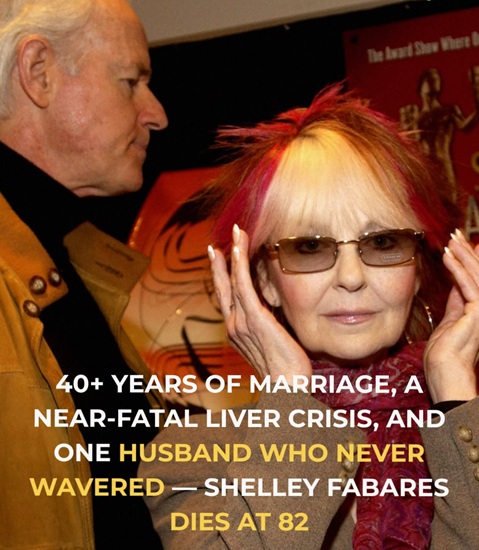
Shelley Fabares spent much of her life in the public eye, becoming a familiar presence to generations of American television viewers. Yet some of the most important moments of her life happened away from Hollywood sets and without an audience watching. Her career included popular television programs, hit music, movies and decades of work in entertainment, but her personal story also included a serious health crisis that eventually required a liver transplant.
Throughout that difficult period, her husband, actor Mike Farrell, remained closely involved in her care. Their experience became an important part of Fabares’ life story and one she later discussed publicly with gratitude. Fabares died in Los Angeles on Saturday, August 22, 2026, at the age of 82, according to a statement from her family. She was surrounded by loved ones at the time of her death. Her husband, Mike Farrell, and other relatives remembered her not simply for her accomplishments as an actress and singer but for the relationships she maintained away from the entertainment industry.
The family’s statement described her as a devoted wife, stepmother and relative, as well as a loyal friend. They also remembered the warmth, generosity, humor and grace she brought to the people around her. For viewers who grew up watching American television during the late 1950s and 1960s, Fabares was closely associated with The Donna Reed Show.
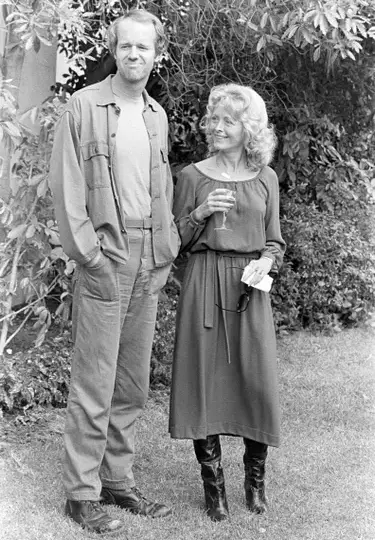
Born Michele Marie Fabares in Santa Monica, California, on January 19, 1944, she entered entertainment at a young age. Acting already existed within her extended family because her aunt was celebrated actress and singer Nanette Fabray. Fabares began working professionally while she was still a child and soon developed a career of her own. Before reaching adulthood, she had already become recognizable to millions of television viewers.
Her breakthrough came when she was cast as Mary Stone, the teenage daughter of Donna and Alex Stone, on The Donna Reed Show. The popular family sitcom began airing in 1958, and Fabares became one of its best-known young performers. Her portrayal of Mary helped establish her as a major teenage television personality at a time when television was becoming increasingly central to American popular culture. Fabares remained with the series for several seasons, and her work on the program created opportunities that extended well beyond acting. Music soon became another unexpected part of her career.
In 1962, Fabares released “Johnny Angel,” the recording that became the defining hit of her relatively brief career as a pop singer. The song reached No. 1 on the Billboard Hot 100 and sold more than a million copies. Although Fabares would ultimately be remembered primarily as an actress, the enormous popularity of “Johnny Angel” ensured that she also maintained a permanent place in early-1960s pop culture. The recording remained closely associated with her throughout her life, even after she had moved away from music and concentrated on acting.
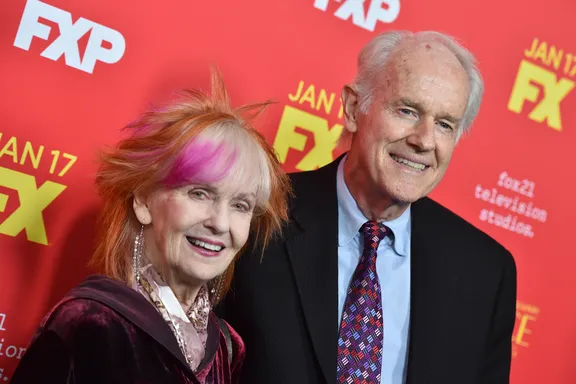
Hollywood films soon followed. During the 1960s, Fabares appeared opposite Elvis Presley in three movies: Girl Happy, Spinout and Clambake. Working with Presley placed her alongside one of the most famous entertainers of the era and further expanded her public profile. She continued moving between television and film as her career developed, avoiding the fate of many performers who struggled to find substantial work after becoming famous as children or teenagers. Her ability to continue working through changing periods of television would eventually become one of the defining characteristics of her career.
Fabares also appeared in the acclaimed television movie Brian’s Song, which told the story of football players Brian Piccolo and Gale Sayers. The production became one of the most remembered television films of its era and added another notable credit to her résumé. Over subsequent years, she appeared in numerous television productions, including familiar series such as One Day at a Time, The Love Boat and Murder, She Wrote. Rather than being defined by a single childhood role, Fabares gradually built a career that stretched across several decades and multiple generations of television audiences.
A major career resurgence arrived in 1989 when Fabares joined the sitcom Coach. She played Christine Armstrong, the romantic partner and later wife of Craig T. Nelson’s character, Hayden Fox. The role introduced Fabares to viewers who may have had little connection to her earlier work on The Donna Reed Show. She remained a central member of the cast during the show’s long run and received two Primetime Emmy Award nominations for her performance. By then, Fabares had accomplished something relatively uncommon in Hollywood: establishing prominent television roles decades apart.
While her professional life continued, Fabares was also building a lasting relationship with Mike Farrell, best known for playing Captain B.J. Hunnicutt on MASH*. Their paths had initially crossed years before they became a couple. Fabares met Farrell in 1970 while appearing on The Interns, a television series in which Farrell was working. Both had complicated personal circumstances at the time, and their first meeting did not immediately develop into a romantic relationship. Years later, however, they encountered each other again and discovered that their circumstances had changed.
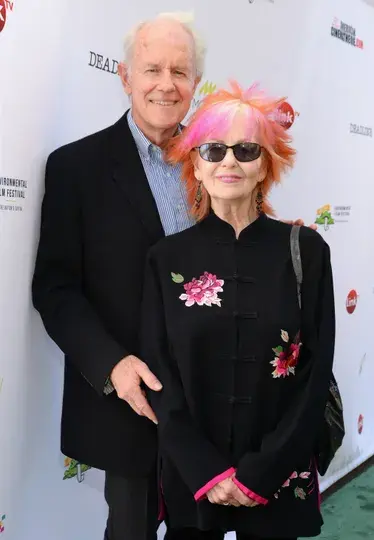
Fabares had previously been married to music producer Lou Adler. Their marriage began in 1964, but the couple eventually separated, and their divorce was finalized in 1980. Farrell had been married to actress Judy Farrell, with whom he had two children, Michael and Erin. That marriage also eventually ended. When Fabares and Farrell reconnected years after their first meeting, their relationship developed gradually from conversation and friendship into something more serious. They ultimately married in 1984, beginning a partnership that would last for more than four decades.
Becoming part of an already established family required adjustment. Fabares became stepmother to Farrell’s children, and she later acknowledged that creating a blended family was not effortless. She spoke about the patience, strength and love necessary to develop those relationships over time rather than pretending that everything immediately fell into place. That openness offered a more nuanced picture of her private life than the polished family relationships often presented on television. Eventually, those relationships became an important part of the family life she shared with Farrell.
A dramatic event in the 1990s changed the direction of Fabares’ life. In 1994, while the couple’s home was under construction, she suffered a serious fall through unfinished floor joists. The accident left her with extensive injuries, including multiple broken ribs. What initially appeared to be primarily an orthopedic emergency unexpectedly led doctors to discover another problem. Blood tests performed during her medical care showed abnormal liver results, beginning a medical journey that would continue for years.
Doctors initially monitored her condition while attempting to determine what was happening to her liver. Medication helped stabilize her for a period, allowing Fabares to continue living and working while receiving medical supervision. The underlying problem, however, did not simply disappear. Over time, the condition became increasingly serious. What had first been discovered almost incidentally after an accident eventually developed into a life-threatening medical crisis requiring far more aggressive treatment.
By early 1999, Fabares experienced a severe esophageal bleed and required emergency treatment at Cedars-Sinai Medical Center in Los Angeles. The episode demonstrated how dangerous her liver disease had become. Her physicians determined that the damage to her liver was irreversible and that transplantation offered the possibility of long-term survival. She was subsequently placed on the waiting list for a donor liver. From that point forward, everyday life included the uncertainty of whether a suitable organ would become available in time.
Waiting for a transplant presented an emotional challenge unlike almost anything Fabares had previously experienced. A transplant could not simply be scheduled for a convenient date. She had to remain prepared for a call that might arrive at virtually any moment while knowing that her health could deteriorate as she waited. Fabares later spoke publicly about the fear and uncertainty surrounding this period. She understood that many people waiting for donor organs never receive one in time, which made every passing month significant.
The physical consequences of liver failure increasingly affected her daily life. Fatigue became severe, and ordinary activities could require far more energy than before. Fabares described how even simple tasks could sometimes feel overwhelming as her condition worsened. At the same time, she and Farrell had to remain ready whenever the transplant pager sounded. The possibility that a donor organ might suddenly become available brought hope, but it also created repeated moments of anxiety.
Farrell’s role during those years extended well beyond offering occasional encouragement. According to accounts Fabares later gave about her medical experience, he accompanied her to appointments and helped manage responsibilities that became difficult as her health declined. The actor who had spent years playing a doctor on television found himself confronting a very real medical crisis within his own family. There was no script or predictable conclusion. The couple instead faced the uncertainty together while relying on the physicians and transplant specialists responsible for Fabares’ treatment.
Fabares later explained that the experience strengthened rather than weakened their relationship. Serious illness can dramatically change the routines and responsibilities within a marriage, particularly when one partner becomes increasingly dependent on the other. Farrell became an important source of practical and emotional support during that period. For Fabares, his willingness to remain closely involved reinforced the partnership they had built since marrying in the 1980s. Their relationship became an especially meaningful part of the story she later told about surviving liver failure.
After an extended wait, the news they had hoped for finally arrived. On October 23, 2000, a donor liver became available, and Fabares underwent transplant surgery at Cedars-Sinai Medical Center. The procedure was successful, giving her an opportunity that she knew many other transplant candidates never received. Her medical team included specialists experienced in liver transplantation, and reports following the surgery indicated that her recovery was progressing well. For Fabares and her family, the successful operation represented the end of one period of uncertainty and the beginning of an entirely different life.
Recovery from an organ transplant is not simply a return to life as it existed before surgery. Recipients require continuing medical care and medications intended to prevent the immune system from rejecting the transplanted organ. Fabares understood that her survival had also depended on an organ donor and the donor’s family. She subsequently became an advocate for organ donation, using her public profile to encourage greater awareness about transplantation and the importance of becoming a donor.
Her experience also deepened her connection to health-related advocacy. Fabares had already experienced the uncertainty of waiting for an organ while her own health deteriorated, giving her a personal understanding of what transplant patients and their families endure. Instead of treating the surgery as an entirely private episode after she recovered, she discussed aspects of her experience publicly. Her comments emphasized gratitude for the medical professionals who treated her, the support she received from Farrell and, above all, the donor whose organ made her survival possible.
Fabares eventually described her transplant as the beginning of a new life. That perspective reflected how dramatically her circumstances had changed. Before the operation, she had lived with the possibility that another serious medical episode could prove fatal. After receiving the donor liver, she was given additional years with her husband, relatives and friends. Those years became especially meaningful precisely because she understood how uncertain her future had once been.
Her health challenges also changed the rhythm of her professional life. Fabares had already enjoyed an unusually long career, from childhood television appearances through The Donna Reed Show, films with Elvis Presley and her later success on Coach. By the time of her transplant, she had accomplished more than five decades of work in entertainment. Her priorities increasingly included family, health and advocacy, although her earlier performances continued reaching audiences through television reruns and other forms of distribution.
Fabares and Farrell’s marriage endured through these major changes. Their relationship had begun after both had experienced previous marriages and had required the careful process of blending families. It then survived an extended medical crisis that fundamentally altered their everyday lives. Farrell’s support throughout Fabares’ illness became one of the most frequently discussed aspects of their relationship, but their marriage encompassed much more than those difficult years. They remained together for the rest of her life.
Fabares’ story therefore cannot be reduced to either Hollywood success or serious illness. Her professional achievements included a No. 1 song, successful television roles in different eras, movies with Elvis Presley and Emmy nominations. Her personal life included marriage, stepfamily relationships, health challenges and a lifesaving organ transplant. Together, those experiences formed a life that looked very different away from the cameras than it sometimes appeared on television.
Her death in August 2026 brought renewed attention to the remarkable length of her career. People who first encountered her as Mary Stone remembered the teenage performer who became one of television’s familiar young stars. Another generation remembered Christine Armstrong from Coach. Music listeners still associated her voice with “Johnny Angel,” while Elvis Presley fans remembered the three films they made together. Few performers maintain recognizable connections with so many different periods of American entertainment.
Yet the private chapters of her life may ultimately be just as meaningful as those professional milestones. Fabares experienced the fear of severe illness, the uncertainty of waiting for a donor organ and the demanding process of recovery. She also experienced the devotion of a spouse who remained beside her through that period. Her survival allowed the couple to share decades that might otherwise have been lost, something Fabares never appeared to take for granted.
Her transplant story also remains a reminder of the broader importance of organ donation. Every successful transplant involves not only surgeons and medical teams but also a donor and, often, a grieving family willing to make donation possible. Fabares recognized that reality and repeatedly expressed gratitude for the second chance she received. Her advocacy helped place a familiar public face on an issue affecting thousands of patients waiting for lifesaving organs.
When Fabares’ family announced her death, they focused on the qualities they remembered beyond celebrity. Their description emphasized a woman who made others feel welcome, appreciated and cared for. Those words offered a different portrait from the roles millions of viewers had watched on television. Fame had been an important part of her life, but according to those closest to her, it did not define the relationships that mattered most.
Mike Farrell was beside Fabares through some of the most frightening years of her life and remained her husband until her death. What began as a connection between two actors eventually became a marriage lasting more than four decades. Their story included professional success and family challenges, but also hospital visits, uncertainty, caregiving and recovery. Fabares herself said the health crisis strengthened their marriage, illustrating how profoundly those experiences affected both of them.
Shelley Fabares leaves behind a body of work spanning much of the history of modern American television. From The Donna Reed Show to Coach, she demonstrated an unusual ability to connect with audiences across generations. Her recordings, particularly “Johnny Angel,” added another dimension to that legacy, while her films connected her career to figures such as Elvis Presley. Her later advocacy ensured that her public influence was not limited exclusively to entertainment.
Beyond those accomplishments stands the story of a woman who received a second chance at life and understood exactly how valuable it was. The liver transplant she underwent in 2000 gave her more than two additional decades with the people she loved. Those years were made possible by medical science, organ donation and the support of those around her, including Farrell. Fabares subsequently used her experience to remind others why donor awareness matters.
Her death closes a career that began when she was a child and continued through several eras of American entertainment. But the quieter parts of her life reveal something that television credits and chart positions cannot fully capture. Fabares faced a potentially fatal illness, endured a long transplant wait and survived a major operation before rebuilding her life. Through it all, the partnership she shared with Farrell remained one of the constants in her story.
For audiences, Shelley Fabares will continue to be remembered through the characters she played, the music she recorded and the many television appearances she made over the decades. For her family and friends, however, the memories are far more personal. Their farewell emphasized her warmth, humor, generosity and ability to make people feel valued. Together with her remarkable entertainment career and her experience as an organ-transplant recipient and advocate, those qualities form the broader legacy she leaves behind.

