
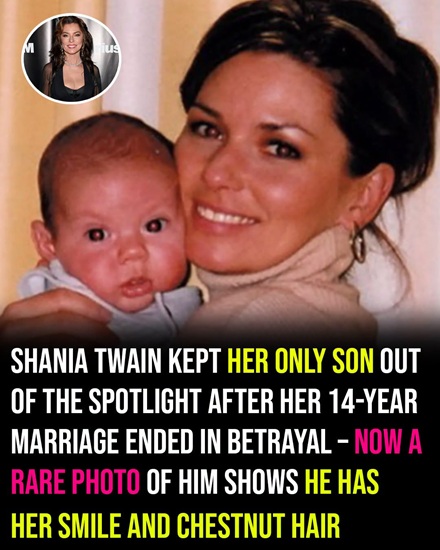
For more than two decades, Shania Twain has made a deliberate effort to protect the privacy of her only child, Eja D’Angelo Lange. Born on August 12, 2001, Eja is the son of Twain and acclaimed music producer Robert John “Mutt” Lange. He entered the world at a time when his mother was already one of the biggest stars in country and pop music, while his father had built an extraordinary career behind the recording console. Despite that unusual family background, Eja was not raised as a public celebrity.
Twain generally kept him away from cameras and allowed details about his childhood and later adult life to remain largely private. Becoming a mother brought major changes to Twain’s priorities. When Eja was still a baby, she explained in interviews that her son had quickly become the center of her everyday life. Motherhood, she said, added another dimension of love and responsibility that altered how she looked at both her personal life and career.
Eja spent much of his childhood in Switzerland, where the family had established a home away from the constant attention associated with major entertainment centers. Twain hoped the quieter environment would give her son opportunities to experience a relatively ordinary childhood despite the extraordinary success of his parents. Twain was also conscious that Eja would grow up with financial advantages that she had never experienced as a child. Her own early years included serious financial difficulties, and those memories influenced the way she approached parenting.
Rather than believing that Eja needed to experience deprivation to develop good character, Twain said she wanted to teach him appreciation, humility and honesty through everyday responsibilities. She explained that her goal was to raise a well-rounded child who understood the value of what he had. At the same time, she did not want to isolate him completely from the world or create an artificial environment around him simply because his parents were famous.

Small family traditions reflected that approach. Twain spoke about keeping certain celebrations simple when Eja was young, including making homemade birthday cake rather than turning every occasion into an elaborate celebrity event. She also expected him to participate in ordinary responsibilities instead of assuming everything would automatically be done for him. These details were significant because Twain understood how different her son’s childhood was from her own. She wanted him to enjoy the security available to him while also recognizing that privilege should not be taken for granted. Her comments over the years consistently suggested that gratitude and independence were central parts of the values she hoped to pass along.
Eja was still a child when his parents’ marriage came to an end. Twain and Lange separated in 2008 following the breakdown of a marriage that had lasted for many years and had also produced one of popular music’s most successful creative partnerships. Twain later discussed the painful circumstances surrounding their separation in interviews and in her memoir, From This Moment On. The period was emotionally difficult for her, and she has spoken candidly about how deeply the experience affected her. Throughout those changes, however, protecting Eja and maintaining stability in his life remained an important responsibility.
Twain eventually developed a relationship with Frédéric Thiébaud, whose former wife, Marie-Anne Thiébaud, had previously been close to Twain. Shania and Frédéric married in 2011. The unusual circumstances surrounding the two relationships generated extensive media attention, but Twain gradually rebuilt her personal and professional life rather than allowing that chapter to define everything that followed. In later interviews, she has spoken about reaching a more peaceful place regarding the past and about the importance of maintaining a workable relationship with Lange because they share a son.
During those difficult years, Twain has recalled trying not to place the full weight of her emotional struggles on Eja. One memory she later shared involved her son discovering her crying while she was listening to emotional music. When he asked what was wrong, Twain explained that music could trigger many different feelings, including sadness. According to her recollection, Eja responded simply and affectionately by giving his mother a hug before continuing with what he had been doing. It was a small family moment, but Twain remembered it because it reflected the emotional connection between mother and son during an especially challenging period.
As Eja grew older, another connection between him and both of his parents became increasingly clear: he developed a serious interest in music. Yet his interests did not appear to center on becoming a highly visible performer like his mother. Twain has described her son as particularly interested in creating music, arranging compositions and exploring production. Rather than immediately pursuing a career in front of audiences, he gravitated toward the creative work that happens behind the scenes. That distinction has allowed him to pursue a musical identity while continuing to maintain the privacy that characterized much of his childhood.

His listening habits were also broader than simply following his mother’s country-pop style. Twain previously explained that Eja enjoyed electronic dance music while also listening to many other genres. She identified acclaimed film composer Hans Zimmer as one of the musicians he greatly admired. His interest in Zimmer was especially revealing because it reflected Eja’s fascination with composition, arrangement and the construction of large musical ideas rather than only conventional pop performance. Twain has said that her son enjoys writing and arranging music and that he has been following his own creative journey instead of attempting to duplicate hers.
Twain has generally been supportive of that independence. Having two highly successful parents in the music industry could create substantial expectations for any young musician, particularly when one parent is a globally recognized singer-songwriter and the other is a producer responsible for numerous major recordings. Nevertheless, Twain has avoided publicly presenting Eja as someone destined to replace or imitate either parent. Her comments have instead emphasized his individual interests and preferences. She has acknowledged his musical abilities while making it clear that his future belongs to him and that he should determine what role music ultimately plays in his life.
A particularly meaningful example of their creative relationship emerged with Twain’s 2023 album Queen of Me. Eja received a songwriting credit on “Number One,” giving mother and son an official musical collaboration. The credit was notable not merely because Eja was Shania’s son, but because it demonstrated that his years of creating music privately had developed into work that could become part of a professional recording project. Twain explained that she incorporated musical material from Eja into the song, creating a collaboration that connected their individual creative approaches.
The songwriting credit also carried an interesting connection to Twain’s musical history. For many years, her former husband Mutt Lange was an important songwriting and production partner on the albums that transformed her into an international superstar. Decades later, another member of the Lange family appeared alongside Twain in the songwriting credits, this time her son. The circumstances were completely different, and Eja was developing his own identity rather than recreating his father’s role. Still, the collaboration represented a meaningful intersection between Twain’s past, her family life and the music she was continuing to create in the present.
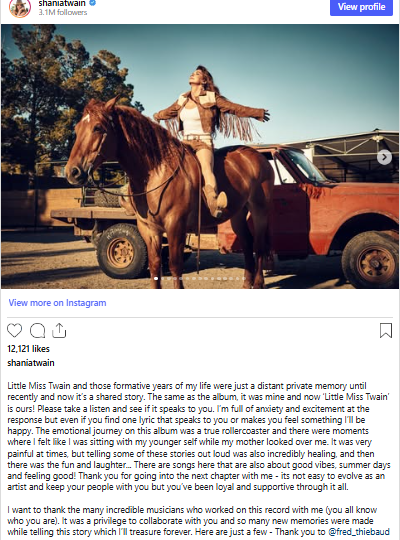
Their musical connection has continued beyond Queen of Me. In 2026, Eja contributed backing vocals to Twain’s Little Miss Twain project, offering another example of mother and son working together creatively. His participation did not suddenly transform him into a highly public celebrity. Instead, it fit the pattern that had already emerged: Eja could contribute to professional music while remaining primarily interested in the creative process rather than the publicity surrounding it. These occasional collaborations provide fans with a glimpse of his musical development without requiring him to adopt the same public lifestyle as his mother.
That distinction remains important when discussing Eja today. Because he has chosen to maintain a relatively private life, many aspects of his adulthood are not publicly documented, and there is no reason to speculate about details he or his family have not shared. Most reliable information about his upbringing and musical interests comes from Twain’s own interviews and the professional credits attached to their collaborations. His limited public profile is therefore not an absence that needs to be filled with assumptions. It is consistent with the privacy Twain has attempted to preserve since he was a child.
Twain has occasionally spoken about the natural adjustment that comes when a child grows into an independent adult. Eja no longer occupies the same everyday role in her life that he did when he was a young boy living at home. She has acknowledged missing him as he developed his own life, while maintaining the affectionate relationship between them. Their shared interest in music appears to provide one way for that connection to continue. Instead of music being solely the profession that made his parents famous, it has become something mother and son can understand and explore together.
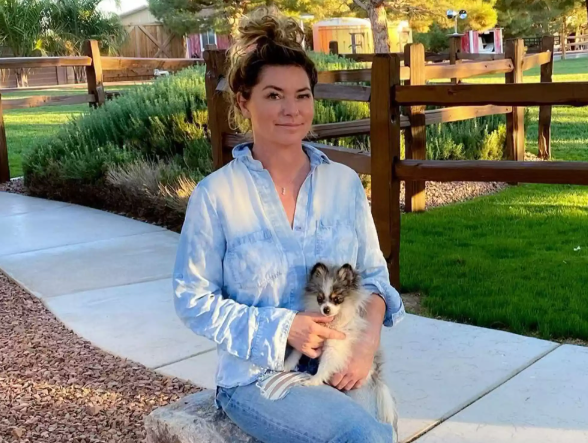
Animals have also appeared in the occasional stories Twain has shared about her son’s adult life. During a 2021 television appearance, she explained that a dog named Luna belonged to Eja after the animal had previously appeared in the background of video conversations. Twain jokingly connected her son’s increasing independence with her decision to welcome another puppy, Camper, into her own life. Although such details are minor compared with their musical collaborations, they provide a more ordinary glimpse into a family that has otherwise lived under unusual levels of public attention.
Twain has additionally discussed the broader lessons she wanted her son to understand about independence and relationships. She has spoken about teaching him that women are fully capable of supporting themselves and making their own decisions. At the same time, she wanted him to understand that independence does not mean people should never rely on one another emotionally. Her comments emphasized mutual respect and the recognition that strength and vulnerability can exist together. Those ideas reflected lessons Twain had developed through her own experiences and hoped to communicate to her son as he became an adult.
Her parenting philosophy makes more sense when viewed alongside her own childhood. Long before becoming famous, Twain experienced significant financial hardship and difficult family circumstances. After her mother and stepfather died in a vehicle collision in 1987, she assumed major responsibilities for younger family members. Those experiences took place years before her recording career brought financial security and international recognition. Consequently, raising a child surrounded by opportunities presented a very different challenge: she wanted Eja to benefit from the life she had built without assuming that comfort and success were guaranteed.
Rather than deliberately recreating hardship for him, Twain tried to emphasize responsibility and perspective. Her public comments suggest that she understood there was no perfect formula for balancing extraordinary privilege with an ordinary upbringing. She could not make Eja’s childhood identical to her own, nor did she want to. Instead, she focused on helping him appreciate what he had while encouraging him to develop interests independently of his parents’ fame. The fact that he ultimately became interested in music was perhaps unsurprising, but the direction he chose within music remained distinctly his own.
Eja’s family background nevertheless gives him an unusual musical inheritance. Mutt Lange established himself as one of popular music’s most successful producers, working across rock, pop and country, while Twain became one of the most commercially successful artists associated with country music. Eja therefore grew up with access to an extraordinary amount of musical knowledge. Yet access does not automatically determine ambition. Based on what Twain has publicly shared, her son has preferred songwriting, arrangement, production and other creative processes rather than pursuing the same kind of highly visible performing career.
Now an adult, Eja D’Angelo Lange continues to maintain a considerably lower public profile than either of his parents did during the height of their careers. The limited information available about him points toward someone developing his musical abilities without making celebrity itself the objective. His songwriting credit on “Number One,” his work connected with his mother’s later recordings and Twain’s descriptions of his creative interests provide concrete evidence of that musical path. Beyond those publicly documented details, much of his life appropriately remains his own.
For Twain, her son’s independence represents the natural evolution of a relationship she began discussing publicly more than two decades ago. When Eja was a baby, she described how completely motherhood had changed her priorities. As he grew, she talked about teaching appreciation and responsibility. Later, she described his musical interests and his preference for creating behind the scenes. Today, their occasional professional collaborations show how the relationship has changed without losing the shared connection that music has provided.
Eja’s story is therefore not simply one of a celebrity child following famous parents into entertainment. It is also about a young man who was given significant musical opportunities while largely remaining outside the machinery of celebrity culture. Twain has repeatedly indicated that she wants him to discover his own direction rather than feel obligated to reproduce her achievements. His interests may have been influenced by growing up around two accomplished musicians, but the creative choices he makes remain his own.
The rare glimpses Twain shares of her son naturally attract attention because audiences remember hearing about Eja when he was very young. More than two decades have passed since his birth, and the child his mother once discussed in interviews is now an adult participating in music on his own terms. What has remained remarkably consistent is the family’s approach to his privacy. Twain occasionally celebrates their relationship and collaborations publicly, but Eja himself has not built a career around constant personal exposure.
Ultimately, the relationship between Shania Twain and Eja Lange offers a quieter story behind an exceptionally famous musical career. Twain became known around the world through records, concerts and an unmistakable public image, while her son was given space to grow largely outside that spotlight. Their shared musical interests have gradually brought their professional worlds closer together, but they have done so without erasing Eja’s independence. His future direction remains his decision, just as Twain has long said it should be.
For now, the publicly documented picture is straightforward: Eja grew up surrounded by music, developed a genuine interest in creating it, and has begun collaborating professionally with his mother while preserving a private personal life. His path demonstrates that inheriting a remarkable musical background does not require copying it exactly. Shania Twain may have provided the environment in which his creativity could develop, but Eja appears to be finding his own way of expressing it — quietly, independently and largely away from the spotlight that has surrounded his mother for decades.

