
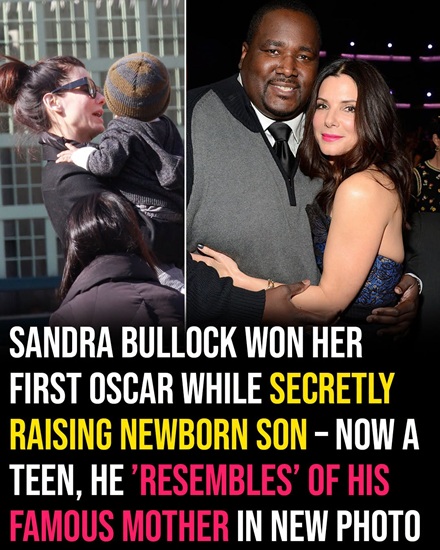
The year 2010 brought Sandra Bullock two enormous milestones that could hardly have been more different. Professionally, she reached one of the highest points of her acting career when she won the Academy Award for Best Actress for her performance in The Blind Side. Privately, however, something even more significant was happening. Bullock had welcomed a baby boy named Louis Bardo Bullock into her family following a lengthy adoption process. While the world was focused on awards ceremonies, red carpets and her successful film career, Bullock was quietly beginning an entirely new chapter as a mother.
Bullock had wanted to become a parent for years, but the road toward adoption did not happen quickly. She has spoken publicly about the patience required during the process and the uncertainty she experienced while waiting to learn whether a child would eventually become part of her family. After Hurricane Katrina devastated New Orleans in 2005, Bullock said she developed a powerful feeling that somehow connected her future child with the city. Years later, Louis, who was born in New Orleans, entered her life.
The adoption process involved years of waiting, paperwork and evaluations. For someone living under intense public attention, Bullock also faced the challenge of keeping an extremely personal experience private. She later recalled that when the long-awaited call finally came, she was told that her placement was ready. After spending so much time wondering when motherhood might happen, she suddenly had very little time to prepare for the arrival that would change her priorities completely.
Louis was still an infant when Bullock brought him home in January 2010. The adoption remained private while she moved through one of the busiest professional periods of her career. Only a small circle of people knew that behind the scenes, she was caring for a newborn while attending major Hollywood events and preparing for the possibility of winning her first Academy Award.
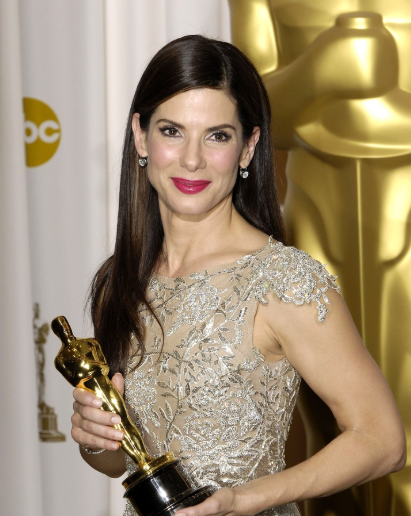
Bullock later described meeting Louis as an immediate emotional connection. After years of waiting and wondering where her family would come from, holding him reportedly created an unexpected sense that he had always belonged with her. She has spoken about how naturally he seemed to fit into her arms and how quickly the uncertainty surrounding the adoption disappeared once they were together.
That feeling helped Bullock understand advice she had repeatedly heard during the adoption process. She had been told that the right child would eventually find her and that she would recognize the connection when it happened. During the years of waiting, those reassuring words had sometimes been difficult to believe. Once Louis arrived, however, Bullock said she finally understood what people had been trying to tell her.
Only weeks after welcoming him into her life, Bullock attended the Academy Awards. On March 7, 2010, she was named Best Actress for her work in The Blind Side. From the outside, the evening represented an extraordinary professional achievement after decades of acting. For Bullock, however, motherhood had already changed the emotional importance she placed on career milestones.
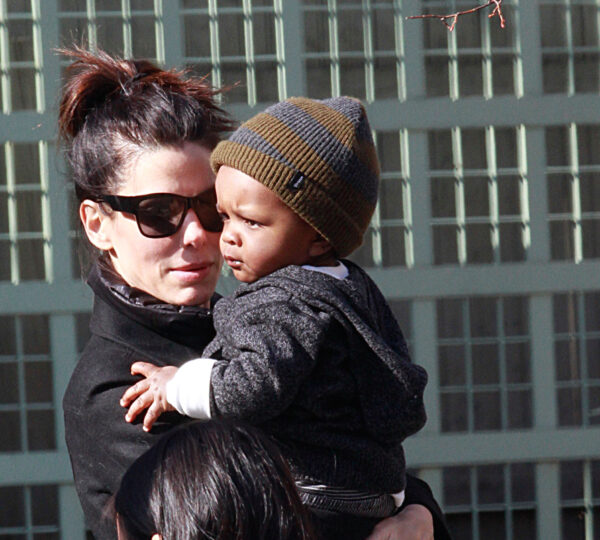
She later recalled that while attending the ceremony, much of her attention remained on Louis waiting at home. The award was significant, but her desire to return to her baby was stronger. The contrast between the two experiences illustrated how rapidly her priorities had changed. One of the biggest nights of her Hollywood career was happening at exactly the same time that another part of her life had become much more important.
Her personal circumstances became even more complicated shortly afterward. Bullock’s marriage to Jesse James collapsed after reports concerning his infidelity became public. Bullock filed for divorce in April 2010, and the marriage formally ended later that year. She moved forward with raising Louis as a single mother while dealing with intense public attention surrounding both the divorce and the newly revealed adoption.
Bullock has described the period as emotionally difficult. She was coping with the breakdown of her marriage while caring for an infant who depended completely on her. Rather than allowing her own grief to dominate Louis’ first year, she said she focused on creating stability for him. Motherhood gave her something immediate and concrete to concentrate on during a period when other parts of her life were changing rapidly.
The arrival of Louis also transformed the way Bullock approached work. Before becoming a mother, her professional schedule had occupied a significant part of her life. Afterward, she said the hierarchy changed naturally. Her career did not disappear, but it was no longer automatically the first consideration in every major decision.
Louis gradually became the center of that new family life. Bullock continued appearing in films and maintaining her successful career, but she also became known for being particularly protective of her son’s privacy. She rarely brought him into the public spotlight and avoided turning his childhood into entertainment content simply because she was famous.
That approach distinguished Bullock from celebrities who routinely share family photographs or personal updates online. Public information about Louis remained limited largely because his mother intentionally created boundaries between her professional life and his childhood. As a result, years could pass without the public seeing more than an occasional glimpse of him.

Eventually, Louis also became connected with another major decision in Bullock’s life. According to Bullock, her son once began talking confidently about the idea that another baby would eventually become part of their family. At the time, expanding the family was not necessarily something she had already planned.
Looking back later, Bullock wondered whether Louis had somehow sensed a change that was approaching. She has affectionately described him as perceptive and naturally confident in his observations. His comments contributed to Bullock thinking more seriously about whether their family was meant to grow again.
In 2015, that happened when Bullock adopted a three-year-old girl named Laila. Laila had been living in foster care in Louisiana before joining the family. Her arrival gave Louis a younger sister and marked the beginning of another significant chapter in Bullock’s experience as a parent.
Adopting Laila was different from bringing home an infant. Laila had already experienced instability before becoming part of Bullock’s household, and Bullock later described some of the behaviors her daughter displayed while adjusting to a permanent home. At first, Laila sometimes appeared prepared to leave, reflecting the uncertainty that can affect children who have experienced disruptions in care.
Bullock focused on giving her daughter consistency and reassurance. She wanted Laila to understand that she had a permanent family and did not need to remain prepared for another sudden change. Over time, Bullock said she watched her daughter become increasingly comfortable and confident in her new environment.
Bullock has spoken proudly about Laila’s determination, describing her as courageous and strong-willed. She has said that her daughter fought hard to preserve her spirit despite difficult experiences earlier in childhood. Bullock has also expressed excitement about the person she believes Laila may become as she grows older.
Louis and Laila eventually developed their lives together largely outside the entertainment spotlight. Bullock continued discussing motherhood occasionally in interviews, but she remained careful about how much personal information she revealed. Her comments generally focused on her experience as a parent rather than exposing unnecessary details about the children’s private lives.
Another important figure in their family was Bryan Randall, Bullock’s longtime partner. The two began a relationship in 2015 after Randall, a photographer, was hired to photograph one of Louis’ birthday celebrations. Their relationship lasted for several years, and Randall became a significant parental figure in the children’s lives.
Bullock publicly described Randall as an important partner in raising Louis and Laila. Like many couples, they did not necessarily approach every parenting decision identically, but she spoke positively about the stability and example he provided. The family maintained a relatively private life despite Bullock’s international fame.
Randall later faced a serious health battle. He was diagnosed with amyotrophic lateral sclerosis, commonly known as ALS, and chose to keep the diagnosis private from the wider public. He died in August 2023 at age 57 after living with the disease for several years.
The loss was another major challenge for Bullock and her children. She has subsequently discussed the importance of helping Louis and Laila understand Randall’s illness and cope with what was happening in ways appropriate to each of them. The experience reinforced the emphasis Bullock had long placed on putting her family’s emotional needs ahead of her public career.
Her role as the mother of two Black children has also shaped the way Bullock thinks about parenting. Bullock, who is white, has openly acknowledged that Louis and Laila will encounter experiences connected with race that differ from her own. She has discussed the responsibility she feels to understand those realities rather than pretending racial differences do not exist.
During a 2021 appearance on Red Table Talk, Bullock reflected on how strangers sometimes react differently to her family because she and her children do not share the same skin color. Her comments centered on the way those outside assumptions can complicate ordinary family interactions.
Bullock acknowledged that she sometimes wished their skin tones matched because she believed it might prevent people from approaching the family differently. She was not suggesting that she wanted her children themselves to be different. Instead, her comments reflected frustration with how other people can make assumptions about families based on appearance.
Motherhood also continued affecting Bullock’s professional decisions. Although her career remained successful, she became increasingly selective about how she spent her time. Films could be postponed or rejected, while time with her children could not simply be replaced later.
That philosophy became especially visible in 2022 when Bullock announced that she intended to take a break from acting. At the time, she explained that she wanted to spend more time at home with her family. She did not describe the decision as permanent retirement, but she made clear that filmmaking was no longer where she wanted to direct all of her energy.
Additional context emerged later concerning how much her family was handling during that period. Randall was privately dealing with ALS, while Bullock was raising Louis and Laila and attempting to protect their lives from unnecessary public attention. Taking a professional pause allowed her to devote more time to responsibilities that mattered far more than maintaining an uninterrupted film schedule.
Bullock’s ability to make such a decision is something she has also acknowledged as a privilege. Many parents cannot simply step away from work for extended periods, and she has recognized that her career success gave her options unavailable to many families. Her broader point has remained that when circumstances allow, she wants to be personally present for her children rather than delegating every responsibility to someone else.
Even as Louis and Laila became older, Bullock continued maintaining their privacy. She does not regularly post detailed accounts of their lives, and the children have not been consistently placed in front of cameras. Because of that, public sightings of the family have remained relatively uncommon.
One such outing occurred in Los Angeles in April 2024, when Bullock was photographed with both Louis and Laila. The appearance attracted attention partly because so much time had passed since many members of the public had last seen the children.
Louis was 14 at the time and looked dramatically different from the baby many people remembered from Bullock’s adoption announcement in 2010. Photographs showed that he had grown into a teenager and appeared taller than his mother. For people who remembered stories about Bullock bringing home an infant, the images highlighted just how much time had passed.
Laila was also present during the family outing. She had been only three years old when news of her adoption became public in 2015, making her appearance years later another reminder that both children had spent much of their childhood growing up away from constant public observation.
Online reactions largely reflected surprise at how grown the children had become. That response was understandable given the limited number of photographs available throughout their childhoods. When a celebrity regularly keeps family life private, the public can mentally continue picturing children at the age when they were last widely photographed.
The interest surrounding Louis in particular often connects back to the extraordinary circumstances of his arrival. When the public first learned about him, Bullock had just completed one of the most dramatic periods of her career. She had won an Oscar, adopted a child and ended her marriage within the same general period.
Sixteen years later, the infant at the center of those stories is now a teenager approaching adulthood. As of 2026, Louis is 16, while his younger sister Laila is 12. Their mother continues to protect much of their personal information, meaning relatively little is publicly known about the ordinary details of their teenage lives.
That privacy is important because being the child of a famous actor does not make someone a public entertainer. Bullock’s fame created enormous public curiosity, but Louis and Laila did not choose her career. Her long-standing approach has therefore been to discuss motherhood without turning her children into ongoing celebrity content.
For that reason, reliable coverage of the family should avoid inventing details about their friendships, education, romantic lives or future ambitions. Bullock has shared certain observations about their personalities and her parenting experiences, but most of their everyday lives appropriately remain private.
Bullock herself has continued reflecting on how difficult it can be to balance protection with allowing children greater independence. Like many parents, she has described feeling fear about what might happen when her children encounter the world without her controlling every circumstance.
As children become teenagers, however, complete protection becomes impossible. Bullock has acknowledged the need to let them develop their own experiences while still being available when they need support. That tension between protecting children and allowing them independence is now particularly relevant as Louis moves closer to adulthood.
The passage of time has also coincided with Bullock returning more visibly to her professional life. Her involvement with Practical Magic 2 brought renewed attention to an actress who had intentionally stepped away from regular filmmaking for several years.
For Bullock, returning to work does not appear to mean returning to the same priorities she had before motherhood. She has continued emphasizing that professional commitments must fit around the responsibilities she considers most important at home.
That represents a major difference between Bullock’s life before and after 2010. Before Louis arrived, films and career opportunities naturally occupied an enormous part of her schedule. Once she became a mother, work became one element of a much larger life rather than the central organizing principle.
Her family expanded again with Laila, and Randall became another major part of that household. Together, those relationships shaped many of the decisions Bullock made over the following decade.
The loss of Randall added grief to a family that had already experienced significant transitions. Bullock’s later comments have suggested that helping her children navigate his illness and death became another responsibility she approached with the same protective instincts she had shown since becoming a mother.
Her story therefore goes far beyond occasional photographs showing how much Louis has grown. Those photographs may create nostalgia among longtime fans, but the larger story concerns sixteen years of changing priorities.
In 2010, Bullock was experiencing enormous professional recognition while privately learning how to care for an infant. By 2015, she was raising two children. By the early 2020s, family responsibilities contributed to her decision to step back from an industry in which she had spent decades working.
Now Louis is no longer the baby whose arrival Bullock kept secret during awards season. He is 16 years old and has grown up largely without the continuous public exposure that might normally accompany being the child of a major Hollywood star.
Laila has similarly spent most of her childhood outside the spotlight. The rare occasions on which she has appeared publicly have generally attracted attention because they are unusual rather than because Bullock has attempted to make her children part of her professional brand.
That distinction explains why photographs of the family can generate such strong reactions. People remember a baby arriving in Bullock’s life during an unforgettable Oscar year, then suddenly see a teenager more than a decade later.
The reality, of course, is less mysterious. Time passed, Louis grew up, and Bullock continued doing what she had said she intended to do from the beginning: raise her child while protecting as much of his ordinary life as possible.
Her approach to Laila has followed the same pattern. Bullock has occasionally spoken about the challenges and joys involved in adoption and parenting, but she has generally resisted providing constant access to her children’s lives.
That choice also means that articles about Bullock’s family should focus on what she has actually shared rather than speculating about what her children are like today. Their appearance changing as they grow older does not provide reliable information about their personalities, plans or private experiences.
What is clear from Bullock’s own public comments is that motherhood fundamentally changed her. She has repeatedly described her children as the people around whom major decisions are now made.
Hollywood success remains an important part of her story. Her Academy Award, successful films and decades of work established her as one of the best-known actors of her generation. Yet she has consistently spoken about Louis and Laila in a way that places those achievements in a different perspective.
The timing of Louis’ arrival made that transformation especially striking. Bullock had spent years working toward professional milestones that millions of actors dream of reaching. Then, just as she received one of the industry’s most prestigious awards, she found herself wanting to leave the ceremony and return home to her baby.
That contrast has remained one of the defining elements of her motherhood story. An Oscar represented recognition from an entire industry. Louis represented something personal that no trophy could replace.
Laila later expanded that family and introduced Bullock to a different parenting experience. Randall became another important source of love and stability before his death. Together, those relationships contributed to a life increasingly organized around family rather than uninterrupted career momentum.
Bullock’s recent return to major film work therefore represents a new chapter rather than a return to the person she was before becoming a parent. Her children are older now, and the demands of family life have naturally changed as they have grown.
Still, Bullock has made clear that being present for them remains a central consideration. A major film opportunity may be exciting, but she has reached a position where she can evaluate whether a project fits the life she wants rather than accepting work simply because it is available.
That perspective helps explain why her motherhood story continues resonating with people years after Louis’ adoption first became public. The circumstances involved fame and Hollywood, but many of the underlying emotions are familiar to parents everywhere: uncertainty, responsibility, fear, sacrifice, love and the realization that children grow faster than expected.
For longtime followers of Bullock’s career, seeing Louis as a teenager can therefore feel like seeing an entire era pass. The baby whose existence remained secret during the 2010 awards season is now approaching adulthood.
The same applies to Laila. The little girl who entered the family through foster care is now growing through her own teenage years while her mother continues protecting her from unnecessary public exposure.
There will probably continue to be curiosity whenever the family is photographed together. Bullock remains an internationally recognizable actor, and people naturally notice changes involving someone they have followed for decades.
But the most meaningful part of those rare images may simply be what they represent. Behind the red carpets, premieres and famous film roles, years of ordinary family life have continued moving forward.
Louis grew from an infant into a teenager. Laila grew from a young child into a teenager approaching her own new stages of independence. Bullock went from a first-time mother balancing an Oscar campaign with bottles and diapers to a parent preparing two increasingly independent children for adulthood.
In that sense, 2010 remains important for reasons extending far beyond Bullock’s Academy Award. Professionally, the Oscar marked a high point in an already successful career. Personally, Louis’ arrival changed the direction of the years that followed.
The award remains on Bullock’s list of achievements, but motherhood became something that could never be measured by trophies or box-office results.
Sixteen years later, the transformation is visible simply in how much Louis has grown.
Yet perhaps the more important transformation is the one Bullock has described in herself. She began that year as one of Hollywood’s most successful actresses and ended it with an entirely different understanding of what she considered most valuable.
Louis eventually gained a sister, Bullock built a family that looked different from whatever she may once have imagined, and life continued through success, divorce, new love, illness and loss.
Through all those changes, Bullock has repeatedly returned to the same priority: her children.
That is why the rare photographs of Louis and Laila can be surprising without needing to become sensational. They are simply reminders that the children Bullock worked so hard to protect have continued growing while much of the world was not watching.
And for a mother who has spent years separating their private childhood from her very public career, that may be exactly the point.

