
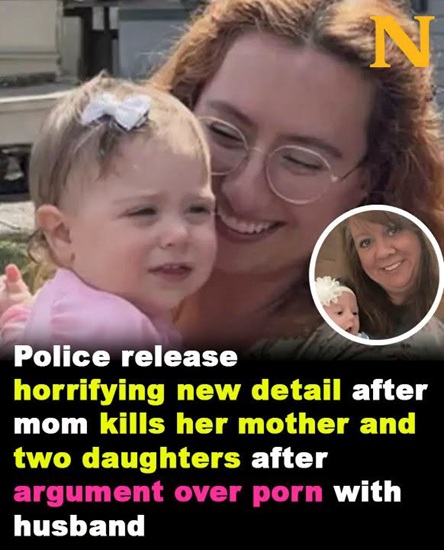
Police in Plant City, Florida, have completed their investigation into a devastating family shooting that left four people dead and one young child physically unharmed. According to the findings released by authorities, investigators concluded that 27-year-old Hailey Dempsey killed her mother and two of her three young daughters before dying from a self-inflicted gunshot wound on May 3, 2026. Police also determined that a shot was fired toward Dempsey’s two-year-old daughter but did not strike her.
The child survived and was later placed in the care of relatives. The conclusions came after investigators spent months examining physical evidence, digital information, surveillance recordings, firearms evidence and the circumstances surrounding the family’s final days together. The violence occurred after Plant City police had already interacted with members of the family several times during the preceding days. Police Chief Richard Mills Jr. said officers were first called to the family’s residence on May 1 because of a verbal disagreement between Dempsey and her husband, Jay Dempsey.
Authorities said the dispute involved adult material Dempsey had discovered on one of her husband’s phones. Mills said investigators did not find evidence that the disagreement involved an affair. Officers responding that day also reported that they did not observe evidence of physical violence or other criminal conduct that would have provided grounds for an arrest. Police had another interaction with Dempsey later that same day. She contacted authorities because she was concerned that a tracking device might have been placed on her vehicle.
Officers examined the vehicle but did not locate such a device, according to the police account released following the investigation. Dempsey subsequently left the family residence with her three children and her mother, 55-year-old Valerie DeBoe, who was visiting from Clearwater. They stayed at a hotel while tensions within the family continued. On May 2, Dempsey again contacted law enforcement because she wanted to retrieve belongings from the family residence while her husband was away.
Officers provided assistance while she collected her possessions. Investigators later reviewed those interactions as they reconstructed the timeline leading to the shootings. Authorities emphasized that nothing officers had encountered during those earlier calls established that the deadly violence that followed was about to occur.
The situation changed dramatically during the early morning hours of May 3. Investigators concluded that Dempsey fatally shot her mother, Valerie DeBoe, at the family’s North Burton Street residence. Police believe she then left the house on foot with her three daughters. The children included a four-year-old, a two-year-old and a four-month-old infant. Surveillance recordings from the surrounding area became important evidence as detectives attempted to determine where Dempsey and the children traveled after leaving the home.
According to investigators, footage showed Dempsey walking through the area with the children during the early morning. At one point, she and the girls approached another residence and attempted to get someone’s attention. When nobody immediately responded, they continued walking. Detectives used this and other surveillance material to reconstruct their movements and establish a more precise sequence of events.
Authorities eventually determined that Dempsey and the children reached another location on West Tever Street. Police said she concealed herself with the children in an area near trees and vegetation on the property. Investigators concluded that shortly before 7 a.m., Dempsey fatally shot her four-year-old daughter and her four-month-old daughter.
Police said another shot was directed toward the two-year-old child but did not hit her. The toddler therefore survived without being physically wounded. Investigators concluded that Dempsey subsequently died from a self-inflicted gunshot wound. Authorities were alerted after receiving a report related to screams in the area, and responding officers discovered the scene later that morning.
The surviving child became one of the central concerns following the tragedy. Authorities have released only limited information about her, which is appropriate considering her age and the circumstances she experienced. Police reported that she remained in good physical health and was placed with relatives following the deaths. Her identity and other personal details do not need to be publicly amplified for the events of the investigation to be accurately reported.
The discovery also led investigators back to the family’s North Burton Street home, where DeBoe was found dead. With deaths occurring at more than one location and the circumstances initially unclear, detectives had to determine whether another person had participated in the violence. That required investigators to consider multiple possibilities rather than immediately assuming what had happened.
Dempsey’s husband was initially detained while investigators worked to establish the facts. His movements around the time of the shootings became an important part of the investigation. Detectives examined available records and other evidence to determine where he had been while the violence occurred.
Police ultimately concluded that Jay Dempsey was traveling from a friend’s home in Lakeland toward Plant City during the relevant period. Authorities said their investigation established an alibi and found no evidence that he was responsible for the deaths. He was therefore ruled out as a suspect and was not charged in connection with the shootings.
That conclusion is significant because early information surrounding rapidly developing criminal investigations can change as additional evidence becomes available. Detaining or questioning someone during an investigation does not establish guilt. In this case, Plant City police said their completed investigation eliminated Dempsey’s husband as a suspect based on the evidence detectives gathered.
Investigators also conducted extensive forensic work. Search-warrant information released during the investigation showed that authorities collected firearms, ammunition, electronic devices, biological evidence and other material that could potentially help establish what happened. Police later reported that firearms evidence was among the information used to connect the shootings and reconstruct the sequence of events.
Digital evidence was another important part of the investigation. Detectives examined communications and electronic information alongside physical evidence and surveillance recordings. Rather than relying on one piece of evidence, authorities said the final conclusions reflected months of investigative work across several areas.
Chief Mills described the investigation as one requiring patience, diligence and precision. The department waited until forensic testing and other investigative work had been completed before publicly announcing its final determination. That approach was particularly important because the deaths involved several members of the same family and because investigators initially needed to determine whether any additional person posed a threat.
Authorities also examined Dempsey’s state of mind in the period before the shootings. Police said investigators uncovered indications that mental-health difficulties may have been relevant to the circumstances surrounding the tragedy. Reporting about the completed investigation has also discussed whether investigators considered the possibility of postpartum psychosis.
However, authorities did not publicly establish a definitive medical diagnosis explaining Dempsey’s actions. For that reason, it would be inaccurate to state as fact that a particular psychiatric condition caused the killings. Mental-health information requires careful treatment, especially when the person involved cannot provide an account and when medical conclusions have not been publicly established.
Investigators also examined messages and other information suggesting that Dempsey had been experiencing significant emotional difficulties. Those findings provide context for the investigation but do not establish one definitive motive. A person’s actions in a complex case cannot automatically be attributed to one argument, one message or one possible medical issue without sufficient evidence.
The marital disagreement from May 1 is therefore best understood as part of the documented timeline rather than a proven single cause of the shootings. Police confirmed that Dempsey and her husband had argued after she discovered adult material on a phone. Chief Mills said the dispute appeared to have contributed to the conflict taking place within the family during that period.
At the same time, investigators did not establish that the disagreement alone explained why Dempsey later killed members of her family. The distinction is important. Events preceding a crime can provide investigative context without necessarily establishing a complete motive for what happened afterward.
Police also clarified that they had not identified evidence of physical violence during the earlier domestic call. Officers who responded to the May 1 dispute encountered a verbal disagreement rather than a situation that, based on the information available at that moment, resulted in criminal charges. The later tragedy therefore should not be inaccurately presented as something responding officers had already confirmed would happen.
For law-enforcement personnel, the May 3 scene was especially difficult. Chief Mills, who said he had worked in law enforcement for 34 years, described it as one of the worst scenes he had personally encountered. His comments reflected the emotional impact of discovering multiple members of a family dead, including two very young children.
The investigation nevertheless required officers and detectives to move beyond the initial emotional impact and methodically establish the facts. They had to document more than one location, review surveillance footage, examine firearms evidence, analyze electronic records and reconstruct the movements of the people involved. Investigators also had to determine whether the surviving child remained in danger and whether another suspect existed.
Months of work ultimately led police to classify the case as a murder-suicide. Their final findings identified Hailey Dempsey as responsible for killing her mother and two daughters before taking her own life. Investigators also concluded that she fired toward her surviving two-year-old daughter but did not strike the child.
Police simultaneously cleared Dempsey’s husband of involvement after examining his whereabouts and the available evidence. No charges were filed against him in connection with the deaths. This conclusion replaced the uncertainty surrounding his initial detention during the earliest stage of the investigation.
The victims were members of the same extended family. Valerie DeBoe was 55 and had been visiting from Clearwater. Family tributes following her death remembered her as a mother and grandmother whose loss deeply affected relatives and friends. A fundraiser was subsequently established in her honor to assist surviving members of the DeBoe family.
The deaths of the two children added another devastating dimension to the case. Because they were minors, responsible reporting does not require unnecessarily repeating personal information about them. Their ages and relationship to the family are sufficient to understand the seriousness of what investigators documented.
The surviving toddler likewise deserves privacy as relatives continue caring for her. Police said she was physically healthy following the incident, but authorities have appropriately avoided publicly detailing her life after the tragedy. Surviving a violent event at such a young age does not make a child’s continuing private life a matter for public speculation.
The conclusion of the police investigation answers several major factual questions that remained unresolved immediately after the deaths. Authorities now say they know who fired the fatal shots, have ruled out Dempsey’s husband, and have reconstructed much of the family’s movements during the hours surrounding the shootings.
Other questions may never have definitive answers.
Most notably, investigators cannot provide a complete explanation for why the killings occurred. They documented marital conflict, unusual concerns expressed before the shooting and possible mental-health factors, but those pieces of information should not be transformed into a medical diagnosis or simplified into a single confirmed motive without supporting evidence.
That limitation is important when discussing tragedies of this nature. Speculation can quickly become misinformation, particularly when early reports are repeated as though they were final investigative conclusions. The completed Plant City investigation provides a clearer factual timeline, but it does not provide certainty about every thought or motivation preceding the deaths.
What authorities have established is that the family experienced several difficult days before May 3, including multiple contacts with police. Dempsey and her children temporarily left the family residence with DeBoe. Officers assisted during a return to retrieve belongings. Then, during the early hours of May 3, investigators say the situation escalated into fatal violence.
DeBoe was killed at the family home. Dempsey subsequently left with her daughters. Two of those children were later fatally shot, while the third survived after a shot directed toward her missed. Dempsey then died from a self-inflicted gunshot wound, according to the final police findings.
The investigation’s conclusion does not lessen the loss experienced by surviving relatives. Four people died, two of them very young children, and one toddler survived a tragedy that permanently changed her family. For those left behind, an investigative report can establish what happened without resolving the grief created by it.
The case also illustrates why careful language matters when reporting developing criminal investigations. Initial detention does not mean guilt. An argument does not automatically establish motive. Possible mental-health concerns do not amount to a confirmed diagnosis, and an investigator’s theory should not be presented as established medical fact.
Plant City police spent more than three months working through those distinctions before announcing their conclusions. Their findings now provide the most complete official account available of the May 3 events while acknowledging that some questions about motive remain unanswered.
The surviving family members now face consequences that extend well beyond the formal end of the investigation. Their privacy, particularly that of the surviving child, remains important. Publicly available evidence can explain the basic timeline without requiring speculation about private matters authorities have not confirmed.
For the broader public, the final police findings provide clarity about a case that initially contained considerable uncertainty. The evidence led investigators to conclude that no unidentified attacker remained at large and that Dempsey’s husband was not responsible for the killings.
For the family, however, the conclusion is something very different.
It marks the end of an investigation into an event that took the lives of a grandmother, a mother and two children while leaving another child without several members of her immediate family.
The documented facts are devastating without exaggeration. There is no need to add unverified claims, assign a medical diagnosis that authorities have not confirmed, or turn a complicated family tragedy into a sensational explanation built around a single disagreement.
What remains is the account established by investigators after months of work: four deaths, one surviving child, a husband cleared of involvement, and a family left to cope with an extraordinary loss.
As the investigation closes, the focus can remain on the confirmed findings and on respecting those who continue living with the consequences. Some questions have now been answered by evidence, while others may remain unresolved.
And in a case involving such profound loss, distinguishing between those two categories remains essential.

