
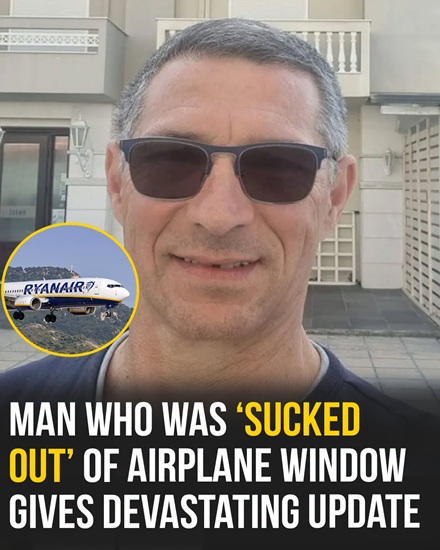
A routine flight from Greece to Germany became a life-changing experience for Serbian passenger Ljubiša Karović after an in-flight emergency left him partially pulled through a damaged aircraft window shortly after takeoff. The incident occurred on July 10 aboard a Ryanair-operated Boeing 737 traveling from Thessaloniki, Greece, to Memmingen, Germany. Investigators are continuing to examine exactly what happened, while early findings suggest the sequence of events may have begun after damage involving the aircraft’s engine led to debris striking a cabin window.
According to Karović, the frightening ordeal began only minutes after departure while he was asleep in his seat. In later interviews, he recalled suddenly hearing what he described as an explosion before the cabin rapidly lost pressure. He said he remained conscious only briefly before losing awareness of what was happening. When he later regained consciousness, he realized he had suffered multiple injuries and was surrounded by emergency responders. Karović has since said the experience remains difficult to describe because everything unfolded within seconds.
Reports indicate that the force of the cabin depressurization pulled Karović’s head and part of his upper body through the damaged window while the aircraft was still climbing. Fortunately, he was wearing his seatbelt, which investigators and witnesses believe played a crucial role in preventing him from being completely ejected from the aircraft. Aviation safety experts have long emphasized that properly fastened seatbelts provide important protection not only during turbulence but also in rare emergency situations involving sudden changes in cabin pressure.
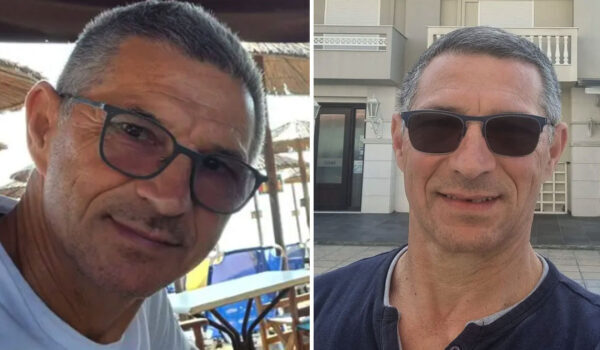
One of the most remarkable aspects of the incident was the response of fellow passengers. Karović’s wife, Svetlana Grković, immediately grabbed his legs and refused to let go despite the chaos unfolding inside the cabin. She later explained in media interviews that she reacted instinctively, focusing entirely on keeping her husband inside the aircraft. Other passengers quickly joined the effort, working together to pull him back into the cabin while oxygen masks were deployed and the crew managed the emergency procedures. Their combined actions are widely credited with helping save his life.
Svetlana also spoke publicly about another passenger whom she praised for remaining calm under extraordinary pressure. According to her account, the passenger attempted to reduce airflow through the damaged window by first using a bag, which was immediately pulled outside, before trying a suitcase that proved more effective. While emergency procedures remained the responsibility of the flight crew, the actions of nearby passengers illustrated how individuals can work together during unexpected emergencies until the aircraft lands safely.
After the aircraft safely returned to Thessaloniki, medical personnel treated Karović for serious physical injuries, including friction burns and trauma affecting his shoulder and spine. Doctors advised that his recovery would likely require months of rehabilitation, and additional medical procedures may be necessary depending on how his injuries heal. Although his physical condition has gradually improved, Karović has explained that recovery involves much more than treating visible injuries.
In interviews conducted after the accident, Karović described the continuing emotional impact of surviving such a rare aviation emergency. He said that memories of the incident frequently return when he closes his eyes and that hearing aircraft overhead can trigger feelings of stress. Mental health specialists note that people who survive traumatic events may experience emotional symptoms during recovery, although every individual’s experience is different. Professional medical care often addresses both physical rehabilitation and psychological well-being following serious accidents.
The cause of the incident remains under official investigation. Ryanair has stated that preliminary indications suggest the sequence of events may have begun when a foreign object damaged the aircraft’s engine during takeoff, resulting in debris striking the window. However, investigators have emphasized that this remains an initial assessment and that the official investigation must determine the precise cause before final conclusions are reached. The U.S. National Transportation Safety Board (NTSB) is leading the investigation under arrangements with Greek authorities.
As investigators continue examining the circumstances surrounding the incident, aviation authorities are carefully reviewing flight data, aircraft components, maintenance records, and witness accounts to establish exactly what occurred. Aviation accident investigations are designed to identify contributing factors and improve future safety rather than assign blame prematurely. For that reason, officials typically avoid drawing final conclusions until all available evidence has been thoroughly analyzed. Ryanair has stated that it is cooperating fully with the investigation while emphasizing that passenger safety remains its highest priority.
According to the airline, the aircraft returned safely to Thessaloniki International Airport shortly after the emergency developed. Flight crews are extensively trained to respond to unexpected situations, including rapid cabin depressurization, engine-related events, and emergency landings. During such incidents, pilots follow established procedures while maintaining communication with air traffic control and coordinating with cabin crew members, whose role includes assisting passengers and preparing the cabin for a safe landing. In this case, the aircraft landed safely, allowing emergency medical teams to provide immediate assistance once it reached the ground.
Following the emergency, Karović received medical treatment for injuries that included significant friction burns as well as trauma affecting his shoulder and spine. Doctors informed him that recovery would likely require considerable time, including rehabilitation and the possibility of additional surgical procedures depending on his progress. Recovering from serious physical injuries often involves not only medical treatment but also physical therapy aimed at restoring mobility, strength, and daily function. Healthcare professionals monitor recovery carefully to determine the most appropriate treatment plan for each patient.
Karović has also spoken publicly about the emotional challenges that followed the incident. In interviews, he explained that memories of the emergency continue to affect him, particularly when he hears aircraft overhead or reflects on the events of that day. Mental health specialists note that emotional reactions following traumatic experiences vary from person to person. Some individuals recover relatively quickly, while others may benefit from counseling or psychological support as they process what happened. Seeking professional care after a traumatic event is widely recognized as an important part of overall recovery alongside treatment for physical injuries.
Svetlana Karović has likewise described the emotional impact the event had on their family. Her immediate decision to hold onto her husband’s legs during the emergency has received widespread attention, but she has consistently focused her public comments on expressing gratitude to everyone who helped during the flight. She has thanked fellow passengers, the cabin crew, emergency responders, and the medical professionals who cared for her husband after the aircraft landed. Her interviews highlight how cooperation among passengers and trained aviation personnel can make an important difference during rare in-flight emergencies.
The incident has also prompted renewed public discussion about aviation safety. Although events involving cabin windows are extremely uncommon, commercial aviation remains one of the safest forms of transportation. International safety standards require aircraft manufacturers, airlines, maintenance organizations, and aviation authorities to follow strict inspection and operational procedures designed to reduce risk. When unusual incidents do occur, detailed investigations help identify lessons that may contribute to future improvements in aircraft design, maintenance practices, crew training, or operational procedures across the aviation industry.
Safety experts also note the importance of following crew instructions throughout every flight, including keeping seatbelts securely fastened whenever passengers are seated. While seatbelts are commonly associated with turbulence, they also provide protection during other unexpected events by helping keep passengers securely positioned in their seats. Aviation authorities around the world routinely recommend fastening seatbelts whenever possible, even when the seatbelt sign is turned off, because unexpected situations can occur without warning.
As the official investigation continues, aviation authorities will determine the precise sequence of events that led to the damage sustained by the aircraft. Preliminary findings released shortly after an accident are subject to revision as additional evidence is examined, and investigators generally issue final reports only after completing a comprehensive technical review. Until that process is finished, many details remain under evaluation, underscoring the importance of relying on verified information rather than speculation.
Ultimately, Ljubiša Karović’s experience serves as a reminder of both the resilience of individuals and the importance of established aviation safety procedures. While his recovery continues, his account highlights the physical and emotional challenges that can follow an unexpected emergency. At the same time, the coordinated actions of passengers, flight attendants, pilots, emergency responders, and medical personnel demonstrate how preparation, professionalism, and cooperation can contribute to a safe outcome even under exceptionally difficult circumstances. As investigators work toward a final report, the lessons learned from this incident may help strengthen aviation safety and reinforce practices that protect travelers around the world.

