
The glossy cruise brochure lay neatly on the kitchen counter, its photographs filled with sparkling blue water, elegant ships, and picturesque coastal towns. Daniel had brought it home several days earlier, proudly announcing that he had supposedly won a company sales competition. According to him, the prize included a four-month luxury cruise through several Mediterranean destinations, with nearly every expense covered. He spoke enthusiastically about the opportunity, describing it as a once-in-a-lifetime reward after years of hard work.
Although I was surprised by the timing, I wanted to believe that fortune had finally smiled on our family. Just two weeks later, our lives changed in a completely unexpected way. During what we assumed would be another routine prenatal appointment, our obstetrician carefully studied the ultrasound monitor before turning toward us with a gentle smile.
Instead of seeing one heartbeat, three tiny heartbeats appeared on the screen. We were expecting triplets. The excitement lasted only a few moments before the doctor explained that my pregnancy would require close medical supervision because my blood pressure had risen to dangerous levels. I was instructed to significantly reduce physical activity while additional monitoring was scheduled over the coming weeks.
Driving home, my mind raced through countless questions. Preparing for one baby already felt overwhelming, but three newborns would completely transform our lives. I expected Daniel to begin discussing practical matters such as rearranging the nursery, adjusting finances, or postponing the cruise. Instead, he remained unusually quiet throughout the drive. Every few minutes, his eyes drifted toward the travel brochure resting on the back seat instead of focusing on the doctor’s recommendations.
That evening, the atmosphere inside our home felt noticeably different. While I rested on the living room sofa following the doctor’s instructions, I heard closet doors opening and luggage being placed on the bedroom floor. Daniel calmly explained that he still intended to leave because the reservation could not easily be changed. He insisted that the vacation had been planned for months and claimed everything would work out. I struggled to understand how someone preparing to become the father of three children could view an extended holiday as more important than remaining close to home during a complicated pregnancy.
Over the following days, my condition required increasingly strict precautions. My doctor recommended extended bed rest to reduce the possibility of premature labor. Family members visited regularly, bringing groceries and helping around the house whenever possible. Friends also checked in frequently, making sure I had everything necessary while Daniel prepared for his departure. Their kindness reminded me that support often arrives from unexpected places during difficult moments.
On the morning Daniel left, he kissed me goodbye and promised to call every day. He reassured me that everything would be fine and repeated that the trip had simply come at an unfortunate time. I watched from the front window as his taxi disappeared down the street. The house suddenly felt much quieter than it ever had before. For the first time since learning I was pregnant, I realized just how uncertain the months ahead might become.
Several days passed peacefully before everything changed without warning. Late one night, I experienced severe pain and realized something was terribly wrong. Emergency medical personnel transported me to the hospital, where doctors quickly began evaluating both my condition and the babies. The medical team worked calmly but urgently, explaining each step while preparing for emergency treatment. Every minute seemed to stretch endlessly as specialists focused on giving the three babies the best possible chance.
The delivery occurred far earlier than anyone had hoped. Immediately after birth, each newborn required specialized medical care inside the neonatal intensive care unit. The NICU became a world unlike anything I had experienced before. Quiet conversations, softly sounding monitors, and highly trained nurses filled every room. Although seeing the babies surrounded by medical equipment was emotionally overwhelming, the dedication of the healthcare professionals provided reassurance during an incredibly uncertain period.
As I recovered, I contacted Daniel to inform him that the babies had arrived prematurely. Communication proved difficult because he was traveling, and our conversations remained brief. While I focused entirely on daily visits to the NICU, medical consultations, and learning about premature infant care, Daniel continued describing his travels through different ports and coastal cities. The contrast between our daily realities became increasingly difficult to ignore.
Weeks gradually turned into months. Every small milestone inside the NICU became a reason for hope. A slight increase in weight, improved breathing, or a successful feeding represented meaningful progress. Doctors carefully explained each development while encouraging patience, reminding me that premature babies often require considerable time before they are ready to leave the hospital. I celebrated every positive update, no matter how small it seemed.
One afternoon, while gathering financial paperwork from Daniel’s home office for insurance purposes, I noticed several unopened bank envelopes stored inside a desk drawer. Initially believing they contained ordinary account statements, I began organizing them alongside other household documents. However, one envelope immediately caught my attention because it referred to mortgage paperwork I did not remember signing. Curious and increasingly concerned, I carefully unfolded the documents, unaware that the information inside would raise questions that could change everything I believed about the months leading up to Daniel’s departure.
Holding the mortgage documents in my hands, I carefully reviewed every page before reaching any conclusions. Several signatures appeared where mine should have been, yet I could not remember ever signing the paperwork. Rather than reacting immediately, I placed the documents back into their envelope and contacted the bank the following morning to request clarification. The representative explained that questions regarding mortgage records would require a formal review, encouraging me to meet with the institution in person before making assumptions about what had occurred.
Over the next several days, I met with both the bank and an attorney who specialized in family and financial matters. They patiently reviewed the available paperwork and explained every possible scenario, emphasizing that documentation alone could not establish what had happened without a proper investigation. I appreciated their careful approach because it reminded me that important decisions should always be based on verified facts rather than emotions. Whatever the explanation might eventually be, I wanted to understand the situation completely before taking further action.
Meanwhile, our daughters continued growing stronger in the neonatal intensive care unit. Each week brought encouraging progress as doctors gradually reduced medical support and celebrated small but meaningful improvements. Nurses taught me how to safely feed, hold, and comfort premature infants while explaining the special care they would continue to need after leaving the hospital. Those moments became my primary focus, reminding me that their health mattered far more than the uncertainty surrounding my personal circumstances.
Several weeks later, the hospital finally shared the news every parent hopes to hear. All three babies had progressed enough to be discharged over the coming days. Bringing them home required careful planning, including pediatric appointments, specialized equipment, and detailed instructions from the medical team. Although the responsibilities ahead felt enormous, I also experienced a renewed sense of confidence. The difficult months had shown me that resilience often develops gradually through everyday challenges rather than dramatic moments.
Not long afterward, Daniel informed me that his cruise was ending and that he would soon return home. Rather than arguing over the phone, I suggested we meet after his arrival and calmly discuss everything that had happened during the previous months. Honest conversations, even difficult ones, seemed far more constructive than exchanging accusations before either of us had the opportunity to explain our perspectives fully.
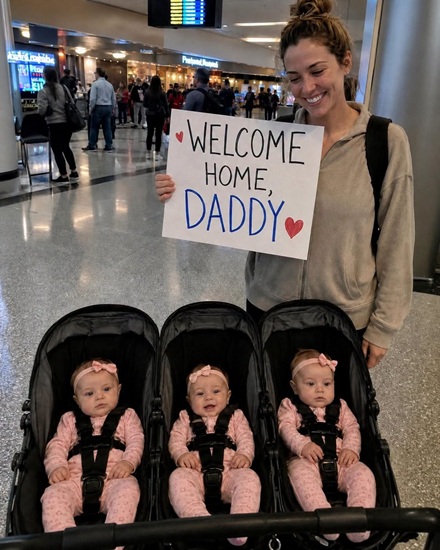
When Daniel arrived at the airport, the atmosphere was noticeably different from what either of us had imagined months earlier. Friends and families greeted returning travelers while luggage carts rolled across the terminal floor. I stood nearby holding one of the babies while relatives helped with the other two. Daniel looked surprised to see all of us waiting together. His expression reflected both relief and uncertainty as he slowly approached, realizing that an important conversation could no longer be postponed.
After greeting the children, we moved to a quieter area of the terminal where we could speak privately. I explained everything I had learned regarding the mortgage documents and the questions raised during my meetings with the bank. Daniel listened carefully before acknowledging that he had made serious financial decisions without fully discussing them with me. He accepted responsibility for failing to communicate openly and admitted that avoiding difficult conversations had only created greater confusion and damaged the trust between us.
Over the following weeks, independent reviews of the financial records continued through the appropriate legal and banking procedures. Rather than speculating about conclusions before those processes were complete, both of us agreed to cooperate fully with every request for documentation and information. We recognized that allowing qualified professionals to evaluate the records objectively was the fairest approach for everyone involved. Patience became an essential part of resolving the situation responsibly.
The experience changed our understanding of communication within a family. We realized that important financial decisions, major travel plans, and significant life changes should always be discussed openly and honestly before commitments are made. Even well-intentioned assumptions can create misunderstandings when information is incomplete. By addressing concerns respectfully and seeking verified facts, many conflicts can be resolved before they grow into much larger problems.
Most importantly, our daughters remained the center of every decision. Their health, development, and happiness became the shared priority that guided every conversation moving forward. Regardless of the challenges adults sometimes face, children benefit most when parents focus on cooperation, respectful communication, and responsible decision-making. Those principles became the foundation for every choice we made after the difficult months surrounding their birth.
Looking back, the events reminded me that resilience is often built through patience rather than certainty. Unexpected circumstances can test relationships in ways no one anticipates, but lasting decisions should always be based on verified information instead of assumptions or emotional reactions. While every family experiences challenges differently, honesty, transparency, and accountability remain essential for rebuilding trust whenever it has been damaged.
Although this fictional story explores themes of family conflict, financial uncertainty, and personal responsibility, its central message is ultimately one of thoughtful decision-making. Open communication, careful verification of facts, respect for legal processes, and prioritizing the well-being of children are lessons that remain valuable regardless of the circumstances. Those principles, rather than dramatic confrontation, provide the strongest foundation for moving forward after difficult experiences.

