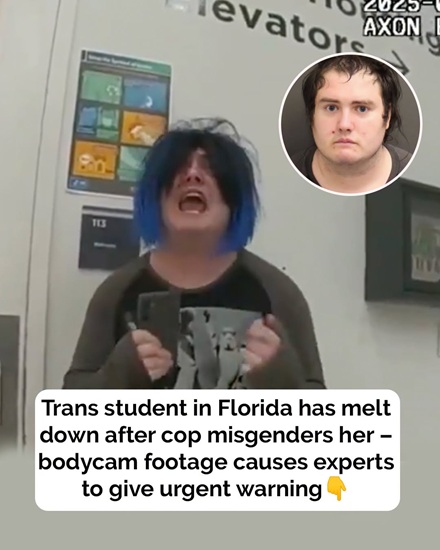
A recently released body camera video from an incident involving the University of Central Florida (UCF) Police Department has generated significant discussion online after showing a tense interaction between police officers and Jarrett Preston Vick, a transgender student. The footage, which has circulated widely across social media platforms and news outlets, has prompted conversations about police interactions, communication during stressful situations, the respectful use of pronouns, and how quickly encounters between law enforcement and members of the public can escalate.
Because the related criminal case is still pending, many of the legal issues involved have not yet been resolved by the courts. According to publicly available reports, the incident began in 2025 after UCF police responded to a report involving a possible vehicle theft investigation on campus. Public reporting indicates that Vick was not accused of stealing the vehicle itself but became involved during the officers’ response to the situation. As officers attempted to gather information, disagreements developed over how Vick was addressed during the interaction. Video released later through body camera footage captured portions of the encounter, allowing members of the public to view many of the events for themselves.

During the recorded exchange, Vick repeatedly asked officers to use she/her pronouns when speaking to her. The footage shows that the request became a central point of disagreement during the interaction. According to the video, Vick expressed frustration and emotional distress after officers continued using male pronouns despite those objections. The discussion gradually became more intense as both sides continued communicating under increasingly stressful circumstances.
The body camera recording also shows a university employee identified in public reporting as Josh, who appeared to attempt to calm the situation and encourage communication between those involved. Throughout the encounter, several people can be heard speaking at the same time, making portions of the conversation difficult to follow. As emotions increased, officers repeatedly instructed Vick to lower her voice and comply with their directions while they attempted to manage the situation.
At one stage of the interaction, one of the responding officers warned Vick that continued disruptive behavior could result in detention for evaluation under Florida’s Baker Act, a state law that allows involuntary mental health examination under specific legal circumstances when statutory requirements are met. The warning itself became another point of controversy after the video was released, with some viewers questioning whether the circumstances shown in the footage justified mentioning the law during the encounter. Others argued that officers have discretion to assess rapidly evolving situations based on the information available to them at the time.
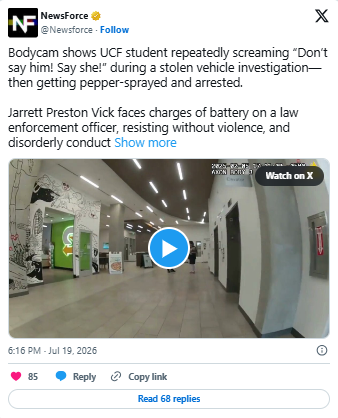
The encounter eventually escalated further, and officers detained and handcuffed Vick. Publicly available court records indicate that prosecutors later filed charges including battery on a law enforcement officer, resisting an officer without violence, and disorderly conduct. Court records further indicate that Vick entered not guilty pleas to the charges. As of the latest publicly available information, the criminal proceedings remain ongoing, and no final verdict has been issued by the court.
After the body camera footage became public, reactions across social media and online discussion forums differed sharply. Some viewers argued that repeatedly using pronouns different from those requested by Vick contributed to increasing tension during the encounter. Others focused primarily on the overall communication between the officers and Vick, suggesting that the situation may have benefited from calmer dialogue on all sides before emotions intensified. The differing reactions illustrate how the same video can be interpreted in very different ways by different audiences.
Mental health professionals and organizations that work with transgender communities have long noted that consistently using a person’s affirmed name and pronouns may contribute positively to respectful communication and emotional well-being. At the same time, legal experts frequently emphasize that questions surrounding respectful language are separate from questions concerning alleged criminal conduct, which must ultimately be evaluated through the judicial process using applicable laws and evidence presented in court.
The incident has also renewed broader public conversations about police interactions during emotionally charged situations. Many policing experts emphasize the importance of clear communication, de-escalation techniques, and maintaining professionalism during encounters involving individuals experiencing significant stress. Likewise, community organizations often encourage members of the public to remain as calm as possible during interactions with law enforcement whenever circumstances safely permit, recognizing that heightened emotions can make already difficult situations even more challenging.
Because the case remains active, many of the factual and legal questions surrounding the incident have yet to be fully addressed in court. Public discussion has largely centered on the body camera footage itself, the legal charges, and differing opinions about how the encounter unfolded. However, the final legal determination regarding the charges will depend on the judicial process, including the presentation of evidence, witness testimony, and any rulings made by the court.
As the proceedings continue, the case serves as a reminder that widely shared video clips often capture only one portion of a larger legal process. While body camera recordings can provide valuable documentation, courts generally consider multiple forms of evidence before reaching conclusions. Until the case is resolved, it is important to distinguish between verified facts contained in public records, statements made by those involved, and legal allegations that have not yet been adjudicated.
As the body camera footage continued circulating online, the incident quickly became the subject of extensive discussion across social media platforms, news websites, and public forums. Thousands of viewers watched the recording and shared opinions about the interaction, often focusing on different aspects of the encounter. While some emphasized the officers’ communication during the incident, others focused on Vick’s responses, demonstrating how the same video can generate a wide range of interpretations depending on the viewer’s perspective.
Many individuals who commented publicly argued that the repeated use of male pronouns after Vick requested she/her pronouns contributed to increasing emotional tension during the encounter. Some LGBTQ+ advocacy organizations have stated that consistently respecting a transgender person’s affirmed name and pronouns may help reduce emotional distress and encourage more respectful communication. Mental health professionals have also published research suggesting that affirming language can positively affect the well-being of many transgender individuals, although every person’s experience is unique.
Other observers viewed the situation differently, arguing that regardless of disagreements over language, maintaining calm communication during interactions with law enforcement remains important for everyone involved. Former law enforcement officials and policing experts frequently note that emotionally charged situations can become more difficult to manage when conversations become increasingly confrontational. They emphasize that clear communication, patience, and de-escalation efforts are valuable tools for both officers and members of the public whenever circumstances allow.
The release of the body camera recording has also prompted discussion about the broader role of body-worn cameras in modern policing. Many police departments throughout the United States use body cameras to document encounters with the public, providing recordings that may later assist investigators, prosecutors, defense attorneys, oversight agencies, and courts. Although body camera footage can offer valuable evidence, legal experts often caution that videos represent only one part of a broader investigation and should be considered alongside witness testimony, official reports, and other available evidence.
Legal analysts following the case have also reminded the public that criminal charges alone do not establish guilt. Under the American legal system, defendants are presumed innocent unless and until prosecutors prove the charges beyond a reasonable doubt in court. As a result, the allegations against Vick—including battery on a law enforcement officer, resisting an officer without violence, and disorderly conduct—remain subject to judicial review. The outcome will ultimately depend on evidence presented during the court proceedings rather than opinions expressed online.
The case has further highlighted how rapidly short video clips can spread across social media, often generating intense public debate before legal proceedings have concluded. Communication researchers have frequently observed that viral videos can influence public conversations, but they also encourage viewers to distinguish between verified information contained in official records and personal opinions shared online. Responsible reporting benefits from presenting documented facts while acknowledging when important legal questions remain unresolved.
For universities and educational institutions, the incident has renewed conversations about student support, campus safety, and communication during high-stress encounters. Colleges regularly bring together individuals from diverse backgrounds, experiences, and identities, making respectful communication an important component of campus life. At the same time, universities also work closely with campus police departments to promote safety and respond to emergencies within applicable laws and institutional policies.
The discussion surrounding the incident has also underscored the importance of separating social issues from ongoing legal proceedings. Questions involving identity, respectful communication, and public policy may generate legitimate public discussion, while criminal cases require courts to evaluate evidence according to established legal standards. Although those conversations sometimes overlap in public debate, each serves a different purpose and follows different processes.
According to publicly available court information, Vick has been released on bond while awaiting additional proceedings in Orange County, Florida. The case continues to move through the judicial system, where future hearings will provide opportunities for both prosecutors and the defense to present evidence and legal arguments. Until those proceedings conclude, many details of the case remain subject to judicial review rather than public speculation.
The widespread attention generated by the body camera footage demonstrates how individual encounters can become part of broader public conversations about policing, communication, and legal accountability. At the same time, responsible reporting requires acknowledging both what has been confirmed through official records and what remains unresolved. Avoiding assumptions before legal proceedings conclude helps ensure that public discussion remains grounded in verified information rather than speculation.
Ultimately, the final resolution of this case will be determined by the courts, not by reactions on social media. Regardless of differing opinions expressed online, the judicial process exists to examine evidence, apply the relevant law, and provide each party with an opportunity to present its case. Until a final ruling is issued, the publicly available information should be understood within that legal context, recognizing that ongoing proceedings may continue to develop as additional hearings take place.
