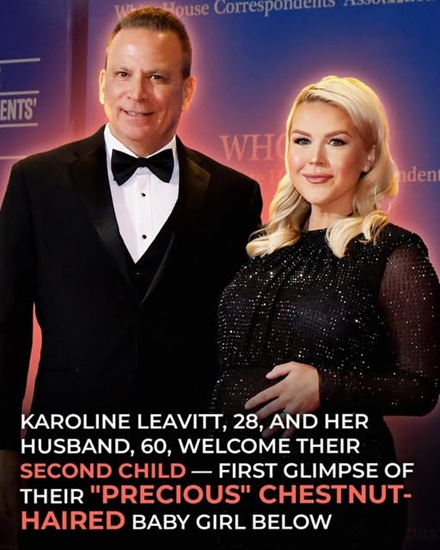
Recent discussions circulating across various social media platforms have drawn significant attention to a personal update allegedly linked to White House Press Secretary Karoline Leavitt. According to multiple unverified posts shared online, a private family moment has recently become a topic of widespread public interest. These claims suggest that a personal announcement involving a newborn child was shared in a highly emotional and intimate context.
However, it is important to note that these circulating details have not been officially confirmed by any verified governmental or authoritative source. The narrative being shared online describes an alleged social media post in which Karoline Leavitt is said to have introduced her newborn daughter, reportedly named Viviana and affectionately referred to as “Vivi.” According to these claims, the post emphasized gratitude, emotional fulfillment, and the joy of welcoming a new child into the family.
While the story has gained traction across different platforms, the original source of the post remains unclear, and no official statement has confirmed its authenticity or context. Some online descriptions further claim that the post included a personal photograph taken inside a home nursery environment. The setting is said to have featured soft lighting, warm tones, and a calm domestic atmosphere meant to reflect early motherhood.
In these circulating accounts, Leavitt is depicted holding her newborn in a quiet and private family moment. Despite these detailed descriptions, there is no verified evidence confirming that such an image or post has been publicly released in an official capacity.
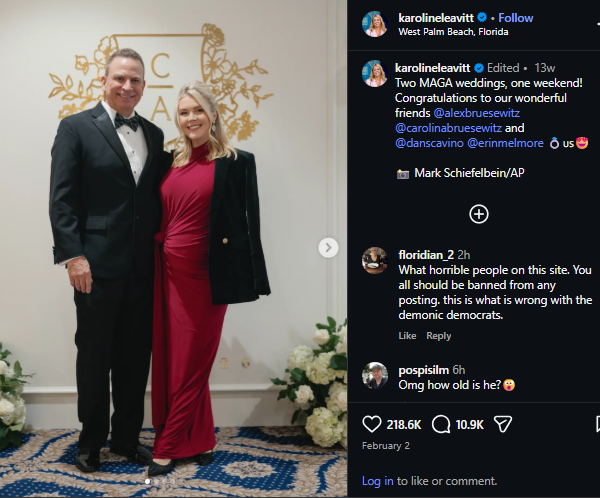
As the story spread across social media platforms, public reactions began to develop rapidly. Many users expressed emotional responses, including supportive comments and positive messages regarding the alleged family milestone. Others focused on the broader theme of public figures sharing personal moments online and how such posts often attract widespread attention. However, these reactions are part of user-generated discussions and should not be interpreted as confirmation of the underlying claims.
The discussion has also extended beyond the alleged image itself and into Karoline Leavitt’s public role and professional responsibilities. As a young and visible political communications figure, she has attracted increasing public attention due to her position in Washington. This visibility often leads to heightened curiosity about her personal life, especially when unverified stories begin circulating online and gain viral traction.
In addition, the situation highlights how quickly personal narratives involving public figures can spread in the digital age. Social media platforms often amplify emotional or attention-grabbing content, which can result in rapid sharing before verification occurs. In many cases, such stories are repeated across multiple accounts, sometimes blending opinion, speculation, and incomplete information into a single viral narrative.
Some online commentary has also framed the alleged update within the broader discussion of work-life balance for public officials. Public figures in high-pressure roles are frequently the subject of discussions about how they manage personal milestones alongside demanding professional obligations. While this theme is commonly debated online, it remains a general observation rather than a verified detail about this specific situation.
It is also worth noting that narratives involving family life and personal relationships of political figures often generate heightened engagement online. Users tend to respond strongly to such stories, as they combine emotional elements with public interest in political personalities. However, without official confirmation, such discussions remain speculative and should be treated cautiously.
As with many viral online stories, different versions of the same claim often circulate simultaneously, sometimes with variations in detail depending on the source. This can lead to confusion among readers, especially when posts are shared without context or verification. In such environments, distinguishing between confirmed information and unverified commentary becomes increasingly important.
For responsible readers, it is essential to rely on credible and authoritative sources when evaluating claims involving public officials. Official statements, verified press releases, and established news organizations provide the most reliable information. In contrast, social media posts, while often engaging and widely shared, do not always meet standards of verification or accuracy.
In summary, the circulating narrative regarding Karoline Leavitt and an alleged personal family update reflects how quickly online discussions can develop around public figures. While the story has generated widespread engagement and emotional reactions across social platforms, it remains based on unverified claims rather than confirmed facts. This situation serves as a reminder of the importance of critical thinking and source verification in the modern digital information landscape.
