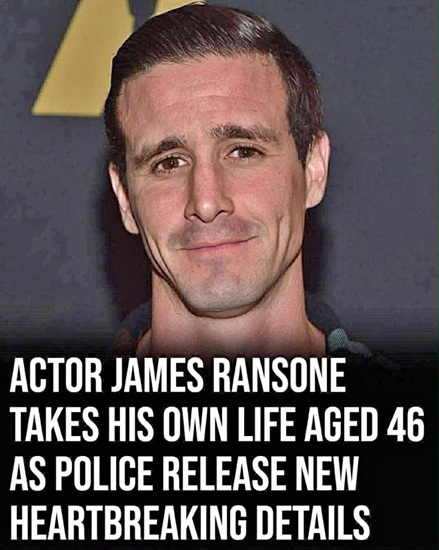
James Ransone Dies at 46 — Remembering the Actor Behind The Wire, It Chapter Two and The Black Phone
For many viewers, James Ransone needed only one role to become unforgettable.
Ziggy Sobotka.
The impulsive, vulnerable and increasingly desperate dockworker from the second season of HBO’s The Wire became one of the most memorable characters of the acclaimed series.
But Ransone spent more than two decades proving that Ziggy was only the beginning.
He moved from prestige television to independent cinema.
From war drama to horror.
From projects with Spike Lee to films by Sean Baker.
Then came the news that brought that career to a sudden end.
James Ransone had died at the age of 46.
His Death Was Confirmed in Los Angeles
Ransone died in Los Angeles in December 2025.
The Los Angeles County Medical Examiner determined his manner of death to be suicide.
The news prompted an immediate wave of tributes from actors, directors, friends and people who had worked alongside him.
But reducing Ransone’s story to how he died would leave out almost everything that made his career distinctive.
Long before the tributes, there was Baltimore.
And there was Ziggy.
The Wire Gave Him His Breakthrough Role
Ransone joined The Wire during its second season.
The series had already established itself around Baltimore’s police department and drug trade.
Then creator David Simon shifted much of the story toward the city’s docks.
The focus moved to working families confronting economic decline, organized crime and institutions that seemed to be changing faster than the people inside them could adapt.
At the center of one of those families was Ziggy Sobotka.
Ziggy desperately wanted respect.
He rarely knew how to earn it.
Ransone made him reckless, irritating and sometimes painfully funny.
But underneath the bravado was a character increasingly aware that he did not know where he belonged.
Eventually, the consequences became devastating.
Ziggy Was More Than Comic Relief
At first, viewers could easily dismiss Ziggy as ridiculous.
He showed off.
He made terrible decisions.
He tried far too hard to impress people.
But Ransone gradually revealed something darker beneath the behavior.
Ziggy wanted recognition.
He wanted his father’s approval.
He wanted to prove he mattered in a world where the economic future of people like him was disappearing.
That vulnerability made the character’s later storyline far more painful.
Ransone did not ask audiences to excuse Ziggy.
He made them understand him.
And viewers remembered.
Being Remembered Too Well Had Its Own Cost
A role as distinctive as Ziggy can become both a career breakthrough and a shadow.
Ransone later acknowledged that people often associated him strongly with The Wire.
For many actors, that might have created a narrow path.
Ransone chose another route.
He kept changing genres.
He kept taking supporting roles that felt completely different from the last one.
And within a few years, another major HBO production arrived.
This time, the setting was Iraq.
Generation Kill Showed Another Side of His Talent
In 2008, Ransone appeared in the HBO miniseries Generation Kill.
Based on Evan Wright’s reporting, the series followed U.S. Marines during the early stages of the Iraq War.
Ransone played Corporal Josh Ray Person.
The character brought humor and commentary into an environment defined by tension, uncertainty and combat.
The performance gave Ransone another chance to use the restless energy that had made Ziggy memorable.
But Person was not Ziggy.
The setting was different.
The emotional rhythm was different.
And Ransone once again demonstrated that his strongest work often came from characters who existed somewhere between humor and anxiety.
He Continued Working With David Simon
Ransone’s relationship with The Wire creator David Simon extended beyond one series.
He later appeared in Treme, Simon’s drama set in post-Katrina New Orleans.
That repeated collaboration reflected something that became clearer after Ransone’s death.
Directors and creators often wanted to work with him again.
Spike Lee did.
Sean Baker did.
David Simon did.
Ransone was not simply moving between productions.
He was developing creative relationships that stretched across years.
And one of those relationships took him into a very different kind of filmmaking.
Spike Lee Cast Him More Than Once
Ransone worked with director Spike Lee on Inside Man.
He later appeared in Lee’s Red Hook Summer.
Following Ransone’s death, Lee publicly mourned the actor and shared a photograph of them together.
The tribute highlighted the personal connection behind the credits.
Audiences see the finished film.
Actors and directors remember everything that happened between takes.
The rehearsals.
Conversations.
Long production days.
Shared jokes.
Creative disagreements.
Those experiences formed another part of Ransone’s legacy.
And Lee was far from the only filmmaker who remembered him that way.
Sean Baker Worked With Ransone Before Anora
Years before Sean Baker received widespread acclaim and major awards for Anora, Ransone appeared in his independent films.
He was in Starlet in 2012.
Then he appeared in Tangerine in 2015.
Those projects existed far from the scale of Hollywood franchise filmmaking.
That was part of their appeal.
Baker built stories around intimate environments and unconventional characters.
Ransone fit comfortably into that world.
After his death, Baker remembered him as a friend and said he would miss him dearly.
The message was brief.
The collaboration behind it stretched across years.
Horror Eventually Became a Major Part of His Career
Another audience came to know Ransone through horror.
He appeared in Sinister, starring Ethan Hawke.
Ransone played a deputy whose awkward personality provided moments of relief inside an otherwise disturbing supernatural story.
Fans remembered him.
He later returned for Sinister 2.
The sequel gave his character a larger role.
By then, Ransone had become increasingly familiar to audiences who might never have watched The Wire.
But an even bigger horror franchise was still ahead.
It Chapter Two Introduced Him to Another Huge Audience
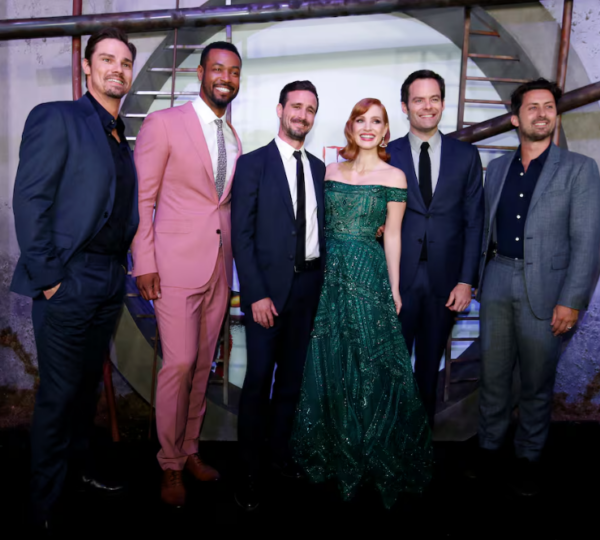
In 2019, Ransone joined the cast of It Chapter Two.
He played the adult version of Eddie Kaspbrak.
Eddie was anxious, sharp-tongued and deeply afraid of danger.
Yet he also possessed courage that became increasingly important as the story progressed.
Ransone brought nervous humor to the character.
The performance fit naturally beside Bill Hader’s Richie Tozier, creating one of the film’s most memorable relationships.
For longtime Ransone viewers, the role also demonstrated something familiar.
He was once again playing someone whose fear and humor existed simultaneously.
And once again, he made that combination feel human.
Then Came The Black Phone
Ransone later appeared in The Black Phone, starring Ethan Hawke.
He played Max.
The horror film became a commercial success and introduced Ransone to another younger audience.
He also returned for the sequel.
By this point, something interesting had happened to his career.
Different generations knew him from completely different projects.
Some viewers saw Ziggy.
Some remembered Generation Kill.
Others knew Eddie from It Chapter Two.
And younger horror audiences associated him with The Black Phone.
Few character actors build that kind of cross-generational recognition.
He Never Stopped Working in Television
Ransone’s film career did not pull him completely away from television.
His credits included appearances on Law & Order and CSI: Crime Scene Investigation.
He worked on Treme and Bosch.
Later, he appeared in Poker Face.
Natasha Lyonne, who starred in the series, was among those who publicly mourned him.
Her tribute joined messages coming from very different corners of the entertainment industry.
The pattern was becoming clear.
Ransone had left an impression far beyond his screen time.
His Wire Family Remembered Him
Wendell Pierce, who played Detective Bunk Moreland in The Wire, also shared a tribute.
More than two decades had passed since Ransone’s season of the show first aired.
Yet the cast remained connected in the minds of viewers.
That speaks partly to the unusual longevity of The Wire.
The series continued finding audiences long after its original run ended.
Streaming brought new viewers.
Critical reassessment strengthened its reputation.
And every new audience encountered Ziggy Sobotka as if the performance were new.
For Ransone, an early-career role had become permanent.
But people who worked with him knew far more than that one performance.
Younger Co-Stars Remembered His Kindness
Madeleine McGraw, who worked with Ransone on The Black Phone, was among the younger actors who shared memories following his death.
She described him warmly and spoke about the support he had shown her.
Those comments revealed something audiences could not learn from a movie.
The relationship between experienced performers and younger actors often exists entirely outside the frame.
Advice.
Encouragement.
Reassurance.
Small acts of kindness during demanding productions.
When Ransone died, those memories became part of the public picture of him.
And the most intimate memories belonged to his family.
Jamie McPhee Shared a Deeply Personal Tribute
Ransone was married to Jamie McPhee.
They had two children together, Jack and Violet.
After his death, McPhee shared a tribute to her husband.
Her message spoke about love extending beyond a single lifetime.
She also thanked him for what she described as the greatest gifts of her life.
Ransone himself.
Jack.
Violet.
It was not the language of an obituary.
It was the language of a family suddenly forced to speak about someone in the past tense.
That difference made the tribute especially affecting.
His Children Were Central to the Life Beyond Acting
For audiences, Ransone’s legacy exists on screens.
For Jack and Violet, it is something entirely different.
Their father was not a collection of characters.
He was simply their father.
That means the memories preserved by Jamie, relatives and close friends will carry a different importance as the children grow older.
Photographs will matter.
Private stories will matter.
Accounts from people who worked with him may matter too.
Films preserve a performance.
Families preserve the person.
Ransone Had Been Open About Addiction in His Earlier Life
During his career, Ransone also spoke publicly about his history of addiction.
He described struggling with heroin and alcohol when he was younger.
He later became sober.
Those experiences became part of the way he discussed his past.
But they should not be used as a simple explanation for his eventual death.
A history of substance dependence does not allow outsiders to determine why someone later dies by suicide.
Human lives do not follow such predictable lines.
And Ransone had also spoken publicly about trauma from much earlier in his life.
He Disclosed Childhood Sexual Abuse
In 2021, Ransone publicly said he had been sexually abused by a tutor during childhood in Maryland.
He described carrying shame and emotional pain from the experience.
His disclosure was intensely personal.
It also contributed to public understanding of struggles he said had affected him over the years.
But trauma must be discussed carefully.
A history of abuse does not automatically lead to addiction.
It does not automatically lead to suicide.
And it should never be used to create a simplistic cause-and-effect explanation after someone dies.
Ransone’s death had an officially determined manner.
The private reasons behind it may never be fully known.
Suicide Is Rarely Explained by One Moment
After a death by suicide, people often search for a single answer.
What happened?
What was the final trigger?
Could one earlier event explain everything?
Those questions are understandable.
But suicide is usually complex.
Mental health, personal circumstances, biological factors, stress and other influences can interact in ways outsiders cannot easily see.
That is why responsible reporting avoids turning one trauma or one period of addiction into a definitive explanation.
Ransone’s past was part of his life.
It should not be treated as a formula predicting its end.
His Colleagues Focused on the Person They Remembered
The tributes after his death were not primarily explanations.
They were memories.
Spike Lee remembered a collaborator.
Sean Baker remembered a friend.
Wendell Pierce remembered a fellow actor.
Madeleine McGraw remembered someone supportive.
Natasha Lyonne expressed love and grief.
Jamie McPhee remembered her husband.
Each person held a different version of James Ransone.
Together, those memories created a portrait much larger than any headline.
He Became the Definition of a Memorable Character Actor
Ransone was rarely the conventional leading man.
That never stopped him from becoming unforgettable.
His strength often came from supporting characters who felt slightly unpredictable.
Characters carrying too much nervous energy.
Characters who talked too much.
Characters whose insecurity came through even when they tried to hide it.
Sometimes those characters were funny.
Sometimes tragic.
Often both.
That was particularly true of Ziggy.
But it extended far beyond him.
His Characters Frequently Lived on the Edge of Control
There is a recognizable quality running through much of Ransone’s work.
His characters often seemed as though they might unravel at any moment.
That gave scenes an unusual tension.
He could deliver a joke and make it feel nervous rather than relaxed.
He could make arrogance look like insecurity.
He could make fear funny without making the character ridiculous.
Those contradictions gave him a distinctive screen presence.
And filmmakers repeatedly found new ways to use it.
The Wire Still Stands at the Center
No matter how many films and series followed, The Wire remained the role most often mentioned alongside Ransone’s name.
That is not necessarily a limitation.
It reflects the enduring reputation of the show.
Season two eventually became recognized as a crucial part of the series’ broader examination of American institutions.
The Sobotka family stood at the heart of that season.
Frank represented a working generation struggling to preserve the docks.
Nick tried to survive within the collapsing system.
And Ziggy became something more tragic.
He was a young man desperate to prove himself in a world offering fewer and fewer paths forward.
Ransone made that desperation unforgettable.
Yet His Filmography Refuses to Fit Inside One Role
Look beyond The Wire and the variety becomes obvious.
Generation Kill.
Sinister.
Starlet.
Tangerine.
It Chapter Two.
The Black Phone.
Poker Face.
Films with Spike Lee.
Independent cinema with Sean Baker.
Crime television.
War drama.
Horror.
The work was too varied to reduce to one character.
That is why different audiences responded to the news of his death in different ways.
Everyone seemed to have their own James Ransone role.
The Performances Remain
Death creates a strange divide in film and television.
The actor is gone.
The character remains exactly as audiences remember.
Ziggy is still young every time someone starts season two of The Wire.
Eddie Kaspbrak still returns to confront Pennywise.
Ransone’s characters continue talking, running, joking and making terrible decisions.
Nothing changes inside the recorded performance.
Only the viewer knows what came afterward.
That can make revisiting an actor’s work feel different after their death.
His Family Carries a Different Legacy
Public memory is built from films.
Private memory is built from life.
Jack and Violet will grow up with stories that have nothing to do with HBO ratings or horror franchises.
Jamie McPhee will remember years that audiences never saw.
Friends will remember conversations.
Directors will remember sets.
Actors will remember rehearsals.
Those memories cannot be streamed.
But they are part of Ransone’s legacy just as surely as Ziggy Sobotka is.
The Way He Died Should Not Erase the Way He Lived
James Ransone died by suicide at 46.
That fact belongs in an accurate account of his death.
But it is not a summary of his life.
He was an actor for more than two decades.
He worked with celebrated directors.
He helped create characters that remained memorable years after their projects ended.
He spoke openly about painful experiences.
He built a family.
He became a husband and father.
And colleagues across generations remembered him with affection after he was gone.
That is a much larger story.
The Final Role Was Never the Point
Ransone’s career did not follow a simple path toward conventional stardom.
It did something more interesting.
It accumulated memorable performances.
One strange, damaged, funny or frightened character after another.
Then one day, audiences realized how many of them they already knew.
That is often how character actors become indispensable.
Not through one giant spotlight.
Through dozens of scenes that refuse to disappear from memory.
James Ransone left behind those scenes.
And although his life ended far too early, the performances remain exactly where he left them.
For one generation, he will always be Ziggy.
For another, Eddie.
For horror audiences, perhaps Max or Deputy So-and-So.
For the people closest to him, none of those names will matter as much as James.
And that is the part no screen could ever fully capture.
