
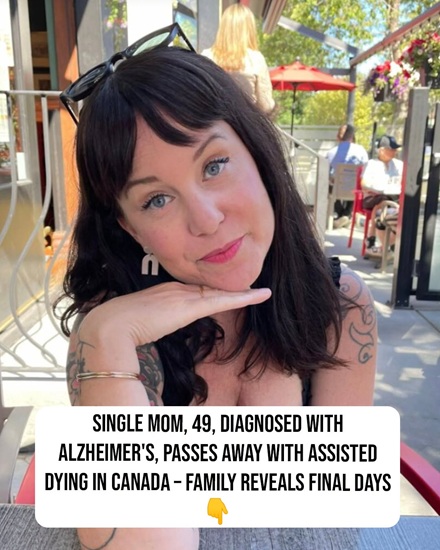
Rebecca Luna, the Canadian content creator known on TikTok as @wheredidrebeccago, became widely recognized for sharing her personal experience after being diagnosed with young-onset Alzheimer’s disease. Through honest and compassionate videos, she documented the realities of living with a progressive neurological illness while also speaking openly about the difficult decisions she faced. Her willingness to discuss her diagnosis publicly helped many people learn more about a condition that remains less widely understood than Alzheimer’s disease affecting older adults.
Young-onset Alzheimer’s disease is a form of Alzheimer’s that develops before the age of 65. Although Alzheimer’s is most commonly associated with older adults, medical experts explain that it can also affect individuals in their 40s and 50s. Early symptoms may include changes in memory, reasoning, language, concentration, or the ability to perform familiar daily tasks. Because these symptoms can resemble other medical conditions, obtaining an accurate diagnosis sometimes requires extensive neurological evaluation and specialized medical testing.
According to information Rebecca Luna shared publicly, she sought medical advice after noticing concerning changes in her health. Following medical evaluations, she was diagnosed with young-onset Alzheimer’s disease. She later explained to her followers that she had been given an estimated life expectancy of approximately five to seven years after her diagnosis. Medical professionals note, however, that Alzheimer’s disease progresses differently in every individual, and the course of the illness can vary considerably depending on numerous clinical factors.
After receiving her diagnosis, Rebecca chose to document her journey through regular updates on social media. Rather than presenting only the medical aspects of her illness, she also shared reflections about family, resilience, daily challenges, and the emotional impact of living with a progressive neurological condition. Her openness helped create greater public awareness while offering many viewers a better understanding of the realities faced by individuals living with young-onset Alzheimer’s disease.
Throughout her videos, Rebecca frequently emphasized the importance of spending meaningful time with family and loved ones. As a mother of two living in British Columbia, she often spoke about cherishing everyday moments while adapting to the changes brought by her diagnosis. Her reflections resonated with many viewers because they highlighted not only the medical aspects of Alzheimer’s disease but also its profound effect on family life, personal identity, and future planning.
Rebecca also publicly discussed her decision to pursue Medical Assistance in Dying (MAID), which has been legal in Canada under specific eligibility requirements since 2016. She explained that this decision followed extensive personal reflection and was based on her own medical circumstances and values. Her public comments described her individual experience and should not be interpreted as guidance or recommendations for others, as end-of-life decisions are highly personal and depend on individual medical, legal, and ethical considerations.
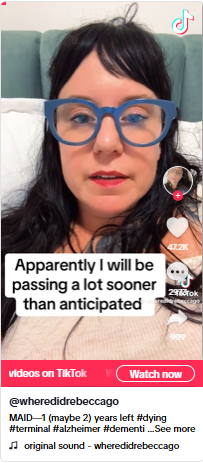
In one of her final public videos, Rebecca explained that her planned MAID date had been moved forward because her condition had deteriorated more rapidly than expected. She described the decision as one of the most difficult she had ever made, explaining that she no longer felt comfortable or safe in her own body as the disease progressed. Her remarks reflected the emotional complexity of living with an irreversible neurological illness and the deeply personal nature of decisions surrounding end-of-life care.
Rebecca also used her platform to reflect on experiences from earlier in her life. She spoke openly about surviving an abusive childhood and overcoming addiction, explaining that these experiences had shaped her resilience. She expressed pride in maintaining her sobriety while facing the emotional and physical challenges associated with her diagnosis. Her willingness to discuss these aspects of her life encouraged conversations about recovery, perseverance, and the importance of personal growth despite difficult circumstances.
Throughout her journey, Rebecca consistently expressed gratitude for the support she received from family, friends, and members of her online community. While she acknowledged the hardships created by her illness, she also spoke about the positive qualities she believed had developed through her life experiences. She reflected on the importance of compassion, empathy, and understanding, encouraging people to appreciate meaningful relationships and the value of supporting one another during difficult times.
In her final public message, Rebecca informed followers that she would step away from creating content in order to focus entirely on spending time with her loved ones. The announcement marked the conclusion of the regular updates she had shared throughout her illness. Her decision reflected a desire to dedicate her remaining time to those closest to her rather than continuing to document her experience publicly.
Rebecca Luna’s story has contributed to broader public awareness of young-onset Alzheimer’s disease, a condition that affects a relatively small percentage of people diagnosed with Alzheimer’s but can have significant consequences for individuals and families during the most active years of adult life. Medical organizations continue emphasizing the importance of early diagnosis, individualized treatment, supportive care, and ongoing research aimed at improving future therapies for neurodegenerative diseases.
Following Rebecca’s passing, many people who had followed her journey shared messages of sympathy and remembrance online. Her openness, honesty, and thoughtful reflections left a lasting impression on many individuals who had learned about young-onset Alzheimer’s through her experience. While her story is deeply personal, it has also encouraged greater understanding of progressive neurological diseases, caregiving, and the importance of compassion toward families facing life-altering medical diagnoses.
Following the announcement of Rebecca Luna’s passing, many people who had followed her journey shared messages of sympathy and remembrance across social media. Friends, followers, and members of the broader online community reflected on the honesty with which she documented her experience. Many noted that her willingness to discuss difficult topics had helped them better understand young-onset Alzheimer’s disease and the challenges faced by individuals and families living with progressive neurological conditions.
Rebecca’s story also drew renewed attention to young-onset Alzheimer’s disease itself. Although Alzheimer’s is most commonly associated with older adults, medical experts explain that a small percentage of cases occur before the age of 65. Because many people are unfamiliar with the condition in younger adults, symptoms may initially be mistaken for stress, anxiety, depression, or other medical concerns. Neurologists emphasize that early medical evaluation is important whenever persistent cognitive changes begin affecting daily life.
Alzheimer’s disease is progressive, meaning symptoms generally become more severe over time. Individuals may experience changes in memory, communication, reasoning, problem-solving, and everyday functioning. While current treatments may help manage some symptoms and improve quality of life for certain patients, there is currently no cure. Researchers around the world continue studying the disease in hopes of developing more effective therapies and improving long-term outcomes for future patients.
Throughout her public updates, Rebecca consistently spoke about the importance of spending meaningful time with family and loved ones. As her condition progressed, she explained that she wanted to dedicate her remaining time to those closest to her rather than continuing to create regular online content. Her decision reflected a deeply personal desire to focus on relationships and shared moments during the final stage of her illness.
Rebecca also reflected openly on earlier chapters of her life, including surviving childhood abuse and overcoming addiction. She explained that these experiences had shaped her resilience and that maintaining her sobriety remained one of the accomplishments she valued most. By speaking honestly about recovery alongside her medical diagnosis, she encouraged thoughtful conversations about perseverance, healing, and the strength required to navigate difficult circumstances throughout life.
Her public discussion of Medical Assistance in Dying (MAID) also prompted broader conversations about end-of-life care. MAID has been legal in Canada since 2016 under specific eligibility requirements established by Canadian law. The process involves medical assessments and legal safeguards that determine eligibility on an individual basis. Laws regarding assisted dying differ significantly between countries and jurisdictions, and decisions regarding end-of-life care are highly personal, depending on medical circumstances, legal frameworks, and individual values.
Healthcare professionals generally encourage individuals facing serious illnesses to discuss treatment options, advance care planning, and supportive services with qualified medical providers. Every patient’s experience is unique, and decisions involving serious medical conditions should always be guided by individualized clinical advice. Rebecca’s public comments described her own circumstances and should not be interpreted as representing the experiences of all individuals living with Alzheimer’s disease.
Her story also highlighted the important role played by caregivers and family members. Progressive neurological diseases affect not only the individual receiving the diagnosis but also those providing daily care, emotional support, and practical assistance. Healthcare organizations emphasize that caregivers may benefit from counseling, support groups, educational resources, and respite services that help them manage the physical and emotional demands associated with long-term caregiving.
In recent years, awareness campaigns have continued working to improve public understanding of dementia and Alzheimer’s disease. Medical organizations encourage people to learn about early symptoms, seek professional evaluation when concerns arise, and support continued scientific research into neurodegenerative disorders. Increased awareness can help reduce stigma while encouraging earlier diagnosis and access to appropriate care and community resources.
Rebecca Luna’s openness also demonstrated the positive role that responsible storytelling can play in increasing public awareness. Rather than focusing solely on medical details, she shared personal reflections about family, resilience, gratitude, and finding meaning despite extraordinary challenges. Many followers expressed appreciation for the compassion and honesty that characterized her videos, describing her willingness to speak openly as both educational and deeply human.
Although her life ended far sooner than she had hoped, Rebecca’s story continues to encourage greater understanding of young-onset Alzheimer’s disease and the realities faced by individuals living with progressive neurological illnesses. Her reflections have contributed to ongoing conversations about compassionate care, family support, recovery from life’s earlier hardships, and the importance of treating those living with serious medical conditions with dignity and empathy.
Ultimately, Rebecca Luna’s legacy extends beyond her social media presence. She is remembered by many for her honesty, resilience, and commitment to sharing her experience in hopes of increasing understanding of a complex medical condition. Her story serves as a reminder of the value of compassion, the importance of supporting families facing serious illness, and the continuing need for medical research aimed at improving the lives of people affected by Alzheimer’s disease.

