
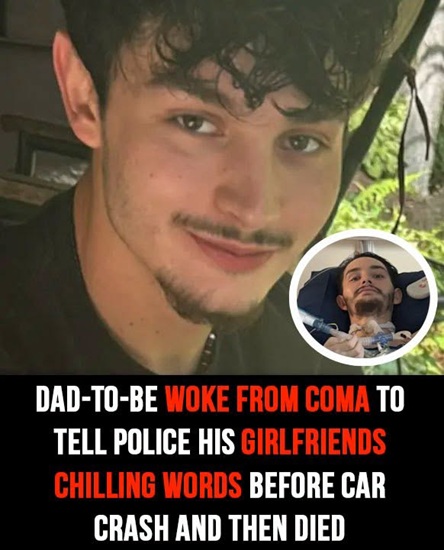
The death of 22-year-old Daniel Waterman has left his family mourning not only the loss of a beloved son, grandson, and nephew but also the future he never had the opportunity to experience. Nearly nine months after the injuries he suffered in a serious vehicle collision ultimately claimed his life, his relatives continue to seek answers while following the ongoing legal proceedings connected to the crash. Throughout the process, they have consistently emphasized their desire to honor Daniel’s memory and ensure that his life is remembered beyond the tragic circumstances surrounding his death.
The events that changed the family’s lives began on Super Bowl Sunday in February 2025 in Flagler County, Florida. Daniel Waterman was traveling as a passenger in a vehicle driven by his then-pregnant girlfriend, Leigha Mumby. According to publicly reported information, the vehicle left the roadway and struck a tree. Emergency responders arrived at the scene, and because of the severity of Daniel’s injuries, he was transported by air ambulance to a hospital, where he was admitted to intensive care.
Daniel remained hospitalized for several months as doctors worked to treat the extensive injuries he sustained in the collision. During that period, family members stayed by his side, hoping for signs of recovery while facing uncertainty about his long-term prognosis. Serious traumatic injuries often require prolonged medical care, and loved ones frequently experience both hope and heartbreak as patients progress through different stages of treatment. Daniel’s family has described those months as emotionally exhausting while continuing to support him throughout his hospitalization.
Despite extensive medical treatment, Daniel Waterman died on October 8, 2025, several months after the crash. His death marked the end of a long medical battle that had begun immediately after the collision. For his family, the loss was especially painful because they had witnessed his determination to survive during the months following the accident. His passing transformed what had initially been a serious injury case into a fatal one, significantly affecting the legal proceedings that followed.
Only three days after Daniel’s death, his daughter was born. According to statements made by his family, Daniel never had the opportunity to meet his child. His relatives have publicly shared that they have not met the girl themselves and do not know her name. They have expressed sadness about that reality while also speaking about their hope that, one day, she will learn about her father through the memories preserved by those who loved him.
Daniel’s grandfather, Michael Gilman, has spoken publicly about the family’s commitment to keeping Daniel’s memory alive for future generations. In interviews, he explained that they hope Daniel’s daughter will eventually come to know who her father was as a person rather than only learning about the legal case connected to his death. Family members have described this commitment as one of the most important responsibilities they now carry following his passing.
According to statements shared publicly by relatives, Daniel briefly regained consciousness while hospitalized and was able to communicate with members of his family. His aunt, Tiffany Waterman, later described what she said Daniel recalled about the events leading up to the collision. According to her account of his statements, Daniel described an argument that allegedly began after he received a text message from a longtime female friend. These descriptions reflect the family’s account of Daniel’s recollections and form part of the information that has been publicly reported in connection with the case.
According to Tiffany Waterman’s description of Daniel’s account, the disagreement escalated while the couple was traveling in the vehicle. She stated that Daniel had previously been involved in another traffic accident and had developed a significant fear associated with vehicle crashes. According to her public statements, Daniel allegedly attempted to leave the moving vehicle after it slowed during the argument. These descriptions have been reported publicly but remain connected to matters that are part of the broader legal proceedings.
Family members have further stated that Daniel recalled hearing words shortly before the collision occurred. According to publicly reported interviews, they said he remembered a statement made immediately before the vehicle struck the tree. Because these descriptions relate to evidence connected to an ongoing criminal case, they remain allegations and should be understood within the context of the judicial process, where evidence is evaluated according to applicable legal standards.
Following an investigation, authorities charged Leigha Mumby with vehicular homicide in connection with the incident. The criminal case has proceeded through the court system, with pretrial hearings scheduled as part of the legal process. Under the principles of the justice system, criminal charges represent allegations that must be evaluated in court, and the defendant is presumed innocent unless and until guilt is established according to law.
For Daniel Waterman’s family, the legal proceedings represent only one part of a much larger emotional journey. Alongside attending court hearings, they continue remembering the young man they knew before the tragedy—a son, grandson, nephew, and soon-to-be father whose life ended at just 22 years old. As the case continues through the judicial system, his relatives say they remain committed both to honoring his memory and to preserving his story for the daughter he never had the chance to meet.
As the legal case continues, Daniel Waterman’s family has remained committed to participating in every stage of the judicial process. Traveling repeatedly from Central New York to Florida, relatives have attended hearings while closely following developments in the case. For them, each court appearance represents another step in seeking answers through the legal system. Although the process has required considerable emotional and practical commitment, family members have consistently stated that they intend to remain involved until the case reaches its conclusion.
The case has also highlighted how criminal investigations involving fatal traffic collisions often require extensive evidence collection and legal review. Law enforcement investigators typically examine physical evidence from the crash scene, vehicle damage, witness statements, medical records, and any available digital or forensic evidence. Prosecutors then evaluate the information before presenting charges through the judicial system. Throughout this process, courts are responsible for determining legal outcomes based on admissible evidence and applicable law.
According to publicly reported information, Leigha Mumby has been charged with vehicular homicide in connection with the incident. As with any criminal proceeding, the filing of charges does not constitute a finding of guilt. Under the principles of the American justice system, every defendant is presumed innocent unless and until guilt is established beyond a reasonable doubt in court. The legal process exists to ensure that all evidence is examined fairly before any final judgment is reached.
For Daniel’s relatives, however, the legal proceedings represent only one aspect of their experience. Much of their public attention has focused on preserving memories of the young man they knew before the tragedy. Family members have described him as someone who was entering a new stage of adulthood, making plans for the future while preparing to become a father. They have spoken about his enthusiasm for life and the excitement he felt as he anticipated welcoming his daughter.
Daniel’s grandfather, Michael Gilman, has publicly shared that one of his greatest hopes is for his granddaughter to someday learn about her father through the people who loved him. Although the family has stated that they have not yet met the child, they have repeatedly expressed their desire for her to know about Daniel’s character, his kindness, and the love he already had for her before she was born. Their comments reflect a family’s wish to preserve a meaningful connection across generations despite heartbreaking circumstances.
Daniel’s aunt, Tiffany Waterman, has also spoken publicly about watching him mature during the years leading up to the accident. She described seeing him gradually become more focused on building his future and preparing for the responsibilities of parenthood. Her reflections emphasize the life Daniel was beginning to create rather than focusing solely on the events surrounding the collision. Family members have consistently encouraged people to remember him as a son, grandson, nephew, friend, and expectant father whose life extended far beyond the legal case now associated with his name.
The family’s experience also illustrates the lasting impact that sudden traumatic events can have on loved ones. Serious injuries and prolonged hospitalization often affect entire families, who spend months balancing hope with uncertainty while supporting an injured relative. Even after medical treatment ends, emotional recovery frequently continues for years. Mental health professionals note that grief following unexpected loss is a highly individual process, and every family experiences it differently.
Throughout this difficult period, Daniel’s relatives have repeatedly expressed gratitude for the support they have received from friends, neighbors, and members of their community. Public expressions of sympathy cannot erase grief, but many families find comfort in knowing that others recognize the significance of their loved one’s life. Compassionate support often becomes an important source of strength while families navigate lengthy legal proceedings and personal loss.
The case has also prompted discussion about the importance of safe driving, responsible decision-making, and conflict management while operating a vehicle. Road safety experts consistently emphasize that drivers should avoid distractions, emotional confrontations, and behaviors that increase the risk of collisions. Remaining focused on driving and making decisions that prioritize the safety of everyone inside a vehicle are fundamental principles promoted by transportation safety organizations worldwide.
As the court proceedings continue, further factual findings will be determined through the judicial process. Until the case is resolved, many details remain subject to legal review and should be understood within that context. Respecting due process ensures that evidence is evaluated fairly and that all parties receive the legal protections provided under the law.
Ultimately, Daniel Waterman’s family hopes that he will be remembered not only through news reports or courtroom proceedings but also through the positive impact he had on the people closest to him. Their public statements consistently emphasize his kindness, his love for family, and the future he hoped to build. While the legal process seeks to determine accountability under the law, his loved ones continue focusing on preserving his memory and ensuring that his daughter may one day learn about the father she never had the opportunity to meet.

