
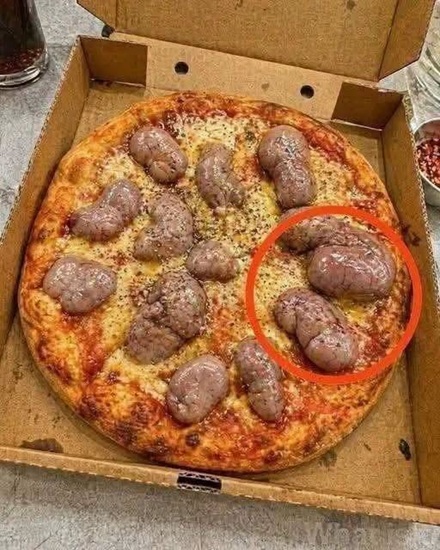
There are moments when an ordinary experience unexpectedly captures our attention. Sometimes it is an unfamiliar sound in the house, an unusual pattern in the clouds, or a small detail in a favorite meal that suddenly seems out of place. When we do not immediately understand what we are seeing, it is natural for our curiosity to take over. In many cases, the explanation turns out to be far simpler than we first imagine. That was exactly the lesson I learned one evening while opening a freshly delivered pizza after a long and exhausting day.
The delivery arrived earlier than expected, and after thanking the driver, I carried the warm pizza box into the kitchen. It had been a busy day, and I was looking forward to a quiet dinner before relaxing for the evening. As I placed the box on the counter and lifted the lid, the familiar aroma of baked dough, tomato sauce, melted cheese, and herbs immediately filled the room. Everything appeared normal until I looked more closely at the surface of the pizza.
Scattered across the melted cheese were several large, rounded bubbles that stood noticeably higher than the surrounding toppings. They were smooth, golden, and slightly puffed up, creating an appearance I did not remember seeing on previous pizzas. Although the pizza smelled perfectly fresh, I paused for a moment and wondered whether those unusual shapes were supposed to be there. Curiosity quickly replaced my appetite as I examined each raised area more carefully.
Like many people, I have occasionally noticed small bubbles on baked cheese before, but these seemed larger than usual. Because they caught my attention immediately, I found myself asking several questions. Had the pizza been cooked differently? Had the cheese reacted to the high temperature in an unusual way? Or was this simply something I had never paid attention to before? Rather than making assumptions, I decided to look for a reliable explanation before reaching any conclusions.
Within a few minutes, I began reading information from cooking resources and food experts who explained the science behind what I was seeing. The answer turned out to be surprisingly straightforward. During baking, intense heat causes moisture trapped beneath the cheese to turn into steam. At the same time, tiny pockets of air can expand as the pizza cooks. When these pockets become trapped under the layer of melted cheese, they push the cheese upward, creating the rounded bubbles that are often visible on freshly baked pizzas.
The exact appearance of these bubbles depends on several factors. Oven temperature plays an important role because pizzas baked in very hot ovens cook rapidly, allowing steam and expanding air to collect beneath the cheese before escaping. The amount of cheese used, the moisture content of the ingredients, the thickness of the dough, and even how evenly the toppings are distributed can all influence where bubbles form. Because every pizza is assembled individually, no two pizzas develop exactly the same pattern during baking.
Professional pizza makers frequently encounter this effect, especially when preparing pizzas in traditional brick ovens or high-temperature commercial ovens. Many restaurants bake pizzas at temperatures much higher than those used in a typical household oven. These intense conditions create the characteristic golden spots, lightly browned cheese, crisp crust, and occasional raised bubbles that many customers associate with freshly baked pizza. Far from indicating a problem, these features often reflect the cooking process itself.
Food scientists explain that cheese undergoes several physical changes while it bakes. As it warms, the fats soften, proteins stretch, and moisture begins to evaporate. Steam naturally seeks the easiest path to escape, but if melted cheese temporarily seals part of the surface, pressure may build underneath until the cheese rises into a dome-like shape. Once the pizza is removed from the oven, many of these bubbles slowly collapse as the trapped steam cools and the pressure decreases.
Moisture from toppings can also contribute to bubble formation. Fresh vegetables, mushrooms, tomatoes, and certain cheeses release water during cooking. This moisture becomes part of the steam generated inside the pizza, adding to the natural baking process. Depending on the ingredients used and the cooking method, some pizzas develop only a few small bubbles, while others produce several larger ones across the surface.
Another factor is the type of cheese itself. Mozzarella, the cheese most commonly used on pizza, melts smoothly while retaining enough structure to stretch across the surface. This elasticity allows it to temporarily hold pockets of expanding steam beneath it. Different cheese blends may behave differently because of variations in moisture, fat content, and protein structure, resulting in slightly different textures and appearances after baking.
Learning this explanation completely changed the way I viewed the pizza in front of me. What had initially seemed unusual became an interesting example of everyday food science. The pizza itself had not changed at all—only my understanding of what I was seeing had changed. Once I realized that the bubbles were simply a normal result of heat, moisture, and melting cheese, there was no longer any reason for concern. The slice tasted exactly as expected, with a crisp crust, flavorful sauce, and perfectly melted cheese.
That simple experience became a reminder of how easily unfamiliar details can capture our attention when we lack an immediate explanation. Instead of relying on assumptions, taking a few moments to learn the science behind an everyday observation can replace uncertainty with understanding.
Once the science behind cheese bubbles is understood, it becomes much easier to appreciate them as a natural part of the baking process rather than something unusual. Professional pizza makers often expect these bubbles to appear, particularly when pizzas are cooked at very high temperatures. In many traditional pizzerias, ovens operate at temperatures that allow the crust to bake quickly while the cheese melts and browns evenly. Under these conditions, small pockets of steam and air can become trapped beneath the cheese, creating the familiar raised areas that many customers notice after opening the box.
The appearance of these bubbles can vary from one pizza to another because every pizza is slightly different. The thickness of the dough, the amount of sauce, the type of cheese, the moisture released by toppings, and the exact position of the pizza inside the oven all influence the final result. Even when two pizzas are prepared using the same recipe, they may not develop identical patterns during baking. These natural variations are part of what makes freshly prepared food unique.
Many experienced pizza chefs consider slight differences in appearance to be completely normal. Unlike highly processed factory-made foods, hand-prepared pizzas are assembled individually before entering the oven. Small changes in ingredient distribution or oven airflow can influence how the cheese melts and where steam collects. As a result, each finished pizza develops its own distinctive appearance while still meeting the expected quality standards.
Although bubbles themselves are generally harmless, consumers should always pay attention to the overall condition of any prepared food. Food safety experts recommend checking whether a pizza appears freshly cooked, smells normal, and has been handled appropriately during delivery. A pizza that has remained at unsafe temperatures for an extended period, has an unusual odor, or shows signs of spoilage should not be eaten. These practical observations are much more useful indicators of food quality than the presence of ordinary cheese bubbles.
Proper food handling after delivery is also important. If a pizza will not be eaten immediately, it should not remain at room temperature for an extended period. Refrigerating leftovers promptly helps maintain both quality and food safety. When reheating, many people choose an oven, toaster oven, or skillet to restore the crispness of the crust, although microwave ovens can also be used depending on personal preference. Following basic food safety practices helps preserve flavor while reducing unnecessary food waste.
Interestingly, some pizza enthusiasts actually enjoy larger cheese bubbles because they create a slightly different texture. The raised portions often become lightly browned during baking, producing subtle differences in flavor and crispness. In wood-fired and brick-oven pizzas, these browned areas are often considered part of the pizza’s distinctive character. Rather than being viewed as imperfections, they are simply one of the many natural results of high-temperature baking.
The discussion surrounding pizza bubbles also offers an excellent example of how understanding everyday science can make routine experiences more enjoyable. Many cooking processes involve physical changes that may initially appear unusual until their causes are understood. Bread rises because of gases produced during fermentation, popcorn expands when moisture inside the kernels turns to steam, and cheese bubbles because heat causes trapped air and moisture to expand beneath its surface. Each of these familiar kitchen observations reflects simple scientific principles at work.
Curiosity about food often leads people to learn more about cooking techniques, ingredients, and food preparation. Professional chefs spend years understanding how temperature, moisture, timing, and ingredient selection influence the final result. Even small details—such as how long dough is fermented or how cheese is distributed—can affect texture, appearance, and flavor. Learning about these processes can deepen appreciation for foods that many people enjoy every day.
Modern food production also benefits from extensive research into quality and safety. Restaurants, commercial kitchens, and food manufacturers follow established procedures designed to prepare meals consistently while meeting health standards. Although every cooking method produces small natural variations, these differences are expected and often contribute to the individuality of freshly prepared food. Understanding this helps consumers distinguish between normal cooking characteristics and genuine signs that a product should not be consumed.
The experience also highlights the value of seeking reliable information before reaching conclusions. Online resources provided by food scientists, culinary professionals, universities, and public health organizations can often explain everyday observations using clear scientific principles. Taking a few moments to verify information from trustworthy sources can replace uncertainty with practical knowledge and encourage more informed decisions in the kitchen.
Cooking has always combined science, craftsmanship, and creativity. Every loaf of bread, roasted vegetable, baked dessert, or freshly prepared pizza reflects countless interactions between heat, moisture, proteins, fats, and natural ingredients. While these changes sometimes create unexpected appearances, they are usually part of the normal cooking process rather than evidence of a problem. Recognizing these natural variations allows people to enjoy food with greater confidence and curiosity.
Ultimately, the raised bubbles that occasionally appear on melted pizza cheese are usually nothing more than the result of trapped steam and expanding air during baking. They are a common feature of pizzas cooked at high temperatures and are influenced by ingredients, moisture, dough, and oven conditions. By understanding the simple science behind this familiar phenomenon and following basic food safety practices, consumers can better recognize the difference between ordinary cooking characteristics and situations that genuinely require attention. Sometimes, a closer look at everyday food reveals not a mystery, but an interesting lesson in how science quietly shapes the meals we enjoy.

