
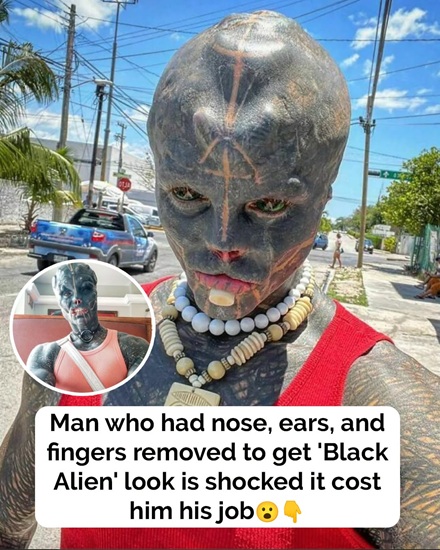
Anthony Loffredo has become one of the most recognizable figures in the global body modification community. Over the past several years, photographs and interviews featuring the French body modification enthusiast have circulated widely across social media platforms, news websites, and documentaries. His appearance has generated enormous public interest, not only because of its uniqueness but also because it raises broader questions about identity, personal freedom, self-expression, and the relationship people have with their own bodies.
Born in France, Loffredo has explained in multiple interviews that his fascination with body modification did not emerge overnight. According to his own public statements, his interest gradually developed over time and eventually became a deeply personal project rather than a temporary trend. He has repeatedly emphasized that his transformation is not intended simply to attract attention or create controversy. Instead, he describes it as a long-term artistic and personal journey that reflects how he sees himself.
His transformation has involved numerous body modification procedures performed over several years. Publicly available interviews and photographs show that he has undergone extensive tattooing, facial modifications, tongue splitting, implants, and other procedures that have dramatically altered his appearance. Because of these changes, internet users began referring to him as the “Black Alien,” a nickname that has since become widely associated with his public image. Loffredo himself has acknowledged the nickname while continuing to describe the project as an expression of personal identity rather than a performance for public approval.
Throughout interviews with various media outlets, Loffredo has consistently explained that he has long been fascinated by science fiction, extraterrestrial imagery, and futuristic artistic concepts. He has stated that these interests inspired many of the aesthetic choices behind his appearance. While some observers interpret the modifications primarily as performance art, Loffredo has said that the project represents something much deeper for him personally. He believes the transformation allows him to feel more authentic and more closely aligned with his own self-image.
His appearance has inevitably generated strong reactions from the public. Some people admire the commitment required to pursue such an unconventional vision, viewing his body as a form of artistic expression. Others struggle to understand his decisions and express concern about the extent of the modifications. The wide range of reactions demonstrates how differently individuals perceive personal appearance, identity, and self-expression. Regardless of opinion, Loffredo’s transformation has become part of a larger public conversation about personal autonomy and the boundaries of body modification.
During interviews, Loffredo has often spoken about the misunderstandings he encounters. He has explained that many people quickly form opinions without asking about his motivations or listening to his perspective. According to his own comments, he does not believe that appearance alone should determine how a person is treated. Instead, he has encouraged people to engage in conversation before making assumptions about someone’s character or personal choices.
Although much public attention focuses on his appearance, Loffredo has also discussed the practical consequences of living with such extensive body modifications. In public interviews, he has acknowledged that daily life can become more complicated because of how others react to him. He has described experiencing difficulty finding employment and believes that employers often judge his appearance before learning about his skills or personality. These experiences have led him to speak openly about the challenges that accompany highly visible forms of self-expression.
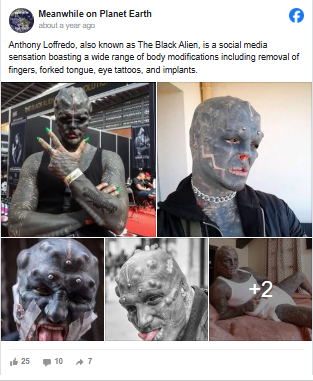
Before becoming internationally known, Loffredo worked in more conventional occupations, including employment in the nightlife industry. His life changed significantly as his body modification project became more extensive and increasingly recognized online. As his appearance evolved, media attention also increased, bringing interviews, documentaries, and discussions across numerous countries. While that visibility introduced him to a global audience, it also exposed him to constant public scrutiny.
Researchers who study body modification point out that practices such as tattooing, scarification, piercing, and other forms of body alteration have existed for thousands of years in many cultures. Historically, these practices have served different purposes, including religious ceremonies, social identity, cultural traditions, rites of passage, and artistic expression. Modern body modification exists within a much broader cultural landscape in which individuals may pursue physical changes for a variety of personal reasons that differ from one person to another.
Academic research has also examined the psychological and social dimensions of body modification. Scholars generally note that motivations vary widely and cannot be reduced to a single explanation. Some individuals describe body modification as a form of artistic creativity, while others view it as part of personal identity, cultural expression, or individual autonomy. Researchers therefore emphasize that each person’s experiences and motivations should be understood within their own context rather than through broad generalizations.
At the same time, healthcare professionals consistently emphasize the importance of safety, informed decision-making, and consultation with qualified medical practitioners regarding any invasive body procedure. Medical organizations generally encourage individuals to fully understand the potential risks, long-term consequences, recovery requirements, and health considerations before undergoing permanent physical modifications. Responsible decision-making and appropriate medical care remain essential components of any procedure involving significant changes to the human body.
Anthony Loffredo’s story continues to attract international attention because it represents far more than a discussion about appearance alone. His experiences touch on broader questions involving identity, acceptance, artistic freedom, and society’s response to people who choose unconventional paths. Whether viewed through the lens of art, psychology, culture, or personal autonomy, his journey remains one of the most widely discussed examples of extreme body modification in recent years.
As Anthony Loffredo’s appearance became increasingly recognizable, public discussion expanded beyond social media and entered broader conversations about identity, personal freedom, and modern body art. News organizations, documentary producers, and online creators began exploring not only the visual transformation itself but also the motivations behind it. While opinions remain divided, Loffredo’s story has encouraged many people to think more deeply about how society defines appearance, individuality, and self-expression.
Throughout his public interviews, Loffredo has repeatedly explained that he does not expect everyone to understand or agree with his choices. Instead, he has emphasized that his decisions reflect his own personal vision rather than an attempt to persuade others to follow the same path. According to his own statements, his goal has always been to create an appearance that aligns with how he sees himself. He has consistently described the transformation as a deeply personal project rather than a message directed at society.
Public reactions to his appearance continue to vary significantly. Some people view his transformation as an example of artistic freedom and individual autonomy, believing that adults should have the right to make informed decisions about their own bodies. Others express concern about the extent of the modifications and the possible long-term physical and psychological consequences. The diversity of these opinions illustrates how personal appearance can generate complex discussions involving culture, ethics, medicine, and personal identity.
Loffredo has also spoken openly about some of the practical difficulties that accompany his unique appearance. In interviews, he has explained that finding employment has become much more challenging than it was before beginning his transformation. He believes that many employers form opinions based on appearance before learning about his personality, experience, or professional abilities. Those experiences have led him to discuss the importance of looking beyond first impressions when evaluating another person.
Despite these challenges, Loffredo has continued sharing aspects of his journey through interviews and social media. He regularly documents different stages of his transformation while interacting with followers from around the world. His online presence has attracted millions of views and generated conversations in multiple languages, making him one of the most recognizable individuals associated with modern body modification. Regardless of differing opinions, his story has undeniably contributed to greater public awareness of this specialized community.
Researchers who study body modification emphasize that motivations differ greatly from one individual to another. While some people choose tattoos or piercings for cultural, religious, or aesthetic reasons, others may see body modification as a form of artistic creativity or personal expression. Because each person’s experiences are unique, experts generally encourage avoiding assumptions about someone’s motivations based solely on appearance. Understanding the individual perspective often requires thoughtful conversation rather than quick judgment.
Medical professionals also emphasize the importance of informed decision-making regarding permanent body modifications. Organizations specializing in healthcare generally recommend that individuals carefully consider potential health risks, long-term consequences, recovery periods, and the qualifications of practitioners before undergoing invasive procedures. Proper medical guidance, hygiene standards, and awareness of possible complications remain essential whenever permanent physical changes are involved.
Psychologists who study identity and self-expression likewise note that human beings have long used clothing, hairstyles, jewelry, tattoos, and other forms of personal appearance to communicate aspects of personality and belonging. Throughout history, different cultures have developed unique traditions involving body decoration and symbolic appearance. Modern body modification exists within this broader historical context, although contemporary procedures may differ significantly from traditional cultural practices in both purpose and appearance.
Loffredo’s experiences have also highlighted broader discussions about acceptance and diversity in modern society. While appearance often influences first impressions, many commentators argue that respectful interaction requires understanding individuals beyond their physical characteristics. Others emphasize that disagreement with someone’s choices does not necessarily justify disrespectful treatment. These conversations continue across media, academic research, and public forums, reflecting the complexity of balancing personal freedom with differing social perspectives.
Throughout his interviews, Loffredo has consistently encouraged people to avoid judging others without first understanding their stories. Whether or not someone agrees with his decisions, his message has often centered on the idea that every individual has personal experiences and motivations that may not be immediately visible. This perspective has resonated with some audiences who believe empathy begins with listening rather than making assumptions based solely on outward appearance.
As body modification continues evolving alongside advances in technology, medicine, and artistic expression, researchers expect public discussion to continue. New techniques, changing cultural attitudes, and the influence of social media are all contributing to ongoing conversations about identity and self-expression. Individuals such as Anthony Loffredo have become part of those discussions because their personal choices challenge conventional ideas about appearance while prompting broader questions about individuality in contemporary society.
Ultimately, Anthony Loffredo’s story is not simply about physical transformation. It is also about personal identity, public perception, and the varied ways people choose to express themselves. His journey demonstrates how one individual’s decisions can generate worldwide discussion across fields including art, sociology, psychology, medicine, and culture. Whether viewed with admiration, curiosity, or skepticism, his story continues to illustrate the diversity of human self-expression while reminding readers that thoughtful dialogue and respect remain important when discussing personal choices that differ from our own.

